Produce personalized presentation boards that distill complex concepts into simple visual representations with a few helpful tools and effects.


Produce personalized presentation boards that distill complex concepts into simple visual representations with a few helpful tools and effects.
Museums, restaurants, shops, theaters. These are the types of spaces the public interact with on a regular basis in a city. But these spaces alone do not make a city - in fact, the vast majority of buildings house spaces that 99 percent of the population will never see. Yet a true city experience cannot exist without these buildings. What is the true value of private buildings to the tourist or the passer-by on the street? Is it simply a matter of aesthetic and identity? Could the same result be achieved with a streetwall made up of only facades? These are the implicit questions embedded in “Apparences,” the new video from Claire and Max of Menilmonde. The duo uses video editing and CGI to alter iconic Paris views, making the city of romance appear to be little more than the world’s largest movie set.
A city with the history and imagery of Paris cannot be mistaken for a Potemkin Village - the city functions still as one of the preeminent economic centers in the world. Yet its status as one of the world’s most visited cities and tales of its beauty and luxury often plant false visions of grandeur in visitors’ minds.
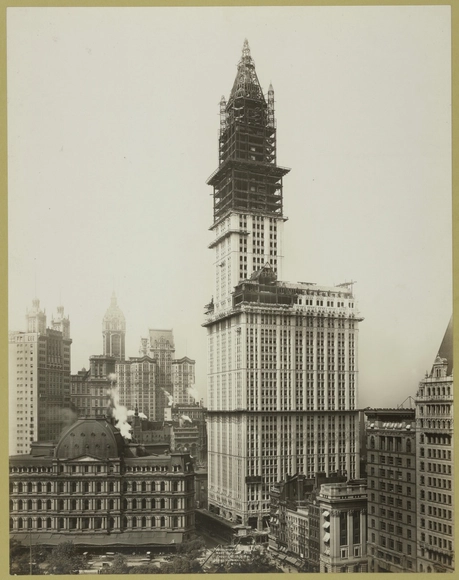
Last week the New York Public Library made over 180,000 images from their digital archives available in the public domain, and free for high-resolution download. Not only are the images available for download, but since they are in the public domain and free of any copyright restrictions, users have the freedom to get creative and alter, modify, and reuse the images in any manner they see fit. Featuring a wide variety of images including drawings, engravings, photographs, maps, postcards, and in some cases, digitized copies of entire books, the collection has been noted for fascinating historical artifacts such as a set of color drawings of Egyptian gods and goddesses, and a digitized book from the 18th century containing over 400 color plates depicting various current and historical fashion trends.
Of course, the archive also includes a significant assortment of captivating architectural images that range from everyday scenes to historic treasures. We've trawled the database to find some of the most unusual and insightful examples - read on to see a selection of the most interesting architectural images from NYPL’s digital archives.
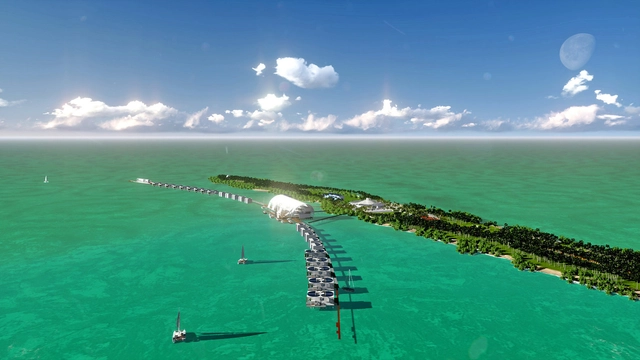
In early April 2015, the New York Times reported on Leonardo DiCaprio’s recent purchase of Blackadore Caye, a small island off the coast of Belize that has faced significant environmental degradation and erosion. A patron of several environmental projects, DiCaprio is partnering with Paul Scialla, CEO of the Delos real estate and wellness platform, to create an eco-resort intended to serve as the latest model of cutting-edge, environmentally-responsible tourism development. The development plans include a row of floating guest suites built over the water, 48 private villas (ringing in at $5-15 million), human health and anti-aging wellness programs, and a conservation area. The project is advertised as meeting the ambitious green building standards of the Living Building Challenge and the WELL Building Standard®.
Many Times readers in the comments section sardonically noted that the private jets and the shipment of building materials and daily resources for island development come with large environmental and social price tags that far outweigh the conservation efforts associated with the resort. On the other hand, a few commentators pointed out that the development will employ local labor and save the island from complete degradation. The discussion surrounding the pros and cons of “eco-tourism” development is not a new one, and not one that is easily settled.
But beyond the (important) discussion of the impacts of eco-tourism, the development raises questions about the emergence of alternative green building market standards, which ostensibly aim to transform the building industry by setting measurable targets for the environmental and social effects of the places we live and work.
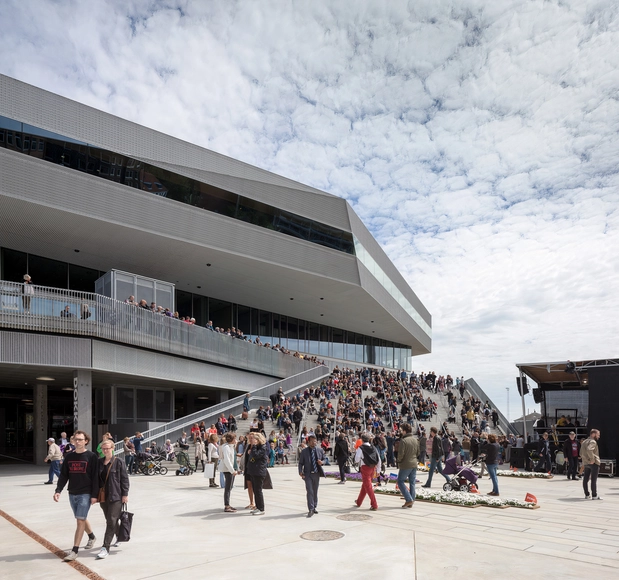
The Architecture Project recently invited us to visit the city of Aarhus, Denmark as part of a press tour related to health and architecture, with the aim of seeing the latest healing projects that are arising in the city.
Overshadowed for years by Copenhagen, Aarhus is a port city that seeks to reinvent itself and shine once again – and it is succeeding. The pleasant surprise is that it is the architects who have driven this change. Architecture has invaded all of the city's spaces, from the forgotten industrial port to the downtown areas full of historical buildings.
This visit has taught us some important lessons: 'healing architecture' isn't only about hospital projects, but rather about encouraging people, about creating friendly spaces to live and coexist, and about getting as connected as possible with users to give them what they really need.
Check out some of the strategies used to achieve these goals after the break.
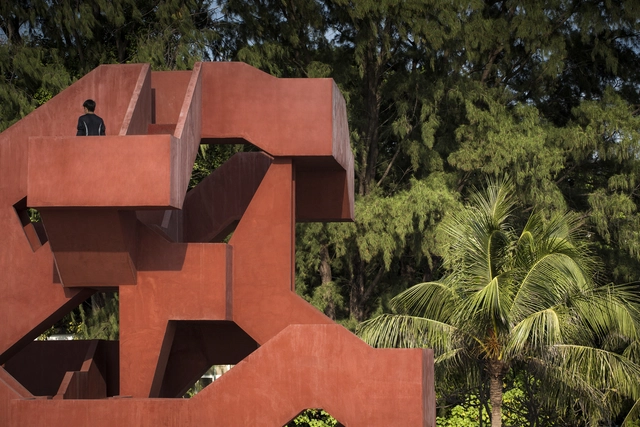
The Architectural Review have selected the winners of the 2015 AR Emerging Architecture Awards, billed as “the world's most popular and prestigious prize for up-and-coming architects, giving emerging practices invaluable impetus on their trajectory to wider recognition and success.” Previous award winners include Sou Fujimoto, Thomas Heatherwick, Sean Godsell, Jurgen Mayer H. and Li Xiaodong.
The award is given to completed projects, with entries consisting of buildings, interiors, landscaping, refurbishment, urban projects, temporary installations, furniture and product design. For its 17th year, the jury was comprised of architects Odile Decq, David Adjaye and Sir Peter Cook, and together they searched for what they referred to as the most “resistant” design.
Read on to see this year’s Emerging Architecture Award winners and a video with the jury on the selection process.

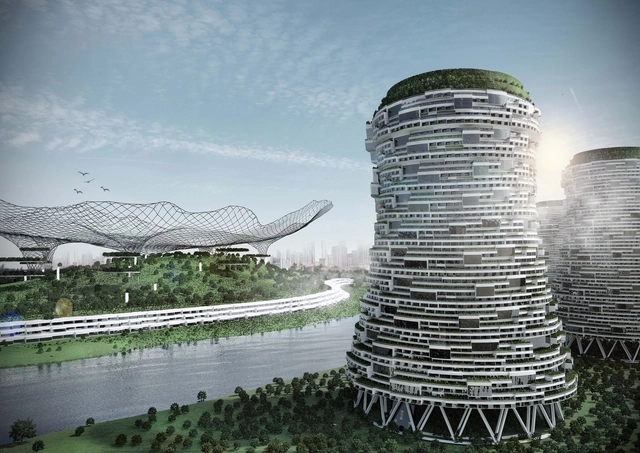
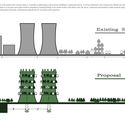
What if a power plant could also be a home, an office, or even a park? That is the question behind Cypher CO2ling Plant, a conceptual design developed by Kawan Golmohamadi, Shilan Golmohamadi, and Soad Moarefi. Power plants are a ubiquitous and inevitable byproduct of modern lifestyles, but they are typically located in remote areas, far from where the power is actually needed, due to their unsightly appearance and the emissions associated with combustion-fueled energy generation. Cypher CO2ling Plant proposes an alternative scenario that utilizes the infrastructure of the power plant’s cooling towers to support mixed-use development, while also mitigating the less desirable aspects of energy generation.
In the latest video from the youtube channel #donotsettle, architects Wahyu Pratomo and Kris Provoost explore OMA’s recently opened Timmerhuis in Rotterdam. The duo compare the conceptual design and renderings to the finished building, look at the impact the new building is having on the cityscape, and with some good fortune find their way through some locked doors.
#Donotsettle was started to reconcile the disparity between film as architectural representation and as an experiential medium. For more #donotsettle, check out their youtube page, where they walk through the Markthal, designed by Rotterdam-based practice MVRDV and the train station in Delft, designed by Delft-based practice Mecanoo, among many other sites.
Could an emergency shelter also provide its users with food? Could we make furniture you can eat? Could you merge furniture and farming into one device?
It’s questions like these that set biodesign studio Terreform ONE (Open Network Ecology) apart from other design collaboratives. Instead of looking at design as finding a solution to solve one problem, their structures and furniture pieces try to tackle many issues facing the planet all at once. Need a structure to house refugees as well as find them a reliable source for protein? Why not build them a home that also acts as a cricket farm?

ArchDaily is continuing our partnership with The Architectural Review, bringing you short introductions to the themes of the magazine’s monthly editions. In this introduction to the January 2016 issue, Editor Christine Murray recounts what we know about gentrification, and how cultural buildings can be planned to encourage - rather than destroy - a neighborhood's cultural vibrancy.
Cultural buildings are the new town halls: more socially inclusive than the pub or the church.
The best cultural projects act as public spaces, schools for continuing education, crucibles for talent, fostering innovation and social happenings, from yoga classes to children’s libraries. When free of entry charge, they are a place you can go to learn, rather than just buy – a triumph of experience over consumerism.
But what we’ve learned from the failure of the icon-building boom is that, for a cultural building to really contribute to a city, it must be part of a social ecosystem, not simply a place for tourists to visit. A cultural hub must be connected into a pre-existing cultural vibrancy, supported by decent infrastructure and a community that actually lives there.

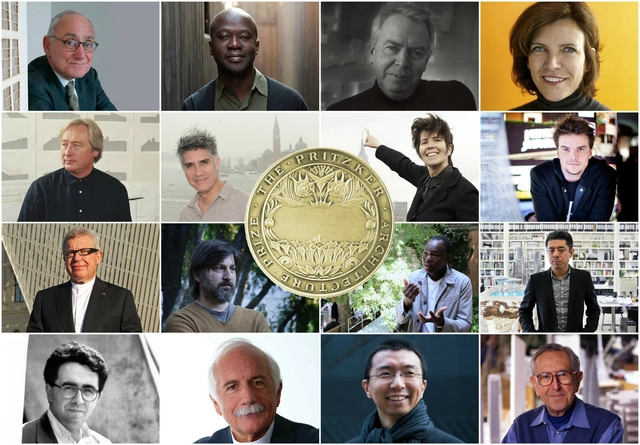
For over 30 years, the Pritzker Prize has awarded some of the most inspirational and accomplished architects on the planet, and it has long helped to shape public discussion about current trends and ideas in architecture. Recent years have been no exception; in 2014, for example, the jury's citation of Shigeru Ban's humanitarian work sparked a heated discussion about the social duties of architects.
However, just as the selection by the Pritzker jury can shape public debate, it is also influenced by public opinion. So with the announcement of the 2016 Pritzker Prize winner due on Wednesday, last month we asked our readers to give us an insight into which architects they feel should be in the running. Through a poll and the comments on the post, they let us know who they think is deserving of architecture's biggest prize.
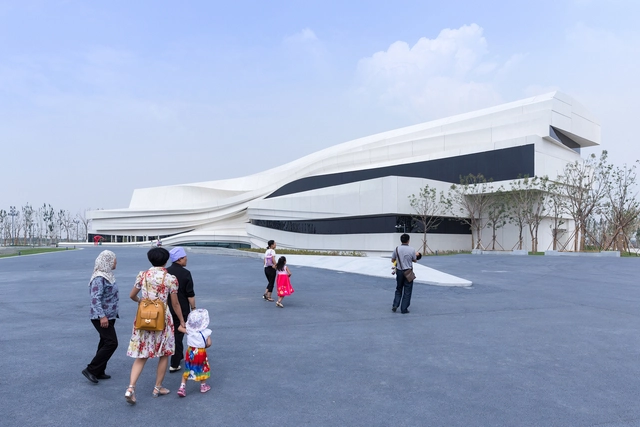
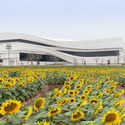
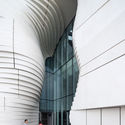
In November, the Architectural Review concluded its search for this year's most promising young designers, awarding a total of 15 projects in its annual Emerging Architecture Awards. Selected by a jury comprising David Adjaye, Peter Cook and Odile Decq alongside AR Editor Christine Murray, these 15 projects included just one firm from China: WAA (We Architect Anonymous), whose Yinchuan Museum of Contemporary Art (MOCA) was commended by the judges. In this article, former associate member of Archigram Colin Fournier reviews the awarded building, showing an appreciation of WAA's work equal to - or perhaps even greater than - the award's jury.
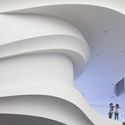
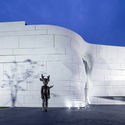
This contemporary art museum is not what it seems. It appears, at first, to be a fairly familiar manifestation of the contemporary architectural discourse, and indeed the striking fluidity of its lines and its impressive mastery of parametrically-enabled tectonics as well as GRC technology put it on a par with recent buildings by Zaha Hadid or MAD, but this first impression is somewhat deceptive: the building is, in fact, refreshingly unique and a radical point of departure from the dominant design ideology of our times, a significant rupture from the orthodoxy. And a very promising one.
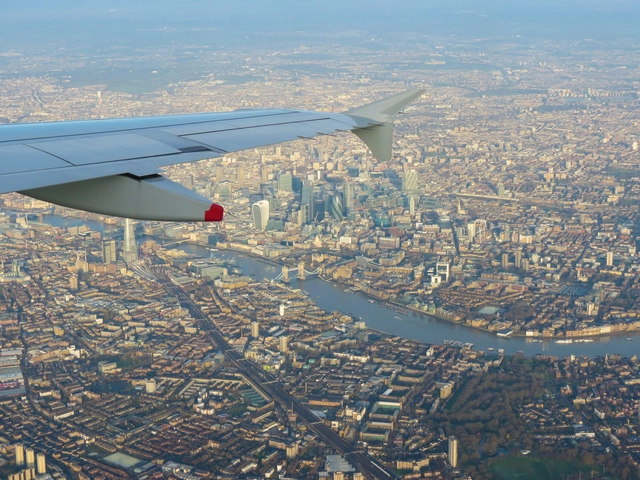
Traditionally, the start of a new year is a time for making plans and optimism for the future. As a result, it's a time when many architects might start dreaming of moving their career to an unfamiliar and exciting country. But as Brandon Hubbard explains in this article, originally published on The Architect's Guide as "Is Working Abroad Bad For Your Architecture Career?" there are many reasons that you shouldn't be so hasty to cross borders and seas in an attempt to advance your career.
Architecture, perhaps more than any other profession, is filled with people who want to live and work abroad.
Are you in Mumbai dreaming of New York City?
In Seattle thinking about a life in Rome?
Some architecture students get a taste for travel while in school. Study abroad programs in the US are quite common. Often when students finish their degree they are drawn to the idea of living abroad.
A doctor can easily find a person wandering nearby. An accountant can easily find an excel spreadsheet. Architects don't have the luxury of buildings coming to us (that would be cool though). We have to go to them. This has inspired generations of architects to pack their sketchbooks and travel.

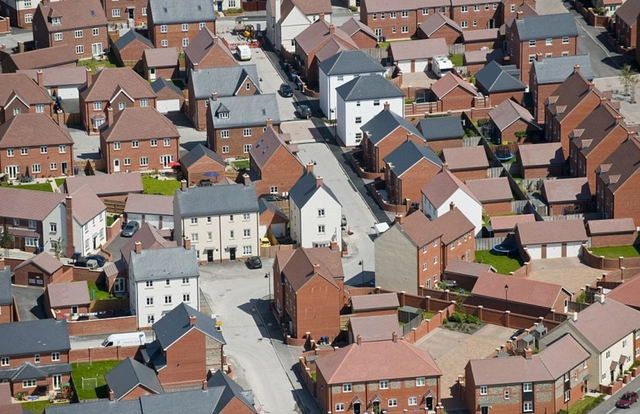
In his essay "Figures, Doors and Passages", the architectural historian Robin Evans described how "it is difficult to see in the conventional layout of a contemporary house anything but the crystallization of cold reason. Because of this," he asserted, "we are easily led into thinking that a commodity so transparently unexceptional must have been wrought directly from the stuff of basic human needs." His words, which highlight the passive approach of designers, developers and dwellers when it comes to the vast majority of British housing being built today, were first published in 1978 – two years before the Conservative government under Margaret Thatcher introduced the 1980 Housing Act.
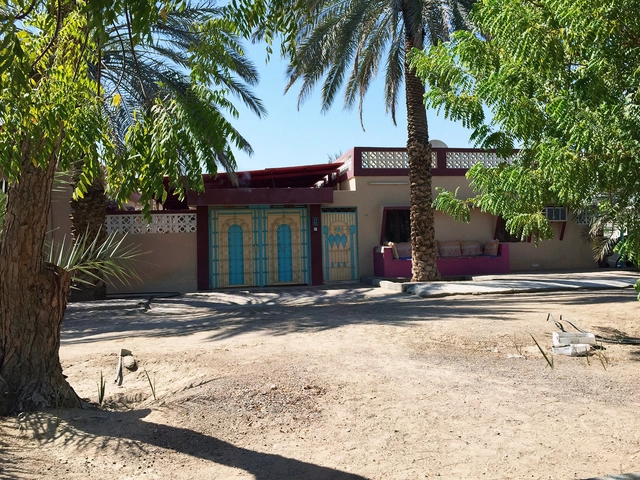
As announced in October 2015, UAEU professor Yasser Elsheshtawy has been selected to curate the United Arab Emirates pavilion for the 2016 Venice Biennale. Following the Biennale’s theme of Reporting from the Front, Elsheshtawy—who runs the blog Dubaization, a term he coined in 2004 to depict the influence of Dubai on the urban discourse—has chosen to highlight the country’s social housing program, known as Sha’abi housing, which began in the 1970s and continues on to today.
ArchDaily was given the opportunity to speak to Elsheshtawy about the history of the United Arab Emirates’ Sha’abi housing, and what role it might play in informing the urban future of a country that has become renowned for a very different type of architecture. Continue reading for our exclusive interview with Elsheshtawy on this year’s UAE pavilion.
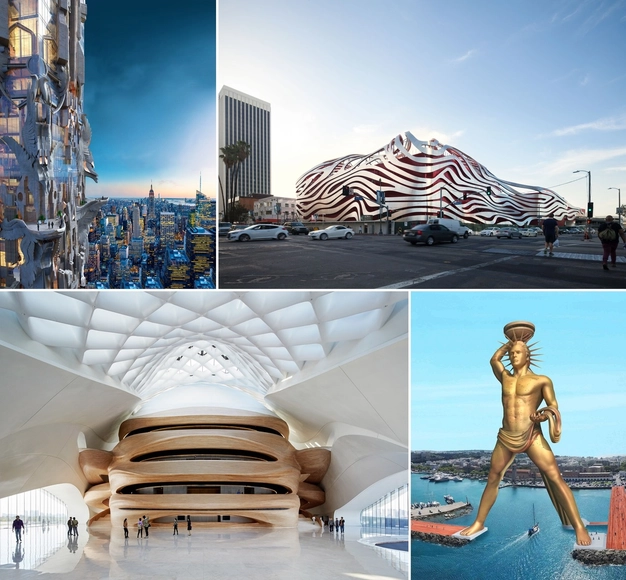
We may be emerging from the holiday season, but the weeks of quiet merriment haven’t slowed down our readers. Over the last few weeks, a small number of stories have kept the comments flowing in - among them a gothic-inspired skyscraper, a museum that is a little too baroque for some tastes, and a statue that most agreed was simply poor taste. Read on to find out what our readers had to say about some of the most noteworthy stories of recent weeks in the latest of our "ArchDaily Readers Debate" series.
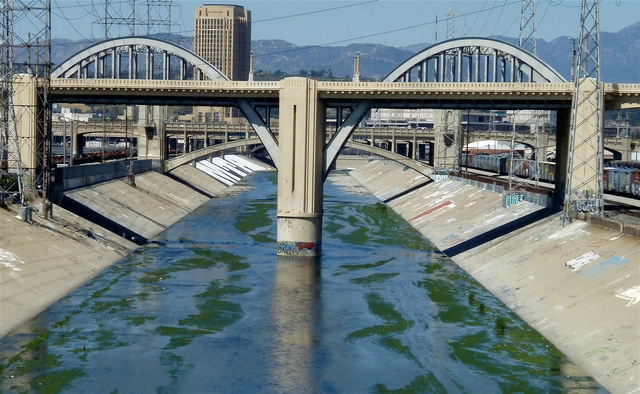
A river is not usually the province of an architect. Cities grow around rivers, and buildings are built near rivers, but rarely is the river itself the subject of a design problem. Ever since news broke that Frank Gehry is leading a master plan effort for the Los Angeles River, there has been a marked increase in discussion of the river, though rarely with much historical background. Joseph Giovannini tries to correct this omission with his recent piece in the Los Angeles Review of Books, laying the groundwork from when the Army Corps of Engineers decided to line the river in concrete in the late 1930s to prevent flooding, and introducing all of the major players who have been working more recently to return the river to a more natural state.
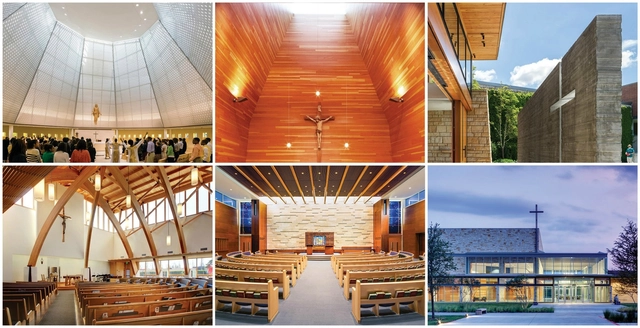
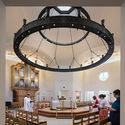
Religious buildings make up many of the highlights of architectural history, and the Religious Architecture Awards from Faith & Form magazine and the Interfaith Forum for Religion, Art, and Architecture celebrate the latest entries in this category. As trends in religious practices and the buildings that house them have changed, this year’s awards celebrate a wide variety of structures, including a growing number of renovation and restoration projects, as well as the first-ever award for a building in the “megachurch” category. From a total of 44 entries, 16 projects received awards in one of five categories: New Facilities, Renovation, Restoration, Adaptive Reuse/Repurpose, and Liturgical/Interior Design.
Read on to see all the winners of the Religious Architecture Awards.
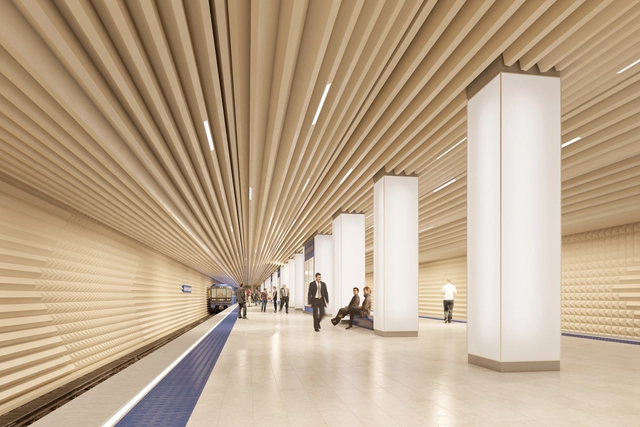
"During the Middle Ages, smell was the unspoken plague of cities," writes New York Times architecture critic Michael Kimmelman. "Today it is sound." In his latest article, entitled "Dear Architects: Sound Matters," Kimmelman breaks down an often-overlooked element of architectural design, explaining how space shapes sound, and how sound shapes our experience of a space - and imploring architects to put more thought into the sonic environments created by their designs.

Dear readers,
This has been an intense year at ArchDaily, and I’d like to look back and share what we’ve done during 2015, and give you a glimpse of what will come during 2016.
Our focus on the emerging countries is something intimately tied to our mission. I’m very happy to see that as a society we understand the importance of cities for the future of mankind, and that we are actively improving them through the traditional way of making architecture, but also more and more in an expanded field and in a multidisciplinary collaborative way.
We started this project in 2008 in a very instinctive way, but always understanding that we should provide value to architects. Today, we are publishing in 4 languages (including the new ArchDaily China!), reaching more than 400,000 daily readers who are viewing 120 million pages every month - and bookmarking thousand of projects on My ArchDaily. This scale has made us understand what is adding value - and what is not - to architects in a very insightful, data-driven way. Our analysis for our end of the year posts has shown us how important it is for you to have access to technology and resources than can help you on your work.
Corcovado and Christ the Redeemer by Pix4D on Sketchfab
As I have touched on in the past many times, context is what transforms an artistic rendering into a photorealistic visual that accurately portrays a building. Seemingly minute details such as the warmth of interior lighting in night renders can actually make a dramatic impact on how the image is received by a potential client or investor. With this in mind, and in a continual attempt to improve the accuracy of renderings while increasing the value they provide to architects, some rendering artists are now taking advantage of readily available Unmanned Aerial Vehicle (UAV) platforms – more commonly referred to as drones – to gain a unique vantage point of land slated for development.
In the past capturing aerial photographs of an area could only be achieved from planes or helicopters, both of which come at a hefty price tag, even to rent. Drones equipped with the same capabilities can now be purchased for a fraction of the cost, making aerial photography more attainable. Aside from capturing standard video or images, drones have given rendering artists access to software that allows them to accurately map the topography of an area slated for development, adding a new level of context and accuracy to the rendering.
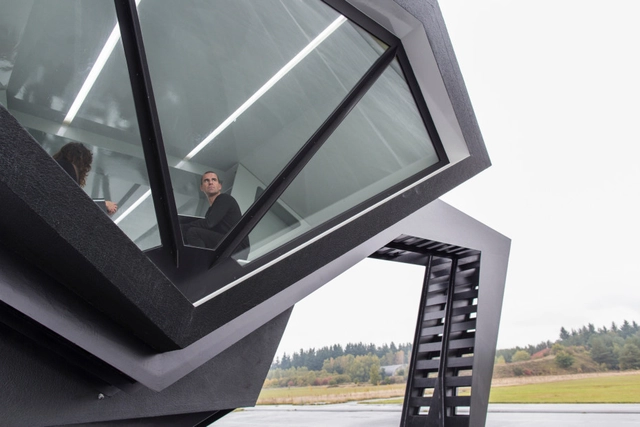
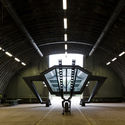
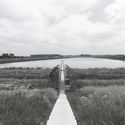
Whether it's a bisected war bunker, an office space that forbids sitting down or a hulking yet ultimately purposeless machine of war, the chances are that if you've seen a project by RAAAF, it provoked some questions. But while their work may appear merely idiosyncratic, it is informed by a deep understanding and questioning of culture. Originally produced and published by Freunde von Freunden as "Experiments In Spatial Dynamics: RAAAF," Leonie Haenchen delves into the architecture and philosophy that drives the unconventional Dutch practice.
It’s pouring without mercy, but at Soesterberg Airbase this is highly appreciated. “We like this weather,” says Ronald Rietveld, co-founder of RAAAF, as he greets us at the entrance of what appears to be an enormous post-apocalyptic amusement park. “The rain suits this atmosphere much better.”
RAAAF stands for Rietveld Architecture-Art-Affordances, which doesn’t really prepare one for what’s revealed behind the doors of Shelter 610. A monstrous arthropod made out of steel with two spindly legs stares vacuously out of its white glassy eyes. Every attempt to name this mechanical being fails, it merely appears as a collision of past and future—science fiction in flesh and blood. “Everything we do should be an in-the-moment experience, something that people can feel physically. If this object was only presented on paper, it would simply not be as strong,” says Ronald and grins mischievously. “I am sure you will still remember this moment in five years.”
If there's one word that sums up our most popular projects of 2015, it's "diversity." The list features architects ranging from old favorites such as SANAA, Diller Scofidio + Renfro and OMA down to newer names like Sculp[IT] and Tropical Space; it also includes everything from museums to multi-family housing and spa retreats to chapels - along with the usual smattering of private residences. Interestingly, this year's list also shows the symbiosis between great architecture and great photography, with no less than 4 projects also appearing in our most bookmarked images from this year's World Photo Day. But despite their diversity, there's one thing all of these 20 projects have in common: great architecture. So settle in, relax and read on - here's our 20 most popular projects of 2015.
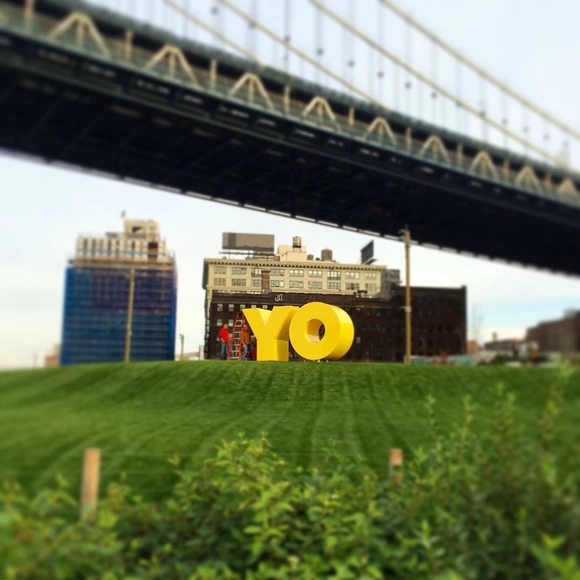
In his latest article for Vulture, art critic Jerry Saltz celebrates the latest crop of public art in New York City, such as Deborah Kass' OY/YO sculpture, sitting near the Manhattan Bridge in Brooklyn, commenting on the success of such pieces even though (or perhaps because) many of them have been curated by art-world insiders rather than publicly accountable arts commissions or community engagement processes. But for Saltz, this new wave of high-quality public art has come at the expense of quality public space. Despite his admiration for the art installations, he expresses skepticism of the privately-funded public spaces that house them, such as the much-celebrated High Line, designed by Diller Scofidio + Renfro (DS+R) and James Corner Field Operations, as well as future projects such as Pier 55 by Heatherwick Studio, and the "Culture Shed" at the Hudson Yards development also by DS+R. His critique even references a phrase from DS+R that belongs on our list of words only architects use. Read Saltz's full discussion of public art and public space here.
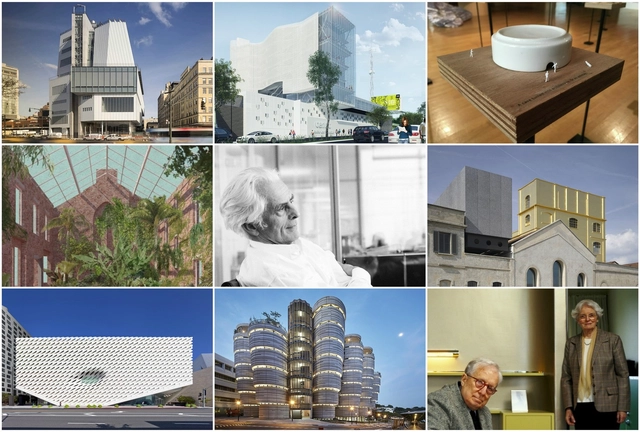
The past 12 months have given us plenty to talk about: 2015 saw the opening of several marquee new museums, and the field took an introspective turn with the “State of the Art of Architecture” at the Chicago Biennial. Now it’s December, and that means it’s time for many critics to look back at the triumphs and failures of the year past and make predictions for the year to come.
To add to our own list of the most inspiring leaders, projects and people from 2015, we found what some of our favorite critics had to say, including Oliver Wainwright of The Guardian, Mark Lamster and Alexandra Lange for Curbed, the Los Angeles Times’ Christopher Hawthorne, and Julie V Iovine for The Wall Street Journal. Continue reading for a selection of just some of the buildings and topics which the critics highlighted as having the greatest impact on the architecture world this year.









.jpg?1451393990 "The End of Sitting (2014). Image © Jan Kempenaers")