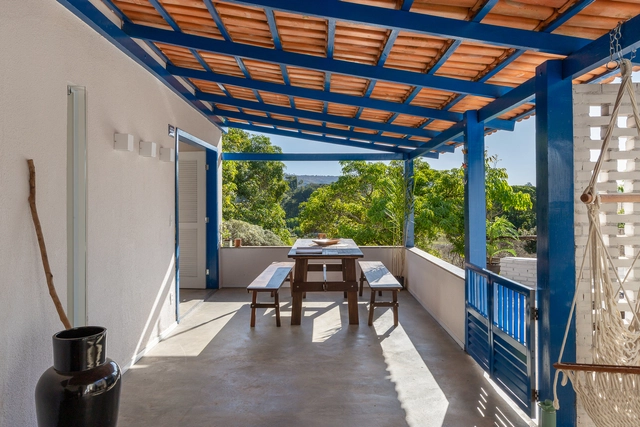
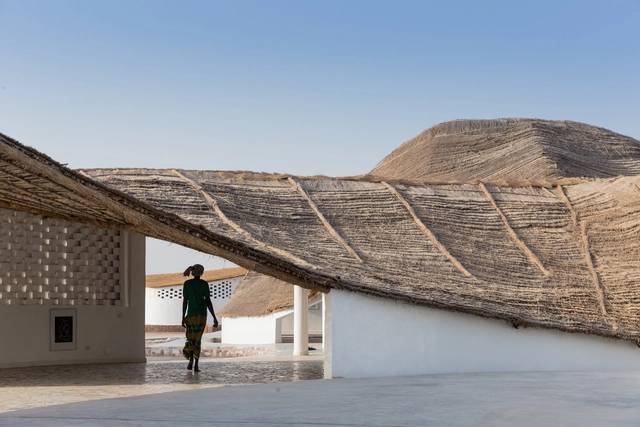
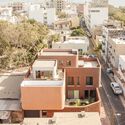
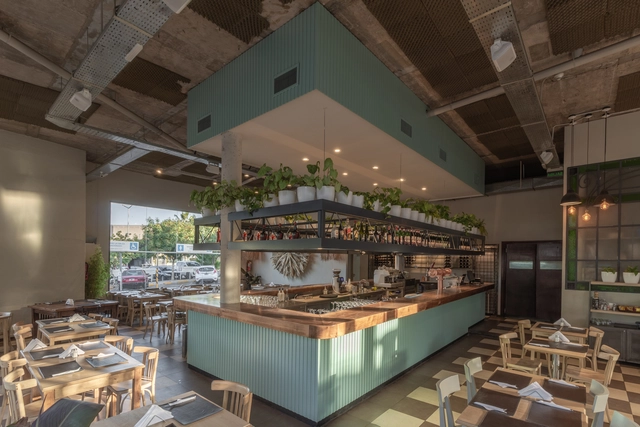
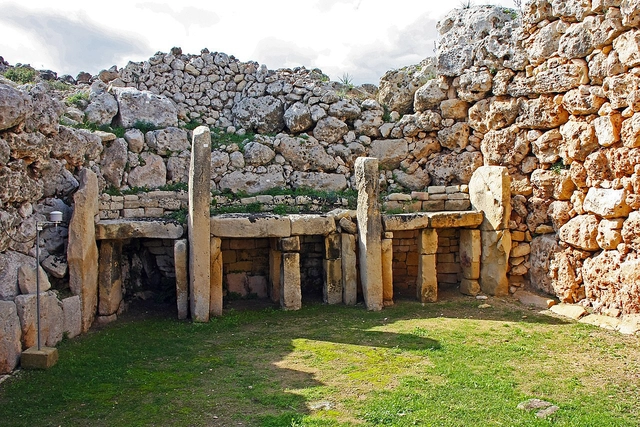
Brazil is one of the largest countries in the world, covering an area that goes from the Equator to beyond the Tropic of Capricorn, presenting a wide variety of climates and vegetation, which implies in the diverse natural landscape, flora and fauna for which the country is known. Residential architecture, when considered from its location, must adapt to the conditions of the surroundings, transforming its design according to the climate and morphology. We have gathered below a selection of Brazilian houses that respond to the natural environment in which they are located.
The advantages of a courtyard house are well known. In addition to bringing closer contact with the outside from the inside, it substantially improves comfort by providing more natural lighting and ventilation. This typology goes through time being reinvented from different ways of thinking not only its architecture, but also the landscaping of its external area. Therefore, we have gathered different ways of conceiving the garden and other elements that can make up that space.
The Second Studio (formerly The Midnight Charette) is an explicit podcast about design, architecture, and the everyday. Hosted by Architects David Bruce Lee and Marina Bourderonnet, it features different creative professionals in unscripted conversations that allow for thoughtful takes and personal discussions.
A variety of subjects are covered with honesty and humor: some episodes are interviews, while others are tips for fellow designers, reviews of buildings and other projects, or casual explorations of everyday life and design. The Second Studio is also available on iTunes, Spotify, and YouTube.
This week David and Marina answer two questions from listeners: How to cope with the feeling of failure in architecture school and whether or not architecture is hard and stressful. The two cover why freshmen often have false expectations of success, embracing failure, not seeking approval from teachers or clients, dealing with ‘dumb’ design assignments, overcoming paralysis, the main reasons why being an architect is challenging, and more!
https://www.archdaily.com/992767/the-second-studio-podcast-overcoming-failure-in-architecture-schoolThe Second Studio Podcast
In 1972, Caetano Veloso announced in the song Triste Bahia that “the steamboat from Cachoeira no longer sails on the sea.” Indeed, ours is a generation unfamiliar with Salvador's nautical capacity, since most of us have not had the opportunity to experience the daily rhythm of a port city. A brief look at the records of photographers such as Marcel Gautherot, Pierre Verger, and Lázaro Roberto, from the 1950s to the 1970s, reveals that the daily dynamics along the waterfront were vastly different from those of today.
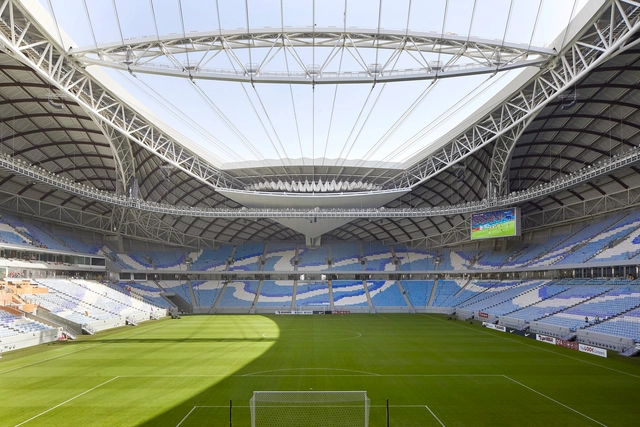
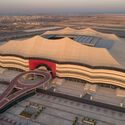
The FIFA World Cup is one of the world's largest events, bringing together fans of all nationalities. Having previously been hosted across various continents, this year's tournament will take place in Qatar, a country on the Arabian Peninsula with a population of about 2.7 million people, the majority of whom are Muslim. Alongside the host nation, 31 other countries will compete for the title of world champion.
Beyond its status as a sporting event, the World Cup is also an opportunity to observe, learn about, and experience other cultures—especially for the host country. Divided into eight different groups, the first to play, from Groups A and B, will be Qatar, Ecuador, England, Iran, Senegal, the Netherlands, the United States, and Wales. Below, explore some examples of architecture from these countries.
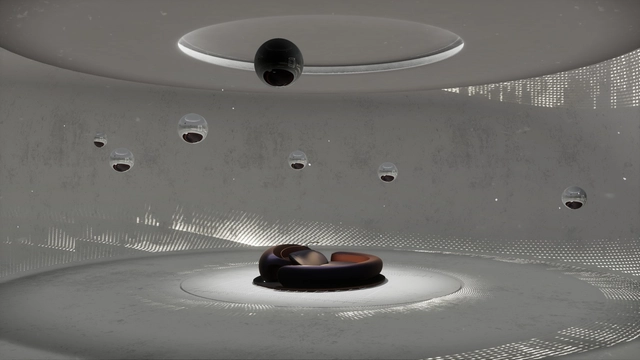
The undisputed protagonist of the last few years has been the Metaverse. The news is already flooding the world of video games and technology. Today, architects and designers are increasingly aware of the responsibility they have in leading this construction of the virtual environment. But what is the architecture of the Metaverse, how is it designed, how is it built?
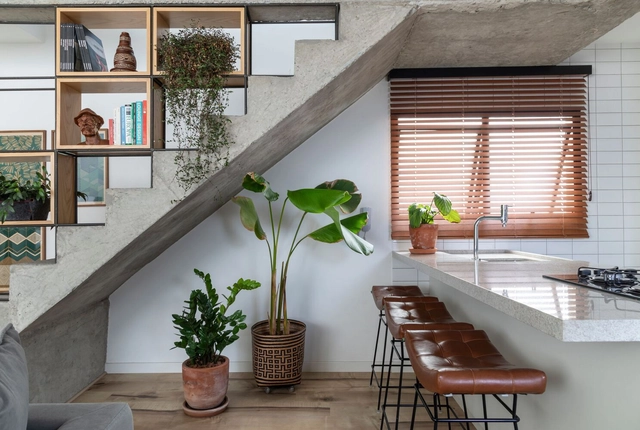
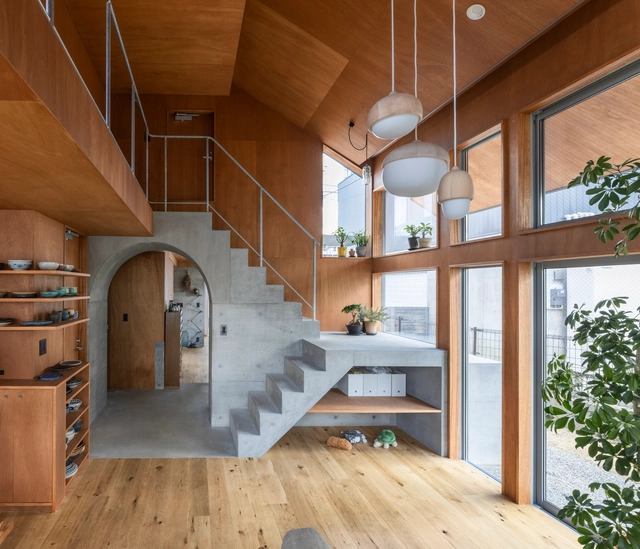
Vertical circulation may be just one of the functions of a ladder. Always occupying a reasonable area, this element can serve to bring some other uses when it is thought of in a more integrated way with the entire room, providing living spaces, storage and also a greater aesthetic appeal. That is why we have gathered some ideas on how to occupy the areas around a staircase in different projects: from home to industrial scale.
Fundamental for the development of large metropolises as we know them today, cement is a material used historically, whose technological advances have revolutionized construction technique and technology of civil construction, enabling the verticalization of construction and the densification of urban centers. Cement, both added to water and sand to make mortar and combined with steel and aggregate to form concrete, performs different functions in a work, from structure to finish.
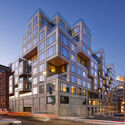
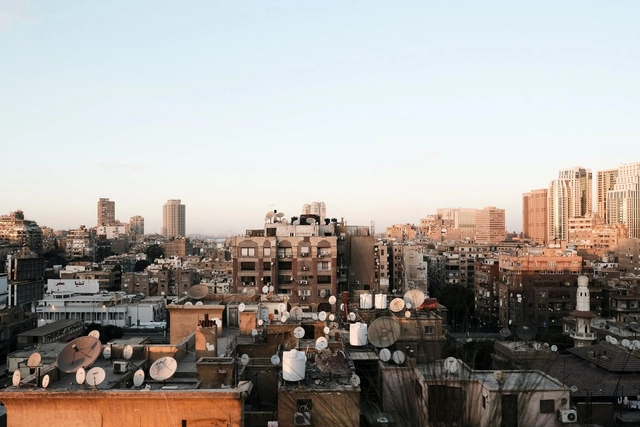
As of today, over 50% of the world’s population lives in urban areas, and by 2050, this urban population will almost double in size, and 7 of 10 people in the world will live in cities. As cities have continued to grow and expand throughout history, a new vocabulary has also emerged, often to better communicate the scale of urban living in a relatively contemporary context. One such example is the term megalopolis – typically defined as a network of large cities that have been interconnected with surrounding metropolitan areas by infrastructure or transportation. In effect, it’s a region perceived as an encompassing urban area, within which there is a constant flow of commerce and migration.
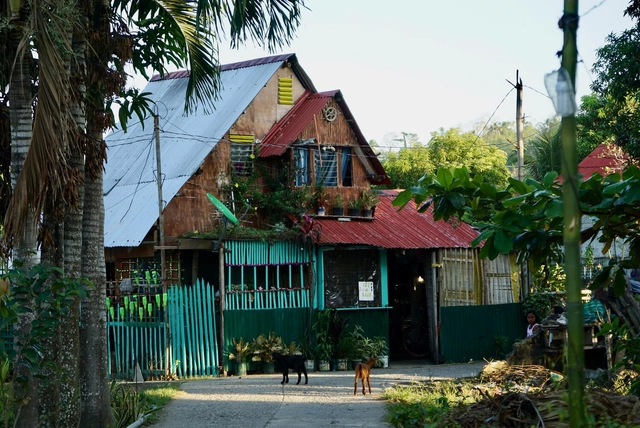
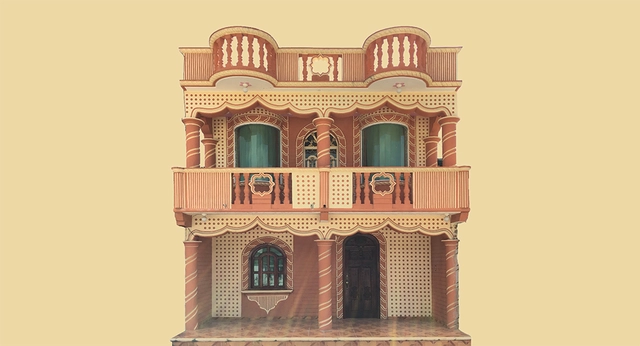
The Philippines' history and cultural background are continually reflected in the architectural landscape throughout the country, with its structures and dwellings harboring a handful of influences from the nations that once purveyed the island.
When we talk about the topic of Filipino architecture and dwellings, more often than not, we may think of the first known Filipino home: Bahay Kubo. The Bahay Kubo is a small hut comprising nipa, bamboo, and other indigenous materials. It is often times that many citizens still choose to adopt this style of habitation, however, over time, the concept of the nipa hut has evolved into a more modern structure.
The World Cup will take place between November and December. This scheduling is due to the fact that average temperatures in the host nation, Qatar, can soar to 40 to 50°C during June and July.
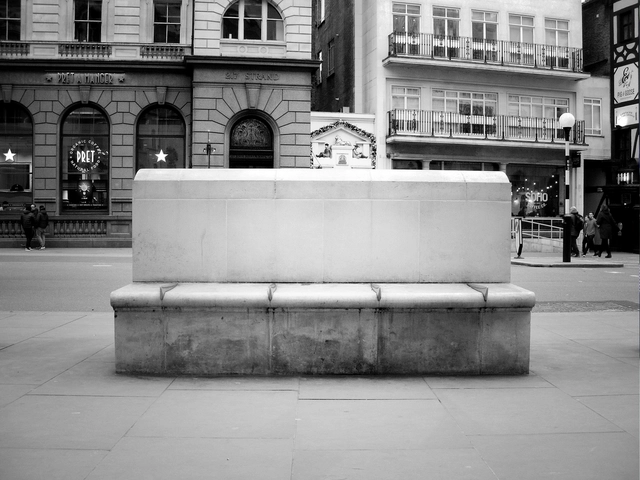
Bench outside the Royal Courts of Justice, London. Image courtesy of James Furzer
Hostile architecture's days may be numbered in Brazil. The Chamber of Deputies has approved a bill that prohibits public authorities from using any material, equipment, or construction technique that deters people or restricts access to public spaces. Bill PL 488/21, named the Padre Júlio Lancelotti Law, now goes to President Jair Bolsonaro for approval.
https://www.archdaily.com/1132161/padre-julio-lancelotti-law-banning-hostile-architecture-is-approved-by-the-chamberArchDaily Team
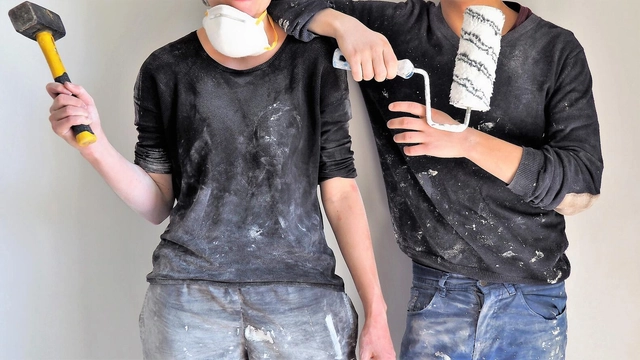
TV shows about renovations are seductive. We feel anxiety when seeing that home remodeled in an unimaginable way, providing a family reconnection with the new space. The tears at the end, the host-architect-contractor satisfied with the result, intact wooden floors, shiny appliances, and bathtubs ready to be used. It is no wonder that these programs are reaching an ever-increasing audience and, consequently, inspiring many transformations in other people's homes.
But if, on the one hand, they encourage viewers to change by showing the infinite possibilities of transforming and improving a space, on the other hand, they can reproduce misconceptions about architecture, especially concerning the conception and execution process.
Noises –especially those we can’t control– greatly affect both physical and mental health. Whether coming from the street, upstairs neighbors or the room next door, research suggests that these can raise stress, reduce productivity, interfere with communications and contribute to developing issues such as high blood pressure. Ultimately, sound quality defines user experience and (literally) sets the tone for the rest of the interior. The bad news is that most conventional building materials used today in modern architecture –concrete, glass, masonry– have extremely hard surfaces and limited acoustic properties, reverberating sound several times over and forcing users to raise their voices to be understood. Coupled with growing urban density and projects adopting a mixed-use layout, all of this results in increasingly noisy, uncomfortable and distracting living and working environments.
Based in Mendoza, Argentina, Estudio Reynals was founded in 2018 by partners and sisters Laia and Cristina Reynals, two architecture and design professionals.
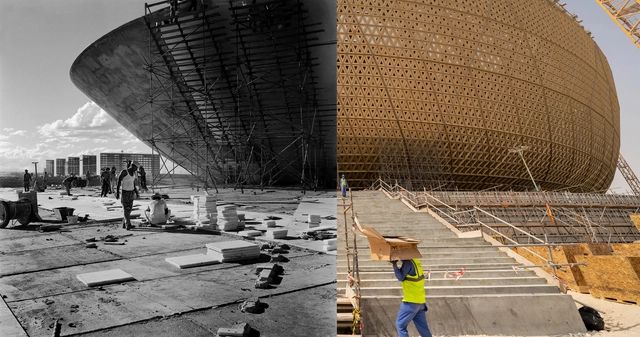
Composition by the author. From left to right: National Congress building (Marcel Gautherot/La Boite Verte) and Lusail Stadium (Sorin Furcoi/Al Jazeera), both under construction
Sixty-two years separate the inauguration of Brasília and the opening of the 22nd edition of the FIFA Men's World Cup, hosted in 2022 in Qatar. Of course, it is not only their placement in time and space that differentiates these two historical occasions; we must also add the geopolitical context, the character, the actors, and the interests surrounding each. What, then, remains as a link between them? Beyond the fact that the emirate now has its own model city (Lusail)—built in the wilderness of the peninsula under the playbook of the latest urban and technological trends, echoing to some extent the avant-garde spirit of Brazil's Federal District at the time of its construction—the inextricable link between the two events lies in the construction sites that materialized the architecture hosting them.
https://www.archdaily.com/1132382/suppression-of-rights-on-the-construction-site-parallels-between-brasilia-and-qatarJoão G. Santos
“We shape our buildings; thereafter they shape us.” Despite Winston Churchill’s words, architects are shaped by our culture, and our work reacts to it. Because our culture evolves, the practice of architecture evolves. What is “New” in architectural practice has had accelerating change, exploding in the 21st century because new technologies have changed everything on a level of the Industrial Revolution, 200 years ago.
In Out Office / Alfredo Häberli. Image Courtesy of Andreu World
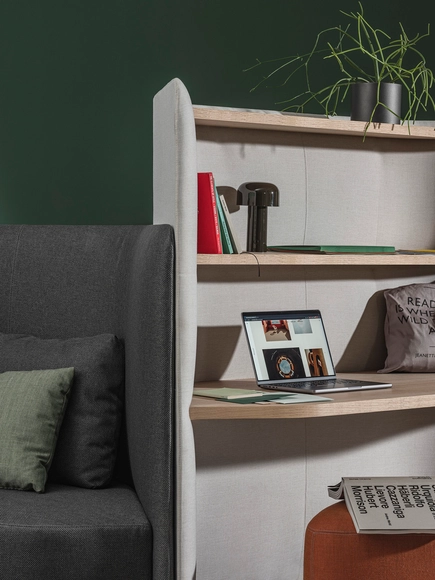
Interior architects and designers have often claimed that a well-designed office space will translate into greater productivity, creativity and worker satisfaction –yet the impact is greater than most tend to imagine. Recent studies suggest that good design positively impacts company culture, fosters a sense of community and creates a healthy, happy and motivating environment. In fact, it directly influences the recruitment and retention of talent: “workplace design significantly increases the attractiveness of employers to potential candidates.” Proper lighting, a flexible layout and biophilic features are all important factors to consider during the planning stage. But to fully address user comfort and well-being, these must be combined with excellent furniture design. After all, integrating high-quality ergonomic pieces is a simple way to boost mood and enhance functionality and aesthetics when creating or redecorating the workspace.
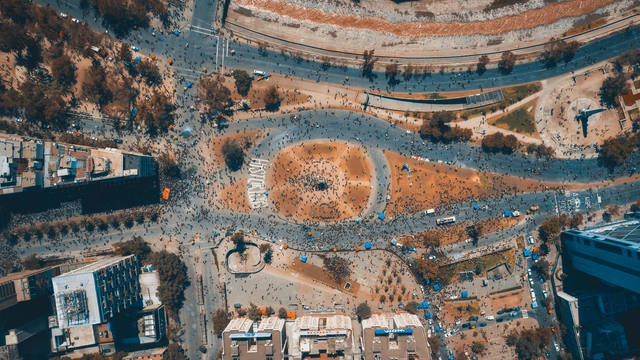
Plaza Baquedano durante las manifestaciones del 19 de octubre. Image Cortesía de Enzo Giusti / Shuttertstock
On Wednesday, November 3, work began on the redevelopment plan for Plaza Baquedano and its surroundings in Santiago de Chile. It is worth noting that Plaza Baquedano—traditionally known as Plaza Italia and recently referred to as Plaza de la Dignidad—is the convergence point for both celebrations and protests. These events have often been marked by social unrest and, particularly following the events of October 18, 2019, have left their mark on the public space. What does the future hold for this site of immense social and political significance?
I remember clearly when I began to question the types of images and architecture we consumed and debated at university, contrasting them with the actual built environment of the city I live in (CDMX). This is a type of architecture that seeks to delineate certain biased, curated aesthetic principles, disseminated through academia, digital platforms, magazines, books, and real estate developers, among others.
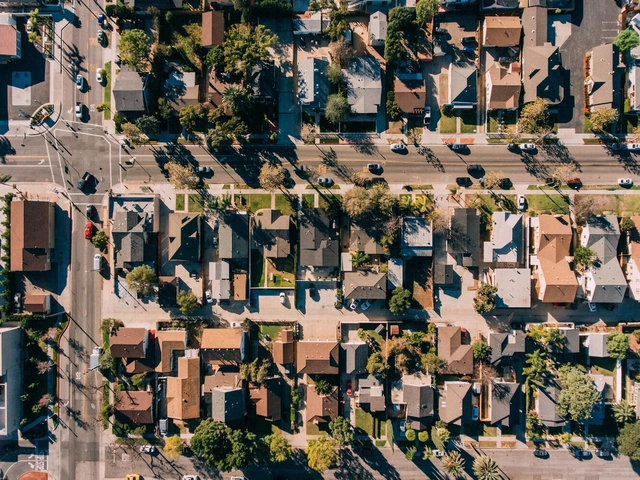
Envision your ideal neighborhood. Maybe it’s on a cul-de-sac in the suburbs, where every neighbor has a well-manicured lawn, a two-car garage, and everyone gives each other a friendly wave on their way to work. Or maybe you live in a high-rise building in a dense urban center, where you take public transit to the office five days a week and say hello to your doorman on your way out. Whatever your neighborhood might look like, there’s always a sense of wanting to know the people who live around your- or at least an unspoken reliance on one another to ensure that your surroundings are safe. What happens when technology brings you and your neighbors together to report on local happenings? Is it a good thing, or does it create a vigilante situation gone awry?
Videos
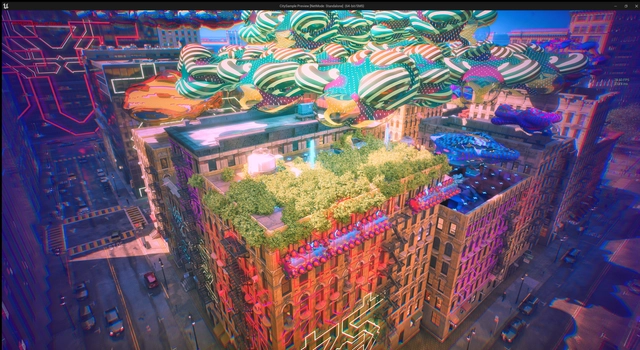
Discovery por lifeforms.io. Image Cortesía de Damjan Jovanovic
Today, architects and designers are increasingly aware of the responsibility they have in leading the construction of the virtual environment. But how is it designed? How is it built? What is the degree of experimentation that exists?
'Discovery: a story about rooftops, airships, robots, and inflatables' is a recently opened exhibition at the SCI-Arc gallery that addresses just this theme. Designed by Damjan Jovanovic and Lidija Kljakovic, founders of lifeforms.io - a video game creation studio based in Los Angeles, California - it presents an exploration of the creation of worlds, artificial intelligence, and ecology.
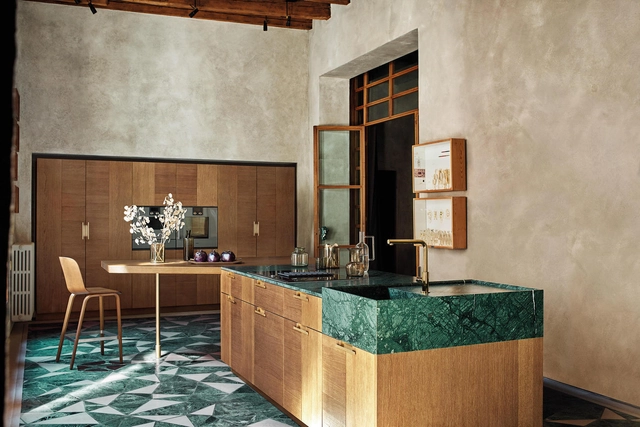
Whether you blame Covid lockdowns, recipe box subscriptions, or the latest high-tech kitchen appliances, everyone’s spending more time in the kitchen. Meanwhile, popular open-plan spaces remove the option of simply shutting the door on the catastrophic mess of a big meal, before settling in for a relaxing evening.
The modern kitchen worktop, then, has to work harder than ever before. Impenetrable when standing up to increased use, yet simple and quick to clean, returning to its sleek and stylish position as a backdrop to the perfect interior with ease. Here are ten of the most common kitchen worktop materials in a crowded market.
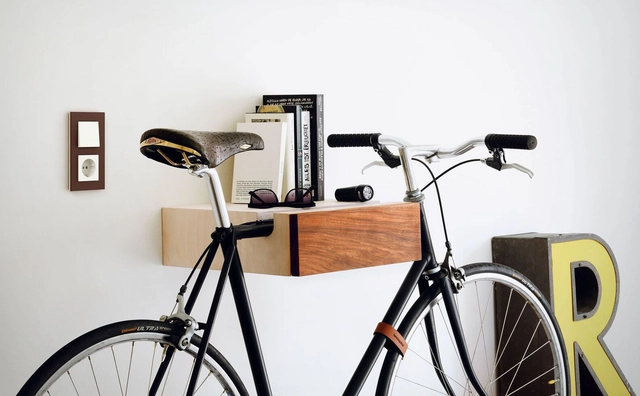
Gira Esprit de linóleo multiplex en color marrón oscuro; interruptor pulsador Gira y base de enchufe SCHUKO en blanco brillante. Image Cortesía de GIRA
Turning a space's lights on or off is a routine part of daily life. This almost automatic action is made possible by a switch, a device designed to divert or interrupt the flow of electrical current. Given its essential role in everyday life, how can we combine a switch's functionality with aesthetic appeal?
Just as current design trends integrate exposed installations and services into interior design strategies, the new range of light switches combines functionality with an aesthetic diversity tailored to the personality of each space. Adapting to different styles relies on a combination of three factors: the choice of materials, colors, and formats. Below, we look at the available options using the GIRA catalog as a guide.