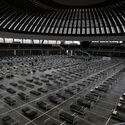
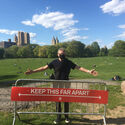
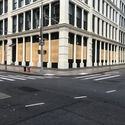
March 20, 2020: I am in New York, “the epicenter of Covid-19,” the news on TV keeps blaring, as if proud of the achievement. New York has always been excessive, so why not now? More cases, more hospitalizations, more ICU admissions, more intubations, more deaths. The news is terrifying and at the same time completely at odds with the day-to-day experience of the city, which has become so strangely quiet, so peaceful. No traffic, no construction noise, no annoying car alarms, no random screams in the middle of the night. Even the ambulances are mostly silent without cars to fight against.
Indians have traditionally lived close to the earth, their cultures shaped by symbiotic relationships with ecosystems. Indian arts and crafts strongly rely on nature for its form, philosophy, and existence. Native landscapes aroused the artistic sensibilities of resident communities, evolving craft practices that met utilitarian and ritualistic needs. The intersectionality of ecology and culture is evident through ancestral forms of craft.
Real-time visualization is an excellent tool for creating beautiful renderings and streamlining workflows within architectural and design projects. It plugs into your CAD, enabling you to visualize as you design.
On top of the high-quality renderings it produces, its speed and ease of use are some of the reasons why many firms have added it to their workflows. See how real-time visualization has benefitted these three firms.
In the book Design of Childhood, architect and researcher Alexandra Lange states that children were considered nonpersons throughout almost the entire history of ancient and modern architecture, being excluded from the process of creating urban and interior spaces. This process has caused and is still causing several problems when children reach adulthood, since these children grew up being constantly watched by fear of movement and the eyes of adults.
Discussions of architectural form demonstrate how disability is negatively imprinted into the field of architecture. In architectural theory and the history of architecture, “form” typically refers to the physical essence and shape of a work of architecture. In the modern idea of form, it is a quality that arises from the activity of design and in ways that can be transmitted into the perceptions of a beholder of architecture. Form provides a link between an architect’s physical creations and the aesthetic reception of these works. It occupies a central place within a general understanding of architecture: the idea of the architect as “form-giver,” among many other turns of phrase, conveys the sense of some fundamental activity and aesthetic role of form within architecture, what architects create, and how people perceive works of architecture.
On August 19th, the world photography day is celebrated, a fundamental tool for the imagery record of our society. If, on the one hand, photography is the protagonist in dialogues that involve architecture and the city, portraying historical moments and enhancing buildings, on the other hand, it guides us through the context and backstage of the moment, eternalizing the process.
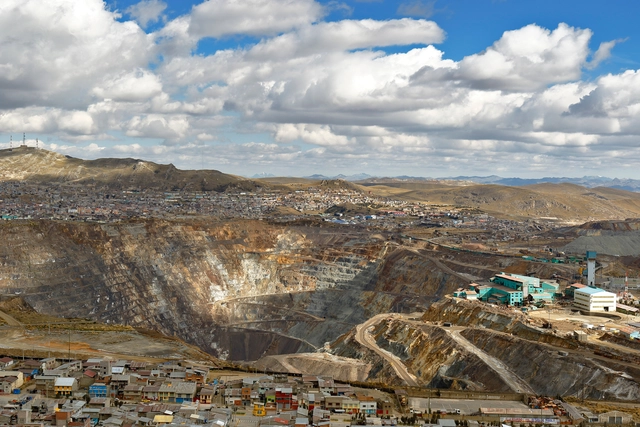
What happens when streets, squares and buildings start to disappear in a city?
This is the case of Cerro de Pasco, capital of the district of Chaupimarca and at the same time of the province of Pasco, located at 4380 m.a.s.l. in the highlands of the Peruvian Andes. It is in this place that the constant expansion of the "open-pit" mining method has devoured the urban fabric, resulting in permanent damage to the territory as its public spaces, heritage buildings and, consequently, its history, disappear.
Hard times bring people together. In recent years we have seen how collective work can be a driving force to help those affected by natural or man-made disasters. After a disaster or displacement, a safe physical environment is often essential. Therefore, the need for coordination becomes a key factor in assisting people in times of need.
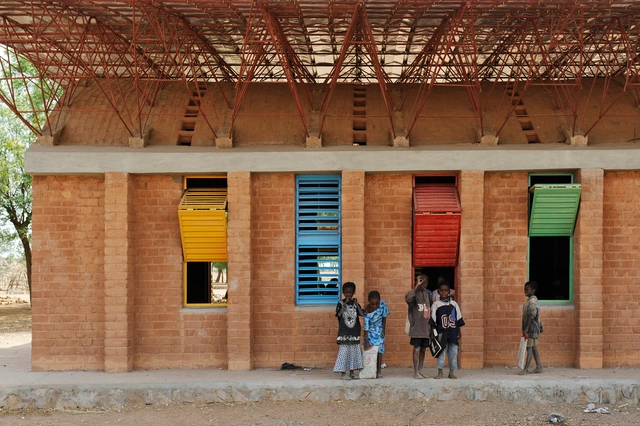
Architects, as "Shelter Specialists", play an important role in creating safe and adequate environments, whether it is individual housing, public buildings, schools, or emergency tent camps. But as architect Diébédo Francis Kéré says, "When you have nothing and you want to convince your community to believe in an idea, it may happen that everybody starts working with you, but you need to keep fighting to convince them."
On August 27th, 1883, the volcano of Krakatoa in the Indonesian islands erupted. Ashes and rocks flew miles high. Barometers wobbled three and a half times as they recorded the atmospheric pressure wave circumnavigating the globe. The noise was heard across the Indian Ocean and Australia. And for years, small ash particles floated in the atmosphere, diffusing the sun’s light and scattering colors around the world.
In October 2011, inspired by the Arab Spring revolutions, thousands of people in Australia and in many other cities in the world started to occupy public spaces. In Sydney, where I live, this occupation took place in Martin Place, appropriately enough right outside the Reserve Bank of Australia. This widely publicized protest was an attempt to promote a pro-democracy, civil liberty, social justice message, and to protest against corporate greed and economic inequality.
All of which begged a central question: Was it an occupation of our public space, or was it a reclamation of our public space from governmental and corporate dominance?
Over the years, ArchDaily has brought us the most innovative architecture projects through the eyes of creative specialized photographers. Their captures bring us closer to the works, reflect the vision of the architects and, above all, transmit and generate the most varied emotions.
From conversations with these talented photographers, we can understand, at least a little, what they feel when facing an architectural project with a camera in hand.
The rise of co-living has begun to radically shape interior design. In residential projects and commercial developments, co-living is tied to the emergence of the Kitchenless Home idea. Began by Spanish architect Anna Puigjaner, this idea is tied to a range of innovations in interior design and co-living that have been built over the last five years. In turn, these new interiors began to tell a story of housing and spatial experience rooted in modern life.
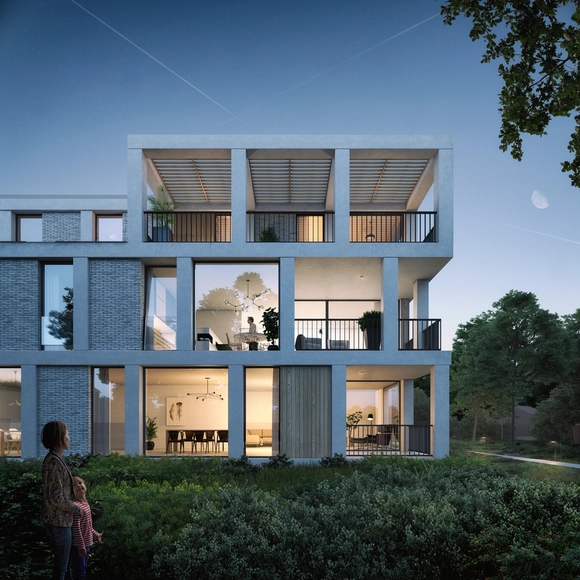
Bergerheide / Iglesias Leenders Bylois Architects. Image Courtesy of Vectorworks
Architectural firm Iglesias Leenders Bylois Architects (ILB Architects) has begun to incorporate the use of building information modeling (BIM). The greatest advocate is architect Meindert Leenders, who believes every architectural office should be working with BIM:
“It doesn’t need to be a big project. Take an actual case, set yourself a few achievable goals, and try to work them out in BIM." ILB chose 'Bergerheide' as a trial: a project consisting of three park villas, designed in collaboration with the construction company Dethier. The rules for collaboration were clearly set out by project director Vlaanderen Bouwt vzw, providing the architects a sturdy framework for experimenting with BIM.
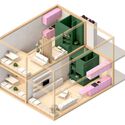
“In recent years, we have been confined to our homes more and more,” says health mentor and entrepreneur, Enitor Joiner. “This has made us more aware of the (dis)comforts of our immediate living environment. For example, sitting still for long periods while working at home leads to physical complaints such as RSI. A poor living environment can also cause stress and and mental challenges. Loneliness is a growing problem in society, and a general lack of knowledge of healthy living patterns has led to an increase in disease. With this in mind, Marc Koehler Architects and I got to work by asking ourselves: how can we create a pleasant living environment that automatically contributes to a healthy lifestyle?”
https://www.archdaily.com/987445/is-comfort-killing-usMarc Koehler Architects and Enitor Joiner
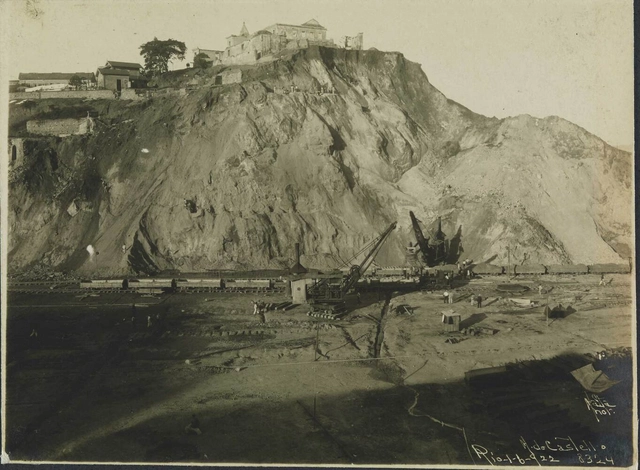
Augusto Malta, Demolition Morro do Castelo, Rio de Janeiro, RJ, June 1, 1922. . Image Courtesy of Biblioteca Nacional Digital Brasil, Fundação Biblioteca Nacional.
At the inauguration of the First Brazilian Congress of Eugenics in July of 1929, the physician and anthropologist Edgar Roquette-Pinto addressed an audience preoccupied with the question of how a country as vast as Brazil could best increase and improve its population. To accomplish this, Roquette-Pinto exalted “eugenia” as the new science that, together with medicine and hygiene, would guarantee the efficiency and perfection of the race. With the following words, the Brazilian scientist underscored a positivist agenda that brought architecture to the very core of the eugenics—the so-called science of race “improvement”—movement: “It is critical to emphasize that the influence [on our race] does not stem from the natural environment but rather from the artificial environment, created by man.” With these opening remarks to the Congress, Roquette-Pinto called attention to the crucial role that the man-made environment plays in the “amelioration” of what he called “the biological patrimony” of Brazil’s diverse population. In his invitation to social engineering, Roquette Pinto pointed to the environmental-genetic collusion that they hoped would bring with it the very possibility of progress.
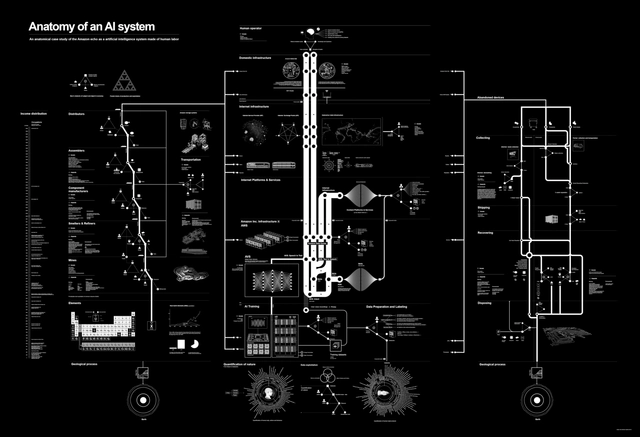
Anatomy of an AI System. Image Courtesy of Kate Crawford
Should designers care about artificial intelligence (AI) or machine learning (ML)? There is no question that technology is adding texture to the current zeitgeist. Never could I have imagined seeing a blockbuster hit where Ryan Reynolds emerges as a conscious non-player character in a video game and a flop where Melissa McCarthy negotiates humanity’s future with a James Corden-powered superintelligence within a year of each other. But does learning AI and ML’s ins and outs really matter for the creative professions and our nebulous, invaluable way of operating?
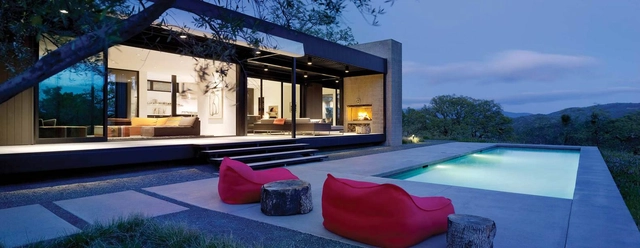
Marmol Radziner Gem. Image Courtesy of Western Window Systems
The benefits of prefabrication are by now well-documented: prefabricated construction is cheaper, faster, better for the environment, and more consistent than traditional forms of architectural construction. At the same time, it can be used for a wide range of unique designs, calculated to meet a client’s specific needs. To take advantage of these many benefits, however, the prefabrication systems and products themselves must meet a certain standard of quality and flexibility.
Below, we consider five architectural projects using custom glass windows and doors by Western Window Systems, each designed to maximize utility for prefabricated and modular construction logics. Beyond their suitability for prefabricated construction, these products also maximize views, aesthetics, and functionality, blurring the line between indoor and outdoor living.
https://www.archdaily.com/963662/glass-windows-and-doors-in-5-prefabricated-projectsLilly Cao
Architects assume a significant amount of responsibility when it comes to considering designs that will be successful for not just their clients, but any person who inhabits or is impacted by their spaces. Topics of sustainability, social inclusion, economic opportunities, and overall urban equity, have consistently been top of mind in recent years, ultimately creating a new holistic approach to designing for a better future, that many people are referring to as Environmental, Social, and Governance metrics, more commonly known as ESG.
In addition to their primary function, roofs are one of the most fundamental elements in the aesthetics of a building, taking different shapes, being composed of different structures and sealed by different materials. But, in addition to aesthetics, roofs need to meet the climatic conditions of where they are located, considering the periodic changes related to rain, sun and winds.
Exterior view of l’Eau Vive hospital, Soisy-sur-Seine, France, 1960s. Image Courtesy of Archives of Nicole Sonolet, collection of Christine de Bremond d’Ars
What would it mean to design buildings that exceed the economic accountings of liberal biopolitics, that instead offer an entirely different rationale for supporting health? In the years that Michel Foucault conceptualized the term biopolitics, he was part of a constellation of researchers and architects who developed care praxes that defined the value of life and its maintenance through a desire-based calculus. The welfare state institutions of architect Nicole Sonolet in particular—mental hospitals, public housing complexes, and new village typologies built mainly in postwar France and postcolonialAlgeria from the 1950s to the 1980s—were designed not only to support but to center the needs of people often excluded from design processes. Sonolet’s mental health centers for residents of Paris’s 13th arrondissement, in particular, were key projects for discovering a design practice tied to the provision of care for its own sake.
The Smile. Image Courtesy of Alison Brooks Architects.
London-based architect Alison Brooks was born and grew up in Canada and studied architecture at the University of Waterloo in Waterloo, Ontario. Upon graduation in 1988, she left for London where after working with designer Ron Arad for seven years she started Alison Brooks Architects in 1996. Her most representative works include the Stirling Prize-winning Accordia Brass Building in Cambridge, Exeter College Cohen Quad in Oxford, the Smile Pavilion for the 2016 London Design Festival, and several expressive single-family residences in London: VXO House, Fold House, Lens House, Mesh House, and Windward House.
Among the studio’s current projects are The Passages in Surrey, Canada; Homerton College in Cambridge, and other residential and cultural projects throughout Britain and in North America. This month the architects’ design was shortlisted for the LSE Firoz Lalji Global Hub and Institute for Africa in London. Together with Nigerian practice Studio Contra, the ABA-led team was one of six finalists chosen from 190 international submissions.
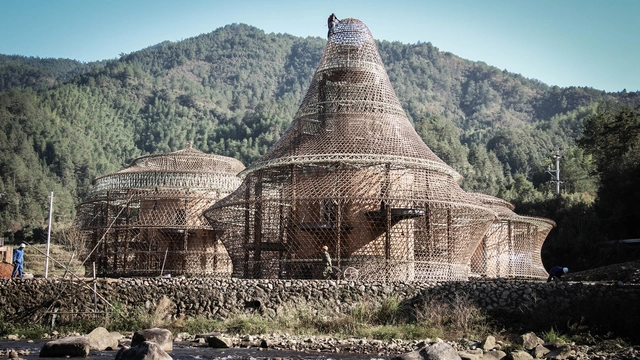
The Filipinos believe that man and woman first emerged from the nodes of a bamboo stalk. The Chinese view the caneas a symbol of their culture and values, reciting “there is no place to live without bamboo”. The plant is a symbol of prosperity in Japan and friendship in India. Along with myths and stories, strong structures made of bamboo flourished in pre-modernAsia. Built forms varied across the changing landscapes of Eastern countries, all sharing one aspect in common - a respect for natural ecosystems.
The A' Design Awards - the world's leading annual international juried design competition - were established to promote and recognize the best design work in all countries and in all creative disciplines. The Award has 100 main categories, including Architecture, Building and Structure Design,Interior Space and Exhibition Design, and Furniture Design, in addition to others related to the world of Lighting, Landscape, Building Materials, and many others. This year's edition is now open for entries; designers can register their submissions here.
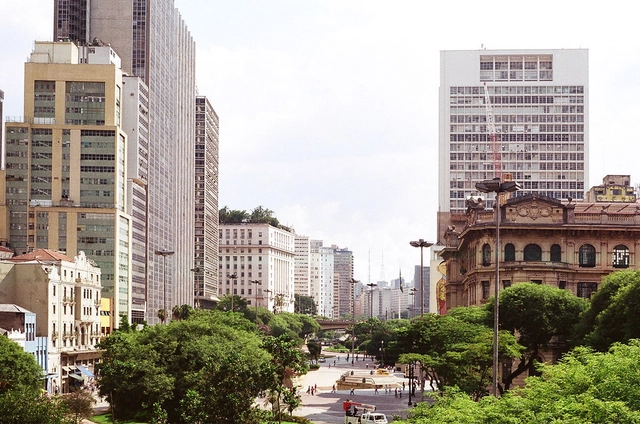
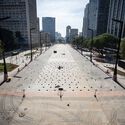
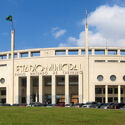
Recently, the city of São Paulo witnessed two events involving spaces that were previously public and are now under private concession. The already renowned Virada Cultural Paulistana took place again after the initial years of the covid-19 pandemic, and had as one of its stages the new Vale do Anhangabaú. In addition, the Pacaembu complex - which recently ceased to be a public facility, became a concession and has been undergoing a series of renovations and transformations - hosted the ArPa Fair, an event that brought together a series of important galleries for exhibition, purchase and sale of artworks. Despite the different nature of these events, their processes arouse reflections upon the privatization model we are experiencing in cities today.