The climate crisis has been one of the focal points of 2021, both within political discourse and the architectural field, accompanied by a newfound acknowledgement of the issue's severity. Over the past year, the IPCC report revealed the severe consequences of inaction, while COP26 and G7 summit resulted in an insufficient commitment to immediate and palpable measures. The AEC sector, responsible for a staggering 39% of global greenhouse gases, can bring a significant contribution to curbing climate change and the following looks at the decarbonization efforts of 2021 that target this industry.
Valuing formal simplicity and delicate attention to details and finishing, Studio MK27 was founded in the late 1970s by Marcio Kogan and currently has more than 30 members based in São Paulo and other collaborators around the world. Its work, as described on its website, seeks to fulfill the task of rethinking and continuing Brazilian modernism.
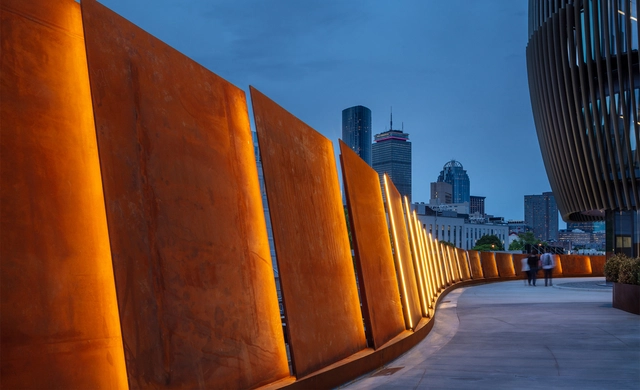
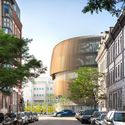
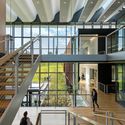
Northeastern University Pedestrian Crossing (PedX). Image Courtesy of Payette
Payette is a studio reimagining what it means to practice today. While primarily an architecture firm, the firm is rooted in an interdisciplinary approach encompassing landscape architecture, interior design, building science, space strategies, design visualization, fabrication, computation and research. For Principal Leon W. Drachman, Payette is an office that moves across a broad range of scales to reimagine design, from a campus master plan to facade details.
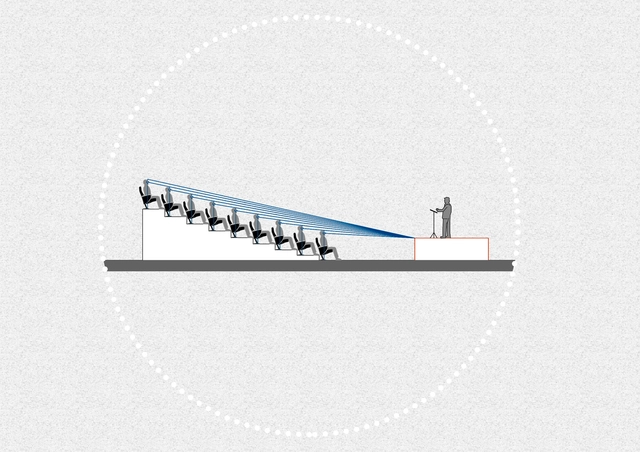
When designing an architectural space, it's necessary to think about how to satisfy the needs of each user, looking to achieve an adequate level of comfort and a pleasant experience. Auditoriums, cinemas, and theatres are spaces that involve large masses of people, so special attention must be paid to factors like isoptics, acoustics or accessibility so that when witnessing an event, everyone is able to receive the same information.
More than 5000 new projects published throughout 2021 make ArchDaily the largest online architecture library in the world. ArchDaily Curatorial Team researches, contacts offices, prepares, and delivers the built projects in the world on a daily basis, with the objective of providing inspiration, knowledge, and tools to our users who take part in the creation of better built environments.
https://www.archdaily.com/974013/best-architectural-projects-of-2021Clara Ott
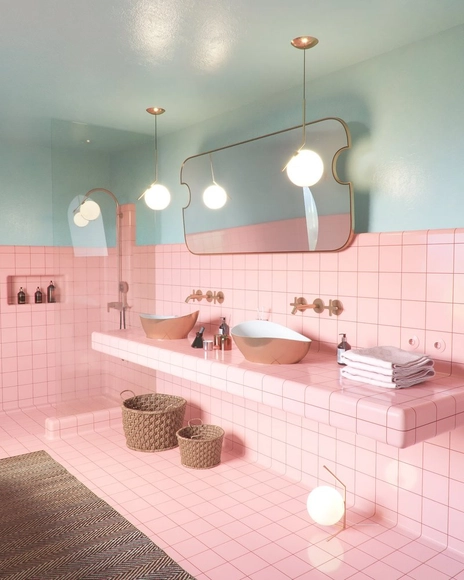
Puerto Vallarta ensuite bathroom / Studio Utkan Gunerkan. Image Courtesy of Studio Utkan Gunerkan
Even though white minimalism remains the norm, retro trends are making a serious comeback in modern bathroom designs, with homeowners incorporating pops of color, classic fixtures, and patterned surfaces. Despite often being static and traditional spaces in homes, bathrooms have certainly undergone significant transformations throughout the years. While those of the outspoken 1970s brought vibrant colors like avocado green and mustard yellow, the ‘80s introduced ceramic tiles in more muted, pastel shades. On the other hand, this century has set the ideal on white and marbled surfaces, slick gloss finishes, and silver fixtures. However, even as this all-white look continues to be the protagonist, bold retro enhancements are reviving and blending in with contemporary elements to create elegant, yet lively atmospheres with a strong character.
Circulation spaces are often challenging for designers as they are intended—as the name implies—for moving from one room to another. While many take advantage of these areas by using them as storage spaces, Mies van der Rohe at the Farnsworth house reduced circulation to a minimum, creating an open floor plan completely free of hallways. When faced with vertical circulation, the issue is similar. Stairs fulfill the purpose of overcoming the height between one floor and another, but rarely constitute indoor living spaces. Bleachers, in turn, play this role in several projects. Until recently, they were only found in sports spaces or amphitheaters; now the use of bleachers has become widespread and is seen in office spaces, public buildings, schools and even homes.
Architecture, to materialize as a constructed and functional building, requires the collaboration of a series of disciplines. During the design stages, these complementary areas are added to the architectural design, attaching systems that help in the construction's functionality, known as complementary projects.
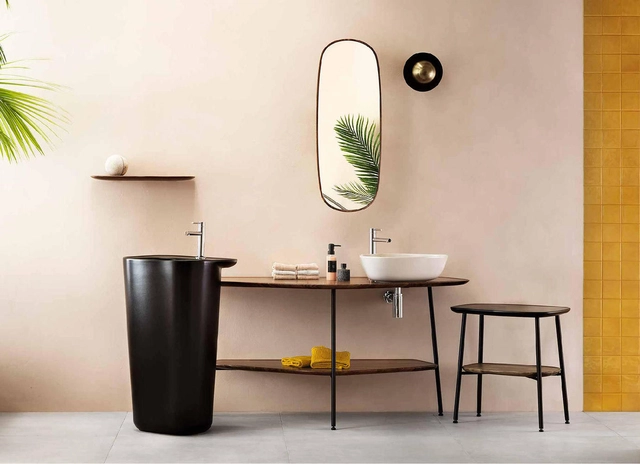
Today, bathroom and sanitaryware design is witnessing a concerted move away from the mild-mannered minimalism and washed-out pastel accents of the turn of the millennium. Bathrooms increasingly feature either bolder colors or more pronounced textures and patterns, and these are found in ceramics as well as fixtures and accessories, providing a more layered, multi-sensory experience.
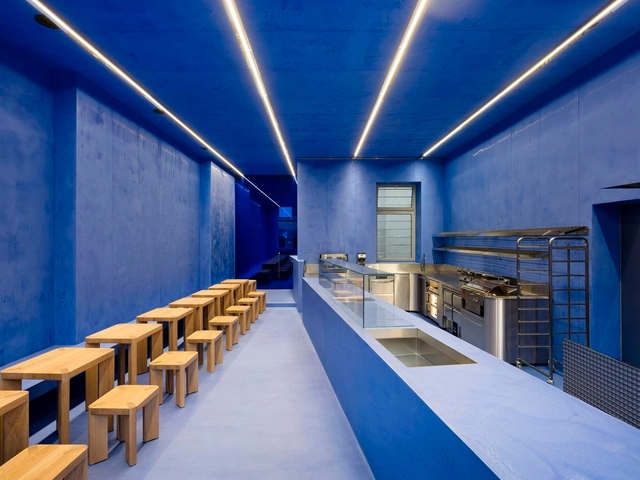
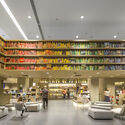
Bakeries are timeless. While industrialization and commercialization have transformed the art of baking and baked goods, bakeries remain important community spaces for gathering and defining neighborhood identity. These iconic spaces are still defined by a common programmatic understanding that combines areas to gather, socialize, shop, and work. Found across cultures, they are diverse as they are functional and expressive.
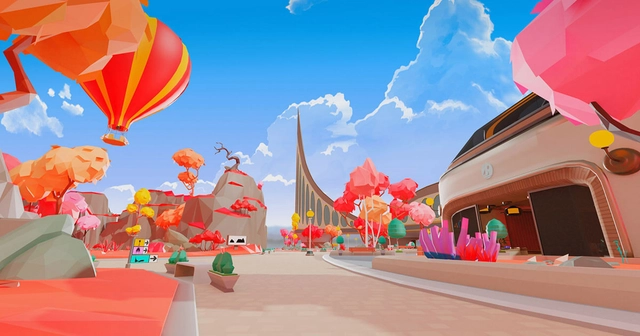
Fashion Street in Decentraland. Image Courtesy of Decentraland
Imagine if a few years ago you woke up to the news that someone paid more than one million dollars for three plots of digital land next to famed rapper Snoop Dogg’s digital mansion. You’d probably ask yourself, “What is digital real estate, and why would someone pay for that?” Over the past year, there’s been a rush to buy properties, art, and land- but all of it exists in a virtual world called the metaverse. Although this world existed long before the pandemic, lockdowns propelled the online world to a new level, catching the attention of private buyers and brokerages alike who began to funnel tier money into this augmented reality. But how did this world emerge, what does the future hold, and can anyone join the virtual world?
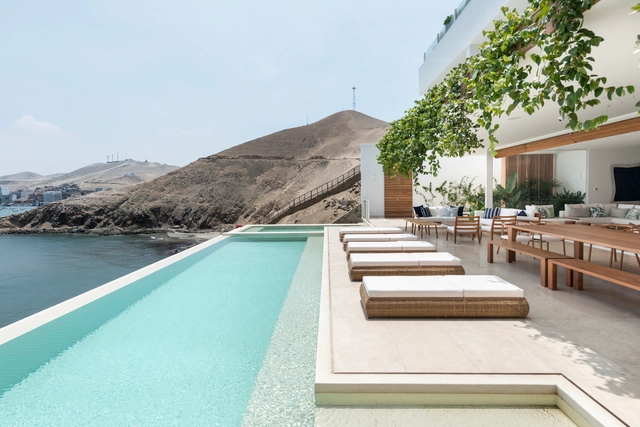
It could be said that one of the main aspects to take into account when designing a swimming pool is the choice of colour for the coating. The light, the shadows, the depth, the environment and the elements that surround it are variables that directly affect the final tonality of the water. The effects of artificial and/or natural lighting also determine the final aesthetic, because if it's located outdoors, reflecting the sky, it will create a different effect than if it's located indoors, where the ceiling would influence its colour.
New York Governor Kathy Hochul announced last week that the current and former sites of Terminals 1, 2, and 3 on the south side of John F. Kennedy International Airport in Queens will be redeveloped to make way for a $9.5 billion international terminal that will be built out in phases beginning next year. With the first of its 23 gates anticipated to go live in 2026, the 2.4-million-square-foot newTerminal One will rank as the largest at JFK and, per a news release from the Governor’s Office, “aspires to be among the top-rated airport terminals in the world.”
This video follows Hiba Bhatty, an architect at Valerio Dewalt Train in Chicago, through a day on the job. The daily activities of an architect can sometimes seem mysterious. This is likely due to the fact that no day is really “typical.” Designing buildings goes through multiple phases, each with very different responsibilities.
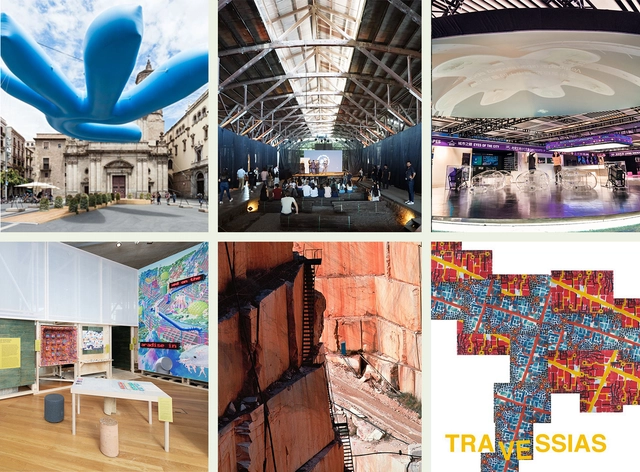
The 2021 Venice Architecture Biennale closed less than a month ago, leaving architects pondering the takeaways of this edition and anticipating the next. The pandemic disrupted the usual cycle of biennials and triennials, as most of the events of 2020 and even some of the ones of 2021 were postponed; nonetheless, next year promises a full calendar of exciting opportunities for knowledge sharing and inquiry. The following are some of the most important architecture events to look forward to in 2022.
With over 20 years of experience, Studio Arthur Casas celebrates the entirety of architectural practice. The office works in different scales, from furniture to urban projects, passing through residences, apartments and buildings, maintaining stringency about the quality of details.
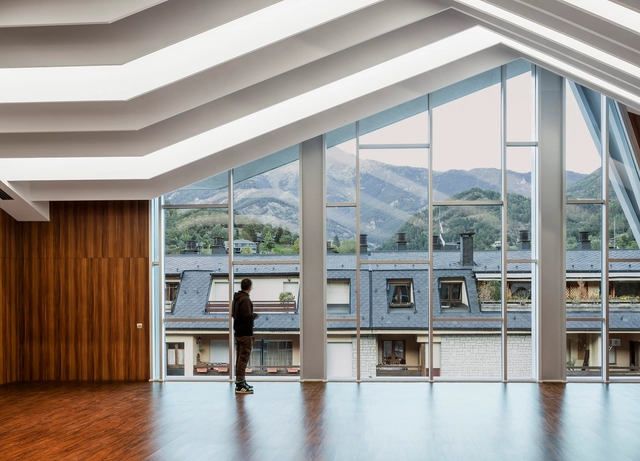
Wedged between France and Spain, Andorra is the sixth smallest nation in Europe. Less than 500 square kilometers in area, the landlocked microstate can be found in the eastern Pyrenees on the Iberian Peninsula. Today, new architecture is being built between Andorra’s rugged mountains and three narrow valleys that combine to form its Gran Valira river.
As the effects of climate change intensify across the world, the AEC industry is shifting toward green building to effectively address the climate crisis. In 2020, members of The American Institute of Architects (AIA) overwhelmingly approved a resolution making environmental stewardship the organization’s top priority. Since then, steady progress has been achieved to develop a Climate Action Plan, evolve the Framework for Design Excellence, and increase participation in the 2030 Commitment. The building and construction sector is responsible for 36% of energy consumption, 38% of energy related carbon emissions, and 50% of resource consumption globally. These percentages are expected to double in total footprint by 2060, exacerbating the negative effects of climate change on the environment. The Intergovernmental Panel on Climate Change (IPCC) 2021 Report warns of increasingly extreme heatwaves, droughts and flooding, and a key temperature limit being broken in just over a decade. The world must act fast to avoid these catastrophic events, and decarbonizing the built environment is a major step in the right direction.
https://www.archdaily.com/972553/net-zero-energy-and-net-zero-carbon-design-strategies-to-reach-performance-goalsSponsored Post