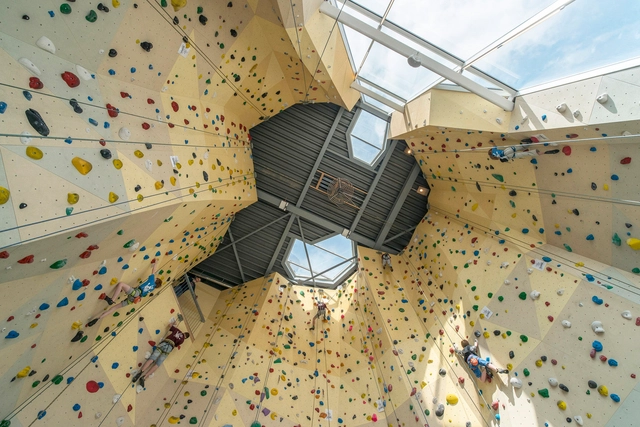
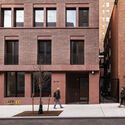
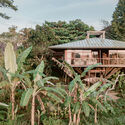
Climbers embrace their own type of architecture. Between barn doors, mantels and multi-pitch routes, rock climbing and bouldering take on a range of surfaces, materials and structures, whether outside or indoors. Today, more recreational centers and sports facilities are including climbing walls as the sport grows in popularity. As spaces to build strength and unwind, climbing gyms are built as their own interior worlds to explore.
Around the world, zoos draw in hundreds of millions of visitors each year. For some cities, they’re major tourist attractions and economic hubs that generate taxpayer dollars and create long-term employment for thousands of people. But beyond these statistics, people have been criticizing the role that zoos play in our society and the way in which we design them that holds the potential a more positive and natural environment for animals.
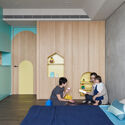
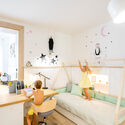
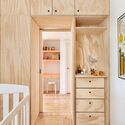
The room for babies or children is a space designed not only for rest and sleep time, but also to encourage imagination, bring symbols that help build perception of the world and, without forgetting, provide fun to the little ones. In addition to sheltering childhood, bringing functionality to this environment and adapting so many functions in the same area often require huge creativity by mothers and fathers, so the search for an architecture professional can be more than welcome.
https://www.archdaily.com/974422/nurseries-and-childrens-rooms-20-examples-to-inspire-the-imaginationEquipe ArchDaily Brasil
After a 2020 that will be remembered as a point of inflection for our global society, 2021 only reminded us that the fast phase of change was here to stay, and that a new attitude towards the way we see and embrace the world was needed. A challenge that we took with optimism.
During this year we continued with our mission to connect our global community through inspiration and knowledge, taking you on an endless journey around the world, through which we saw how architecture, often slow to react, was up to the challenge and architect embraced a new attitude, becoming aware of the new scenario, bringing adaptable, hybrid, scalable, reusable solutions.
The year 2021 has been a turbulent one –coronavirus rages on, and the design and construction industries have been forced to keep adapting two years into a global pandemic. As virtual methods of working and communicating continue to be tweaked and honed, a plethora of virtual events has meant that architectural discourse outside the western canon and Eurocentric gaze, in a small way, has been able to claim space front and center in the global architectural conversation.
This week's curated selection of Best Unbuilt Architecture highlights designs submitted by established architecture practices, featuring conceptual works, competition entries and projects in different stages of development. From a pollinator park designed for an EU initiative to a greenhouse residential project in Germany, to a museum in the Arctics or an innovative proposal for harvesting renewable energy in the Netherlands, the following showcases a variety of design approaches, programs and scales.
Featuring firms like Vincent Callebaut Architectures, 10 Design, Antonio Citterio Patricia Viel, or Sweco, this week's selection of unbuilt projects highlights worldwide interventions that illustrate a variety of ideas, from new models for collective housing and community-living, to design for ecology and sustainability, to community-oriented cultural architecture.
Entrearcos, arquitecturas de conexión - Colección. Image Cortesía de Daniela Silva Landeros
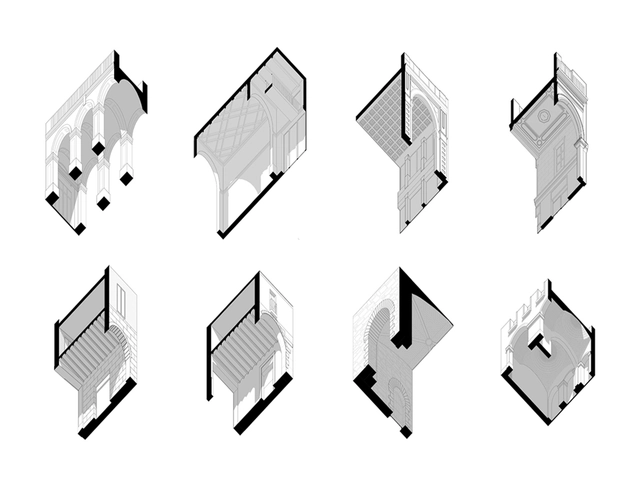
The gaze is a tool that the architect uses constantly but does not fully value. It is an instrument that, in addition to allowing us to know and recognize our reality and the phenomena that arise from it, can work as a method of analysis. "Entrearcos (Between-arches): architecture of connection" is a research project developed by the architect Daniela Silva Landeros that studies, in the specific case of the Ciutat Vella neighbourhood of the city of Barcelona, the issue of arches in our cities. And Silva Landeros does so from alternative points of view that call into question the way we are used to looking.
Ethical practice spans all parts of architecture. From intersectionality and labor to the climate crisis, a designer must work with a range of conditions and contexts that inform the built environment and the process of its creation. Across cultures, policies and climates, architecture is as much functional and aesthetic as it is political, social, economic, and ecological. By addressing the ethics of practice, designers can reimagine the discipline's impact and who it serves.
Every year, ArchDaily's curatorial team publishes thousands of new architectural projects. From this experience, we know that no one builds alone and that these projects would not have been possible without the collaboration of many other professionals that are as much involved as the architects and designers themselves.
Another year comes to an end and with it, another round up that explores the most important events that took place over the past twelve months. In this article, we look into the photos that received the most interactions (likes, comments, shares, and saves) on ArchDaily's Instagram.
The early stages of practicing architecture are often met with what many explain as "the slippery slope of being an architect", where expectations do not at all meet reality of the profession and gets worse as the experience progresses. With constant burnouts as a result of working overtime and on weekends on the account of “gaining experience”, extraordinary expectations, low wages, and physical and mental strains, the prestige of being an architect has evidently vanished with modern-day work conditions. So how can architects fight for their labor rights after years of exploitation and what is currently being done to ensure them?
The word commensality refers to the act of eating together, sharing a meal. Much more than a mere function of essential human need, sitting at the table is a practice of communion and exchange. An article by Cody C. Delistraty compiles some studies on the importance of eating together: students who don't eat regularly with their parents miss school more; children who do not have daily dinner with their family tend to be more obese and young people in families without this tradition can have more problems with drugs and alcohol, in addition to poorer academic performance. Evidently, all these issues raised are complex and should not be reduced to just one factor. But having a suitable place to have meals, free from distractions, is a good starting point for at least one moment a day that is focused on conversation and food. This is where dinner tables come in. In this article, we review some projects to classify the most common ways to deploy these important pieces of furniture.
Steeped in history, culture, and tradition, Switzerland is a country with a lot of pride. The famous Swiss exports of watches, financial services, chocolate, and cheese are all synonymous with ‘quality’, but perhaps Switzerland’s greatest export of all is its landscape.
Communal living is nothing new. Throughout history, housing has long been tied to both shared needs and a concentration of resources. Today, between population growth and an increase in urban density and real estate prices, architects and urban planners have been pursuing alternatives for shared living. These new models explore a range of spatial and formal configurations with a shared vision for the future.
ArchDaily continues a seven-year-long tradition of celebrating the best architecture drawings of the year. From painting to collages to blueprints, the 2021 edition highlights a carefully-curated collection of architectural drawings and visualizations with a wide variety of techniques and representations.
https://www.archdaily.com/973582/the-best-architectural-drawings-of-2021ArchDaily Team
Born in the corridors of FAU-USP, FGMF Arquitetos began as a wish of Lourenço Gimenes, Rodrigo Marcondes Ferraz and Fernando Forte, three young friends. It became a reality in 1999, when they formalized the office and began the award-winning career they have established.
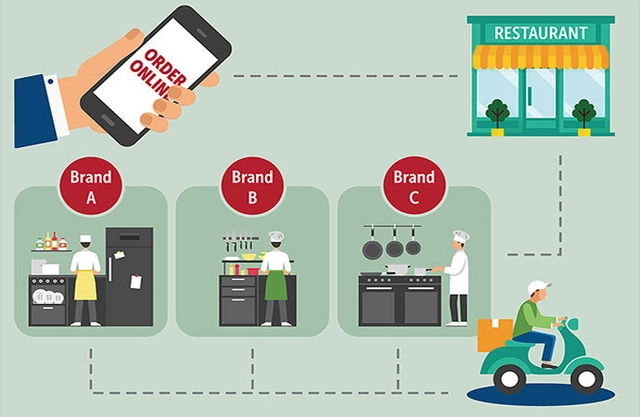
Diagram of how the Cloud Kitchen process works. Image via Kilowa Designs
On a cold winter day, if you’re craving a fresh hot pizza, a stack of warm pancakes, or a juicy cheeseburger, it’s easy to turn to an app on your phone to quickly place an order and have it delivered right to your door. But if you’ve ever wondered how restaurants keep up with the demands of diners, those who take food-to-go, and those who order through delivery apps, especially over the last two years of the COVID-19 pandemic, the solution might lie in the rapidly expanding new trend of Ghost Kitchens.
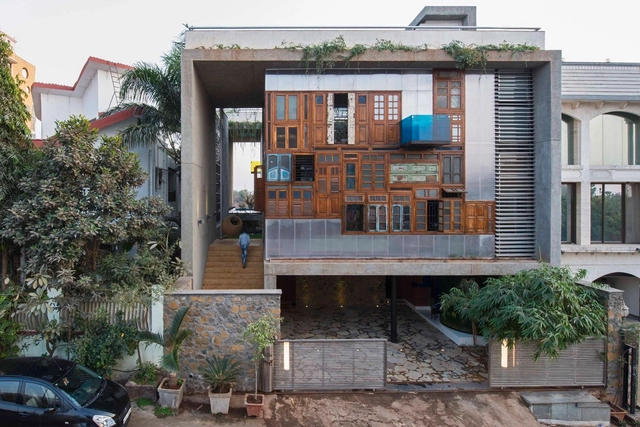
Casa Collage / S+PS Architects. Image Cortesia de S+PS Architects
Reform and adaptation of spaces represent a significant parcel of projects ordered to architecture firms, and reuse of preexisting structures is not newness. Functions and needs change over time, therefore adaptations are required to meet new demands. However, no matter how much the maintenance of a building is, in most cases, preferred in economic and ecological sense to its demolition and a new construction from the beginning, the logic of the reuse of a space does not usually extend to its parts that become, thus, rubble.