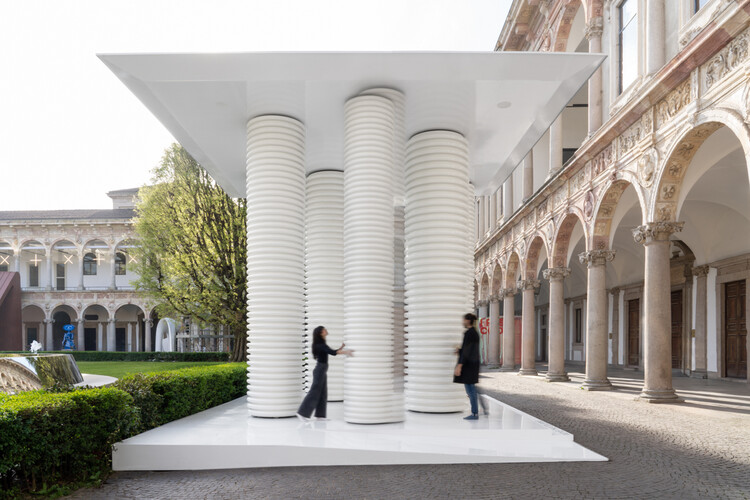
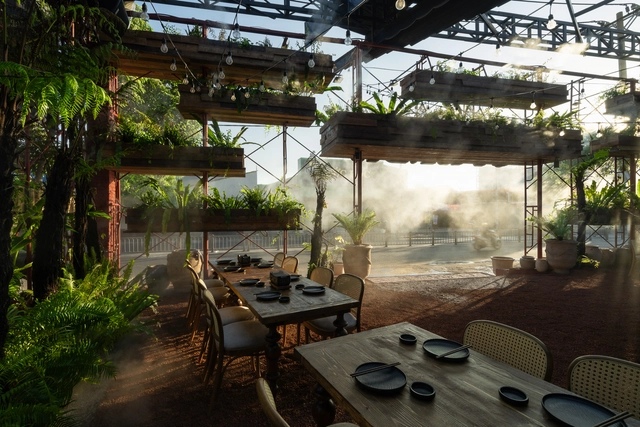
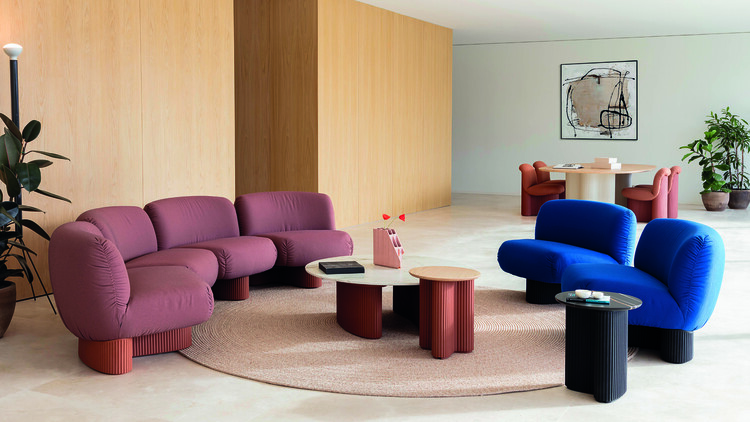
Ellisse, location: Armando Cose, Designer: Philippe Malouin
Communicating an idea using only the essentials is a far greater challenge than it often appears. From Japanese haikus to the refined sculptures of Constantin Brâncuși, many artistic expressions have sought to condense the maximum meaning with the minimum of elements. This economy of form is not a sign of scarcity, but of intensity: every stroke, every word, every silence gains weight. There is something intrinsically appealing in what presents itself as simple and well-resolved, whether it is a text that wastes no words, a tennis player who moves with purposeful gestures, or a melody that is both direct yet unexpectedly profound.
That same principle, which transcends various artistic languages, resonates deeply in contemporary design. When reduced to the essential, furniture or everyday objects reveal a form of beauty that arises from precision and transcends their function. This is exemplified by HUM, the new collection of taps developed by designer Philippe Malouin for QuadroDesign, in which a simple gesture is transformed into a complete language.
It is a vast rural expanse spread across the planet, assuming different expressions depending on context—from Asian rice fields to African agricultural settlements, from small European farms to the large estates and agro-extractive communities of the Americas. Yet, beneath this plurality, is there something that unites them? And, more importantly, how might architecture illuminate this quiet thread?
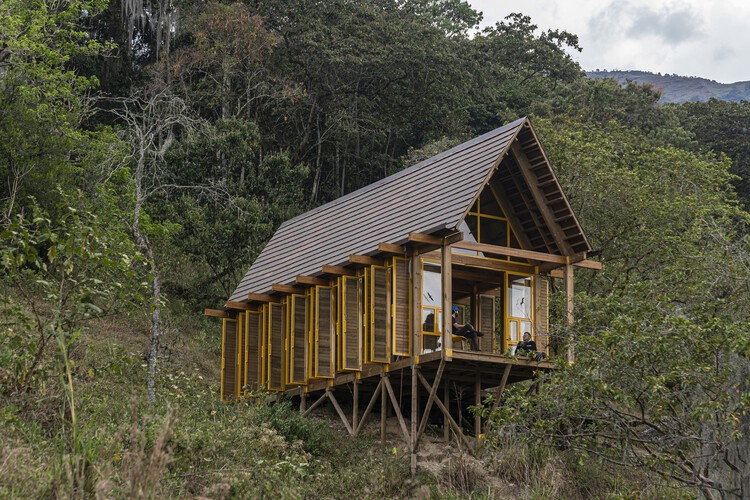
This year's selection of Best Latin American Houses brings together both renovations and ground-up projects, covering reinterpretations of local construction techniques and innovative architectural responses. The works are set in a wide range of contexts, from dense urban environments to rural and coastal landscapes.
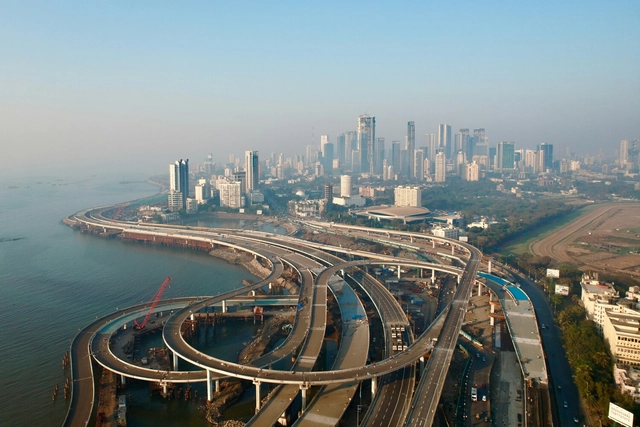
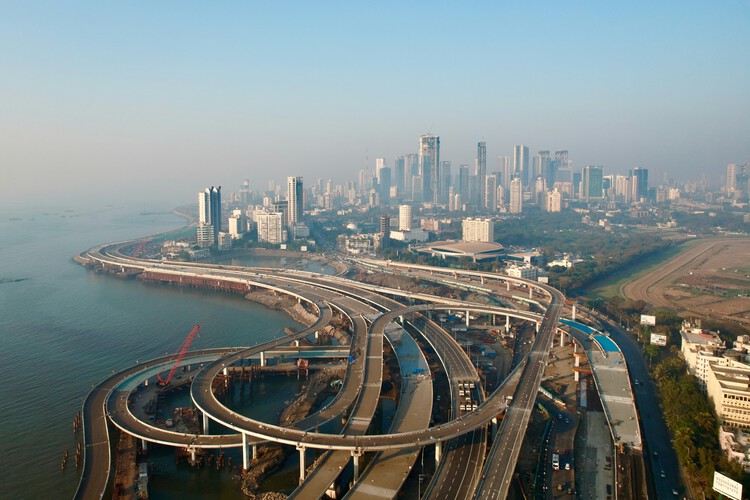
In 2025, India's most consequential design projects unfolded largely out of sight. While public attention gravitated toward museums, cultural landmarks, and visually arresting façades, the architecture that most decisively shaped daily life existed underground, at the city's edges, or inside secured compounds few citizens would ever enter. Sewage networks were rebuilt, flood tunnels bored beneath dense neighborhoods, substations lifted above floodplains, and data centers multiplied across peri-urban landscapes. These were not peripheral works of engineering; they were the spatial systems that allowed Indian cities to remain functional through record heatwaves, erratic monsoons, and accelerating urban growth.
Bratislava, the rapidly developing capital of Slovakia—located in the heart of Europe—continues to strengthen its presence on the European architectural map. As a growing hub of contemporary design—already home to projects by Zaha Hadid Architects, Massimiliano & Doriana Fuksas, Stefano Boeri, Studio Egret West, and Snøhetta—the city has now reached another important milestone: an international architectural and urban design competition has been announced to shape the future of Zváračák, one of the last major brownfield sites near the city center.
In 2025, the architectural field has been marked by a dense calendar of exhibitions, a measured slowdown in construction across multiple regions, and a period of reflection that scrutinizes the impact of intelligence (artificial and natural)—both on professional practice and workplace culture, as well as its use as a pedagogical tool. Over this calendar year, ArchDaily has published more than 30 interviews in a range of formats—Q&As, in-person conversations, video features, and more. These exchanges have engaged themes of sustainability and nature, housing and urban development, AI and intelligence, adaptive reuse and public life, and have closely followed major exhibition platforms including the Venice Biennale, Expo 2025 Osaka, Milan Design Week, Concéntrico, and others.
Amid countless questions, reflections, and debates about rethinking what a hotel can be, current hotel architecture faces growing complexities that span user experience, environmental responsibility, and the relationship with local context. Contemporary hotel design shows a clear—and increasingly prominent—intention to blend seamlessly and harmoniously with its surroundings, building a sense of identity that responds to local cultures, traditions, and character. The interconnection with nature, along with the reinterpretation of hotels as spaces for engaging with their surroundings, creates a direct relationship that expands their boundaries beyond the history and origins of the many practices that have shaped—and continue to define—their local characteristics and philosophy of life.
In a time when many hotels are designed to look like destinations, the real challenge is to design hotels that grow from their destination. But how can large-scale urban projects be integrated into sensitive landscapes without overpowering them? How is it possible to build with density while preserving a sense of intimacy and create identity in places that already carry strong local character?
This article is part of our new Opinion section, a format for argument-driven essays on critical questions shaping our field.
Who designs architecture today? In a professional landscape increasingly defined by collaborative workflows, generative software, and distributed teams, the figure of the architect as a singular creative author feels both anachronistic and inadequate. This article argues that architectural authorship is no longer an individual act, but a collective and distributed condition shaped by institutions, technologies, and shared forms of labor. The transition from individual to collective authorship is not simply a consequence of larger offices or digital tools; it signals a deeper structural shift in how architecture is produced, communicated, and validated.
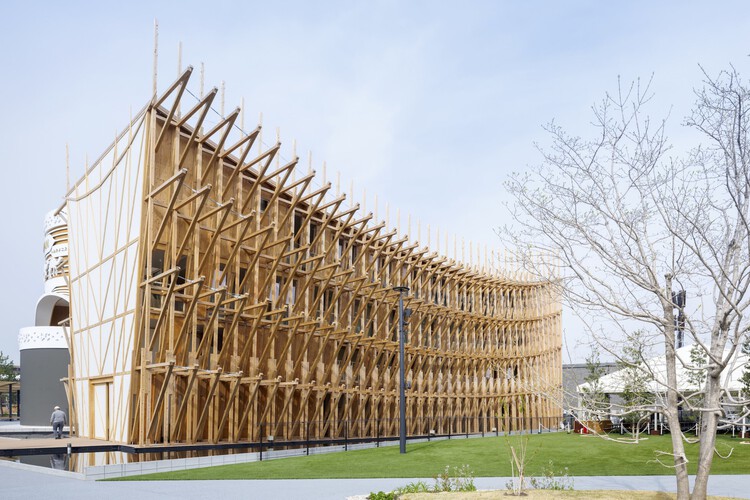
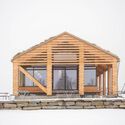
The phenomenon known in biology as convergent evolution describes how distant species can develop similar structures when confronted with comparable challenges. Dolphins and ichthyosaurs, for example, are separated by millions of years of evolutionary history, yet both evolved nearly identical hydrodynamic bodies. Architecture has its own parallels: A-frame structures emerged independently in both the European Alps and Japan, even without direct cultural exchange, as spontaneous responses to snow, wind, and material scarcity.
https://www.archdaily.com/1037027/converging-trends-in-2025-architecture-circularity-biomaterials-and-carbon-conscious-designArchDaily Team
Bolete Lounge BIO®. Image Courtesy of Andreu World
What is the current global outlook on the recyclability of materials used in architecture? To what extent are contemporary societies truly committed to reducing environmental impact? In the effort to live in balance with nature, replacing fossil fuels with renewable energy sources is one of the key strategies for cutting greenhouse gas emissions and addressing global warming. Looking to nature for inspiration as a way to protect it means creating designs that incorporate sustainability, circularity, and recyclability from the very first sketch. From building systems to surface finishes, the use of biomaterials in architecture reflects a mindset rooted in long-term responsibility for a material's full life cycle.
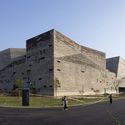
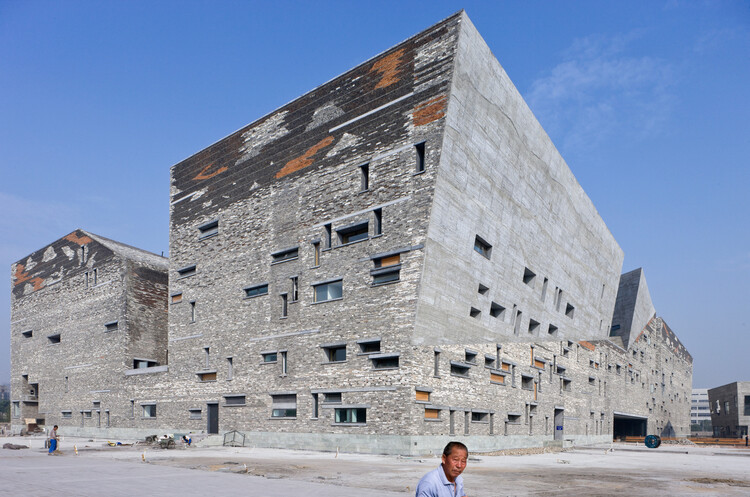
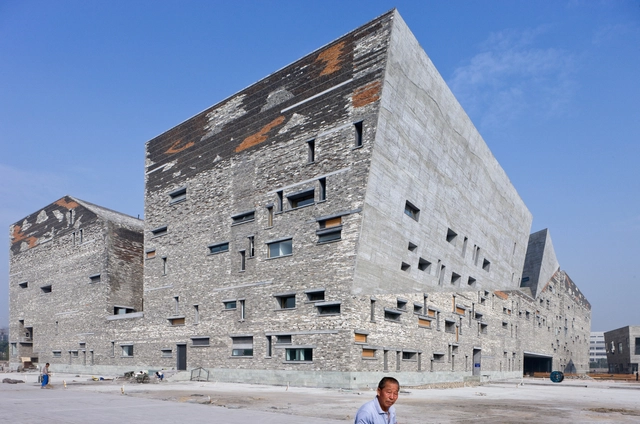
Amateur Architecture Studio, Ningbo History Museum, 2008. Image Courtesy of Louisiana
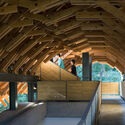
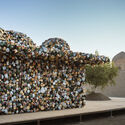
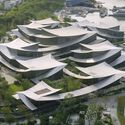
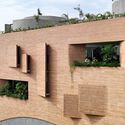
Born in 1963 in Urumqi, Xinjiang, China, architect Wang Shu has dedicated his career to defining a contemporary approach to building that is deeply rooted in China's cultural and material history. In 2012, he was recognized with the Pritzker Prize, becoming the first Chinese citizen to receive the distinction. The award jury acknowledged his body of work "for the exceptional nature and quality of his executed work, and also for his ongoing commitment to pursuing an uncompromising, responsible architecture arising from a sense of specific culture and place." In 2027, along with his wife Lu Wenyu, Wang Shu will be a curator for the Venice Architecture Biennale.
Liminal Air Space-Time by Shinji Ohmaki, Noor Riyadh 2025. Image Courtesy of Noor Riyadh
Noor Riyadh 2025 brought large-scale light installations to public sites across the Saudi Arabian capital, temporarily transforming transit hubs, historic districts, and significant landmarks into illuminated urban environments. From November 20 to December 6, 2025, Riyadh became a citywide gallery of light, motion, and shifting perception. The festival's fifth edition featured 60 artworks by 59 artists from 24 countries, including more than 35 new commissions, responding to the theme "In the Blink of an Eye." Through light as both medium and concept, the installations reinterpreted the capital's rapidly evolving architectural landscape and reflected how perception shifts in spaces shaped by heritage and ambitious urban development.
This past year marked a period of introspection for architecture. As 2025 unfolded, the discipline, confronted with evolving environmental and social realities, entered a broader turning point in how it understands its role and how users engage with it. Throughout the year, exhibitions shifted focus away from buildings as isolated objects toward a broader understanding of relationships between ecology, equity, everyday life, and collective imaginaries. Across institutions and cities, they operated less as showcases and more as discursive platforms: places where architecture was not only presented, but also imagined, questioned, and collectively redefined.
While exhibitions have long functioned as sites of discourse, politics, and community, this role became more explicit in 2025. As Carlo Ratti noted in an ArchDaily interview during the pre-opening of the Venice Architecture Biennale 2025, exhibitions today can "hybridize the way that people come together," an ambition that echoed across cities and institutions as exhibitions evolved into spaces for debate, experimentation, and collective reflection. Exhibitions are places where architects and designers meet, where conversations unfold openly with the public, and where ideas emerge through spontaneous exchanges among passersby. Exhibitions became spaces where architectural discourse extended beyond professional circles, opening conversations to broader publics through everyday encounters, shared experiences, and informal exchanges.
Creating living spaces in a world between on and off. Image Courtesy of GIRA
Across recent architectural discourse, interior design has been centered on how spaces shape psychological and atmospheric experience, and on what gives interior environments their emotional resonance. Attention has shifted toward small details rather than relying primarily on form or structure. Light, for instance, is not only a technical requirement but also an architectural material in its own right. It can structure space, animate surfaces, define textures, and shape atmosphere while influencing well-being. At the same time, the characteristics between minimalism and maximalism shape how atmospheres are perceived, prompting reflection on how approaches to simplicity or exuberance might influence mood. Rather than existing as opposing aesthetics, these tendencies explore how interiors interact with mental states, reflect personal identity, and respond to the subtle shifts in the way people inhabit and experience space.
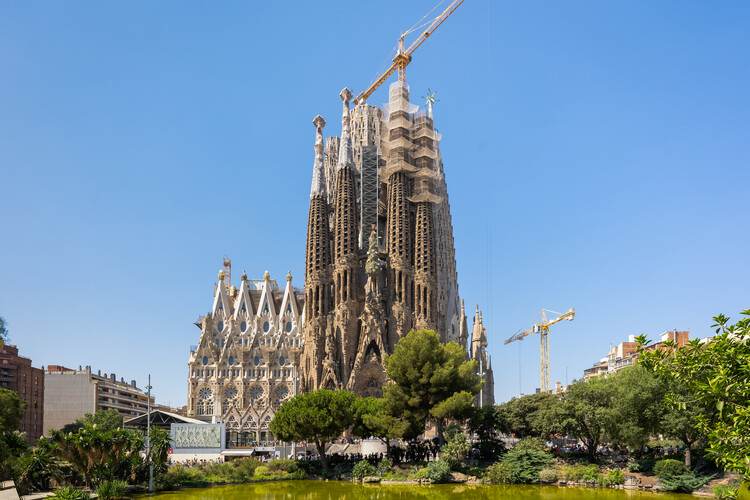
La Sagrada Familia by Antoni Gaudi. Image by Maksim Sokolov, via Wikimedia Commons, License CC BY-SA 4.0
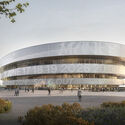
As 2025 concludes, we look ahead to 2026, a year scheduled to deliver a diverse range of significant architectural projects across the world. The year is particularly notable for the completion of new infrastructure and cultural buildings, including long-term projects. Europe will be in the spotlight of the new year with the Milano Cortina 2026 Winter Olympics. This event will feature projects such as the Olympic Village by SOM and the Winter Olympics Arena by David Chipperfield Architects. Also in Milan, BIG is set to complete construction of the City Wave project as part of a new business district in the city. At the same time, after more than 140 years of its establishment, the architects around the world will also be watching for the long-awaited completion of Antoni Gaudí's La Sagrada Familia in Barcelona, announced for 2026.
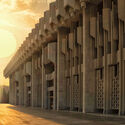
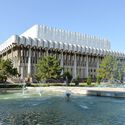
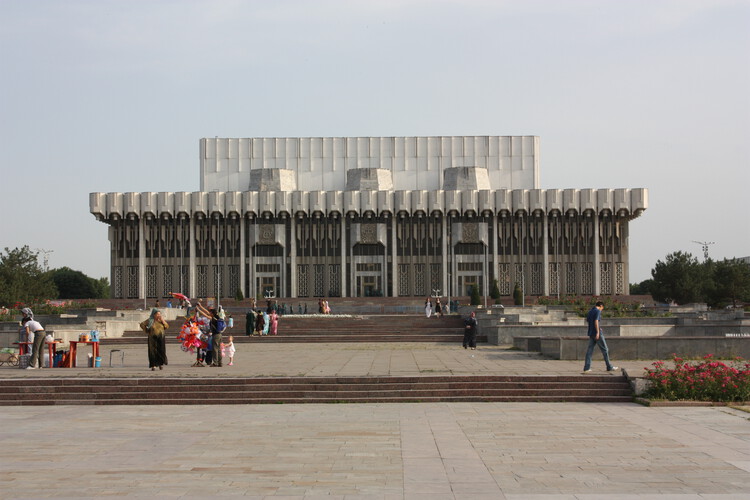
Tashkent, the capital of Uzbekistan and one of the oldest cities in Central Asia, has long been shaped by a hybrid culture. Located at a strategic point along the Silk Road, the city developed an architectural tradition defined by inner courtyards, domes, decorative ceramics, and Islamic geometric patterns. The annexation by the Russian Empire in the 19th century introduced administrative buildings, orthogonal squares, and straight avenues, creating a dual urban fabric — between the “old” Eastern city and the “new” European one — in which contrasts and overlaps became the norm.
During the Soviet period, when Tashkent became the capital of the Uzbek Soviet Socialist Republic and received intense migration from across the union, the city was transformed into a modernist showcase. The coexistence between Islamic heritage and the ideology of socialist progress found a new inflection point with the 1966 earthquake, whose destruction triggered a large-scale reconstruction effort involving architects from across the USSR. Massive housing complexes, cultural institutions, and monumental buildings emerged, reinterpreting local motifs through ideological and technological language. It was in this context that the Palace of Peoples’ Friendship took shape.

























.jpg?1478078308 "Hangzhou Xiangshan Campus. Image © Iwan Baan")