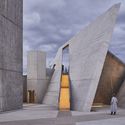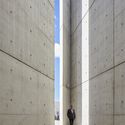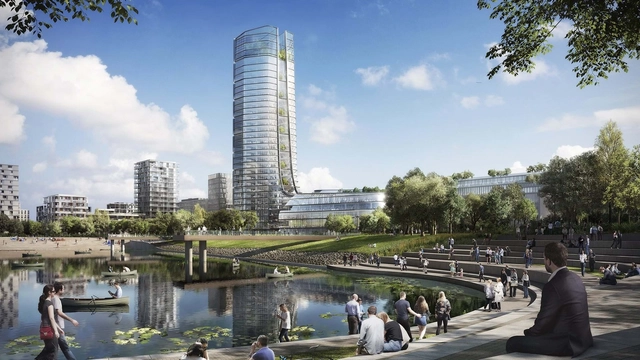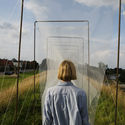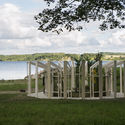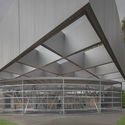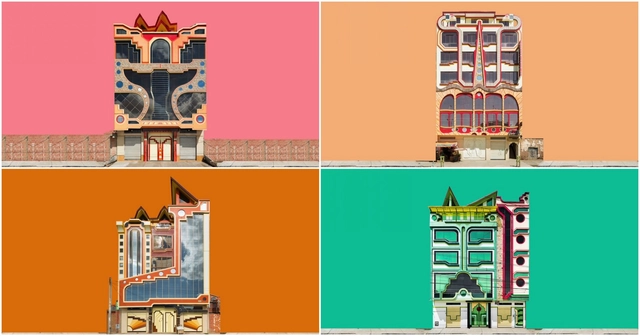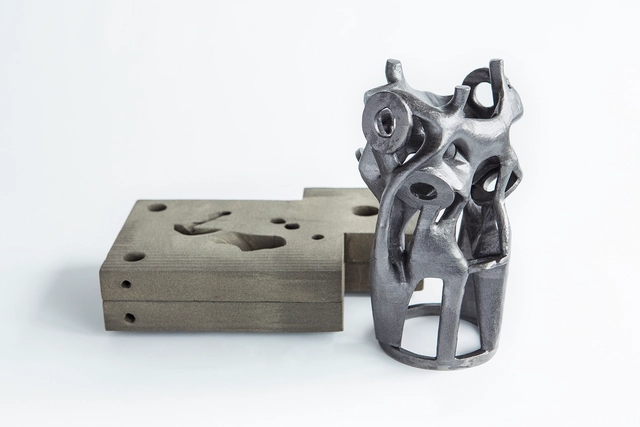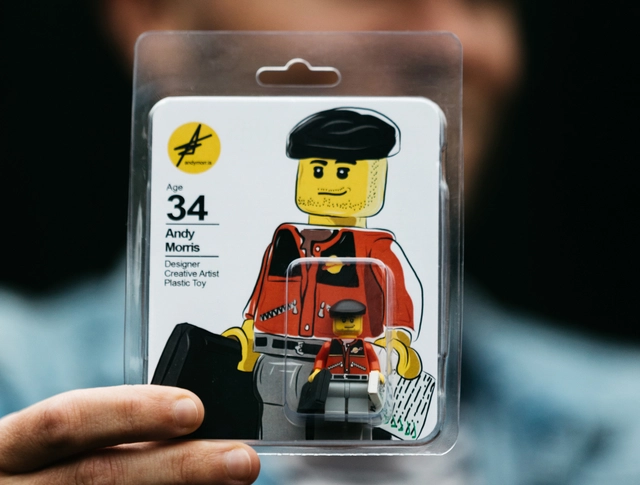
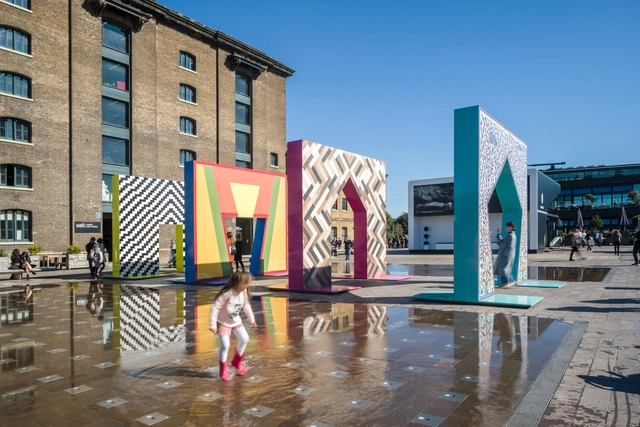
Atelier YokYok, in partnership with Sammode, created a temporary geometric forest called “TREEDOM” for the 2015 Sziget Festival in Budapest. Constructed in nine days before the festival, and then dismounted in two days afterwards, the installation was composed of 37 wood poles, and over 200 boards, with the highest point extending 10 meters.
Building projects are inherently complex: as projects progress, architects are joined by contractors, engineers, and myriad consultants. Architects, according to a recent report by RIBA, are considered the "spiritual leaders" of a building project. Cemented in this perception by a monopoly on design, architects continue to sit precariously atop project hierarchies despite a shifting landscape in building production. This begs the question: how can architects leverage this spiritual responsibility to translate into the best results for clients?
In their latest report Client & Architect: Developing the Essential Relationship, RIBA delves into the nuanced problem of connecting architecture to its owners, emphasizing the importance of a strong, functional and mutually educational relationship. Currently, architects have a tremendous opportunity to learn, improve and capitalize on understanding of clients, regardless of firm size, portfolio and established skills.
Read on to discover RIBA's findings from two years of client analysis
The Finnish Association of Architects SAFA has announced the five projects shortlisted for the 2015 Finlandia Prize for Architecture. After hosting the competition successfully for the first time last year, the Association has returned to “increase public awareness of high quality Finnish architecture and [to highlight] its benefits for our well-being.”
Similarly to last year, while the five shortlisted projects were selected by a jury of architects, the final winning design will be chosen by a non-architect. This year Kaija Saariaho, an internationally renowned Finnish composer, will select the 2015 winner. “I’ve always taken a keen interest in architecture and of course concert halls," said Saariaho. "When visiting the buildings now proposed for the prize, I gave much thought to how deeply architecture affects our lives on a daily basis."
Learn more about the five shortlisted projects, after the break.
English Heritage has announced the six teams shortlisted in the two-stage competition to design a new bridge at Tintagel Castle. Situated on the Island of Tintagel on the Northern coast of Cornwall, the new bridge will strengthen the medieval castle's connection to the mainland, spanning 72 meters at a height 28 meters taller than the existing pedestrian footbridge.
When the competition was announced in June, the organizers Malcolm Reading explained that teams should "envisage an elegant, even structurally daring, concept which is beautiful in its own right and sensitively-balanced with the landscape and exceptional surroundings." The six winners were chosen unanimously from a list of 137 candidates which Chair of the Jury Graham Morrison said reflect "a mix of great talent and experience." Read on for the six teams to go through to the next stage of the contest.
Photograph from 2012 showing the glare from the Museum Tower
Back in 2012, a dispute arose between the Renzo Piano-designed Nasher Sculpture Center in Dallas and the adjacent Museum Tower, a 42-story residential building which was accused of reflecting so much glare through the museum's glass roof that it risked damaging the art inside, and made the museum's garden areas so warm they were unusable. Last week, that 3-year long dispute appears to have been brought to a close - with nothing happening, as the owners of the Museum Tower, the Dallas Police and Fire Pension System (DPFP), voted nearly unanimously that it is no longer their responsibility to find a solution.
Michael Maltzan Architecture has been selected to renovate the outdoor space at the Segerstrom Center for the Arts in Orange County, California to create the Julianne and George Argyros Plaza. In hopes of transforming the site into more of a “dynamic town square,” the new plaza design will be centered on a multipurpose outdoor stage, which will act as a “site for visitor engagement.”
Standing 3 meters (10 feet) tall, Benjamin Dillenburger and Michael Hansmeyer's Arabesque Wall is an object of intimidating intricacy. 3D printed over the course of four days from a 50 Gigabyte file, the piece is a demonstration of the incredible forms achievable with algorithmic design and 3D printing - however with its overwhelming complexity it is also a test of human perception.
"Architecture should surprise, excite, and irritate," explain Dillenburger and Hansmeyer. "As both an intellectual and a phenomenological endeavor, it should address not only the mind, but all the senses - viscerally. It must be judged by the experiences it generates."
The Royal Institute of British Architect (RIBA)'s Future Trends Survey results for July 2015 present a note of caution for architecture practices with a fall in both workload and staffing forecasts. However, optimism remains as staffing levels are higher than a year ago. Despite June’s record-high forecast, July 2015 saw a downturn in the RIBA Future Trends Workload Index from +44 to +22. Even so, practices reported an overall increase in workload at an annual rate of 8%, and staffing levels 6% higher than in 2014.
From the 2,000-year-old Temple of Baalshamin to the city of Nimrud, ISIS has destroyed countless monuments and relics. Now archaeologists from Harvard and Oxford have teamed up with UNESCO World Heritage and the epigraphical database project at New York University’s Institute for the Study of the Ancient World to launch the Million Image Database Project. Spearheaded by Oxford's Institute for Digital Archaeology (IDA), the campaign plans to "flood" war-torn regions with thousands of 3D cameras so people can scan and (digitally) preserve their region's historical architecture and artifacts.
As the global economy grows uncertain, homeowners are getting more creative in order to afford essential residential spaces. The tiny house movement has gained a foothold worldwide, encouraging the construction of homes as small as 150 square feet (14 square meters), with many smaller housing models cropping up on a daily basis. Home to residents of all ages, tiny houses have evolved far beyond the cramped quarters of Airstream trailers of decades past and, though they were once considered an architectural farce, tiny houses are becoming an increasingly popular solution to weather the economic storm and increasingly relevant to the field of architecture.
With their increasing respectability - and their popularity increasingly exposing the drawbacks of other housing types - we take a look at some lessons that while key to the tiny house movement, are still applicable in the larger architectural arena. Read on to find out what tiny houses can contribute to the race for better space.
Following the ground breaking last December, construction has begun on Zaha Hadid’sOne Thousand Museum in Miami, with 9,500 cubic yards of concrete already poured. Designed in association with the local architect of record, O’Donnell Dannwolf Partners Architects, the residential skyscraper will rise 62 stories, comprising half- and full-floor residences, duplex townhomes, and a single duplex penthouse, overlooking Museum Park and Biscayne Bay at 1000 Biscayne Boulevard. As a burgeoning area, Museum Park—once called Bicentennial Park—is home to the Peréz Art Museum Miami and will soon be home to the Frost Museum of Science.
In the latest of a series of technological developments which are expanding the capabilities of 3D Printing, researchers at MIT's Computer Science and Artificial Intelligence Laboratory (CSAIL) have developed a 3D printer that is capable of handling up to 10 materials simultaneously, and uses a process called "machine vision" to dramatically increase the variety of objects which the printer can produce.
The National Council of Architectural Registration Boards (NCARB) has named the first 13 accredited architectural schools to implement the "Integrated Path Initiative." Each selected school has proposed a pre-graduation curriculum that would provide students with the necessary mix of education, work experience, and opportunities to complete the Architect Registration Examinations (ARE) to achieve licensure before graduation. The initiative was spearheaded by NCARB to shorten the time it takes for US architects to get licensed.
The 13 accepted schools represent "a wide range B.Arch and M.Arch programs in nine jurisdictions, including both public and private institutions," says NCARB. These schools are:
"I believe that for architecture to be emotionally relevant to people, that there has to be a connection, [that] there has to be a relationship, that architecture cannot be autonomous. If it's not connected to the lives of people, the histories of people, I think there's a problem." In a recent interview with Aljazeera's Lisa Fletcher, British architect David Adjaye discusses his recent work and how the new Smithsonian Museum of African American History will serve as a "negotiator" on racial tension in the US. Read the full interview, here.
Alejandro Aravena. Image Courtesy of la Biennale di Venezia
The Venice Biennale has announced the theme selected by 2016 Biennale director Alejandro Aravena. Titled "Reporting From the Front," next year's Biennale will be an investigation into the role of architects in the battle to improve the living conditions for people all over the world. The theme aims to focus on architecture which works within the constraints presented by a lack of resources, and those designs which subvert the status quo to produce architecture for the common good - no matter how small the success.
https://www.archdaily.com/772776/venice-biennale-announces-theme-for-2016-event-reporting-from-the-frontAD Editorial Team
Architect Christian de Portzamparc has completed construction on the new House of Dior in Seoul, South Korea. The building, which houses designs by Christian Dior, is based off of watercolor paintings and the concept of experimentation with light and shadows.
Texas and clean energy are hardly considered synonymous. However, as uncovered by a recent article in the Wall Street Journal, Texas has emerged as an unexpected leader in solar power, with $1 billion now being invested in solar energy infrastructure with an aim to produce up to 12,500 megawatts of solar electricity by 2029. To mark this important moment in US energy production, the New Jersey Institute of Technology has produced this infographic revealing the benefits (and drawbacks) of solar energy for the average American consumer, including everything from the history of solar energy to incentives available for solar systems nationwide. Read on to view the infographic in full.
With the cost of space rising in city centres everywhere, YO! Home by Simon Woodroffe provides a possible solution – a transformable, modular living space. Acting as a reinvention of the traditional studio apartment, YO! Home is a 40 square metre living space with movable features to create the impression of a much bigger home. Read more about this London apartment project after the break.