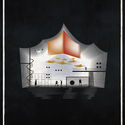
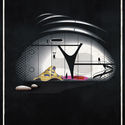
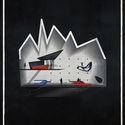
In this latest set of illustrations from Federico Babina, the artist envisions set designs in the styles of 27 of history's greatest architects, using signature elements from some of their most notable works to "stage [architecture] as if it were an architectural play."
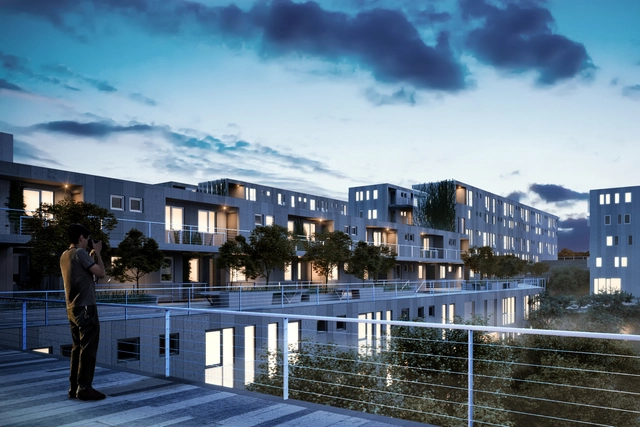
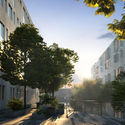
Somatic Collaborative has unveiled its design for Neapolitan Housing and Co-working Complex, a new urban block typology located in Gravatai, Brazil, that contrasts the traditional landscape of repetitive housing types that dominate the urban peripheries of Latin American cities. Like a Neapolitan ice cream, the project’s buildings will be layered, housing a variety of residential units and co-working space.
In a drastic shift from typical low-rise residential enclaves, gates, and walled compounds, the project will create high-density urban blocks “that engage the street as a source of urban life” through porous borders that encourage new city centralities. A semi-porous perimeter block with retail and commercial space will allow the project to better interact with its surroundings while designating the distinction between public, semipublic, and private space through the buildings’ masses.
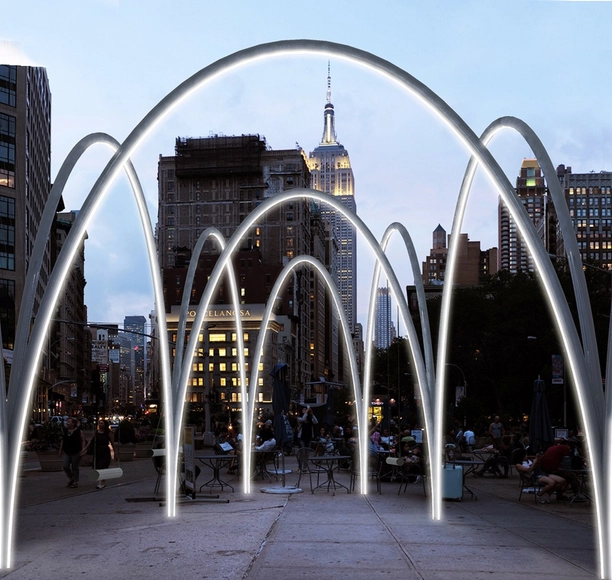
The winning proposal, titled “Flatiron Sky-Line,” consists of a series of 10 large contiguous arches, constructed out of white powder-coated steel tubes housing LED lights, from which an array of hammocks will be suspended to allow visitors to rest and take in the surrounding landmarks such as the Met Life Tower and Empire State Building.
Videos
BRIT statue concept sketch by Zaha Hadid Design. Image Courtesy of Zaha Hadid Architects
The BRIT Awards has announced that the statuettes that will be given during their 2017 awards ceremony have been designed by the late Zaha Hadid.
Hadid had accepted the project in January of this year and developed concepts for the design before her sudden passing in March of this year. The work has since been led by Zaha Hadid Design Director Maha Kutay and the BRIT Awards Niamh Byrne.
“Zaha was truly excited to be doing this,” recalled Kutay. “Her vision was, being an architect, to focus our efforts more on the 3D element, as the statue had previously been used as a canvas for artists to paint on for the last few years. Our design expresses Zaha’s unwavering belief in progress and optimism for the future and a break from the norm. The biggest challenge was to create something different within certain guidelines, yet achieving a result recognisable to the public. You have to respect the existing to create something new.”
Elon Musk has revealed his company Tesla’s latest world-changing innovation: a solar roof system so fully integrated into a home’s architecture as to be indistinguishable from a traditional roof.
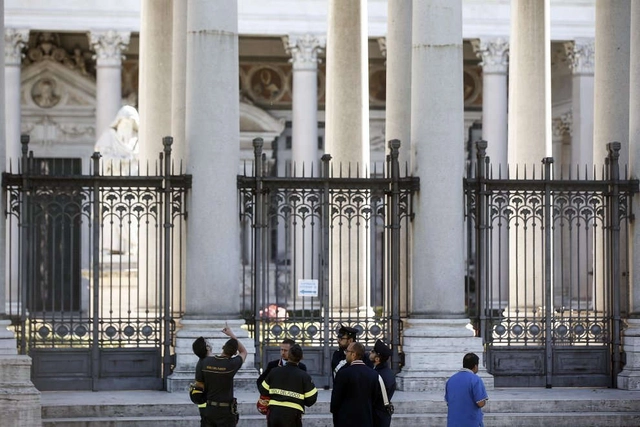
Inspections underway in Rome. Image via La Repubblica (Roma)
Following an earthquake measuring 6.6 on the Richter Scale that struck central Italy this morning at 7:40 a.m. local time—the fourth to hit this part of the country in three months—a number of structures have collapsed entirely or been severely damaged. While no deaths have been reported at this time, the BBC suggests that twenty people have been injured.
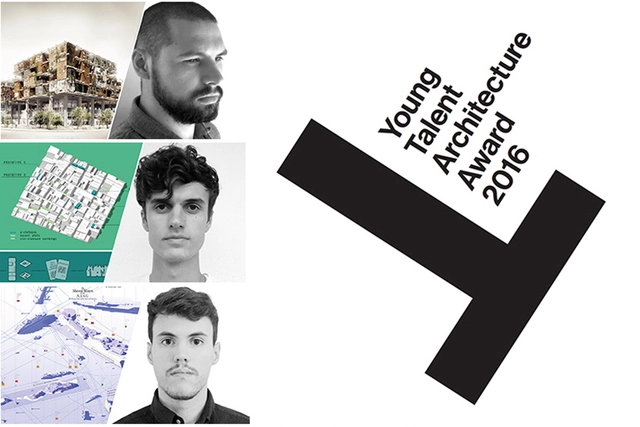
The Fundació Mies van der Rohe has announced the three winners of the inaugural Young Talent Architecture Award (YTAA) 2016. Established this year to “support the talent of recently graduated Architects, Urban Planners and Landscape Architects who will be responsible for transforming our environment in the future,” 9 finalists were selected from a shortlist of 30 projects, which was then narrowed down to 3 winners.
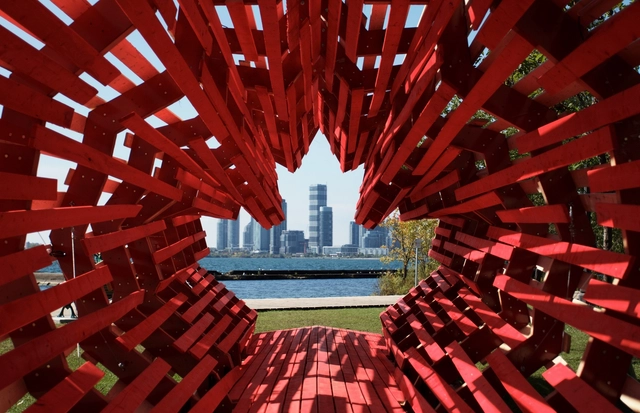
In memorial of the 1956 Hungarian Revolution, which resulted in the emigration of over 37,000 Hungarians to Canada, architectural studio Hello Wood has created Tunnel Through Time, a contemporary interpretation of the historic event that remembers the heroes of the revolution and especially honoring the Canadian people who welcomed Hungarian refugees.
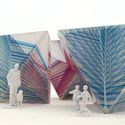
Composed of 37,565 pieces—one for each Hungarian refugee accepted into Canada—the tunnel begins with a Hungarian flag with a hole in the middle, representing how protesters cut the communist coat of arms out of the Hungarian flag during the revolution. The tunnel then morphs—as a representation of the journey of the refugees—until it reaches an exit, which is shaped like the national symbol of Canada, the maple leaf.
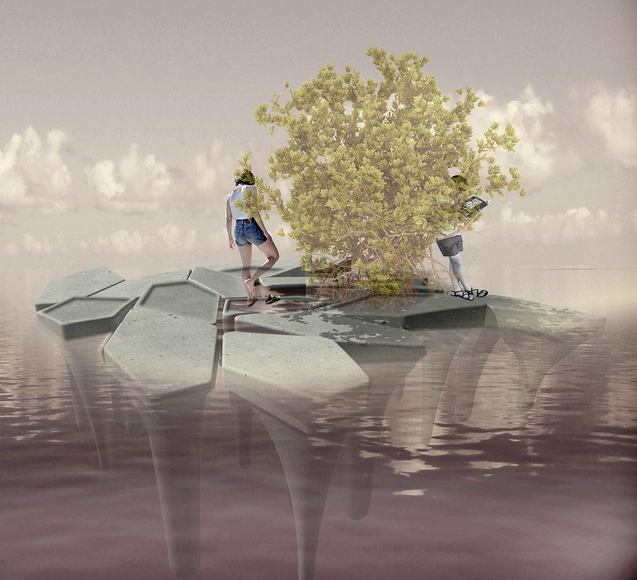
Mangroves are vital for stabilizing shorelines, but their recent depletion presents impending doom for coastal habitats.
Aptum Architecture and CEMEX Research Group might have a solution. Their collaborative project, Rhizolith Island (Isla Rhizolith), is a prototype that explores the potential for floating concrete structures to revitalize deteriorating shorelines. The structure was just installed in Cartagena, Columbia as part of the RC 2016 (Reunion del Concreto), an international Expo and Academic Conference on Concrete.
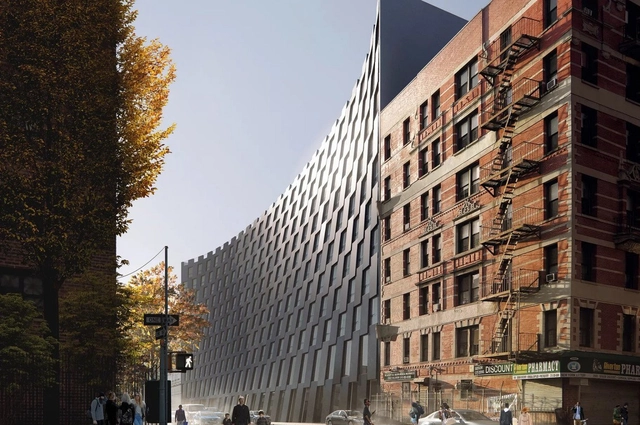
Final renderings of BIG’s latest New York City project, 149 East 125th Street in East Harlem, have been revealed at the project’s groundbreaking ceremony. In contrast to original images showing a bright red facade, the undulating, rotating building will instead feature a gray exterior that Bjarke Ingels has referred to as “inspired by an elephant’s skin.”
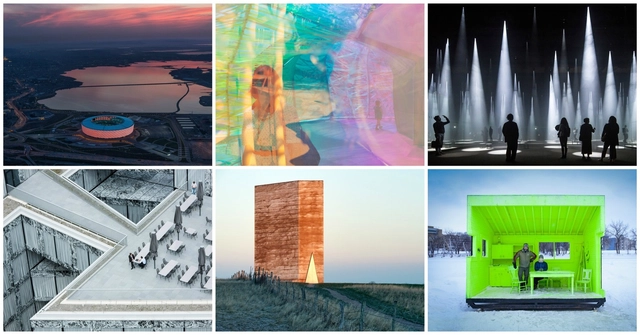
Arcaid has shortlisted 20 of the year’s best architectural photographs in the running for the 2016 Arcaid Images Architectural Photography Awards. The annual award presents prizes in four categories - Exteriors, Interiors, Sense of Place, and Building in Use - and judged by an esteemed panel on their atmospheric quality, composition, use of scale and more.
This year, judges for the award include Emily Booth, executive editor of The Architectural Review; artist and Sto Werkstatt curator Amy Croft; Katy Harris, director of communications at Foster + Partners; architect Kai-Uwe Bergmann of BIG and photographers Fernando Guerra and Ulrich Müller.
The photographs will be showcased at World Architecture Festival from November 16-18 in Berlin, Germany, where the overall winner will be announced. The shortlist of 20 images is as follows:
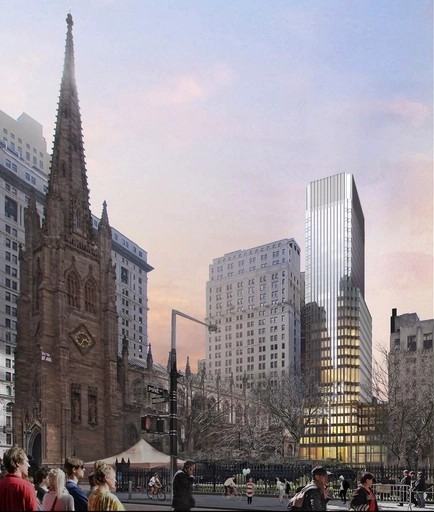
After two years of intensive planning, Trinity ChurchWall Street revealed the design for its new building at 74 Trinity Place, in the Financial District of New York City. New York-based firm Pelli Clarke Pelli Architects designed the building to serve as both a ministry and community center for the church. Using open public spaces and multipurpose rooms, the structure will connect neighbors, workers, and families — reflecting the church’s aim for community engagement.
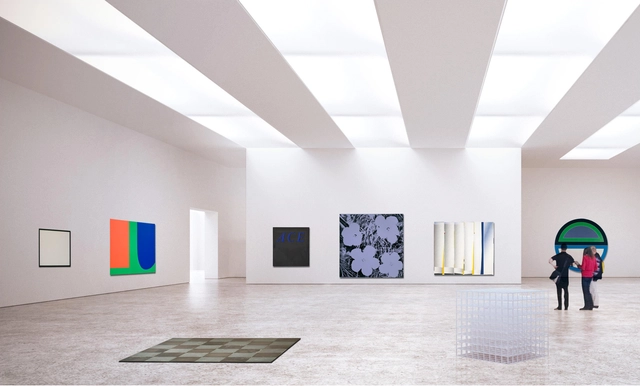
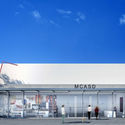
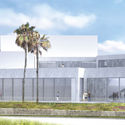
The Museum of Contemporary Art San Diego (MCASD) first opened in 1941 in the oceanfront La Jolla home of philanthropist Ellen Browning Scripps. In the half century that followed, the museum saw three distinct expansions; now, as it turns 75, MCASD anticipates its latest addition, a flexible new multipurpose design by Selldorf Architects that will quadruple the current gallery space.
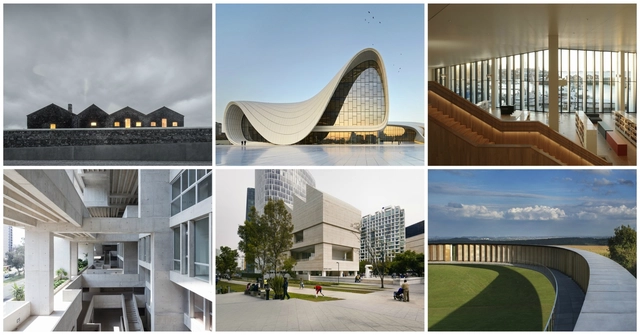
The Royal Institute of British Architects (RIBA) has announced the shortlist of six finalist projects in the running for the inaugural RIBA International Prize. The first RIBA Award open to any qualified architect in the world, the International Prize seeks to name the world’s “most significant and inspirational” building. Criteria for consideration include the demonstration of “visionary, innovative thinking and excellence of execution, whilst making a distinct contribution to its users and to its physical context.”
The six finalists were named from a longlist of 30 buildings, from which a further selection of 21 projects have been recognized by the jury for the RIBA Award for International Excellence. The jury has also named the winner of the RIBA International Emerging Architect prize recognizing “the achievement of architects in the earlier stages of their career who are working on global projects.”
"Our panel of jurors have been particularly impressed by the way in which each building reacts to, resolves and assimilates into the varying geographies and contexts - from dense urban cities to a small town in the Arctic Circle," said RIBA President Jane Duncan on the naming of the finalists. "Each project resolves the complex demands of its context with ingenuity, exceptional detail and finishing and a sensitivity to the needs of the users and communities which will inhabit these spaces."
Apple has unveiled a new version of their professional-level portable computer, the MacBook Pro, making steps towards defining the laptop as a tool for those in the creative industries. With a full 500 days since these devices were last refreshed by the company, the standout feature of this latest incarnation is a new, application-specific Touch Bar – a touch-sensitive display band at the top of the keyboard which becomes an “intuitive” part of the user interface, which also includes a Touch ID fingerprint sensor. Oh – and there’s still a headphone jack!
https://www.archdaily.com/798287/apple-releases-macbook-pro-with-integrated-touch-bar-that-works-seamlessly-with-photoshopAD Editorial Team
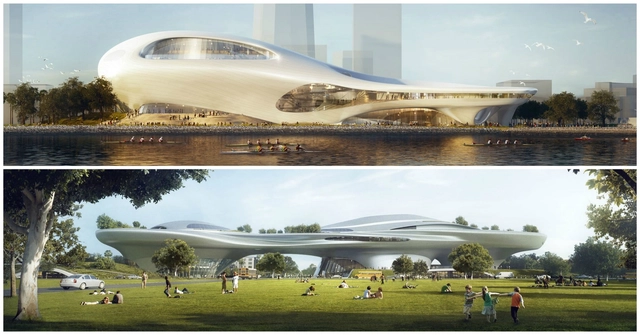
In the latest episode of what has become a dramatic narrative worthy of its own space opera, The Lucas Museum of Narrative Art has revealed plans for their two newest hopes: prospective museum designs, one in Los Angeles and one in San Francisco, that could serve as the new home of filmmaker George Lucas’ eclectic personal collection of artworks, costumes and artifacts.
After their failed proposal for a mountain-shaped museum along the Chicago Waterfront, the museum has again tapped architect Ma Yansong and his firm, MAD Architects, to design both proposals for the California sites, the first along the water on Treasure Island in San Francisco Bay, and the second for a site in Exposition Park in Los Angeles, adjacent to the city’s Natural History Museum and the Coliseum.
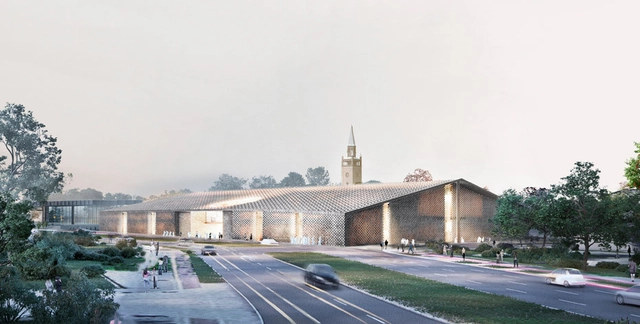
Three winning firms have been selected in the competition for the Museum of the 20th Century to be located in the heart of the Berlin Cultural Forum in Berlin, Germany. The 200 million euro building and site plan will serve as the new home of multiple internationally significant art collections, including the National Gallery’s Marx and Pietzsch collections, sections of the Marzona collection, and a collection of works from the Kupferstichkabinett (Museum of Prints and Drawings).
In 2015, the competition was launched, aimed at finding a design scheme that would encompass the site layout, architecture and landscaping around the museum.
Facing stiff competition from a list of 42 renowned finalists, Herzog & de Meuron together with Vogt Landscape Architects has emerged victorious for their brick, warehouse-inspired design. Runner up prizes were given to Lundgaard & Tranberg Architects with SCHØNHERR A / S, and Bruno Fioretti Marquez with Capatti Staubach Landscape Architects, while four jury recognitions were awarded to proposals from OMA, SANAA, Staab Architekten, and Aires Mateus e Associados.










.jpg?1477936158&format=webp&width=640&height=580)


.jpg?1477928406 "\"Textured\" Style. Image © Tesla. Via the Verge")










.jpg?1477685456 "© Blumenfeld Development Group. Via Curbed NY")