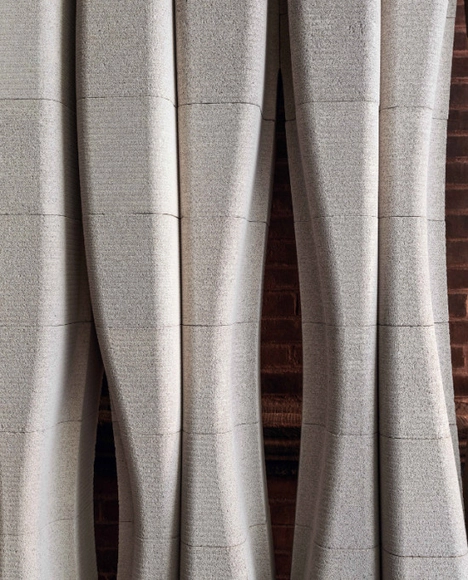


The American Institute of Architecture (AIA) has indicated a “heightened level of demand for design services” throughout the US. As the latest Architecture Billings Index (ABI) reports, all regions and project sectors have shown positive conditions and the September score was 55.2, up from a mark of 53.0 in August. The new projects inquiry index was 64.8, following a mark of 62.6 the previous month.
“Strong demand for apartment buildings and condominiums has been one of the main drivers in helping to keep the design and construction market afloat in recent years,” said AIA Chief Economist Kermit Baker, Hon. AIA, PhD. “There continues to be a healthy market for those types of design projects, but the recently resurgent Institutional sector is leading to broader growth for the entire construction industry.”
A breakdown of regional highlights, after the break.
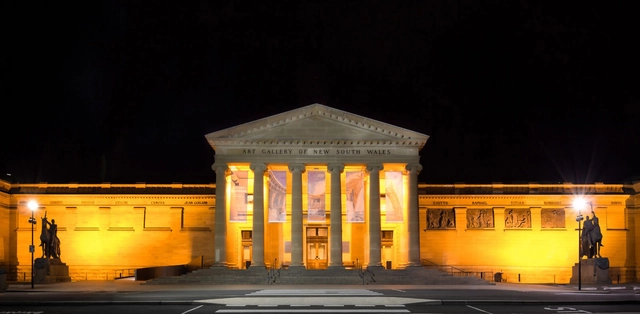
Twelve local and international practices have been invited to participate in a two-stage competition for the “Sydney Modern Project,” a $450 million expansion of the Art Gallery of New South Wales (NSW). Five practices from the shortlist, which also includes SANAA, Tod Williams and Billie Tsien, and Herzog & de Meuron, will move on to produce conceptual designs in the competition’s final round.
“The Sydney Modern vision for expansion and transformation is much more than just a building project,” stated gallery director Dr. Michael Brand. “Through this invited competition the Gallery is seeking ideas that will create an architecturally ambitious, intelligent, sensitive, sustainable and highly functional design. Our site overlooking Sydney Harbor will inspire each of the invited architectural practices, all of whom have extraordinary design skills.”
The invited architectural practices are…
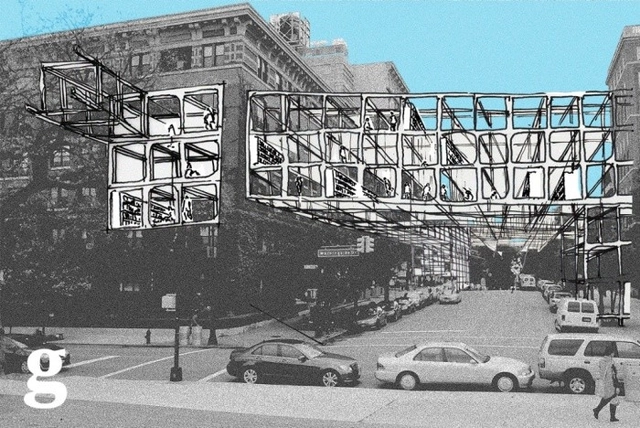
Barack Obama still has two years left in his presidency, but speculative planning for his Presidential Library has already begun for each of the four possible final locations. Just as the election of President Obama broke down historical precedents for who could hold office, could the design of his dedication library represent an architectural shift from previous libraries? This article by Lilah Raptopoulos from The Guardian presents four unofficial visions for the design of the new library, each of them from award-winning architects. Their bold design sketches expand our perceptions of what a presidential library could be, and explore new ways in which these libraries could serve their communities. See all four designs and read the full article from The Guardian entitled, “Obama's presidential library: four radical visions of the future from top architects.”

Combo Competitions' latest ideas challenge, entitled Hello Nature!, centres on a site located in northern Sweden at the foot of a mountain (Omneberget), sat within an area called the High Coast (Höga Kusten) - which is also a UNESCO World Heritage Site. This competition is looking for "structures that celebrate nature", which also involve elements of "both education and recreation, or - if you prefer - business and pleasure." The wider question the competition poses is whether or not architecture can encourage involvement with nature. Previous Combo Competitions have included the London Cinema Challenge and Faith! A Place of Worship in London, both of which attracted a number of high quality proposals.
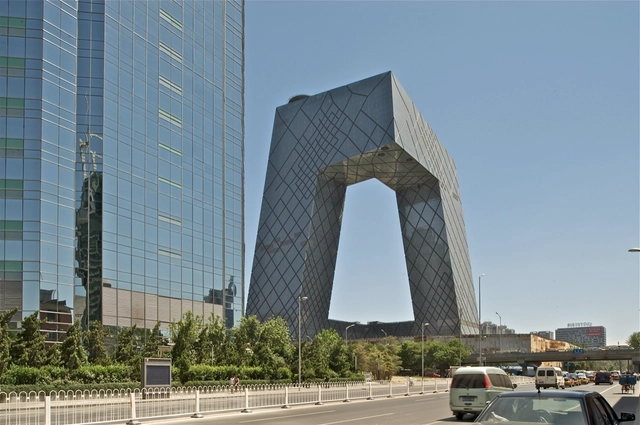
The President of the People's Republic of China, Xi Jinping, has reportedly called for an end to the "weird buildings" being built in China, and particularly in the nation's capital, Beijing. In a two hour speech at a literary symposium in Beijing last week, Mr Xi expressed his views that art should serve the people and be morally inspiring, identifying architectural projects such as OMA's CCTV Headquarters as the kind of building that should no longer be constructed in Beijing.
With China's construction boom being one of the most talked about features of today's architecture scene - and many a Western practice relying on their extravagant projects to prop up their studios - the Chinese leader's comments have the potential to affect the landscape of architectural practice worldwide. But what is behind these sentiments? Read on after the break to find out.
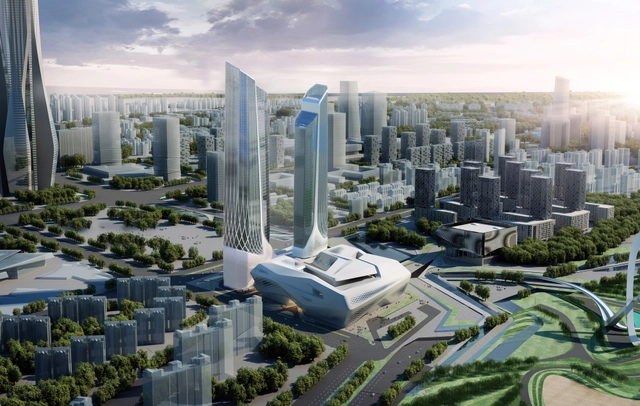
Zaha Hadid and Norman Foster have been tapped to design two luxury hotels for the Jumeirah Group's newest properties in China: Jumeirah Wuhan and Jumeirah Nanjing. Both properties will be adjacent to existing business districts and will provide luxury suites, specialty restaurants, executive club lounges, business centers, spas and more.
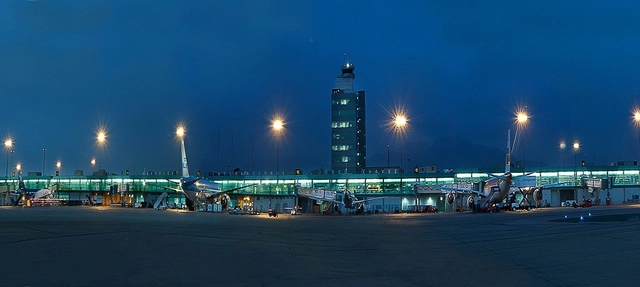
Grimshaw has landed a $950 million expansion project for the Jorge Chávez International Airport in Lima, Peru. As reported by the Architect’s Journal, Grimshaw will work with ARCADIS, CH2MHill and Ramboll to design a seven million square meter scheme that will include a new air traffic control tower and second terminal for the international airport. Designs are set to be revealed in 2015.
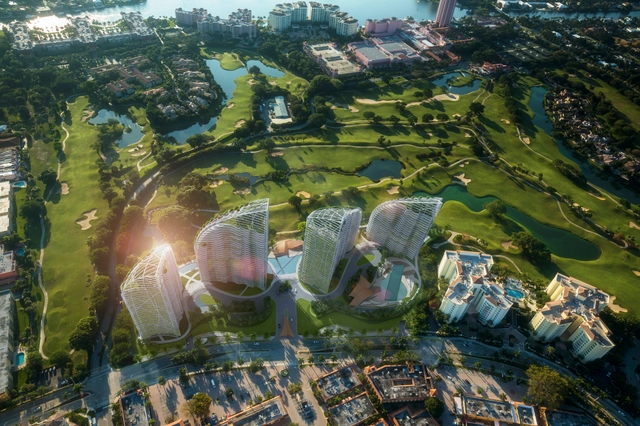
Daniel Libeskind has teamed up with locally-based GS4 Studios to propose a four-tower, luxury condominium project for downtown Boca Raton, Florida. North of Miami, the “Mizner on the Green” development will add 500 residential units and a two-acre public park directly adjacent to the Boca Raton Resort and Club golf course.

The Dutch Minister of Education, Culture and Science Jet Bussemaker has awarded architect Donna van Milligen Bielke the €40,000 Prix de Rome Architecture 2014. A 2012 graduate from the Amsterdam Academy of Architecture, Van Milligen Bielke won the prize for her “radical and poetic intervention” - Cabinet of Curiosities - for the Hoogstraat in Rotterdam.
The Prix de Rome is the oldest and largest prize in the Netherlands for architects and visual artists under 40, previously awarded to alumnus Ronald Rietveld in 2006.

How much do you love invoicing? I imagine, about as much as you love cleaning the mouldy food out of the back of your refrigerator. Or possibly your annual trip to the dentist. Or maybe as much as your neighbor's dog who likes to run around in circles yapping excitedly for seven straight hours.
On invoicing days, you will usually find me in the kitchen, condiments spread everywhere, frantically trying to discern exactly what that lump of amorphous green goo stuck at the bottom of the vegetable crisper once was.
As an architect, you’re writing invoices all the time, for huge amounts of money. You’ve probably had enough late-paying clients or miscalculated fees to understand how important it is to stay on top of invoicing and make sure you haven’t missed off a zero or moved a decimal point in the total. But pulling all the data together, giving the client the information they want, and making sure you’ve calculated it all correctly can take hours. Hours you’d rather spend on other tasks, like actually working in the studio.
With the touch of a button on your smartphone, your furniture begins to reconfigure while new walls glide into place. In a matter of seconds, your bedroom can become the kitchen, dining room, or simply an empty room thanks to the ingenuity of architecture students at Delft University of Technology's Hyperbody design team. The Pop up Interactive Apartment occupies a mere 50 square metres of multi-use space optimized for specific real-time use, allowing the occupant to choose a configuration based on current needs.
Enter the hyper-efficient world of Pop up Interactive Apartment after the break.
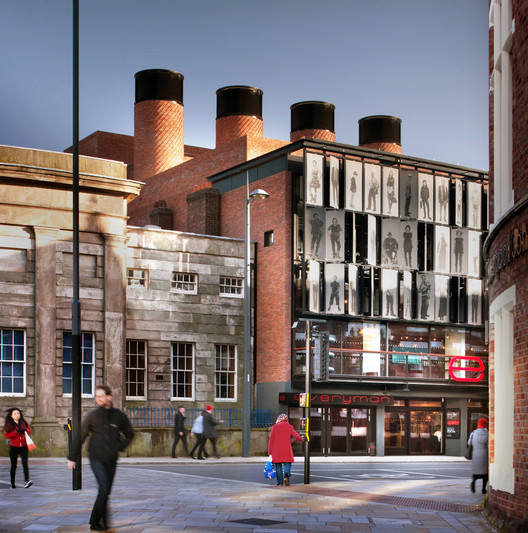
This year's RIBA Stirling Prize shortlist was seen by many as the strongest in years. The practice who emerged victorious, beating off competition from internationally recognised practices including Zaha Hadid Architects, Renzo Piano Building Workshop, Mecanoo, O’Donnell + Tuomey and Feilden Clegg Bradley, was Haworth Tompkins: but who exactly are they? Ellis Woodman pinned his hopes on the successful Everyman Theatre before the award was announced, uncovering the practice's rich history in designing performance spaces through a discussion with founding partner, Steve Tompkins. For Woodman, their theatre work "has left a legacy of spaces that count among the most beautiful and provocative created in Britain over the past twenty years."
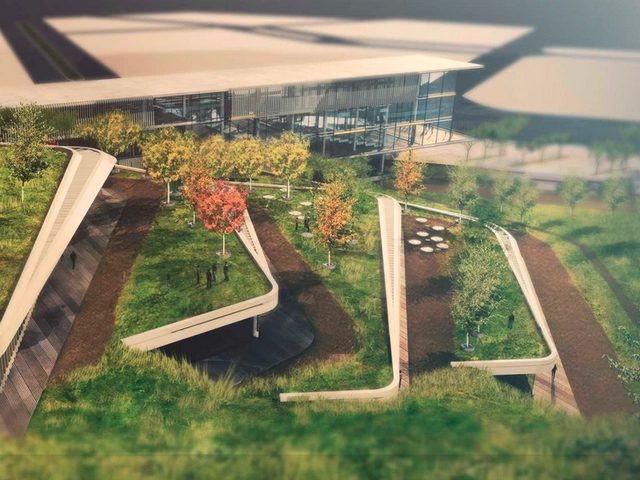
Teams from Turkey and Lebanon have received top honors in the 2014 regional Holcim Awards for Africa Middle East, an award which recognizes the most innovative and advanced sustainable construction designs. Among the top three winners is an “Eco-Park” sustainable research and technology center embedded within the terraced, industrial landscape of Ankara.
The 12 recognized projects will share over $300,000 in prize money, with the top three projects overall going on to be considered for the global Holcim Awards, to be selected in 2015.
The full list of Africa Middle East winners, after the break…

Judith Edelman, FAIA, an American architect and feminist who hoped to rid architecture of its “gentleman’s club” status, has passed away at 91. Starting her career in an era when hiring “girls” wasn’t the norm, Edelman’s work to elevate women in architecture has paved the way for many of today’s leading architects; She was the first woman ever elected to the executive committee of the AIA’s New York chapter and she helped co-found the Alliance of Women in Architecture in 1972. Edelman’s built work, also highly admired, ranged from affordable housing to schools and health clinics, mostly in the New York City area. You can read Edelman’s obituary here.
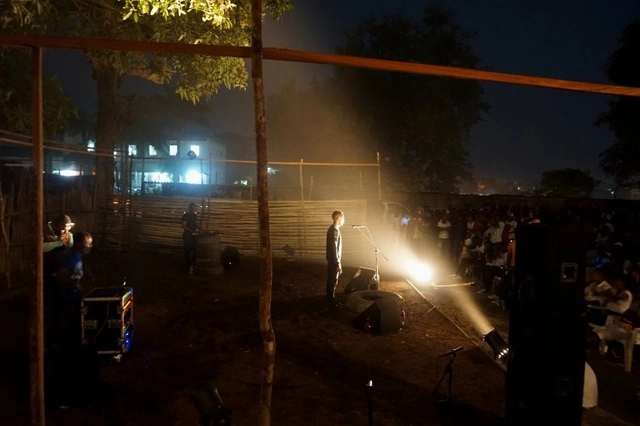
Studios Kabako, a Congolese performance and theater studio founded by Faustin Linyekula in 2001, has won the 2014 Curry Stone Design Prize, a $100,000 annual award that honors practitioners who use design to address critical social needs and strengthen communities. Studios Kabako was selected for establishing a series of cultural programs and urban interventions within the city of Kisangani as a way to help communities deal with the aftermath of civil war through dance and the arts. A video about Studios Kabako, after the break.

Rogers Partners (formally known as Rogers Marvel Architects) and PWP Landscape Architecture’s redesign for the National Mall’s neglected Constitution Gardens has received unanimous approval from the U.S. Commission of Fine Arts and The National Capital Planning Commission (NCPC). The 50-acre project, which was originally won through a competition in 2012, will now move forward with its first phase.
The Pärnu Municipal Government (in West-Estonia) announces an open architectural competition for the Rail Baltic Pärnu passenger terminal.
The aim of the architectural competition is to find the best comprehensive spatial solution for Pärnu’s Rail Baltic passenger terminal and its immediate surroundings. The hope is to commission the construction design project for the terminal and its immediate surroundings from the winner of the competition, and the intention is to also include the winner in drawing up the detailed master plan for the area.
All individuals or groups where one co-author and representative of the design team has a certificate of professional qualification as an authorized architect can participate in the idea competition.
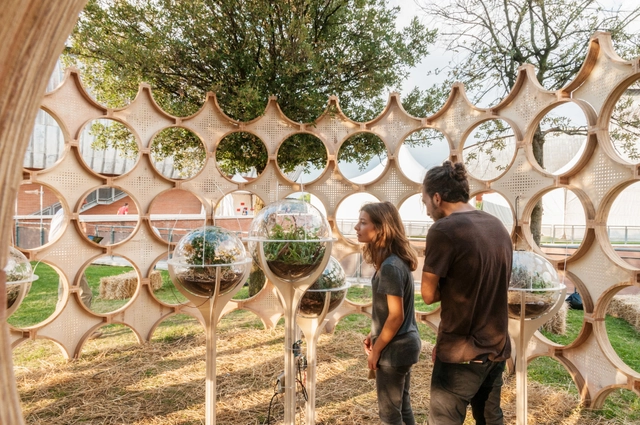
Within the walls of OFL Architecture's open-air wooden pavilion, the term "built environment" truly earns its keep. In Wunderbugs, humans become spectators of the natural world as insects toil away in six spherical ecosystems, and sensors weave movements into a web of data. Upon entering the pavilion, visitors are transformed into components of an interactive soundtrack harvested from the sensors and broadcast in the space, uniting the insect and human experience. The project was conceived for the second annual Maker Faire Europe in Rome, where it was installed earlier this month.
Enter the interactive acoustic experience of Wonderbugs after the break.
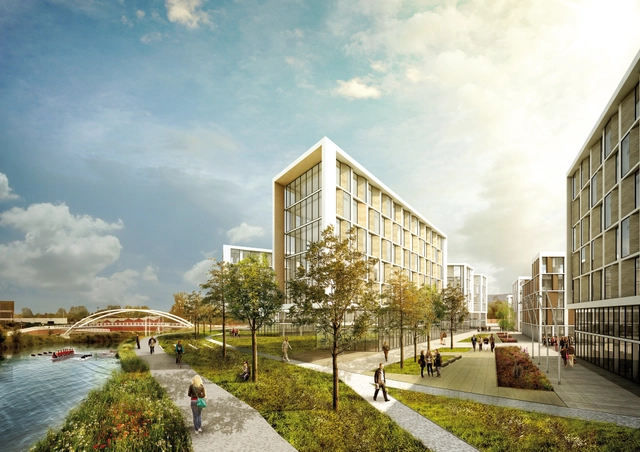
Edinburgh-based 7N Architects has revealed their masterplan for Shawfield in Glasgow, a development containing 1.2 million square feet of "flexible business space" next to the River Clyde. Produced for the Clyde Gateway Urban Regeneration Company, the scheme aims to capitalize on the growth and investment that was brought to Glasgow by this summer's Commonwealth Games by providing "a nationally significant business district which will play a strong role in contributing to growth in Scotland's economy."
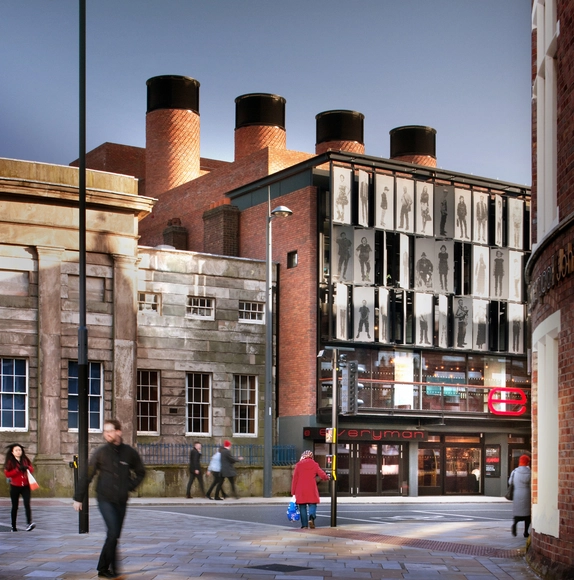
In the great tradition of the RIBA Stirling Prize, the announcement of Haworth Tompkins' Everyman Theatre as the winner of the 2014 RIBA Stirling Prize took many by surprise. The Everyman surpassed the public's favourite, Mecanoo's Library of Birmingham, and the bookies' (and many critics') favourite, O'Donnell + Tuomey's LSE Saw Swee Hock Student Centre - as well as two household names in Zaha Hadid's Aquatics Centre and Renzo Piano's Shard.
In what was seen by many as the strongest shortlist in years, the underdog Everyman has emerged victorious. But was it a worthy winner? Read on after the break to find out what the critics made of this unexpected result.
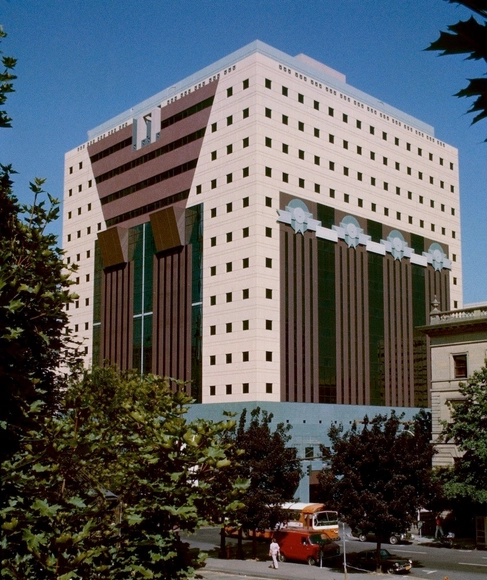
Last week, Michael Graves attended a public conversation with Randy Gragg, director of The University of Oregon's John Yeon Center to discuss the Portland Building, America's first postmodern building. The discussion centered around the famed, 1980s building’s many problems - “dark, leaky and claustrophobic” interiors,” pedestrian-unfriendly parking garage, and more - asking Graves for his advice on whether the city should update it or tear it down. His response, “The whole idea of tearing the building down, it's like killing a child… I don't know how to react to that.” Read all of Graves’ responses to tenant complaints here on the Oregon Live.

A little over a year ago, New York City-based graphic designer José Guizar started illustrating an obsession of his that had quickly grown since moving into the city: New York’s varied and eclectic windows. “A product of countless steps of journey through the city streets, this is a collection of windows that somehow have caught my restless eye out from the never-ending buzz of the city,” Guizar writes on his website. “This project is part an ode to architecture and part a self-challenge to never stop looking up.”
Others have since been inspired by Guizar’s colorful and captivating homage to the windows of NYC, and earlier this year São Paulo-based Nara Rosetto began her own weekly illustrations of windows in South America’s largest city.
Ranging from Victorian and porthole windows to windows with security bars, planting boxes and the occasional cat, the windows are as varied as the cities and buildings they occupy.
Read on after the break for a journey through the windows of New York and São Paulo.
Joyce Hwang founded Buffalo-based firm Ants of the Prairie in 2004 as an architecture and research practice “dedicated to developing creative approaches in confronting the pleasures and horrors of our contemporary ecologies,” according to the Architectural League. In her lecture as one of winners of the Architectural League’s annual Emerging Voices awards, Hwang explains her fascination with the conflicted perceptions of urban wildlife, and discusses a series of projects that aim to incorporate diverse animal habitats into the built environment.
But you can browse the last one: 417