Following our readers poll last year, here's an updated list of what we think are the best ten apps for architects. From condensed versions of large scale programmes architects and designers use every day, to blank canvases to scratch ideas down onto, you might just find an app that could improve the way you work.
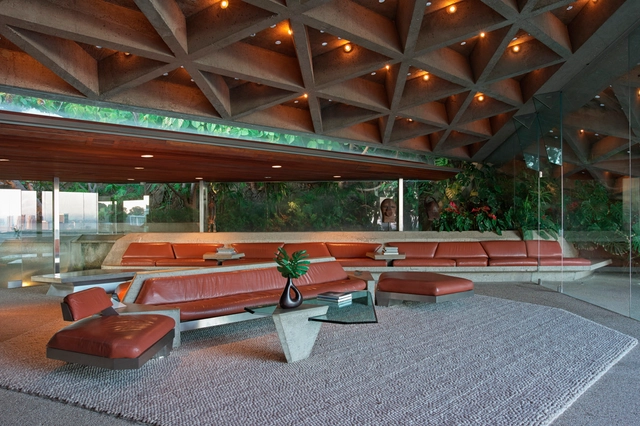
In this interesting article for the Financial Times, Edwin Heathcote dissects two Hollywood homes that are infamous as the homes of slick movie bad guys. The Lovell Health House designed by Richard Neutra appeared in LA Confidential as the home of pornographer and pimp Pierce Patchett; the Sheats Goldstein Residence appeared in The Big Lebowski - again as the home of a pornographer - and was designed by none other than "Hollywood's favourite architect" John Lautner. Heathcote probes the two architects' design influences and ideas, and of course offers an explanation as to why ""bad guys always seem to get the best houses". You can read the full article here.
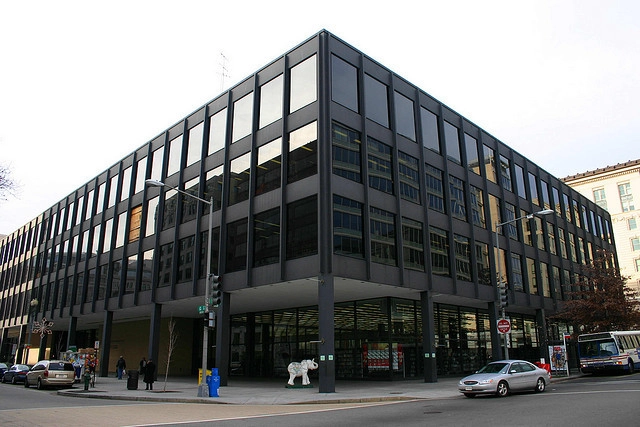
In August, we reported a Request for Qualifications for the renovation of Mies van der Rohe's Martin Luther King (MLK) Jr. Memorial Library in Washington D.C. - Mies' only library and the only building in D.C. A few days ago, the District of Columbia Public Library (DCPL) narrowed down the list of potential firms from 26 to 10 and revealed that it was looking for community input on the library's future spaces and services.
Bjarke Ingels Group (BIG)’s 700,000 square foot Beach + Howe development has been approved by the Vancouver City Council. Though concerns still remain regarding the height of the 52-story tower - which is intended to become the city’s fourth tallest building - an overwhelming majority of the council and public seems to be enthusiastic about the project.
“It meets the test at every respect — gorgeous architecture, turning a dead space into a vibrant public space with animation and job space. The housing is diverse and much needed... People have used the word iconic - I think it’s remarkable design to combine so many elements on a tough site,” stated Mayor Gregor Robertson before the vote. “It’s an extraordinary project that deserves strong council support.”
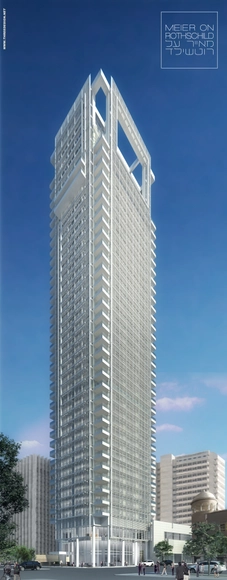
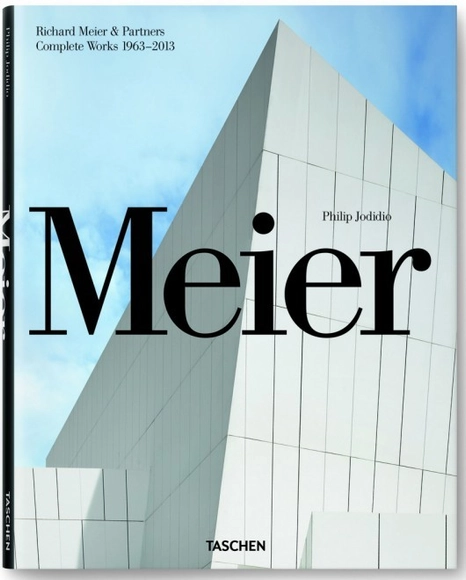
Pritzker Laureate Richard Meier’s iconic new residential tower in the heart of Tel Aviv is nearing completion. Located in Rothschild Boulevard, the city’s bustling high-end commercial, cultural and financial district, it is no surprise that over 70% of the 42-story luxury tower has already been sold.
More on the tower, and its potentially controversial context, after the break...
Graduating architecture students are welcomed to the professional world with few job opportunities, lots of competition, and, for many, shockingly high student debt. Barring winning the lottery, there's nothing for it but to work the decades it takes to pay them off. But what if there was another way? Shervan Sebastian, of AIArchitect, explores a new possibility for student debt relief designed specifically for architects in "Proposal Combines Student Debt Relief with Community Design Support," reprinted here. Read on to see how you could one day pay off your student debt and help your community at the same time.
Public service loan assistance programs have for decades been a driving force in attracting talent to some of America’s neediest and underserved regions and sectors of the economy. Programs as varied as AmeriCorps, the Peace Corps as well as the medical, legal, and dental professions have all employed these incentives to provide communities with talented, civically engaged professionals, while offering one of the most coveted forms of support for financially burdened graduates: student loan assistance.
What might a national design service corps look like for the architecture profession? The AIA is proposing legislation that offers architecture school graduates loan re-payment assistance opportunities similar to those offered to graduates of other professions who contribute their services to their communities. The National Design Services Act (NDSA) provides student loan assistance for architects who work at community design centers by securing grants from the Department of Housing and Urban Development (HUD) to reduce loan balances of participating students.
https://www.archdaily.com/441116/could-an-architecture-peace-corps-be-the-answer-to-student-debtShervan Sebastian
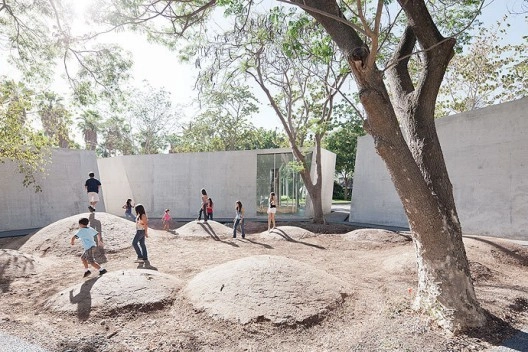
The simple concrete-hewn structures designed by Tatiana Bilbao acknowledge their context in a way that most buildings don't. In a recent interview with uncube Magazine, Bilbao explains how her outlook on design shifted after she realized that "the quality of architecture relies heavily on the people who build it and what techniques and materials they are used to." And it seems this novel approach hasn't gone unnoticed - she recently showed her work at Berlin's Architekturgalerie and is on a star-studded shortlist to design the Menil Drawing Institute. Read the full interview here.
https://www.archdaily.com/444493/redefining-context-with-tatiana-bilbaoKatherine Allen
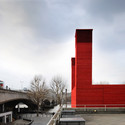
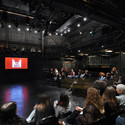
The Shed, a 225-seat auditorium designed by Haworth Tompkins, was completed earlier this year in London. It's made of raw steel and plywood, while the rough sawn timber cladding refers to the National Theatre’s iconic board-marked concrete. You can see more photos of photographer Philip Vile after the break.
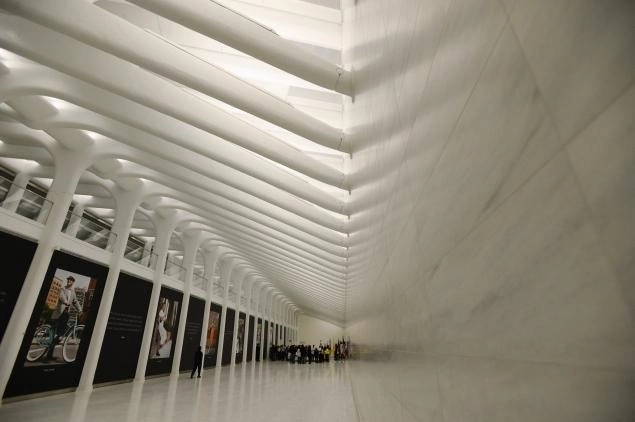
A portion of Santiago Calatrava’s $4 billion PATH station has opened. According to NY Daily News, the Western Concourse will now relieve New Yorkers from “cramped sidewalks and temporary bridges” crossing West St. with a 600-foot underground passage lined in “bright white marble” that connects the World Trade Center to the neighboring office complex formerly known as the World Financial Center. Once complete in 2015, the controversial transit hub will double as a massive shopping and retail complex, which aims to “transform” the cultural experience of lower Manhattan.
Related Companies founder Stephen Ross has commissioned London designer and architect Thomas Heatherwick to design what could be, according to the Wall Street Journal, “one of the most expensive works of public art in the world.” Planned to be the centerpiece of Related’s Hudson Yards project in Manhattan’s West Side, the estimated $75 million artwork and its surrounding 4-acre public space aims to become “new icon for the city.”
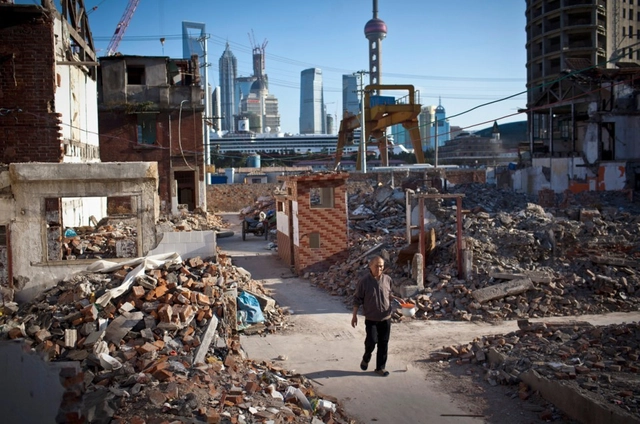
Chinese city-dwellers are waking to find eight stories of construction debris outside of their homes. Over two billion tons of waste, outside Beijing and other major cities, is a result of a booming construction industry. "There's no systematic way to deal with [the garbage]," says Wilson W.S. Lu, architecture professor at the University of Hong Kong, "The illegal dumping is everywhere." Recycling efforts have just begun, but local activists believe it will require a radical paradigm shift in the way Chinese residents reclaim material. Read the full New York Times article, "China's Mountains of Construction Rubble."
https://www.archdaily.com/443367/mountains-of-construction-debris-accumulate-outside-chinese-citiesJose Luis Gabriel Cruz
According to the Royal Institute of British Architects (RIBA), the number of people aged over 60 is expected to increase by 40% over the next twenty years, suggesting that "our post-retirement years will be longer and healthier." There is no doubt, therefore, that people in this age group will have a greater economic, social and political power - but how will this affect our cities?
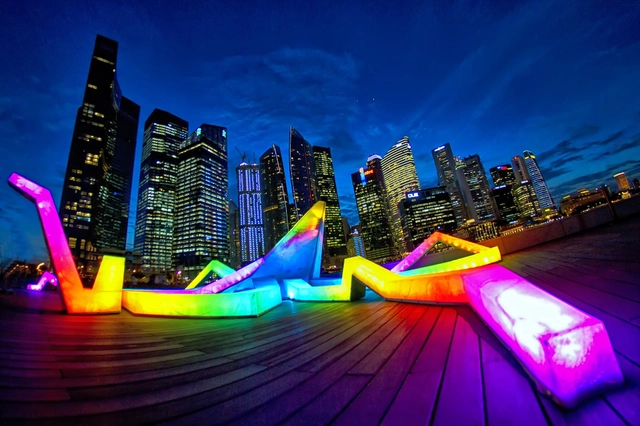
In mid autumn, when the nights get longer in the northern hemisphere, we encounter numerous light festivals. And indeed, within the last ten years, more and more light festivals have globally emerged. The reason for the success of light festivals is simple, as the German curator Bettina Pelz concludes: “It’s actually fairly easy, because whenever you do something with light in cities in the night, then people do come. If you do it good, they come twice.”
As Pelz points out, light is an apt medium for evening events, since it easily attracts people. Communities have discovered the potential of lighting for city marketing, and the closer they plan their date to Christmas, the more they merge their illumination with the festive blinking lights of commercial Christmas markets.
Join us on a tour through some of the leading light festivals in Europe. Read more about their different backgrounds, artistic concepts and future trends after the break...
The latest Future Trends Survey, published by the Royal Institute of British Architects (RIBA), indicates both stability and optimism. The Future Trends Workload Index increased to +26, a rise of four balance points from August 2013, "building upon the steadily increasing positive trend" seen since the start of this year. The survey also shows evidence that "the growing optimism about an upturn in overall workloads is now widespread" throughout the UK.
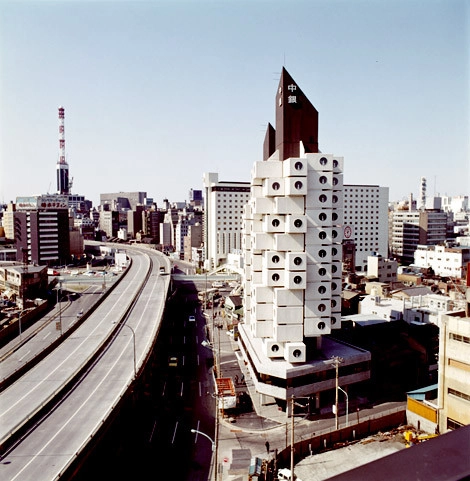
Seizing on the current trend for 'micro-apartments' in cities such as New York, Fast Company has an interesting profile (including some great photos) of the Nakagin Capsule Tower, the 1972 Japanese building, one of the first (and still one of the most extreme) examples of small-plan living. The article explores both the successful and unsuccessful elements of the design, such as the difficult maintenance and non-openable windows, as well as the ongoing battle for preservation since the residents voted to replace the tower with a conventional building. You can read the full article here.
The Documentation Center of Cambodia’s (DC-Cam) has commissioned Zaha Hadid to design the much-anticipated genocide studies institute in Phnom Penh. The new campus, known as the Sleuk Rith Institute, will serve as an extension of DC-Cam’s work as the country’s go-to archive for Khmer Rouge history as well as a leading center for genocide studies in Asia. Within a modest campus, the institute will house a “cross-section of pursuits,” including a genocide studies center, a school, a museum for memorial and education purposes, and more.
"Youk Chhang's vision is inspirational,” stated Zaha Hadid. “His brief for the Sleuk Rith Institute calls for beauty and an optimism for the future to heal and reconnect a country, with the Documentation Centre of Cambodia being key to that process."
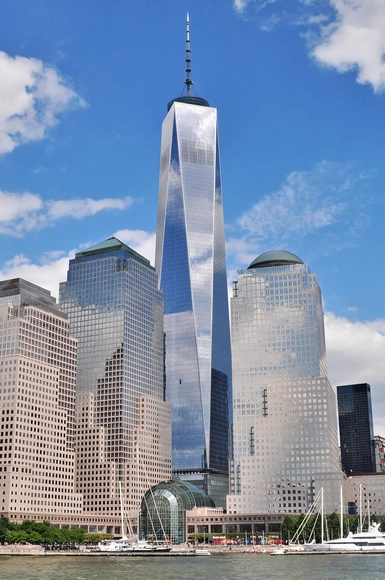
Banksy, the pseudonymous United Kingdom-based graffiti artist who is currently making his rounds in New York City, has proclaimed the One World Trade Center as the city’s “biggest eyesore.” In a brief op-ed piece, Banksy describes the SOM-designed tower as a “shy skyscraper,” one that declares New York’s “glory days” are gone.
“You really need to put up a better building in front of it right away,” stated Banksy. “... because you currently have under construction a one thousand foot tall sign that reads, New York - we lost our nerve.”
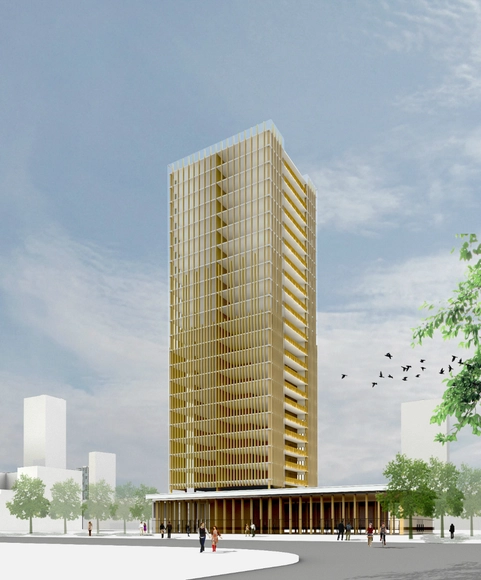
Michael Green is calling for a drastic paradigm shift in the way we build. Forget steel, straw, concrete and shipping containers; use wood to erect urban skyscrapers. In a 240 page report - complete with diagrams, plans, renders and even typical wooden curtain wall details - Green outlines a new way of designing and constructing tall buildings using mass timber, all the while addressing common misconceptions of fire safety, structure, sustainability, cost and climate concerns.
https://www.archdaily.com/443626/the-case-for-tall-wood-buildingsJose Luis Gabriel Cruz
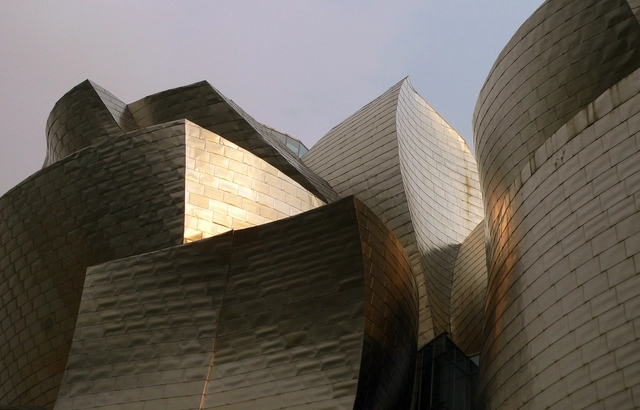
Do we prefer straight lines or curves? According to Eric Jaffe's article on Fast Co.Design, it seems we subconsciously prefer the latter. Our brains, he claims, have evolved to perceive potential threat in sharp edges. "Square watches, pointy couches, and the like activate the amygdala. The part of the brain that processes fear." Thus, our feelings, buying habits and favorite buildings are subject to our affection of curves. Investigate for yourself and make sure to read the full article here, “Why Our Brains Love Curvy Architecture.”
https://www.archdaily.com/442283/straight-lines-or-curves-which-do-we-preferJose Luis Gabriel Cruz
Çanakkale, a city of unique urban heritage, is situated on the northwestern coast of Turkey along the Aegean Sea and Dardanelles. The new antenna tower to be designed will be located at the southern outskirt of Çanakkale and will broadcast to the surrounding cities. The site for the proposed tower is on the top of a hill -and within a national forest- providing stunning views of the Dardanelles.
The competitors are strongly recommended to consider the technological requirements of the broadcasting tower and recreational potentials of a public entity with equal emphasis.
The scope of the competition is not only limited to the design of an iconic antenna tower but also includes development of innovative concepts for creating outdoor and indoor spaces enabling public programs of leisure, recreation and exhibition that will attract local people as well as tourists. The design and the position of the project should create a destination in the region that will be renown throughout Turkey.
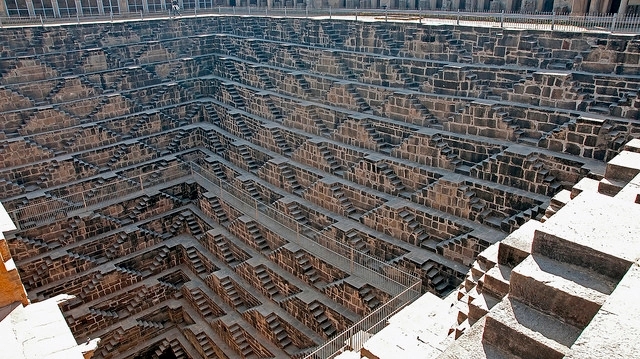
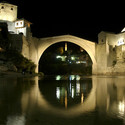
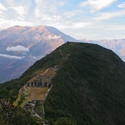
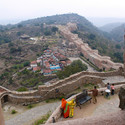
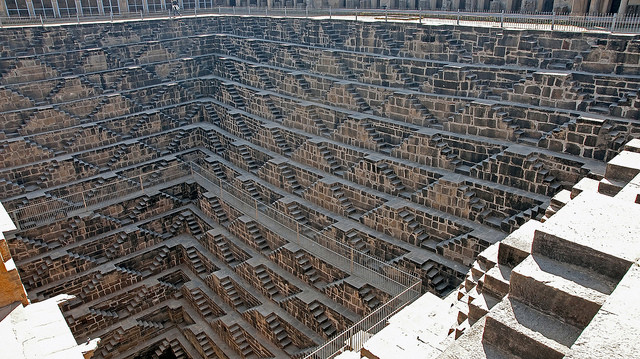
What makes a building world-famous? The answer is most likely some combination of magnificence, size, and historical importance. But it's far from an exact science, and many of the world's most impressive architectural landmarks are therefore not very well known outside of their own locations.
Thankfully, this post on Quora sheds some light on the lesser-known architectural landmarks on the planet. Read on to find out which marvels you may have missed...
Courtesy of Tod Williams Billie Tsien Architects / Dbox
After sitting derelict for years, the Kate Wollman Memorial Rink in Brooklyn's Prospect Park is poised for something of a rebirth. Tod Williams and Billie Tsien's plans for a sports complex, known as Lakeside, is expected to restore the rink's role as the park's chief attraction. Michael Kimmelman recently stopped by the site to explore the project as it nears completion - click here to read his thoughts on what he calls one of the last "parting gifts of the Bloomberg era to the city."
https://www.archdaily.com/443090/tod-williams-and-billie-tsien-architects-design-ice-rink-for-nycKatherine Allen