The Morpholio Project's latest iPhone application, Morpholio Frame, "is like having a DJ booth for your photos." The application allows users to merge, crop, and filter photographs before posting them to social media outlets like Instagram, Facebook, and Twitter. Sounds typical, right? Not so fast.
The application gives users more control than most thanks to an interactive matrix approach. Users can select up to three filters and three related masks, creating an image with one of 64 million unique filter combinations. One of the most interesting filters for architecture fans is "sketch" – as seen in the image after the break.
This year there are two new entries into the top 10, with Queen's University Belfast and Northumbria University bagging 5th and 6th respectively, replacing Oxford Brookes and Kent, who drop to 12th and 14th. Elsewhere, the Glasgow School of Art had a disappointing result dropping to 43rd, and the University of Greenwich has reacted positively to their last-place position from last year by rising to 21st.
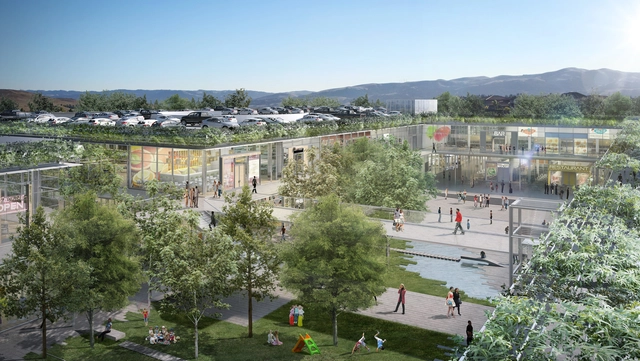
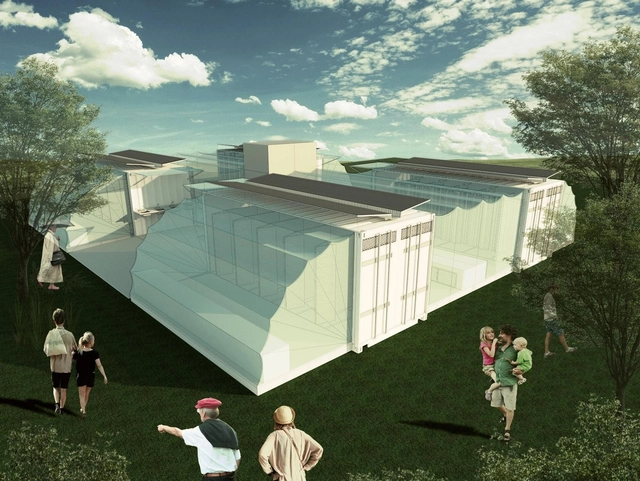
Renzo Piano has been commissioned to return to the Bay Area, this time to design a 350,000 square foot “Plaza District” for a mixed-used City Center development in San Ramon. Similar to his prized California Academy of Sciences building in San Francisco’s Golden Gate Park, the new multi-use district will feature expansive glass walls and a lush living roof.
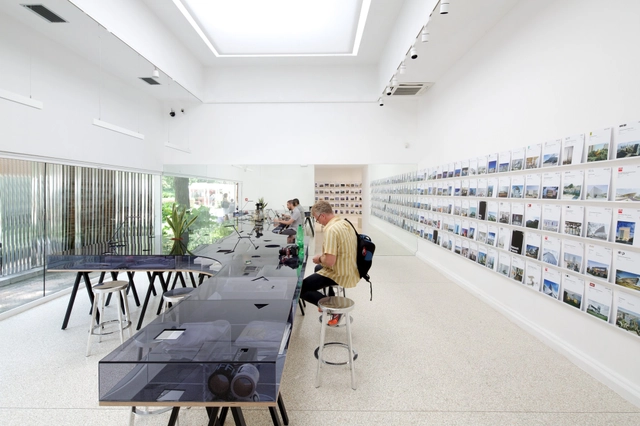
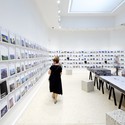
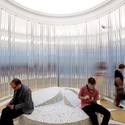
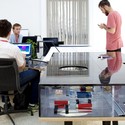
To kick off our coverage of the Venice Biennale, we're bringing you photos of OfficeUS -- the United States' contribution to the national exhibitions organized under the theme of "Absorbing Modernity." The pavilion houses both a repository of information about the history of architectural firms in the US (with a focus on the US's role in exporting architecture) and serves as the base of operations for a new architectural firm that was created solely for this year's biennale. The research, collected into booklets, lines the walls of the space. While visitors mill around the pavilion, the members of OfficeUS work at specially designed tables. The output and deliverables of the office will be determined as the Biennale progresses. We also got the chance to speak to the organizers, so stayed tuned for video interviews with the curators and designers of the US Pavilion (coming soon!). For now, however, read on to the see the curator's statement on the exhibit.
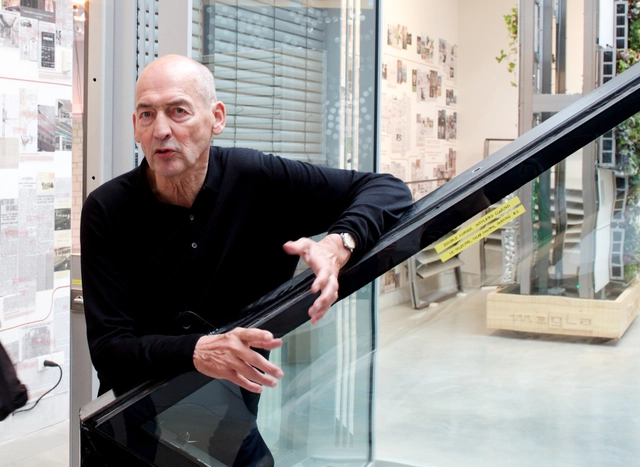
ArchDaily is excited to announce that we are now in Venice to cover this year’s highly anticipated Biennale. Curated by the influential Rem Koolhaas, this edition of the biennale delves into the past to inform current architectural production.
For this year, Koolhaas proposed “Fundamentals” as the main theme for the Biennale. Rather than focusing on contemporary production (as the Biennale traditionally has), “Fundamentals” is divided into three large exhibits that look into the past, present and future of architecture: Absorbing Modernity 1924-2014 (National Pavilions), Elements (Central Pavilion), and Monditalia (Arsenale). You can learn more about these exhibits in our previous coverage.
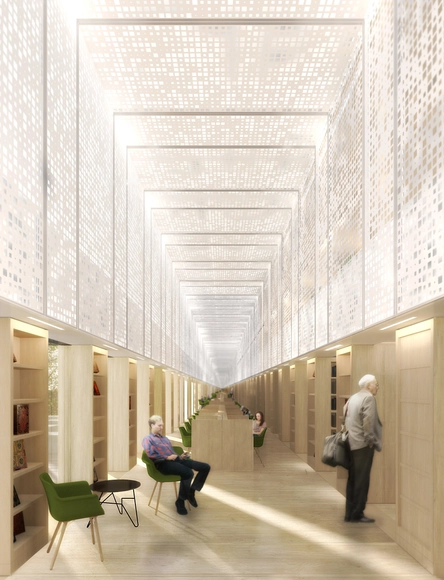
Coffey Architectshas won a competition to design a new research centre for the Science Museum in South Kensington, London. Designed to enable a “new level of integration between exhibitions and research,” the new centre will act as a portal for over 500,000 items contained within the Wroughton Library.
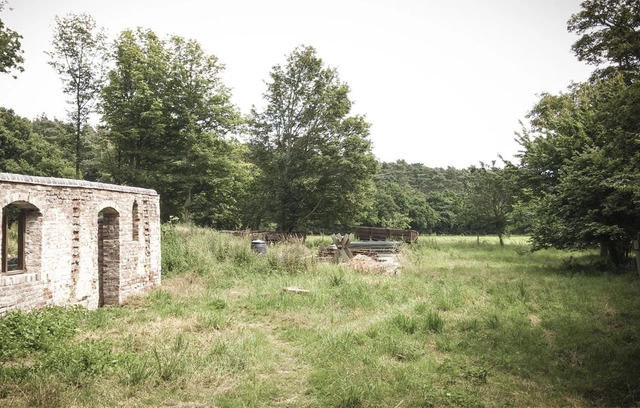
The site in Norfolk, UK. Image Courtesy of Studio Bark
Studio Bark, a London based collaborative practice, are inviting students to join them for a summer workshop in order to develop a "prototype for environmental low-energy student led construction." In collaboration with TRADA, the Timber Research and Development Association, the organisers hope to begin to bridge the "enormous chasm between architectural education and the on-site application of architecture" through a live-build project. They plan to give participants an understanding of construction terminology, materials, or technical detailing, all through on-site practice.
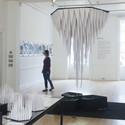
Chilean-German architecture practice GUN Architects' latest installation, accompanied by an exhibition in the AA gallery, brings the micro-climate of Chile to the UK. Using tree-like structures and pyramidal fabric ‘stalactites,’ the architects create a unique ecology that is at once natural and material. The architects' description of the installation, after the break...
Axel de Stampa has shared with us his awesome series of architecture gifs, Architecture Animée (Animated Architecture), which turn architecture from SANAA, Herzog and de Meuron, MAD Architects and more into amazing, zany gifs. See all nine after the break!
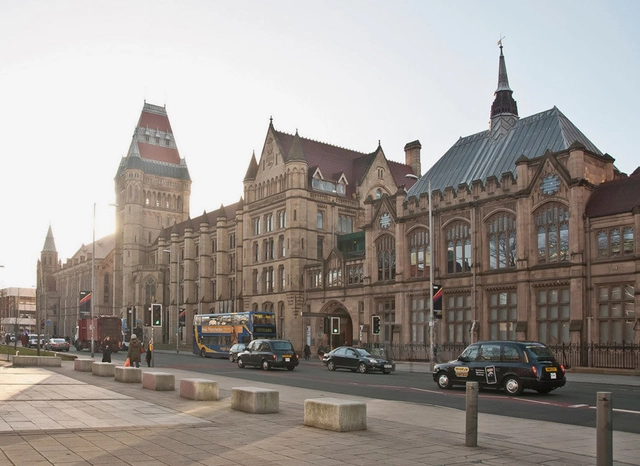
With the recent news that Dutch practice Mecanoo, along with Penoyre & Prasad, have been selected for a £200 million new engineering campus at the University of Manchester, Amanda Baillieu of BDOnline argues that they "need to set their ambitions a whole lot higher." Alongside's Manchester's announcement, universities in Sheffield, Newcastle and Oxford also recently announced a big investment in their campuses. The trick, Baillieu suggests, will be in ensuring the architecture is not "safe and office-like" (which fits universities’ "business-like" mindset). As we enter a "golden age" in university capital investment, educational architecture will be playing a central role. Read the article in full here.
The Zumtobel Group Awards, now in its fourth year, has recognized 15 projects for their innovative contributions to sustainability and humanity in the built environment. Winy Maas of MVRDV and Kazuyo Sejima of SANAA were part of the seven person jury in which selected the winners within three categories: “Buildings,” “Urban Developments & Initiatives,” and the newly implemented “Applied Innovations.”
Ranging from Arup’s photo-bioreactor facade system to Lacaton & Vassal architectes’ “House of Transformation,” the awarded projects have been deemed sustainable exemplars for their contributions to the built environment.
This year at the 2014 Venice Architecture Biennale, KAAN Architecten will present a Collateral Event featuring PLANTA - a partially subterranean space that will be dedicated to multidisciplinary artistic production and built within the confines of the “La Plana del Corb” quarry in Balaguer (Lleida, Spain) by 2016. Designed for Grupo and Fundació Sorigué, PLANTA is not only a building, but a concept; a concept in which is the “culmination of the desire to give back, to return through a balanced tension between art, institution, knowledge, ecology and manufacturing.”
The University of Sao Paulo's communal bathroom proposal for post-disaster relief. Image Courtesy of Pillars of Sustainable Education
Interdisciplinary teams from the University of Sao Paulo, Delft University, and five other post-secondary institutions are currently exploring sustainable innovations in design, materials, and building systems thanks to the support of Pillars of Sustainable Education – a partnership between Architecture for Humanity and the Alcoa Foundation. The collaborative effort was founded as a way to “educate the next generation of architects, engineers, and material designers while supporting real-world design-build projects that positively impact both the environment and the local community.” Months into the project, the schools’ proposals are turning into reality as students collaborate with NGOs. To learn about what each school is working on, keep reading after the break.
This year's Venice Biennale, curated by OMA'sRem Koolhaas, is "interested in the banal". In an article in the Financial Times', Edwin Heathcote discusses the paradox between exploring generic modernism at an event which celebrates the individual. Heathcote raises interesting questions about the extent to which world architecture has developed in modernity, ultimately arguing that, "in a way, architecture is over." You can read the article, which neatly investigates the curatorial rationale behind this year's Biennale, in full here.
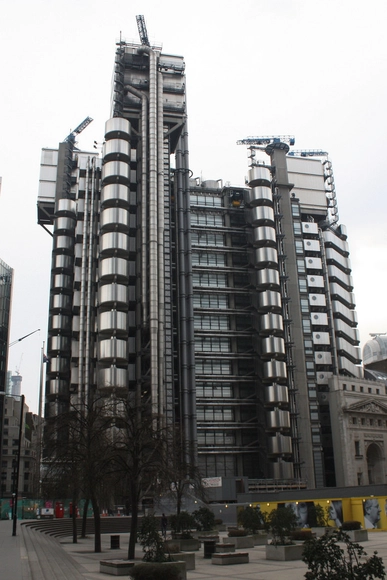
Insurance firm Lloyd's of London has indicated that it plans to leave its famous Richard Rogers-designed headquarters, which it has occupied since construction ended in 1986. Lloyd's has recently been involved in talks with Henderson, the developer of Make Architects' Gotham City project which earlier this year gained planning permission for a site adjacent to their current headquarters.
More on the building's uncertain future after the break
With the London Festival of Architecture opening yesterday, this article in the London Evening Standard highlights just one of the many threads which make up this year's theme: the importance of foreign talent in making up London's cosmopolitan architectural culture. From Adam Caruso to Zaha Hadid, many of the city's biggest names have come from abroad to study and work in the UK, helping to make it one of the greatest centres for design in the world - but all this could be at risk from untenable housing prices and draconian new visa restrictions. You can read the full article here.
Official Danish LEGO constructors have teamed up with locals in Budapest, Hungary to build the world’s tallest LEGO tower. Rising 34.76 meters (114 feet) in front of the St. Stephen’s Basilica, the towering spire was officially registered with the Guinness book of World Records for breaking the US’ previous record of 34.43 meters on May 25th. The structure was made of 450,000 colorful bricks and appropriately topped with an oversized, Hungarian-built Rubik's Cube.
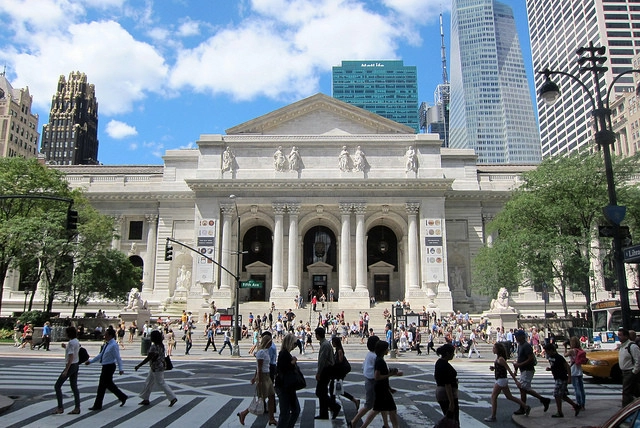
The New York Public Library’s (NYPL) main building on Fifth Avenue, is a Beaux-Arts masterpiece designed by architects Carrère & Hastings. Image via Flickr User CC wallyg. Used under Creative Commons
Details have been released on the New York Public Library’s (NYPL) plan to renovate its Mid-Manhattan branch, while creating more public space within its flagship Stephen A. Schwarzman Building. The news comes shortly after Foster + Partner’s redesign of the the Beaux-Arts landmark was scrapped due to concerns of a ballooning budget. The revised $300 million overhaul suggests a more affordable option of relocating Schwarzman’s main stacks beneath Bryant Park, while establishing a more campus-like connection with a fully renovated Mid-Manhattan branch. All the details, here.
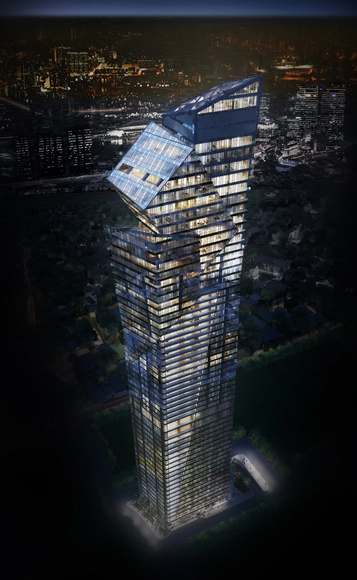
Last week, Daniel Libeskindjoined Century Properties Group to celebrate the ground breaking of the “Century Spire.” Designed as a key building for Century City - a 3.4 hectare, mixed-use development in Makati - the all-glass, 60-story office and residential tower sets itself apart with a “dramatic crown” that divides and expands the building’s top half as it rises.
Our friends at The Morpholio Project have just announced that submissions are open for Pinup 2014 - a free competition for students and young professionals to submit up to three digital images of their studio, 3D-printed, or unbuilt work. All work should acknowledge the existence of technology and question why/how "we harness it as designers." The guest jury includes participants from Fast Company, Metropolis Magazine, Columbia GSAPP, and even our very own Editor-in-Chief, David Basulto. Learn how to apply after the break!
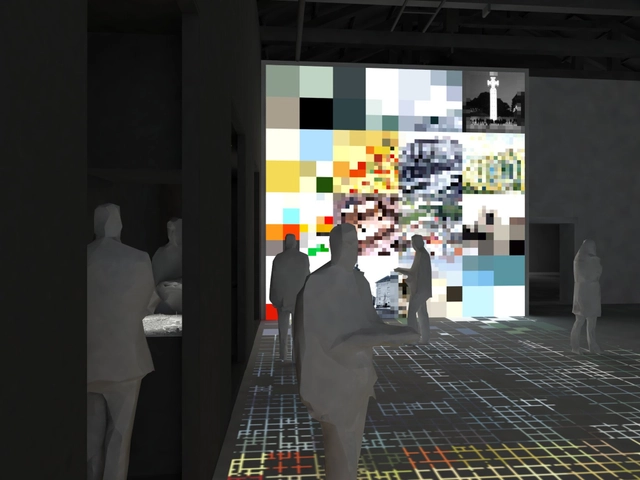
The rise of the internet has radically changed how we inhabit space. Thus, for the 2014 Venice Architecture Biennale, Estonia’s pavilion will focus on how this change is applied to the practice of architecture. Titled Interspace, the exhibition will be a single room that digitally showcases the physical act of placemaking.


.gif?1401808654)






_%C2%A9_Armin_Linke_2012_(1).jpg?1401833201&format=webp&width=640&height=580)

.jpg?1399649064&format=webp&width=640&height=580)