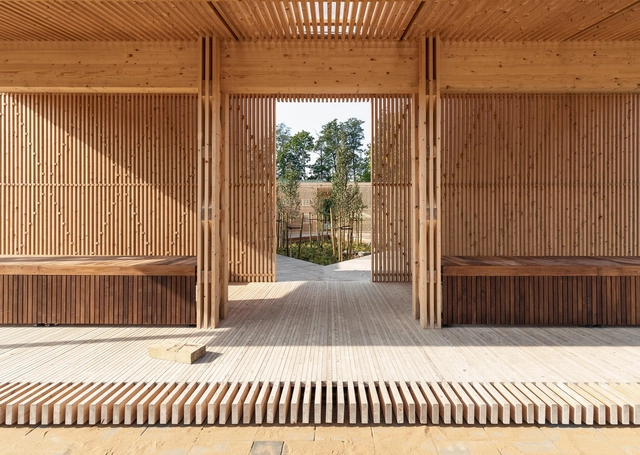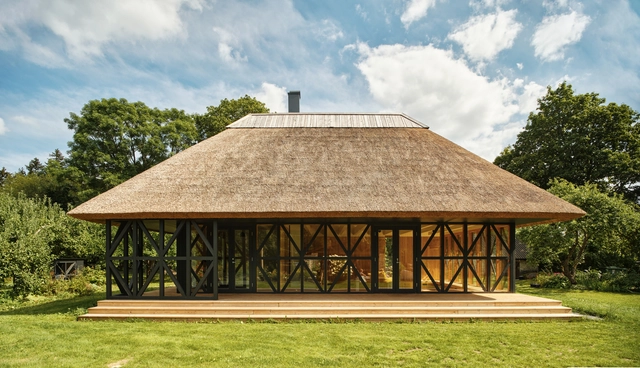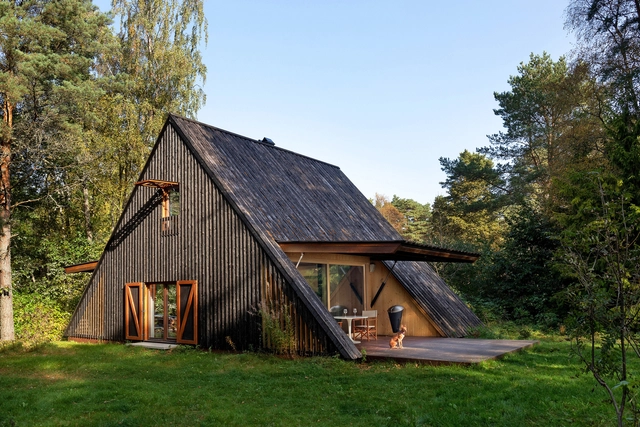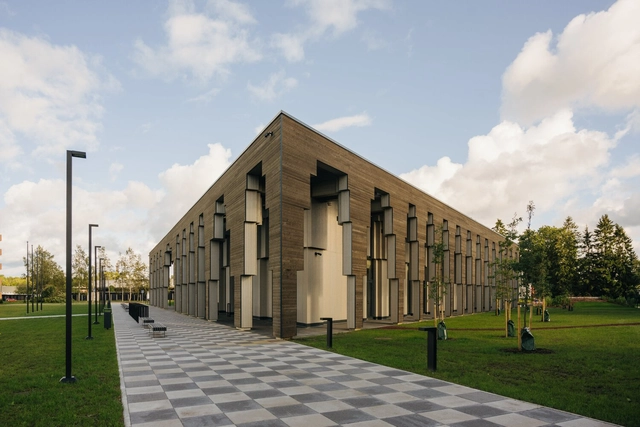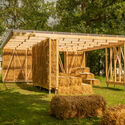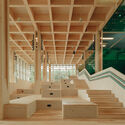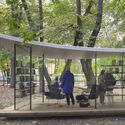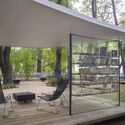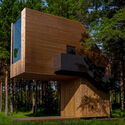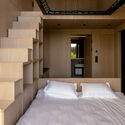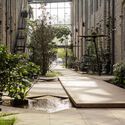

Science Centre AHHAA / Künnapu & Padrik Architects

© Arne Maasik

Architects: Künnapu & Padrik Architects
Location: ,
Area: 10,130 sqm
Year: 2011
Photographs: Arne Maasik

Snailtower / Künnapu & Padrik Architects

© Reio Avaste

Architects: Künnapu & Padrik Architects
Location: ,
Structural Engineering: TARI
Builder: Nordecon Ehitus
Year: 2008
Photographs: Reio Avaste

The Pier / Kavakava Architects

© Margit Argus

Architects: Kavakava Architects
Location: ,
Architect In Charge: Siiri Vallner, Indrek Peil
Year: 2011
Photographs: Margit Argus, Siiri Vallner, Maarin Murk, Tarvo Hanno Varres, Courtesy of Kavakava Architects

Villa Lokaator / Kavakava Architects

© Paul Riddle

Architects: Kavakava Architects
Location: ,
Architect In Charge: Indrek Peil, Siiri Vallner
Structural Engineer: Maari Idnurm, Juhan Idnurm EEB
Area: 197 sqm
Year: 2007
Photographs: Paul Riddle, Martin Siplane, Courtesy of Kavakava Architects

Tartu Health Care College / Kavakava Architects

© Jaan Sokk

Architects: Kavakava Architects
Location: ,
Architect In Charge: Siiri Vallner, Indrek Peil
Interior Design: Tarmo Piirmets PINK
Area: 6,480 sqm
Year: 2011
Photographs: Jaan Sokk, Martin Siplane

Kindergarten Lotte / Kavakava Architects

© Aivo Kallas

Architects: Kavakava Architects
Location: , Estonia
Architect In Charge: Indrek Peil, Siiri Vallner
Interior Design: Tea Tammelaan, Malle Jürgenson, Krista Lepland, Sirli Ehari
Area: 1,885 sqm
Year: 2008
Photographs: Aivo Kallas, Kaido Haagen, Lauri Kulpsoo, Kristo Nurmis

Tallinn Architecture Biennale Vision Competition 2013

Courtesy of Architecture Biennale 2013

The topic of this year’s Tallinn Architecture Biennale Vision Competition, Recycling Socialism, seeks architectural ideas and methods to envision the future of an iconic circular block-housing district in Tallinn – Väike-Õismäe (“Little Blossom Hill”). Väike-Õismäe stands apart from other similar neighborhoods in Tallinn by way of its concentric plan derived from the idea of a circle-city. The district is positioned circularly as a single, complete solution around a pond in the middle and the environment and modern-day life are still searching for a common language. More information and a video after the break.

Estonian Young Architect Award 2012: Veronika Valk

Heldur Meerits, Veronika Valk and President Ilves

Back in January, I had the opportunity to be part of the jury for the Young Architect Award in , which was officially announced by the President of , Mr. Toomas Hendrik Ilves, the past Thursday Feb 14th in , at the annual meeting of the Union of Estonian Architects .

The objective of the award is to encourage innovative and creative thinking by young minds, and it gives the winner the chance to travel anywhere in the world, giving the opportunity to expand their vision and contribute back to the development of the country.

During the process I had the chance to learn more about the new generation of Estonian architecture after reviewing the works and trajectory of the 8 shortlisted young architects, a generation with very diverse backgrounds and projects, but with one thing in common: a commitment to open up architecture and make it part of the larger public.

This year the ward went to Veronika Valk, who was recognized for her built work and her efforts to raise awareness around architecture (organizing international lectures, workshops, writing articles, and more). More about Veronika and the award after the break:

Apartment Building in Lootsi Street / HGA (Hayashi-Grossschmidt Arhitektuur)

© Kalle Veesaar

Architects: HGA (Hayashi-Grossschmidt Arhitektuur)
Location: Tallinn,
Architects In Charge: Hanno Grossschmidt, Tomomi Hayashi, Pille Heinloo
Area: 1701.0 sqm
Year: 2005
Photographs: Kalle Veesaar, Tomomi Hayashi

Rotermann’s Old and New Flour Storage / HGA (Hayashi-Grossschmidt Arhitektuur)

© Martin Siplane

Architects: HGA (Hayashi – Grossschmidt Arhitektuur)
Location: Tallin,
Design Team: Hanno Grossschmidt, Tomomi Hayashi, Yoko Azukawa
Area: 9002 sqm
Year: 2009
Photographs: Martin Siplane, Arne Maasik, Sven Soome, Tomomi Hayashi, Reio Avaste, Courtesy of Rotermann City

Venice Biennale 2012: Estonian exhibition looks into the fate of Linnahall

Linnahall in Tallinn. Photo: Dmitri Bruns (1980)

The Estonian exhibition for the 2012 Venice Architecture Biennale investigates the relationship between time and space by discovering how venues once important have been abandoned and how these tendencies may carry on today and in the future. The exhibition poses a question as its title: “How long is the life of a building?”. The answer is sought based on the example of Linnahall – a dignified Modernist legacy in the heart of Tallinn that only a few decades ago was a renowned and requisite construction, yet is closed today. What’s happening to Linnahall speaks volumes in a more general context as well – similar tendencies are becoming prominent everywhere in the world where multitudes of architectural masterpieces less than 50 years old stand unused.

Continue after the break to learn more.

Memorial of the Victims of Communism in Estonia / Armin Valter + Joel Kopli

Courtesy of Armin Valter +

Armin Valter and Joel Kopli shared with us their competition winning proposal for the Memorial of Victims of Communism in Estonia. Situated on/in northern coastal limestone cliff near town , which was a closed military nuclear submarine base in soviet times, their design attempts to revitalize the place and bring more awareness to people of the region. More images and architects’ description after the break.

Winners of the Tallinn Vision Competition Street 2020

Peer to Peer / Warren Techentin Architecture (WTARCH)

Warren Techentin Architecture (WTARCH)’s entry “Peer-to-Peer” received the €3000 I prize of the Vision competition STREET 2020, held under the auspices of TAB Tallinn Architecture Biennale.

Tallinn Vision competition STREET 2020 was addressed to young architects and architecture students who were asked to describe a fluently connected, compatible and diverse urban landscape, with a focus on one particular urban typology: the street. The organizers received 35 competition entries, 34 of which qualified. Entries were submitted from Japan, Bangladesh, New-Zealand, Turkey, Italy, Poland, USA, Austria, Lithuania, and other countries.

The architects from WTARCH describe their winning proposal after the break

Tallinn Architecture Biennale: September 8-11, 2011

Tallinn Architecture Biennale is a new international architecture forum that brings together theory and practice as well as young and experienced architects in order to arouse rich discussion upon the issues of architecture, urban planning and landscape. The first TAB concentrates on the hybrid issue of Landscape Urbanism.

Our hope is to see landscape urbanism as a ’third way’ which can solve urban problems that have proved too difficult for conventional planning methods. Landscape urbanism could provide answers to the question of how to guide urban processes from the inside so that the system as a whole would maintain its balance and integrity. The term ’landscape’ is here used primarily as a model of consistency, responsiveness and scale, that is, a conceptual tool rather than a direct reference to nature.

For further details on this years Architecture Biennale, please follow after the break.

Tartu Rebase Street / Atelier Thomas Pucher and Bramberger [architects]

© Lukas Schaller

The original concept of the building was to combine the advantages of single residential homes with the economical aspects of `apartment living´. Over the last centuries the concept of single residential family houses changed enormously. Different approaches and reinterpretations changed not only the way that people live but also the way they use their own spaces. Atelier Thomas Pucher and Bramberger [architects]‘s proposal was to combine the advantages of privacy, outdoor gardens, and boundless views that a single residential home offers with the low economic and maintenance costs of an apartment.

Architect: Atelier Thomas Pucher and Bramberger [architects]
Location: Tartu, Estonia
Project Area: 3,500 sqm
Renderings: Martin Mathy
Project Year: 2008
Photographs: Lukas Schaller, Jaan Sokk

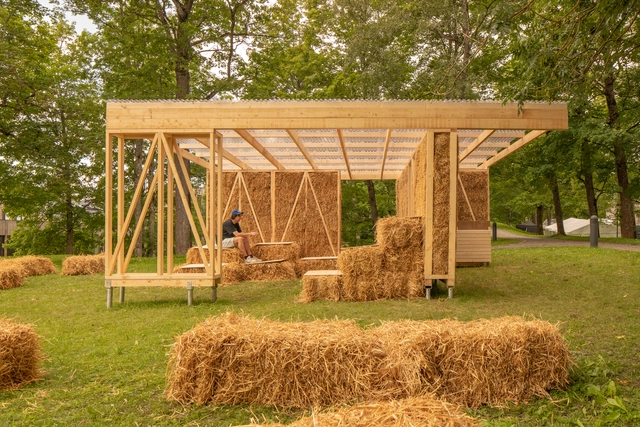
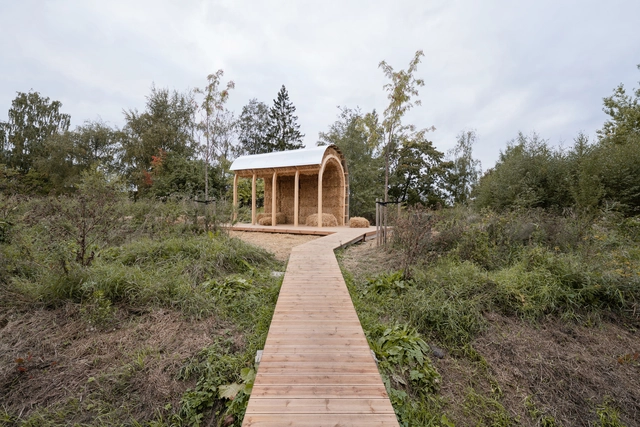
NO99 Straw Theatre / Salto AB

© Martin Siplane

Architects: Salto AB
Location: ,
Project Year: 2011
Photographs: Martin Siplane, Karli Luik

Tallinn Music High School, Ballet School and Georg Otsa Music School / Atelier Thomas Pucher

rendering

The key concept of this project was to create not only a building but also a new meaningful city space connecting the people, the place, its history and their music. The building delimits the boundaries of the plot, enclosing an expanse of green at its core: a garden that is urban yet isolated from the hubbub of the city.

RAKVERE Summer Theater / Kadarik Tüür Arhitektid

© Courtesy of Kadarik Tüür Arhitektid

Architects: Kadarik Tüür Arhitektid
Location: Tallinn,
Client: SA Teatrimaja
Project Year: 2011
Project Area: 400 sqm
Photographs: Courtesy of Kadarik Tüür Arhitektid

Tartu Kesklinna School Extension / Salto AB

© Martin Siplane

Architects: Salto AB
Location: Kroonuaia 7, Tartu,
Credits: Maarja Kask, Karli Luik, Ralf Lõoke, Kristiina Arusoo
Graphics: Mammut
Project year: 2005 – 2007
Photographs: Reio Avaste, Martin Siplane, Karli Luik

“BOOM/ROOM: New Estonian Architecture” Opens in Moscow

Apartment building in Tallinn. Architects Ott Kadarik, Villem Tomiste, Mihkel Tüür. Completed 2009. Photo Paco Ulman

Exhibition “BOOM/ROOM: New Estonian Architecture” opened on June 21 at MUAR – Russian State Museum of Architecture, . BOOM/ROOM, produced by the Estonian Centre of Architecture in collaboration with the Estonian Embassy in Moscow, presents a distinct selection of Estonian architecture from the last decade. The opening will be accompanied by a seminar, where Estonian architects and institutional representatives discuss the latest tendencies in Estonian architecture.

The program of the opening seminar includes presentations by Ülar Mark, Chairman of the Estonian Centre of Architecture, Peeter Pere, Chairman of the Union of Estonian Architects, Martin Aunin, laureate of the Young Architect’s Award 2009, Karli Luik, partner architect of the award-winning Salto AB, and architecture historian Carl-Dag Lige.

BOOM/ROOM: New Estonian Architecture has recently been exhibited at DAZ (Deutsches Architektur Zentrum, Berlin), London Architecture Festival, Sofia Architecture Week and architecture events in Glasgow as well as Helsinki. BOOM/ROOM at MUAR will be open from 21 June until 21 August 2011.

Rakvere Linnametsa Residential Area Spatial Planning / Peter Sand

Courtesy

Architect Peter Sand has placed first in an open competition to design a residential area in , Estonia. The only notable restriction in the competition guidelines was that all entrants must be under the age of thirty. Please follow after the break to see additional images of Peter Sand‘s award winning proposal and a narrative from the architect himself.