

Produce personalized presentation boards that distill complex concepts into simple visual representations with a few helpful tools and effects.
Architecture News
How to Create Architectural Presentation Boards
| Sponsored Content
https://www.archdaily.comhttps://www.archdaily.com/catalog/us/products/37234/how-to-create-architectural-presentation-boards-lumion
Burned Cathedral of St. Sava Begins Reconstruction Process in New York
Instagram photo by Christopher Beckman * Aug 21, 2016 at 9:33pm UTC
Almost four months after going up in flames, the Serbian Orthodox Cathedral of St. Sava has begun the process of rebuilding in the Flatiron district of New York. On the night of May 1, a four-alarm fire blazed through the 1851 building by Richard Upjohn, burning the majority of the church.
In the time since the fire—which was caused accidentally by improperly extinguished candles—church officials have been working with city government agencies and have determined that the addition of metal beams and other small reinforcements will be sufficient to salvage the remaining structure of the church.
https://www.archdaily.com/794210/burned-cathedral-of-st-sava-begins-reconstruction-process-in-new-yorkSabrina Santos
Iceland Trekking Cabins Competition Winners Announced
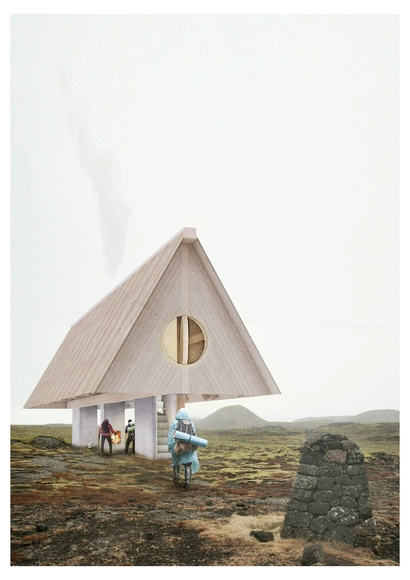
Architecture competition organizer Bee Breeders has announced the winners of the international Iceland Trekking Cabins competition, which called for entries to design a cabin with provision for enclosure, place, and social collectivity. As a structure for nomads and backpackers, Iceland Trekking Cabins are associated with cultural folklore and exist within the context of fjords, lava fields, glaciers, mountains, and the respective trekking ethos.
The competition furthermore sought projects that are “a supple and dexterous yet protected architecture, sensitive to the landscape though guarded against its severity, accommodating for the community, but in the company of strangers.”
The winners of the Iceland Trekking Cabins Competition are:




https://www.archdaily.com/794738/iceland-trekking-cabins-competition-winners-announcedSabrina Santos
Architect Magazine Names the Top 50 Architecture Firms in the US for 2016
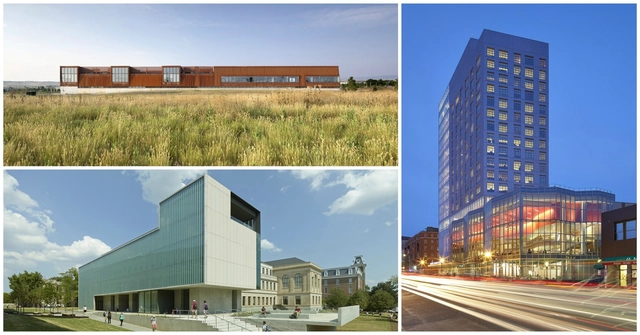
Architect Magazine has unveiled the latest edition of the “Architect 50,” their list of the 50 best architecture firms in the United States. The 2016 rankings are based on scores from three categories: business, design and sustainability; the last of which was calculated using a new methodology this year. Topping the list this year was ZGF Architects, who also were given the distinction of top sustainable firm, while William Rawn Associates and Marlon Blackwell Architects finished number 1 in business and design, respectively.
See the top 10 from each category after the break.
https://www.archdaily.com/794903/architect-magazine-names-the-top-50-architecture-firms-in-the-us-for-2016Patrick Lynch
Is the New iPhone 7 The Best Cell Phone for Architects?
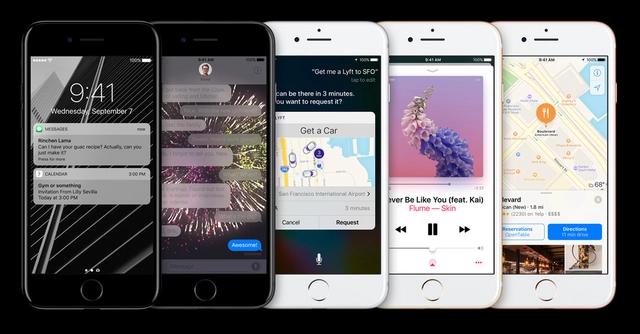
The iPhone 7 is here. Announced at Apple’s September Launch event today, the new device and its sibling, the iPhone 7 plus, have arrived after months of rumors, leaks and anticipation. The phones are loaded with a bevy of new components, including a new pressure-sensitive home button and bluetooth headphones, marking another step in the journey toward our wireless future.
Of course, in spite of the hype that the new iPhone will inevitably get—as it always does—it’s not the only smartphone on the market. Many will point to the fact that its expected RAM capabilities (2GB for the iPhone 7 and 3GB for the 7 Plus) still lag behind some competitors (for comparison the Samsung Galaxy S7 has 3GB and the S7 Edge 4GB), while the upgraded 32GB storage and newly-found water-resistance are no more than catching up with Apple’s competition. Nonetheless, Apple’s iPhone 7 also features a number of features that could make it a phone perfectly suited to architects. Read on to find out exactly why.
https://www.archdaily.com/794898/is-the-new-iphone-7-the-best-cell-phone-for-architectsAAA
J. Mayer H. Fills Times Square With X-Shaped Lounge Chairs
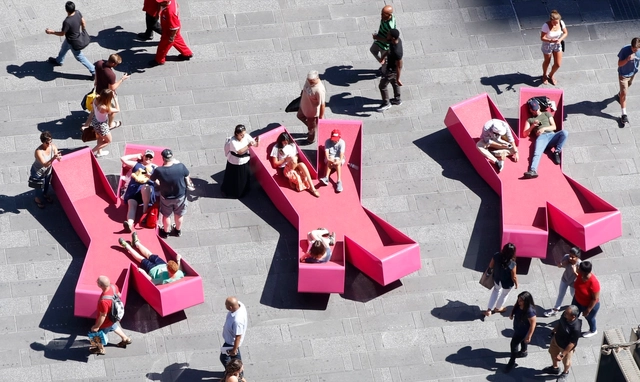
Adding to the ever-changing public landscape of Times Square, German artist and architect J. Mayer H. has unveiled XXX TIMES SQUARE WITH LOVE, three bright-pink, X-shaped custom lounge chairs that allow visitors to lie back and take in the cacophony of lights and sounds for which Times Square is famous. Originally inspired by the “X-like” intersection of Broadway and 7th Avenue, the name also serves as a cheeky reference to the adult theaters and sex shops that once lined the square before its revitalization in the 1990s.
https://www.archdaily.com/794882/j-mayer-h-fills-times-square-with-x-shaped-lounge-chairsPatrick Lynch
Agro Food Park Expansion in Denmark to Combine Urbanity and Agriculture
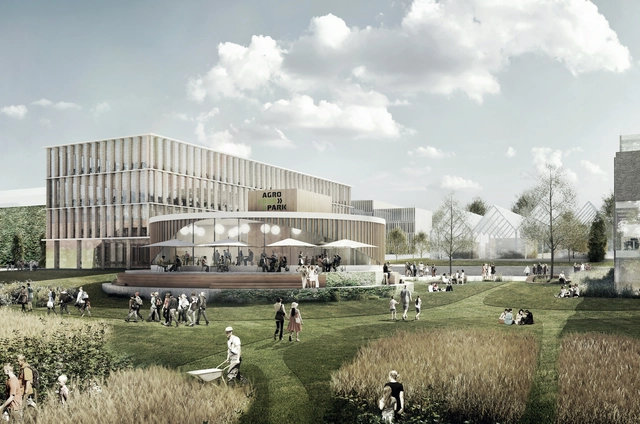
William McDonough + Partners and GXN together with 3XN Architects, BCVA and Urland have teamed up to develop a master plan for the Agro Food Park (AFP), a hub for agricultural innovation near Aarhus, Denmark. Aiming to serve as a benchmark for future global food industry development, the project will combine urban density with agricultural test fields in a collaboration of academic and commercial business.
Over the next 30 years, the current AFP—which was opened in 2009 and spans 44,000 square meters with nearly 1,000 employees—will expand by an additional 280,000 square meters.
We are privileged to have been chosen by GXN to collaborate on what will become an entrepreneurial ecosystem for addressing the future of food and plant resources, said William McDonough, founder of William McDonough + Partners and co-author of the text, Cradle to Cradle: Remaking the Way We Make Things.



https://www.archdaily.com/794507/agro-food-park-expansion-in-denmark-to-combine-urbanity-and-agricultureSabrina Santos
Weston Williamson + Partners Win Competition to Design "Science City" in Egypt
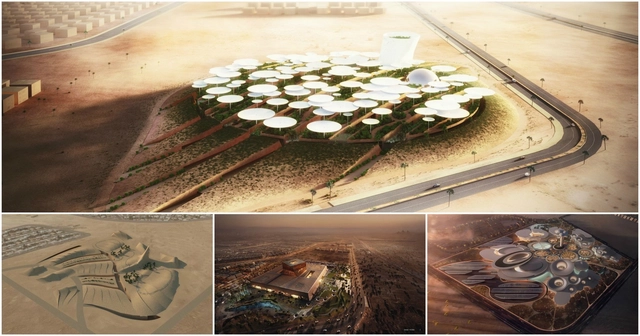
Weston Williamson + Partners has won an international competition for a 125,000 square meter “Science City” along the western edge of Cairo, Egypt, beating out entries from Ngiom Partnership and Zaha Hadid Architects. The project will be built from the ground up in the desert surrounding the city, and will serve as a 21st century science museum and new national institute for scientific innovation. The competition called for an integrated master plan and conceptual design that express “a particular vision of the quest for knowledge and the pursuit of science.”
The jury selected the winning design for its overall comprehensiveness and identity, as well as its ability to be intelligently constructed in phases.
“This project was the one that best responded to the challenges of the brief. The design is subtle but rich. It involves various levels of planning,” said the jury in a statement. “It displays a blending of aspects of several of the “types” that were so visible: the circle, the striation, the berm (or dune), the legible apparatus of sustainable performance, the complex of courtyards, the oasis, etc. But the overall impact is one of a unified composition of great elegance and finesse.”
Continue reading for more on Weston Williamson’s design and to see images from all of the winning entries.
https://www.archdaily.com/794806/weston-williams-plus-partners-win-competition-to-design-science-city-in-egyptPatrick Lynch
4 Projects Named as Finalists for the 2016 Finlandia Prize
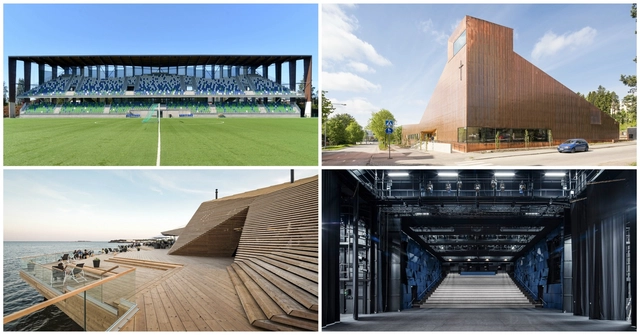
The Finnish Association of Architects (SAFA) have announced a shortlist of 4 projects in contention for the Finlandia Prize for Architecture 2016. Now in its third year, the prize continues with the goal to “increase public awareness of high quality Finnish architecture and [to highlight] its benefits for our well-being.”
Following the tradition of the award, while the shortlist was selected by a panel of architects, the final winning project will be chosen by a non-architect. This year, former Prime Minister of Finland Paavo Lipponen will have the honor of picking the winner.
Find out more about the 4 projects after the break.
https://www.archdaily.com/794785/4-projects-named-as-finalists-for-the-2016-finlandia-prizePatrick Lynch
The Stencil App That Gives You Custom Stencil Tools for Digital Drawing

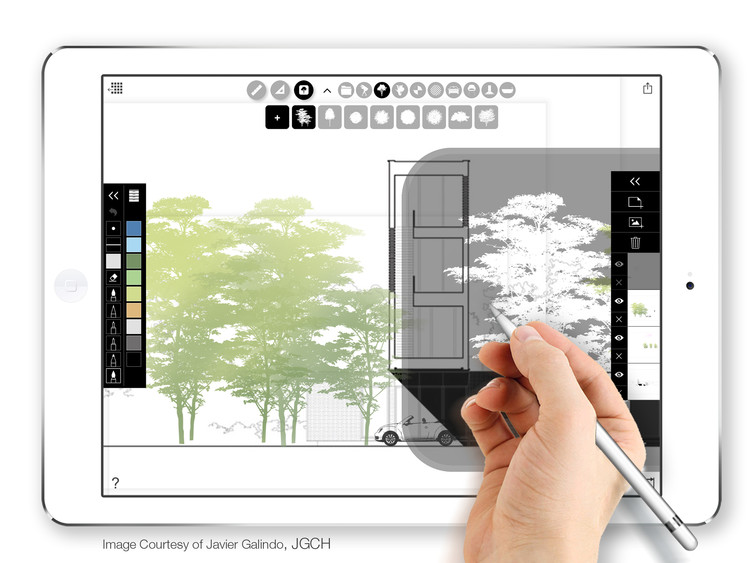
Today, Morpholio has unveiled a new addition to their flagship Trace app. The new addition, called simply “Stencil,” offers a quick way to add figures and annotations to your Trace sketches using a tool that has been familiar to architects for years. The update to the app features a number of pre-loaded stencil designs, but thanks to its new digital twist, the act of stenciling is also augmented through the ability to take any image you can find or photograph and turn it into a stencil in seconds.



https://www.archdaily.com/794772/morpholio-stencil-app-gives-you-custom-stencil-tools-digital-drawingRory Stott
"Circus, Circus" Brings Architectural Interventions to the Bauhaus Dessau
.jpg?1473087666&format=webp&width=640&height=580)
This past weekend, the Bauhaus in Dessau was animated by the Bauhaus Festival. Titled “Circus, Circus – from Black to White,” the event was intended to present all the fun of the fair with a monochrome twist--in opposition to the wild colors usually associated with circuses--and in the words of the Bauhaus was a “kinetic explorations of bodies, objects, media, space and sound.” The event was also an opportunity to tap into the legacy of Bauhaus legend László Moholy-Nagy, whose experiments in film and media blend well with the performative nature of the circus. The event featured a number of performances by artists, while “Cybernetic Circus” by Anhalt University of Applied Sciences and the Initiative Neuer Zirkus turned the grounds of the Bauhaus into an “architectural landscape” of performance modules inspired by Maholy-Nagy. Also featured were installations by students at Burg Giebichenstein University of Art and Design Halle titled “Neo Luna Park.” Photographer Laurian Ghinitoiu traveled to the event to capture the festivities, showing their interaction with Walter Gropius’ famous building.
.jpg?1473088561 "Bauhaus Festival 2016. Image © Laurian Ghinitoiu")
.jpg?1473087820 "Bauhaus Festival 2016. Image © Laurian Ghinitoiu")
.jpg?1473088648 "Bauhaus Festival 2016. Image © Laurian Ghinitoiu")
.jpg?1473088081 "Bauhaus Festival 2016. Image © Laurian Ghinitoiu")
.jpg?1473087666)
https://www.archdaily.com/794690/circus-circus-brings-architectural-interventions-to-the-bauhaus-dessauAD Editorial Team
Diller Scofidio + Renfro, Adjaye Associates Among Firms Shortlisted for London’s Illuminated River Competition
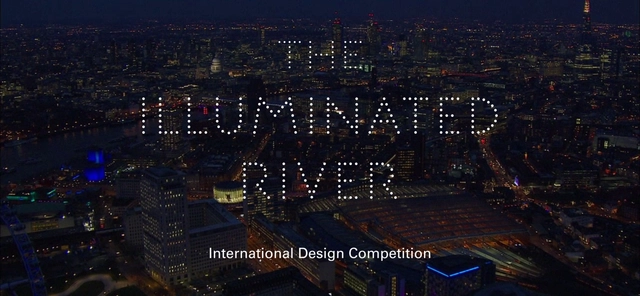
The Illuminated River Foundation has announced a shortlist of six firms that will compete to design a new permanent light installation along the Thames River in London. From a pool of 105 teams (made up of 346 different firms), the winners were selected based on experience, past projects and team composition. The six finalists will now continue on to develop lighting schemes for the Westminster, Waterloo, London and Chelsea Bridges, as well as a design masterplan for the 17 iconic London bridges between Albert and Tower.
Continue reading to see the list of six finalists.
https://www.archdaily.com/794689/diller-scofidio-plus-renfro-adjaye-associates-among-firms-shortlisted-for-londons-illuminated-river-competitionPatrick Lynch
Can't Build Up? Why Not Build Down? The Case For Subterranean Architecture
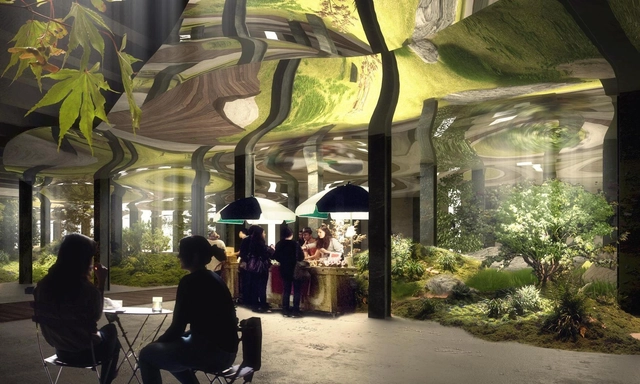
While most cities strive for a sustainable level of urban density, there are limitations at play that can restrict the amount of upwards growth. In Mexico City, for example, height restrictions guide the growth outwards rather than upwards, and often the preservation of historic low-rise architecture halts expansion plans. In an attempt to mine the possibilities for alternative expansion, Kurt Kohlstedt from 99% Invisible has presented a round-up of the different ways in which architecture can instead grow below the ground surface.
https://www.archdaily.com/794320/cant-build-up-why-not-build-down-the-case-for-subterranean-architectureLauren Crockett
Inspired by the Concept of Blooming Flowers MOB Architects' Residential Project is Shortlisted for the 2016 WAF

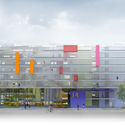
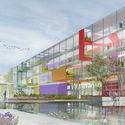
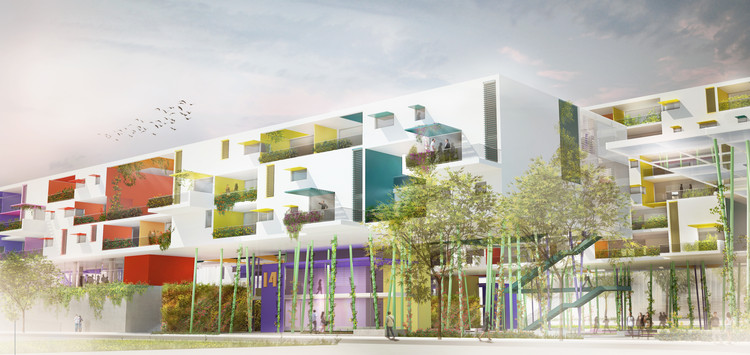
MOB Architects’ project Liaisons has been shortlisted for the 2016 World Architecture Festival in the Future Projects \ Residential category and has won the Residential category for the 2016 AR MIPIM Future Projects Awards.
Designed for the MOLEWA (Mount Lu World of Architecture) competition, Liaisons is a residential project in Ruichang, China near the “Flower Ocean Garden,” one of the world’s largest flower theme parks.
Inspired by the concept of blooming, the project centers on introducing a flourishing essence to the neighborhood by analyzing floral and vegetal properties in pixels and converting them into patterns, which are applied in arrangements and spatial organization principles.
https://www.archdaily.com/794451/inspired-by-the-concept-of-blooming-flowers-mob-architects-residential-project-is-shortlisted-for-the-2016-wafSabrina Santos
Studio Gang Selected to Design Next Iteration of National Building Museum's Summer Block Party
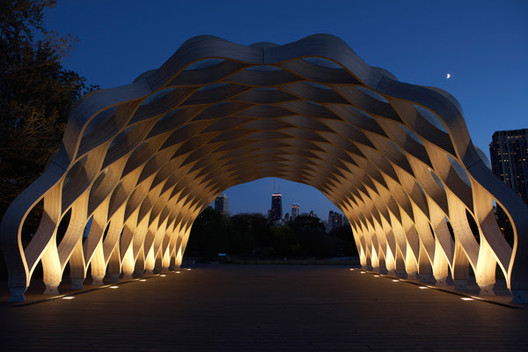
Studio Gang has been selected to design next year’s installation of the Summer Block Party at the National Building Museum in Washington, D.C. The temporary exhibition will be the latest in the Museum’s annual series, after this year’s ICEBERGS by James Corner Field Operations, and previous installations like Snarkitecture’s The BEACH in 2015, and Bjarke Ingels Group’s BIG Maze in 2014.
https://www.archdaily.com/794505/studio-gang-selected-to-design-next-iteration-of-national-building-museums-summer-block-partySabrina Santos
Maison Edouard François Transforms Sports Stadium Into Residential and Commercial Green Space

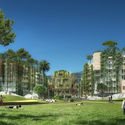
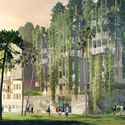
Maison Edouard François, in partnership with ABC Architectes, has won the competition for the requalification of the former Ray Stadium into housing, landscaped gardens, shops, sports facilities, and parking, beating other competing firms like Herzog & de Meuron and Rudy Riciotti.
Located in Nice, France, the project aims to provide its swiftly growing neighborhood with a “new green lung” by mimicking the form of a vegetated hill and incorporating elements of classic Niçois architecture like white stone and wood. The reinvented stadium becomes a bridge between the urban and natural landscapes, linking new constructions of the Boulevard Gorbella with the new Ray Park.



https://www.archdaily.com/794437/maison-edouard-francois-transforms-sports-stadium-into-residential-and-commercial-green-spaceSabrina Santos
Never-before-heard Audio Gives us Insight to the Creativity of Prominent Architects and Reveals Forgotten Bauhaus Secrets
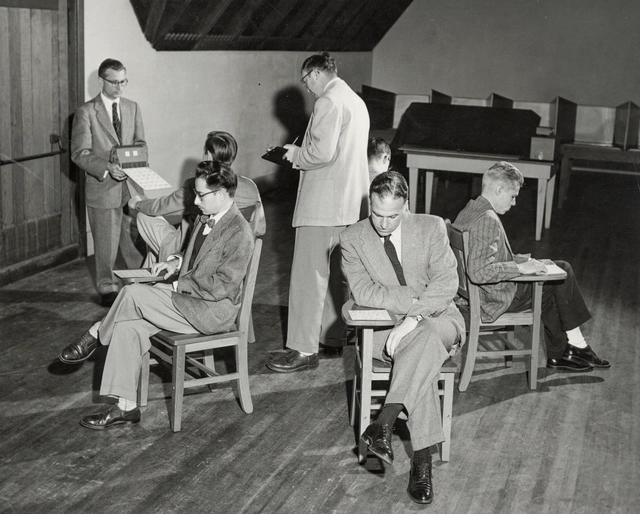
In two intriguing new podcasts, the team over at 99% Invisible uncovered some never-before-heard audio and forgotten secrets about elements of architectural history. In the first, The Mind of an Architect, producer Avery Trufelman explores the audio archives of the Institute of Personality Assessment and Research (IPAR), where a study undertaken in the late 1950s mapped the personalities of prominent architects. Eero Saarinen, Philip Johnson, and Richard Neutra were among the study group, and the data came to some interesting conclusions about the role of ego and the presence of creativity.
In the second, Photo Credit; The Negatives of the Bauhaus Sam Greenspan explores the misattribution of credit for some of the most prolific images of the Bauhaus. Taken in the 1930s by German photographer Lucia Moholy, the historic images paint one of the clearest pictures of life at the Bauhaus. In the turmoil of the war, her negatives were lost, and absorbed by the school's collection, denying her the credit she deserved.
https://www.archdaily.com/794384/never-before-heard-audio-gives-us-insight-on-the-creativity-of-prominent-architects-and-reveals-forgotten-bauhaus-secretsLauren Crockett
The Best Architecture Schools in the U.S. 2017
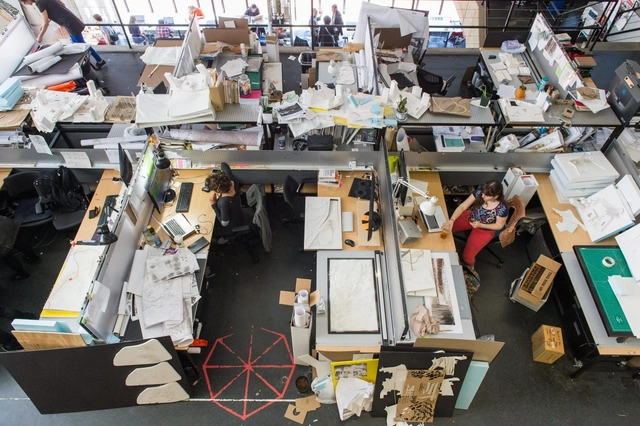
With schools around the country starting back up again, it’s time for the latest edition of DesignIntelligence’s yearly rankings of the Top Architecture Schools in the US for both undergraduate and graduate programs. This year, CEOs, managing partners, and human-resource directors from more than 2,000 firms were asked to list the 10 programs from each category they felt best prepared students for success in the profession of architecture.
This information, along with detailed accounts on the best programs that teach skills in design, computer applications, sustainability and construction methods & materials, factored into the creation of the 2017 rankings. In addition, over 2,785 students were polled on the quality of their program and their plans for post-graduation. The two top schools, Cornell for undergraduates and Harvard for graduates, were once again named the best programs to attend, according to the study.
Read on to see the list of the top 10 undergraduate and graduate programs in the US.
https://www.archdaily.com/794585/the-best-architecture-schools-in-the-us-2017Patrick Lynch
Photographer Mirna Pavlovic Captures the Decaying Interiors of Grand European Villas
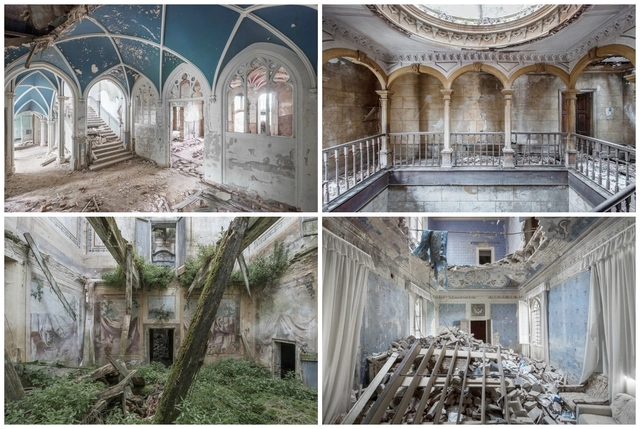
Architectural photographer Mirna Pavlovic has an obsession with abandoned places. For her, their appeal lies in their ability to exist on a different temporal plane from the rest of reality – both impossibly ancient and frozen in the present.
“They are never truly dead, yet never really alive,” Pavlovic explains. “Precariously treading along the border between life and death, decay and growth, the seen and the unseen, the past and the present, abandoned places confusingly encompass both at the same time, thus leaving the ordinary passer-by overwhelmed with both attraction and revulsion.”
For her latest series, Dulcis Domus, Pavlovic trekked over fences and past “no trespassing” signs to capture the once-glorious villas, palaces and castles of Europe that have now been left to decay, slowly returning to the Earth that existed before them. Through photography, Pavlovic attempts to highlight social issues through an aestheticised approach, allowing viewers to “see with fresh eyes what lies beneath those spots that we pass by on the street.”
Continue reading to see a selection of photographs from the series – hover over the images to see where each villa is located.
https://www.archdaily.com/794562/photographer-mirna-pavlovic-captures-the-decaying-interiors-of-grand-european-villasPatrick Lynch
DETAIL Prize 2016 Winners Announced

DETAIL Magazine has announced the winners of the DETAIL Prize 2016. This year, the jury selected five projects from a pool of 337 projects from 42 different countries by looking for “realizations in which the overall design concept and the detailing were brought together in a coherent way.” The winners were noted for being “future-oriented, innovative and pioneering projects from different disciplines that have outstanding architectural and technical qualities.”
This is the seventh edition of the biennial award, which aims to “strengthen architecture in public debate, strengthen the role of architects in public, and strengthen networking among architects, industrialists, developers and politicians.”
Continue after the break to see the winners.
https://www.archdaily.com/794557/detail-prize-2016-winners-announcedPatrick Lynch
Herzog & de Meuron, OMA, MAD Among 13 Shortlisted for “Design of the Year 2016”
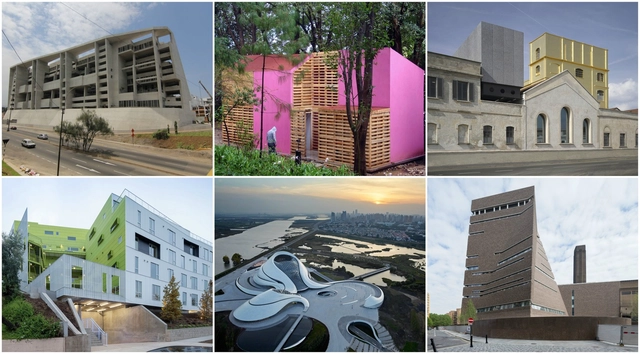
The Design Museum in London has announced the shortlist of 13 architecture projects being considered for the 2016 edition of the prestigious Beazley Design of the Year award. From Tatiana Bilbao’s Sustainable Housing Prototype to MAD Architects’ Harbin Opera House, the list features projects from a wide variety of scales and programs, celebrating some of architecture’s most significant achievements from the past year.
The award, now in its ninth year, “celebrates design that promotes or delivers change, enables access, extends design practice or captures the spirit of the year.” Nominees are selected in six categories, including Architecture, Digital, Fashion, Graphics, Product and Transport. An exhibition on the projects will be on display from 24 November 2016 – 19 February 2017.
Last year, the overall architecture prize was awarded to Alejandro Aravena's UC Innovation Center for the building’s ability to be “permeable – visually, socially and climatically with its environment."
View all of the shortlisted buildings, after the break.
https://www.archdaily.com/794526/herzog-and-de-meuron-oma-mad-among-13-shortlisted-for-design-of-the-year-2016Patrick Lynch
2016 Olympics: Two Legacies for Rio
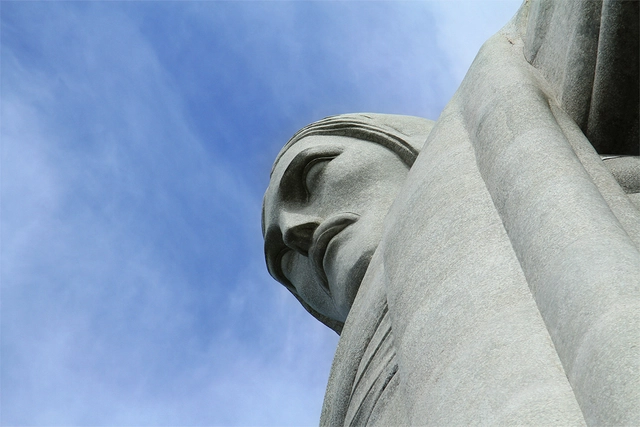
Just over a week ago in beautiful Rio de Janeiro the Olympic Games, the world's largest sporting event, came to an end. The Games, as well as the FIFA World Cup, have been a driving force for the city over the last six and a half years. In the wake of the frenzy caused by the much-anticipated event, Rio will have the Paralympics, which will take place between the 7th and 18th of September. But then what?
The word "legacy" being associated with major world events is nothing new. We see it used a lot when referring to the Olympics and the World Cup, and it’s come up time and time again in recent years when we look at the lasting effects these events have had on host cities like Barcelona (1992), Athens (2004), Beijing (2008) and London (2012). Essentially, the issue revolves around some fundamental questions: Who are the major beneficiaries of the "legacy" of the Olympic Games? Were the huge public investments worth it? Will there be any improvement for the general population? Can the equipment that was built be adapted for everyday use?



https://www.archdaily.com/794240/2016-olympics-two-legacies-for-rioRomullo Baratto
Tredje Natur, AART Architects and Arup Team Up for Copenhagen Island Competition Proposal
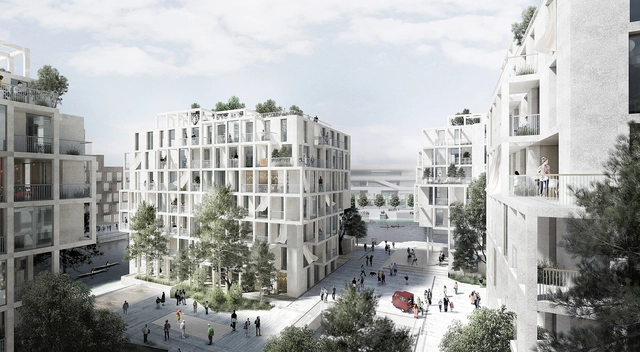
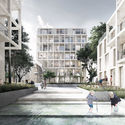
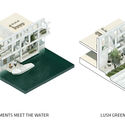
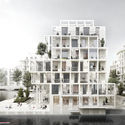
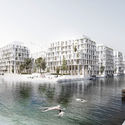
TREDJE NATUR, AART Architects, and Arup have teamed up for a competition proposal to redesign Kronløbsøen, an island development marking the transition between port and city in Nordhavn, Copenhagen. Composed of 30,000 square meters of housing, six water-rooms, a houseboat colony, harbor bath, and multi-story underwater parking, the project aims to create an island celebrating all aspects of harbor life.
Taking into account the local port’s spirit, scale, material palette, and history, Kronløbsøen is “composed of eight porous monoliths shaped by physical connections, visibility, and microclimate, creating the optimal conditions for housing and urban life.”

https://www.archdaily.com/794428/tredje-natur-aart-architects-and-arup-team-up-to-create-copenhagen-island-developmentSabrina Santos
Luxury Living Through the Ages, From the Castle to the Villa
.jpg?1472236051&format=webp&width=640&height=580)
Although societies have transformed through the ages, wealth never truly seems to go out of style. That said, the manner in which it is expressed continually adapts to each successive cultural epoch. As a consequence of evolving social mores and emerging technologies, the ideal of “luxury” and “splendour” sees priorities shift from opulence to subtlety, from tradition to innovation, and from visual ornamentation to physical comfort.
AD Classics are ArchDaily's continually updated collection of longer-form building studies of the world's most significant architectural projects. In these ten examples of "high-end" residences, which represent centuries of history across three separate continents, the ever-changing nature of status, power and fine living is revealed.


.jpg?1472236051)
https://www.archdaily.com/794005/ad-classics-round-up-luxury-living-through-the-agesLuke Fiederer
Instagram Will Now Let You Zoom Into Your Favorite Buildings
.gif?1472762798)
A feature Instagram users have spent years longing for is finally here: Zoom. Just released today, the update to the iOS app finally will allow you to pinch to zoom in on photos and videos, just like you can in most photo viewing apps (no more screenshotting necessary!). This means you can now get a closer look at the architectural details of your favorite buildings on Instagram, from doorways to moldings to joints. Though be warned, just because you can make it bigger doesn’t mean it will necessarily be clearer - Instagram still will only support images 1080 pixels wide.
See it in action after the break.
https://www.archdaily.com/794484/instagram-will-now-let-you-zoom-into-your-favorite-buildingsPatrick Lynch


