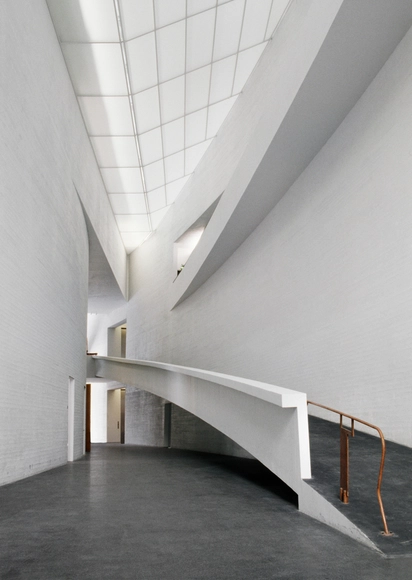
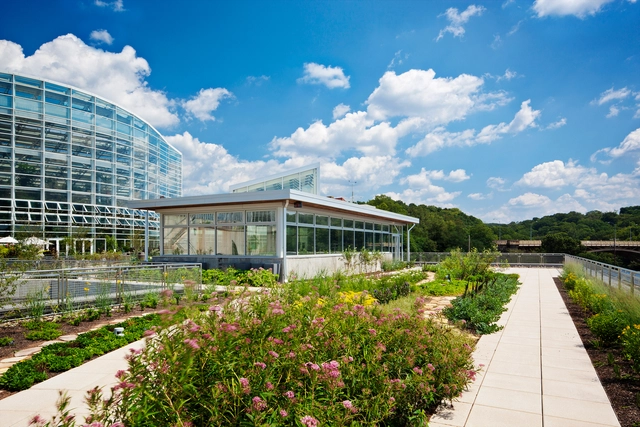
Steven Holl has been awarded the 2016 Daylight Award in Architecture, which honors architects “who have distinguished themselves by realizing architecture or creating urban environments that showcase a unique use of daylight, for the benefit of overall quality of life, its impact on human health, well-being and performance, and its value to society.”
Archive 2 / Sauerbruch Hutton. Image Courtesy of Lars Müller Publishers
Louisa Hutton and Matthias Sauerbruch, of Berlin-based practice Sauerbruch Hutton, have recently published Archive 2– a second series of monographic volumes dedicated to the work of their practice between 2006 and 2015. In the nine years between two sets of books, the architects have observed that "the expansion of the digital realm has had a profound effect on the way we perceive, discuss and produce architecture." As such, and on the occasion of their second volume, they are inviting people to share their thoughts "on the convergence of architecture in concrete, pixel and print."
https://www.archdaily.com/795612/archive-2-sauerbruch-hutton-reflect-how-we-perceive-discuss-produce-architectureAD Editorial Team
View to Historical Relics. Image Courtesy of Studio Pei-Zhu
Studio Zhu-Pei has unveiled their design for the Jingdezhen Historical Museum of Imperial Kiln, a museum dedicated to the unique history of ceramics in Jingdezhen, China. Located in the heart of the historic china-making district of the city, nestled between ceramic workshops that date back to the Ming and Qing dynasties, the museum draws inspiration from the special forms of the kilns, creating gallery spaces out of a series of hand-crafted vaulted structures.
The competition brief asked architects to renovate and expand the historic home of San Pellegrino, the world’s leading sparkling mineral water company, with a “truly innovative and technologically-advanced design” aimed at integrating into the natural aesthetic of the surrounding terrain, while responding to the iconic identity of the S. Pellegrino brand.
Continue reading to see each proposal along with official descriptions from each firm.
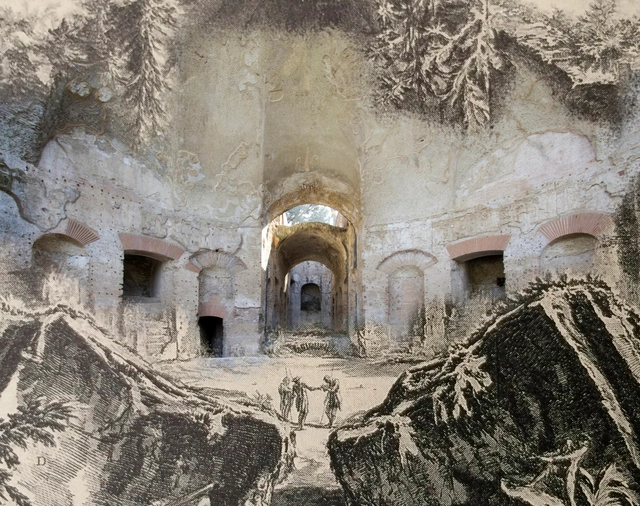
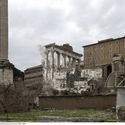
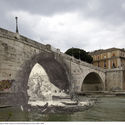
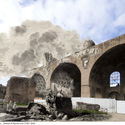
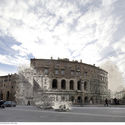
Driven by an intrigue in the ruination of Roman architecture, Brazilian architect, and photographer Olympio Augusto Ribeiro has undertaken a fascinating comparative analysis of Giovanni Battista Piranesi's architectural etchings and the scenes as they stand today. Travelling to each of the Italian sites brought to life in Piranesi's drawings, Ribeiro has managed to recreate the original angle and shot, eventually compositing them together to create collages which cross time periods.
Piranesi's drawings show different architectural styles side by side, and it was this coexistence that urged Ribeiro to investigate what has changed in Rome and Tivoli since their conception. The project, officially dubbed "Piranesi Project (In search of Giovanni Battista Piranesi’s Rome, 1720-1778)" took Ribeiro two months to photograph, meticulously recreating the images across Rome, Villa Adriana, and Tivoli.
A recent study conducted by Dodge Data & Analytics with the American Institute of Architects (AIA) has found that architects and building owners are beginning to place higher priority of the impacts of design decisions on human health. Nearly 75% of architects and 67% of owners responded that health considerations now play a role in how their buildings are designed, indicating that healthy environments have become an important tool in marketing to tenants and consumers.
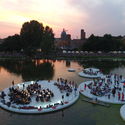
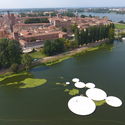
Genoa-based studio Space Caviar has recently unveiled Arcipelago di Ocno, an aquatic installation on a lake in Mantova, Italy, which is the 2016 Italian Capital of Culture. Named after the local demigod Ocno, the installation recalls the form of a lotus, a plant with an extensive presence in Mantova’s lakes.
Acting as an aquatic piazza for the city, the archipelago of floating islands “[extends] Mantova’s urban fabric onto the lakes that surround its historic center,” utilizing modular units to create a venue for Mantova’s cultural activities for years to come.
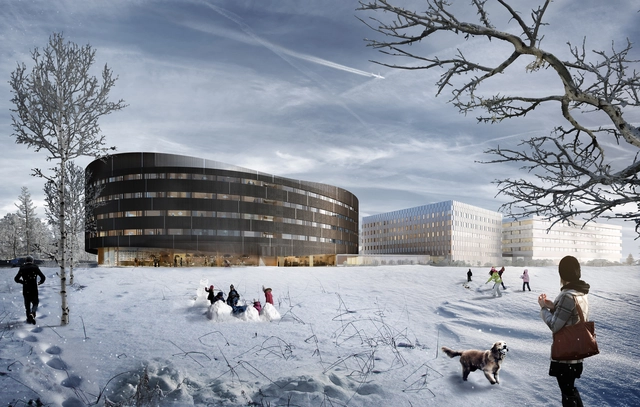
SPOL Architects’First Hotel OSL, a hotel near the newly extended Oslo Airport, has received planning approval after a unanimous vote in the Jessheim City Council. Designed to be a destination in itself, the hotel will be an environmentally friendly oval shape, featuring 300 rooms and a large atrium for sports activities.
Acting as a “meeting place for globe trotters,” the hotel aims to become a shared space for shared experiences for travelers.
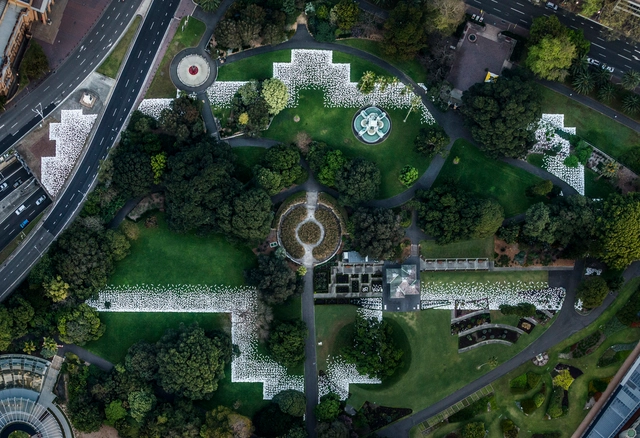
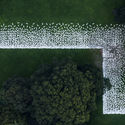
Kaldor Public Art Projects, in collaboration with artist Jonathan Jones, has created barrangal dyara (skin and bones), the first Kaldor Public Art project to be produced together with an Aboriginal artist in the Royal Botanic Garden of Sydney, Australia. Inspired by the history of the 19th century Garden Palace building, which originally stood in the Royal Botanic Garden from 1879 to 1882 before burning to the ground, the artwork marks the original footprint of the building with a sculptural installation of 15,000 white shields spanning 20,000 square meters.
Where the Garden Palace’s dome once crowned the city, a dynamic meadow of kangaroo grass now disrupts the garden’s formal European design.
Eight Aboriginal language soundscapes, which were developed with communities throughout south-east Australia, are installed throughout the site.
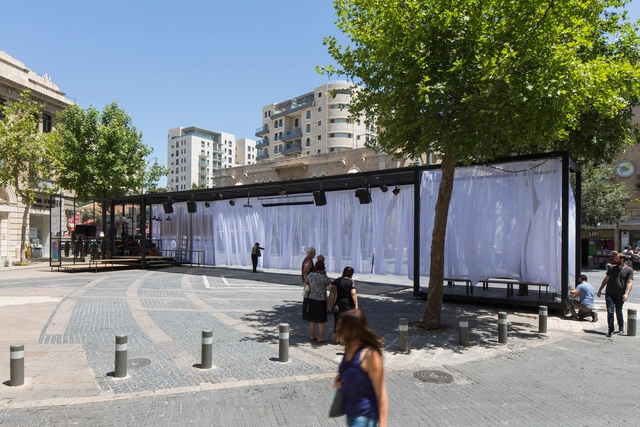
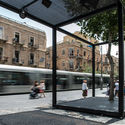
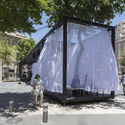
Located in Zion Square parallel to the tramway line, the pavilion creates a space to host art programs including lectures, concerts, dance performances, video screenings, and theater productions. The structure beautifully frames a dialogue between the urban routine and cultural experiences, giving users a new understanding of the Israel Festival, and of the potential of the spaces within their city.
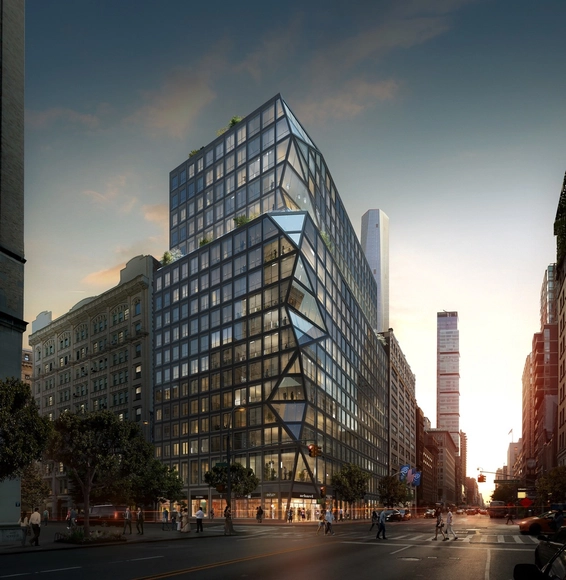
OMA has unveiled its first residential tower for New York. Located at 121 East 22nd Street, the building sits at the intersection of two neighborhoods, with the busy Madison Square area to the North-West and the relative tranquility of Gramercy Park to the South. The building's facade reflects this duality, with a striking "prismatic corner" of glass contrasting the rest of the building's more conventional window layout. The corner element is designed to frame views, in some places directing users' attention up towards the sky and in others along the busy streets below.
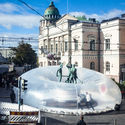
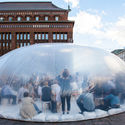
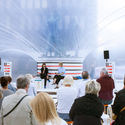
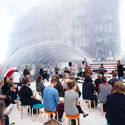
German collective Plastique Fantastique have created “superKOLMEMEN,” an inflatable structure encircling a historic sculpture in Three Smiths Square (Kolmen sepän aukio) in downtown Helsinki for Helsinki Design Week. Throughout the event, the installation was used as a space for lectures, performances and workshops, as well as a casual gathering place.
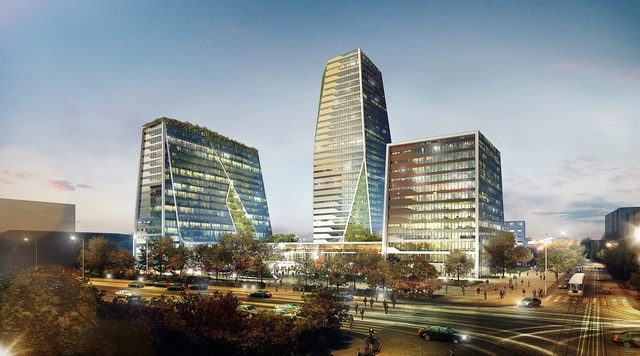
Five notable projects have been selected as finalists for the 2016 International Highrise Award (IHA). One of the world’s most important architectural prizes for highrises, the award is given to projects that exemplify the criteria of future-oriented design, functionality, innovative building technology, integration into urban development schemes, sustainability, and cost-effectiveness.
Led by 2014 IHA winner Stefano Boeri, the competition’s world-class jury noted the significant trend in high-rise development away from office buildings and towards residential towers, as well as the geographic dichotomy of the finalists.
“Asia versus America is an interesting conclusion at this point – they are the defining forces on the map,” commented jury member Ole Scheeren. “In Asia you can see the impact of the tropical, climatic and environmental consequences are very well translated into new types of residential high-rises. In New York the finalists all show some way of power-statement.”
See the 5 finalists with comments from the jury, after the break.
One of Europe’s most prestigious architecture awards, The European Prize for Architecture is given annually to architects who have ‘blazoned a new path and direction for an architecture that is deeply humane and committed to forward the principles of European humanism’.
In this TED Talk, co-founder of MASS Design Group, Michael Murphy, presents the question “what more can architecture do?” as the springboard philosophy behind the practice. Following a trajectory of MASS’s projects, Murphy reflects upon their practice’s progress in seeing architecture as an opportunity to invest in the future of communities.
Self-proclaimed “Instagram purist” Olivier Martel Savoie (@une_olive) has created #olive_libraries, a series of Instagram photographs portraying libraries around the world, using only the camera on his iPhone. Over the past two years, Savoie has traveled from his home city of Montréal, to Berlin, Amsterdam, Budapest, Rome, Riga, Paris, Moscow, and several other cities photographing the stunning architecture of libraries. Encountering language barriers and even intense security, Savoie’s dedication to taking the perfect photo has resulted in a stunning collection of images.
Experience the beauty of libraries around the world, after the break.
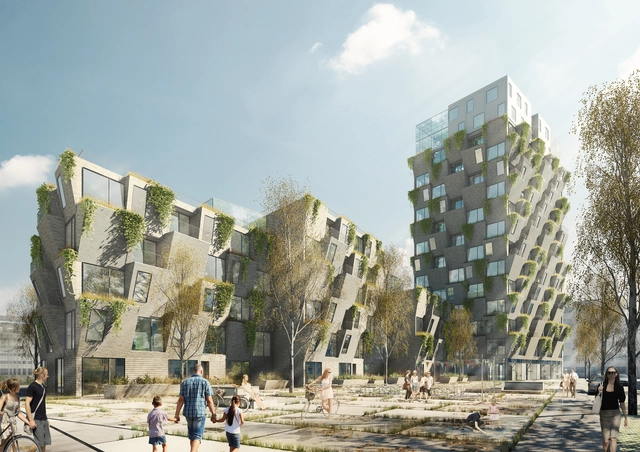
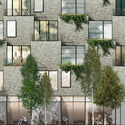
Denmark-based Studio LOKAL has won the competition for the design of a residential tower in Copenhagen, with The Hanging Gardens, its proposal for a merger of the historic brick buildings of Carlsberg with the concept of a personal garden for each resident.
Located on the site of a former vegetable market, the proposal aims to return to these homegrown roots by encouraging residents to grow their own produce in one of the tower’s gardens. Furthermore, the ground floor of the building will house a farmers market where residents can trade their own produce.
The Museum of Modern Art in New York (MoMA) has released an online archive of over 3,500 of the museum’s past exhibitions from its founding in 1929 to today. Free and available to the public, the database contains photographs, press releases, checklists, catalogues and lists of featured artists.
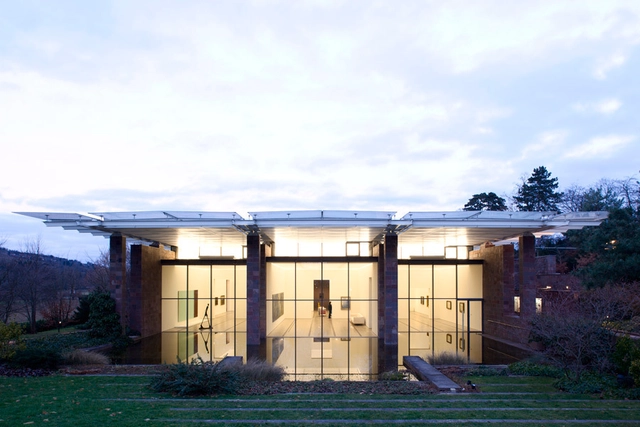
The office of Peter Zumthor has been selected to design an expansion to the Beyeler Foundation, located just outside Zumthor’s childhood home of Basel, Switzerland. The Swiss architect was chosen from a prestigious shortlist of 11 firms to add to the existing museum building, designed by Renzo Piano Building Workshop and completed in 1997.
“The sky above Basel, the city and its surroundings–those are the landscapes of my youth,” said Zumthor. “It is heart-warming to be able to design a major building here.”
Videos
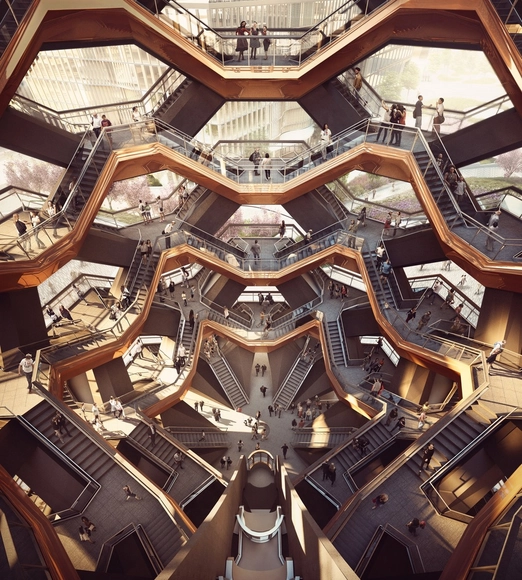
Interior View of the Vessel. Image Courtesy of Forbes Massie-Heatherwick Studio
UPDATE: We've added a video of Thomas Heatherwick explaining the design of "Vessel," after the break!
Thomas Heatherwick is bringing a new public monument to New York City. Today, Heatherwick Studio revealed the first renderings of “Vessel,” a 15-story tall occupiable sculpture comprised of 154 intricately interconnecting flights of stairs that will serve as the centerpiece of the new Hudson Yards development in west Manhattan.
Similarly to how he prefers to practice architecture, Bjarke Ingels likes speaking in big, bold assertions. In his recent profile for WIRED UK, the Danish architect makes quite a few of those assertions, among them the belief that architecture could learn a thing or two from the imaginative world of architecture-based video games such as Minecraft.
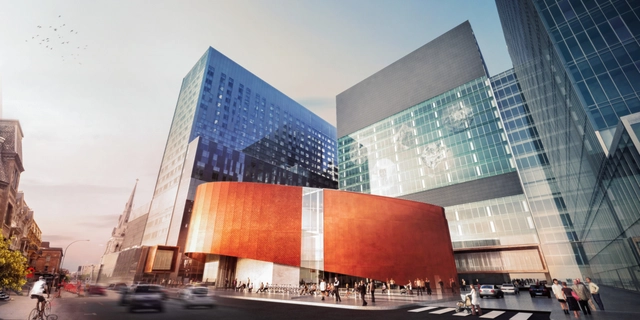
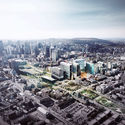
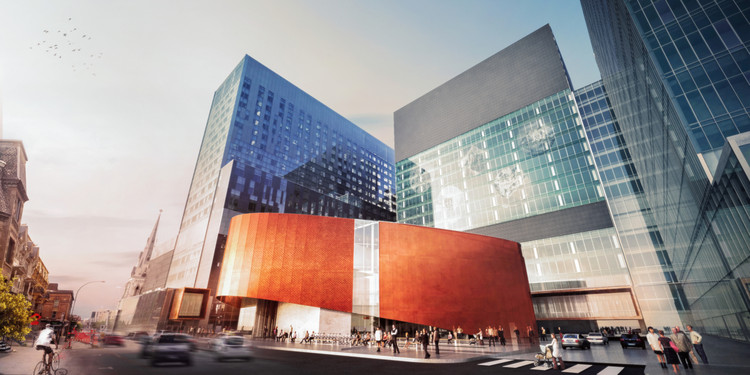
CannonDesign and NEUF architect(e)s have unveiled the design for the Centre Hospitalier de l’Université de Montréal (CHUM), the largest healthcare construction project in North America and one of the largest current healthcare projects in the world, which has been in the works for almost a decade.
Spanning over 3 million square feet, the 22-story complex will merge three aging hospitals into one, creating a space with 772 single-bed patient rooms, 39 operating theaters, and more than 400 clinics and examination rooms.
“Belonging,” the curatorial quintet of the 2016 Oslo Architecture Triennale, After Belonging, argue, “is no longer something bound to one’s own space of residence, or to the territory of a nation.” For this group of Spanish-born architects, academics and theorists—Lluís Alexandre Casanovas Blanco, Ignacio Galán, Carlos Minguez Carrasco, Alejandra Navarrese Llopis and Marina Otero Verzier—the very notion of our belongings and what it means to belong is becoming increasingly unstable.
After Belonging is the sixth incarnation of the Triennale and the first one in which a single curatorial thread has woven all of the festival’s activities together, including the international conference. The goal of the two primary exhibitions—On Residence and In Residence, including a series of Intervention Strategies—is to develop platforms with the aim of “rehearsing research strategies,” providing new ways for architects to engage with “contemporary changing realities."
https://www.archdaily.com/795067/atelier-bow-wow-oma-amale-andraos-live-from-the-2016-oslo-architecture-triennale-after-belongingAD Editorial Team
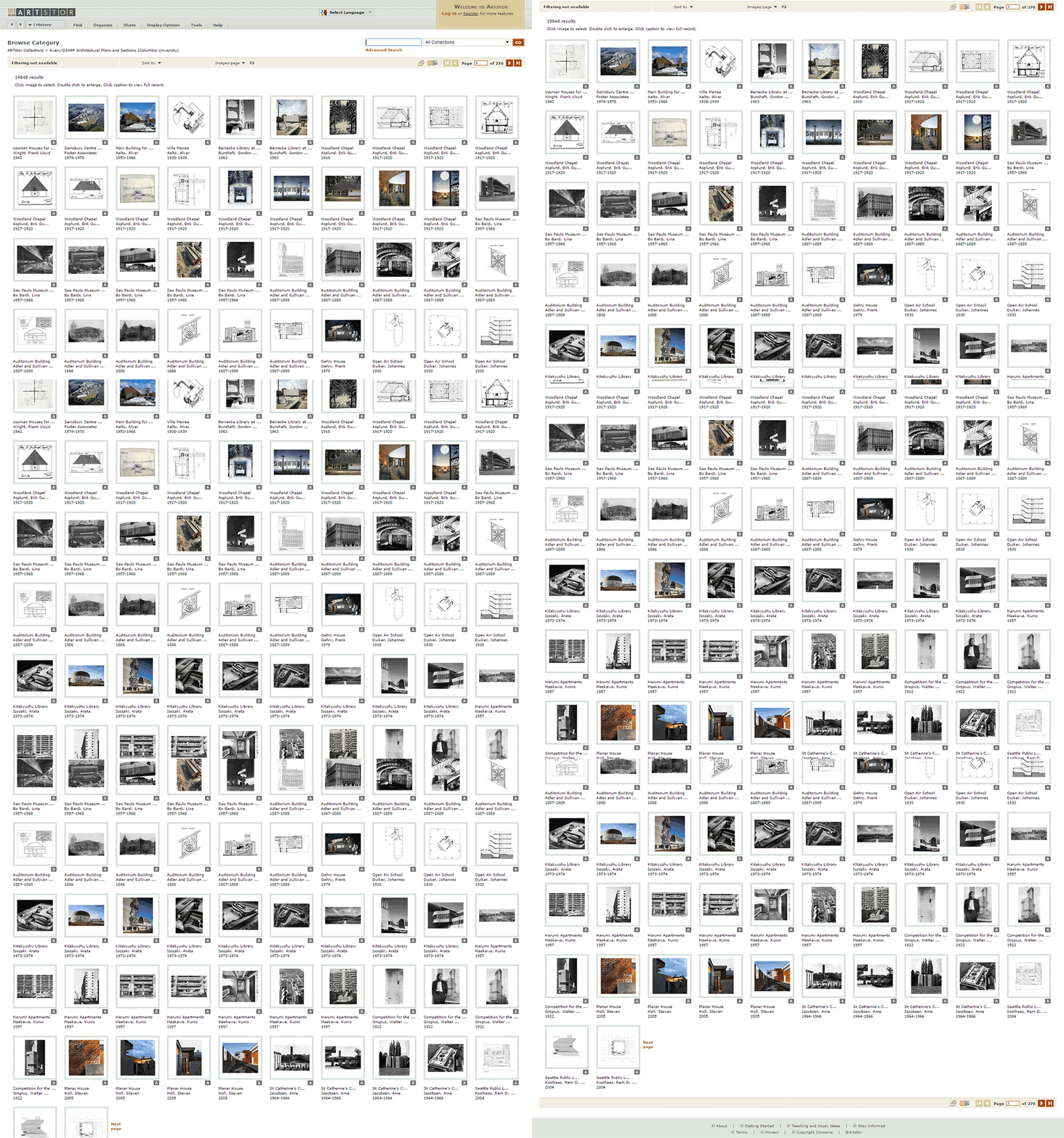
The Visual Resources Collection (VRC) at the Columbia University Graduate School of Architecture, Planning and Preservation (GSAPP) has released the second phase of their online database, now containing 20,000 images of architectural plans, sections, diagrams and photographs. The Avery/GSAPP Architectural Plans & Sections Collection contains images related to GSAPP’s history of modern architecture curriculum, which focuses on the history of modern buildings, with an emphasis of 20th century Modernism.