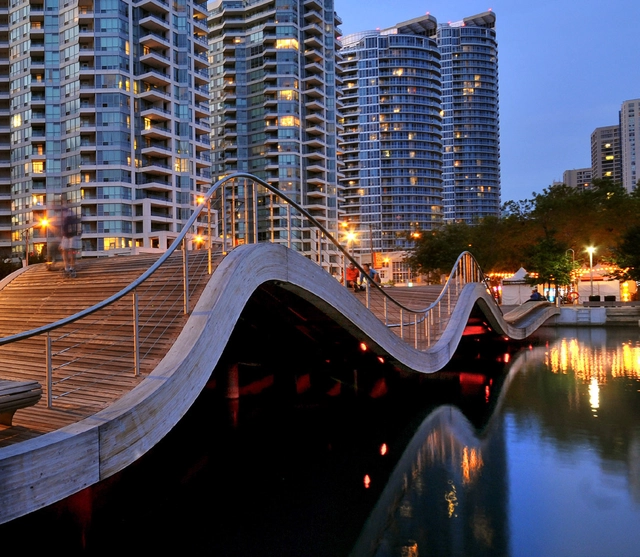
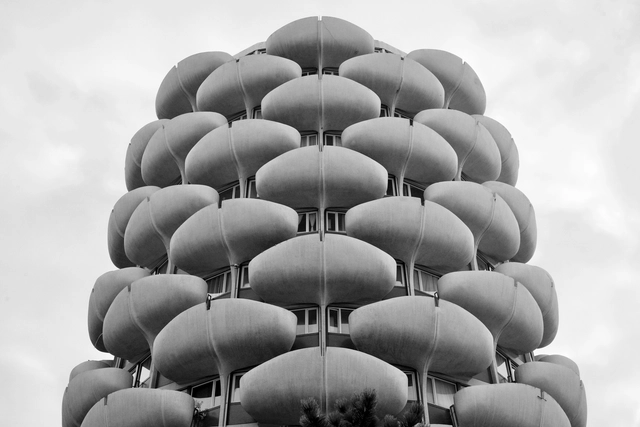
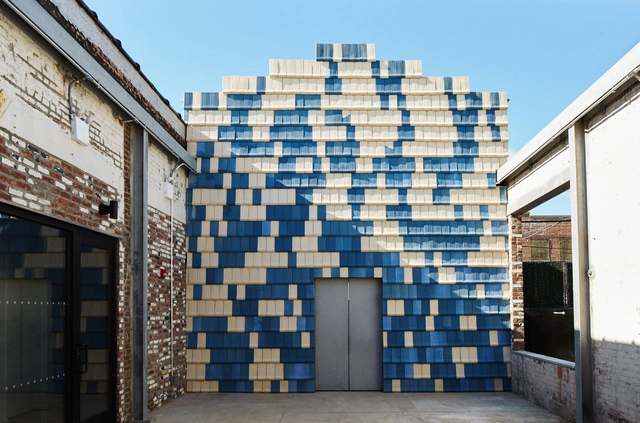
AIA New York has announced the winners of their 2017 AIA New York Design Awards, highlighting the best new projects located in the Empire State or completed by AIA NY registered architects across categories of architecture, projects, interior design and urban planning.
Within the four categories, winning projects have been granted either an “Honor” or “Merit” distinction. Each project has been chosen for its “design quality, response to its context and community, program resolution, innovation, thoughtfulness, and technique.” The winners scale in scale from temporary exhibitions to large-scale urban interventions.
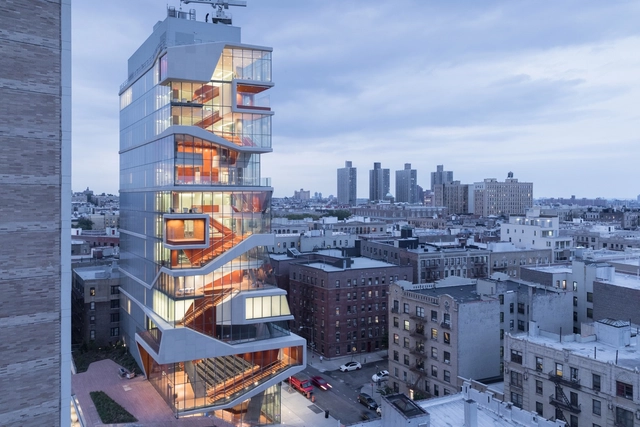
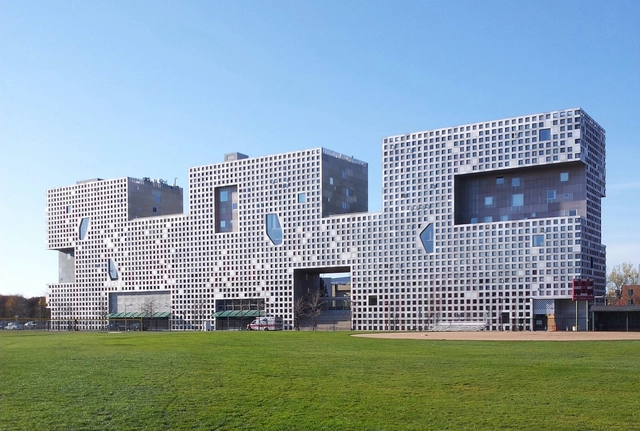
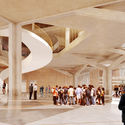
This year 22 of the 35 winners were New York City-located projects, including the grand prize winner, Diller Scofidio + Renfro’s striking Roy and Diana Vagelos Education Center at Columbia University’s medical campus. Continue reading to see the full list of winners.
With cracked paint, overgrown vines, rust, and decay, abandoned buildings have carved out a photographic genre that plays to our complex fascination with the perverse remnants of our past. While intellectual interest in ruins has been recorded for centuries, the popularity and controversy of contemporary "ruin porn" can be traced back to somewhere around 2009, when photographer James Griffioen’s feral houses series sparked a conversation about the potential harm in the aesthetic appropriation of urban collapse.
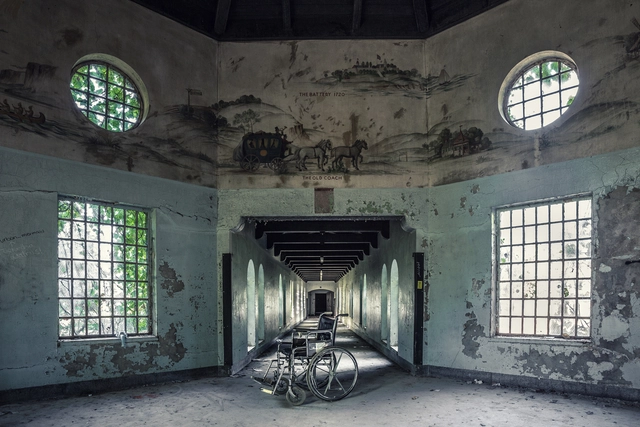
A favorite subject within this field is the American insane asylum, whose tragic remains carry echoes of the unsavory history of mental illness treatment in the United States. These state-funded asylums were intensely overcrowded and often housed patients in nightmarish conditions in the 20th century. Beginning in 1955, with the introduction of the antipsychotic drug Thorazine, these institutions were closed in large numbers, never to be reopened [1]. Now, these closed but un-demolished asylums that dot the country are the subject of "ruin porn" that neglects an equally important piece of the buildings’ narrative: the beginning. In his recent photobook Abandoned Asylums, Photographer Matt Van der Velde depicts this earlier period of asylum architecture, when the institutions were built in the belief that the built environment has the power to cure.
Global higher education analysis firm Quacquarelli Symonds (QS) has released in 2017 rankings of the world’s top universities for the study of Architecture & Built Environment. This year, for the seventh edition of the survey, QS has expanded the ranking to list the world’s top 200 schools, including institutions across all six inhabited continents.
For the third year in a row, MIT has topped the list, finishing ahead of the Bartlett School of Architecture and the Delft University of Technology (TU Delft). Read on for the full rankings.
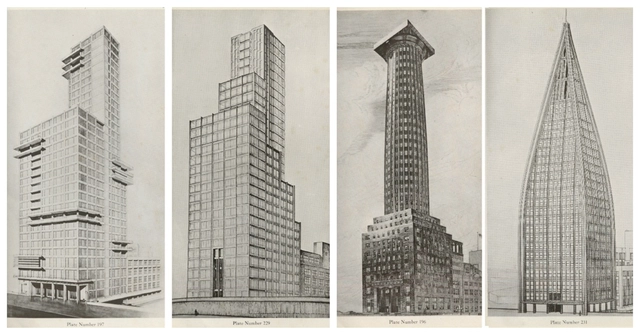
Designs for the Chicago Tribune Tower by (left to right) Walter Gropius and Adolf Meyer; Max Taut; Adolf Loos; and Bruno Taut, Walter Gunther, and Kurz Schutz. Image via skyscraper.org
The Chicago Architecture Biennial has announced the first exhibit that will on display during the event’s second edition from September 16 to January 7, 2018 – a contemporary reboot of one of architecture’s most well-known competitions, the Chicago Tribune tower design contest. Sixteen young architects from around the world will contribute new versions of the iconic skyscraper that will be displayed as a series of 16-foot-tall architectural models in the Chicago Cultural Center, the Biennial’s main venue.
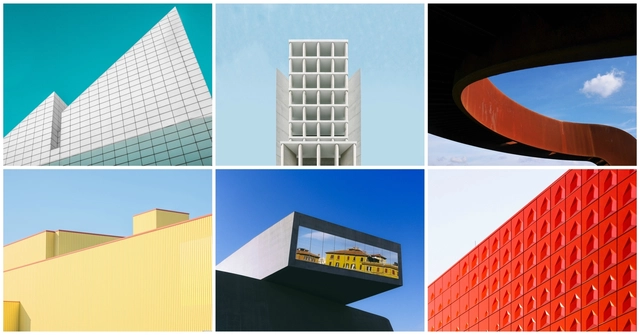
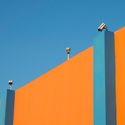
Global photography community and marketplace EyeEm has announced the winners of their Minimalist Architecture Photography Mission to find photos that best highlight “the beauty of minimalism in architecture.” Organized alongside art and design blog We and the Color, the competition saw photographers from across the globe submit over 45,000 images focusing on the color, lines, shapes, and compositions of contemporary, minimalist architecture.
From the entries, 20 images were selected as winners with a top 3 was chosen by German minimalist photographer Matthias Heiderich. Read on to see the full list of winners.
Mies van der Rohe’s seminal Barcelona Pavilion is one of the most well-loved structures in the history of architecture, a de facto pilgrimage site for architects and architecture lovers around the world. Now, even those unable to make the trip have the opportunity to get a tour of the beautiful structure, thanks to a new virtual walkthrough produced by The Mies van der Rohe Foundation.
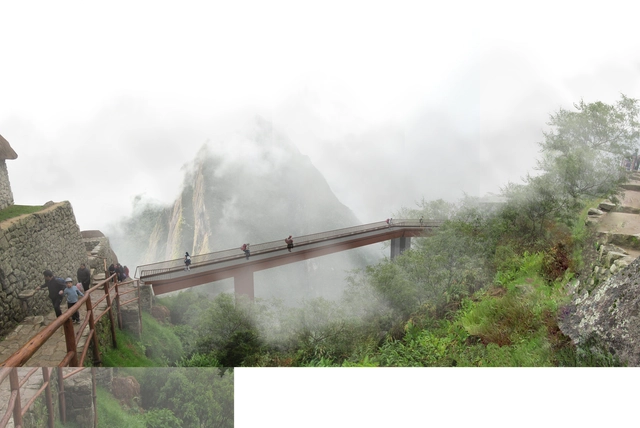
Historical preservation and integration with nature, two crucial themes in the development of the Peruvian structure whose territory is a synthesis of historical landscapes. The winning project of the “Ideas de Arquitectura” contest in Machu Picchu National Archaeological Park (Cusco) not only achieves both themes but also weaves and customizes them. The project mimics the architectural tradition of the place while bringing its own contemporary language. It creates bridges of new relations while respecting the preexisting ones, in continuation with the nature of the place, harmony between nature and history. And of course, it invites visitors to be part of this experience.
Learn more details about this project and its approach to what has been the development of landscape of its masterplan that was made for the Archaeological Park.
Photographer Laurian Ghinitoiuhas visited Herzog & de Meuron's Elbphilharmonie Hamburg, Germany – a 2017 winner of the ArchDaily Building of the Year award. The striking silhouette of this cultural centre and concert hall, which is identical in ground plan to the brick block of the older building upon which it sits, is often photographed as an isolated object. In this photo-essay, the context of the port around the project is often foregrounded – and unusual views offer new perspectives onto its iconic design.
The first edition of ArchDaily China's Building of the Year Awards has now come to a close. Like our global Building of the Year Awards, the awards given by ArchDaily China rely on the collective intelligence of an audience of informed and engaged readers to select the winners.
Once again, ArchDaily readers demonstrated their collective influence, with over 7,000 votes cast over 3 weeks to filter over 300 projects published on ArchDaily China in 2016 to find the 3 best works that mainland China and Hong Kong have to offer. Read on to see the winners.
https://www.archdaily.com/806691/winners-of-the-2017-archdaily-china-building-of-the-year-awardsAD Editorial Team
James Welling, 8183, 2016 from the series Chicago, 2016-2017, Courtesy the Artist and David Zwirner, New York and London. Image Courtesy of Chicago Architecture Biennial
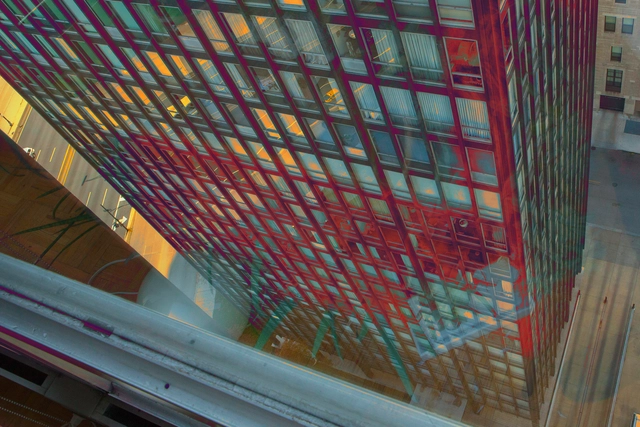
The Chicago Architecture Biennial has announced the list of participants invited to contribute to the event’s second edition, which will be held from September 16 to January 7, 2018 in Chicago. More than 100 architecture firms and artists have been selected by 2017 artistic directors Sharon Johnston and Mark Lee, founders of Los Angeles–based Johnston Marklee, to design exhibitions that will be displayed at the Chicago Cultural Center and throughout the city.
“Our goal for the 2017 Chicago Architecture Biennial is to continue to build on the themes and ideas presented in the first edition,” explained Johnston and Lee. “We hope to examine, through the work of the chosen participants, the continuous engagement with questions of history and architecture as an evolutionary practice.”
Russian designer Sergey Lisovsky has created an online illustrative magazine inspired by Brutalist Architecture. Pattern Brutalist’s first issue was published in January 2017, illustrating four Brutalist buildings across Russia, Germany, and Serbia. The buildings, dating between 1968 and 1980, are represented by Lisovsky using a collection of GIFs, photographs, and illustrations.
Pattern Brutalist also hosts a T-shirt printing service, allowing users to publically express their appreciation for an often-criticized architectural style.
https://www.archdaily.com/806436/pattern-brutalist-an-illustrative-magazineNiall Patrick Walsh
In the upcoming years, Dubai may become home to one of the world’s newest radical architectures—the first ever, rotating skyscraper. Designed by Dynamic Architecture’s Davis Fisher, the 80-story, 1,273-foot tower proposal features independent floors that can rotate 360 degrees in both directions, in order to provide more comprehensive views.
A static central core will connect the rotating floors together, each of which will be prefabricated off-site and attached to the tower afterward.
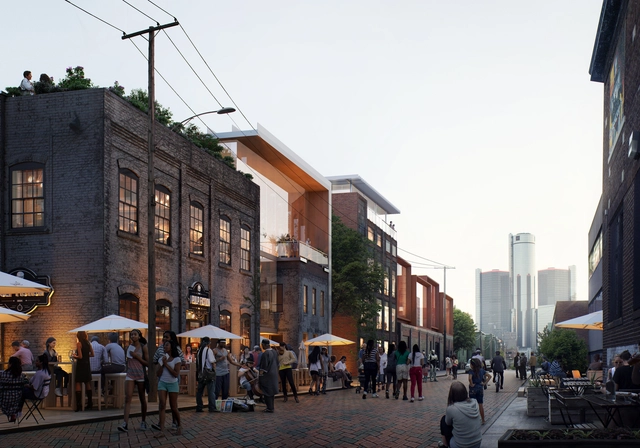
The Historic Stone Soap Building will be upgraded to a mixed-use development, increasing density and activity along the riverfront. Image Courtesy of City of Detroit
Chicago-based SOM’s plans for the redevelopment of the East Riverfront in Detroit, Michigan have been unveiled. The Detroit RiverFront Conservancy, Detroit Economic Growth Corporation, and City of Detroit Planning and Development Department will work together to deliver SOM’s plan to revitalize the former blighted industrial area. The framework plan involves improving community access to the riverfront, the design of a new riverfront parkland, and the conversion of a historic riverfront structure into a mixed-use development.
https://www.archdaily.com/806465/soms-inclusive-riverfront-set-to-revitalise-detroitNiall Patrick Walsh
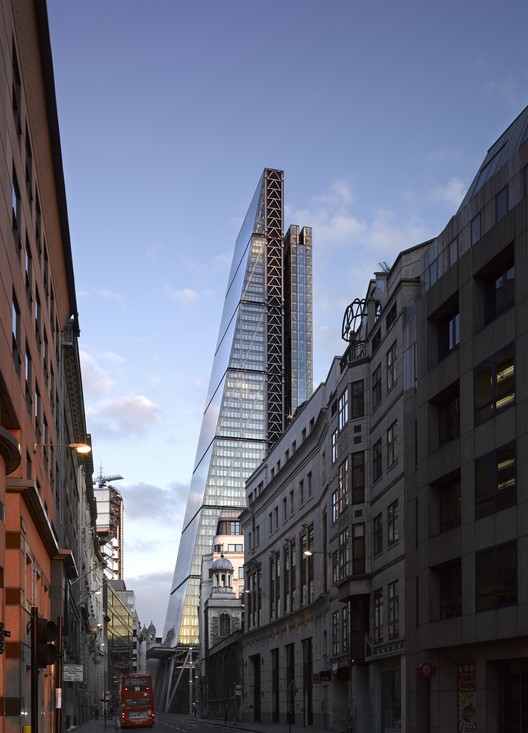
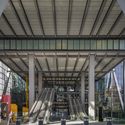
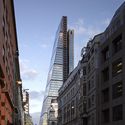
The Leadenhall Building, designed by Rogers Stirk Harbour + Partners, has been sold to a Chinese property magnate for a price of £1.15 billion, in what has become the second-biggest sale of a UK building in history, as well as one of China’s largest acquisitions of UK real estate. The transaction involved developer British Land and its partner Oxford Properties, who sold the tower to CC Land, a Hong Kong based company.
Tim Roberts, head of offices and residential at British Land, said: “British Land and Oxford Properties took a bold step at the early stages of the UK’s economic recovery to develop the Leadenhall Building to generate a high-quality, long-term income stream,” said Tim Roberts, head of offices and residential at British Land. “This sale shows continued investor appetite for best-in-class, well-located property in London.”
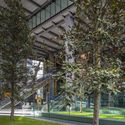
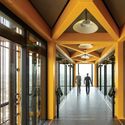
Benoy has released its latest designs for the China International Travel Service (CITS) Sanya Enot development scheme, which will be located on the reclaimed Hexin Island in Hainan, and is the second phase of a large-scale plan. Connected to the first phase of development by a pedestrian bridge, the project will be surrounded by the area’s luxury international hotels and natural attractions.
The 32,000-square-meter mixed-use, retail-led space features a “porous and multi-layered environment,” with clusters of small-scale buildings that will create a series of indoor and outdoor spaces for entertainment and retail programming. Buildings will be connected by a succession of elevated walkways and bridges.
Perkins+Will and the Healthy Building Network (HBN) have released their latest material health and performance white paper, Healthy Environments: Understanding Antimicrobial Ingredients in Building Materials.
According to the paper, antimicrobial building products “marketed as healthy or beneficial to human health contain ingredients that may have adverse environmental or human health impacts, and alternative products should be considered whenever possible.” Citing a lack of evidence that antimicrobial products prevent the spread of communicable diseases, the report highlights potential impacts like “super bugs,” contamination of aquatic ecosystems, and carcinogens.
Ten top highlights from the paper, concerning antimicrobial products, are:
His RAIC Gold Medal, recognizing a significant and lasting contribution to Canadian Architecture, will be accepted by his widow Sheila du Toit and two sons at the RAIC/OAA Festival of Architecture in Ottawa in May.
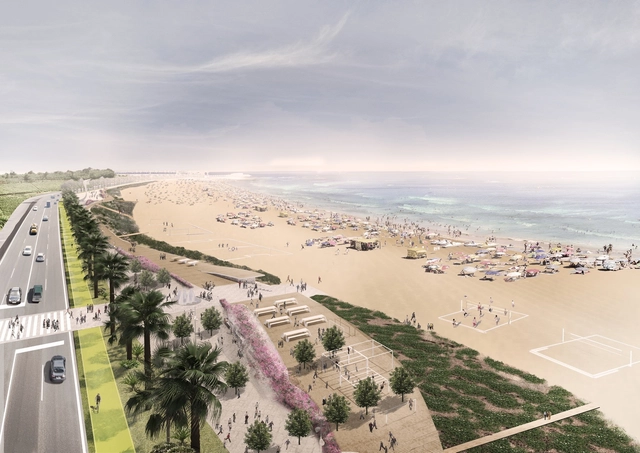
Quebec-based practice Lemay has won the global bid to redesign Morocco’sCasablanca Coast, which will include the new seaside promenade of the Hassan II Mosque and the Ain Diab corniche.
With modernity, sustainability, and innovation in mind, the urban and landscape design will promote mobility along the length of the corniche (a coastal, cliffside road) and aims to reinforce the appeal of the coast.
Launched in December, the project will feature an urban park and corniche along the El Hank embankment that will include rest areas, walkways, outdoor sports, and more. As an extension of the Hassan II Mosque, the promenade is expected to become a new Moroccan landmark.
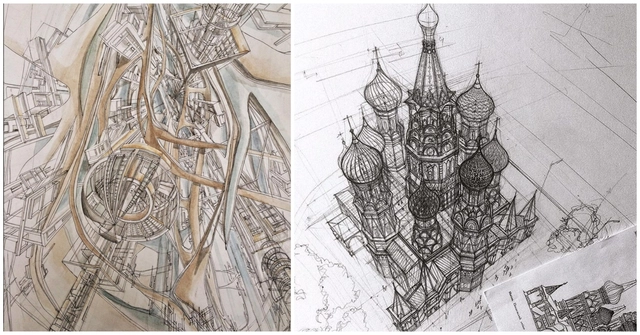
Despite the rush of new technologies available to architects to express their designs, the humble art of hand-drawing is still alive and well. And when sketching are drafting are done well enough, they can become their own artifacts for inspiring architectural thought.
The work of architecture student Adelina Gareeva is one such example. Studying at Kazan State University of Architecture and Engineering (KSUAE) in Russia, Gareeva produces incredibly detailed architectural drawings, from carefully constructed perspective drawings of St. Basil’s Cathedral, to travel sketches to more abstract architectural compositions that draw similarities to Zaha Hadid’s Suprematist paintings or the Cubist works of Georges Braques. Check out some of her best sketches below.
Works by Gabriela Carrillo (left) and Rozana Montiel (right)
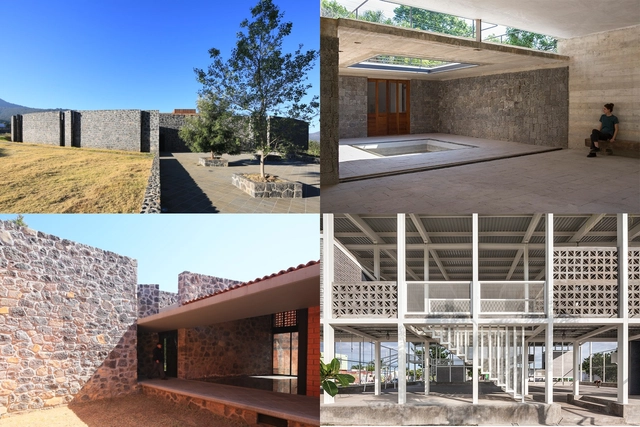
The Architectural Review and The Architects’ Journal have announced two Mexican architects as winners of their 2017 “Women in Architecture” Awards. This year’s Architect of the Year is awarded to Gabriela Carrillo of Taller Mauricio Rocha + Gabriela Carrillo, while Rozana Montiel Estudio de Arquitectura’s Rozana Montiel was named the winner of the Moira Gemmill Prize for Emerging Architecture. Both women were selecting for demonstrating “excellence in design and a commitment to working both sustainably and democratically with local communities.”
The installation is set at A/D/O's courtyard in Brooklyn. Image Courtesy of Sam Nixon
London-based architecture collective Assemble is set to transform an outdoor courtyard at A/D/O in Brooklyn into a ‘model factory’ to explore utopian ideals of work. The Turner Prize-winning architects will use their first site-specific installation in the U.S. entitled ‘A Factory As It Might Be’ to depict a vision of how society should build and function using abundant, malleable materials.
Earlier this month, Hong Kong-owned developer Knight Dragonrevealed plans for an billion-dollar urban-development scheme that will completely transform London’s Greenwich Peninsula. In this edition of Section D, Monocle 24's weekly review of design, architecture and craft, the team speak to Santiago Calatrava—who will be designing the core of this grand new project—about this and his public-spirited design philosophy. Why, they ask, has he’s always wanted to leave a mark on the "Big Smoke?"
https://www.archdaily.com/806495/santiago-calatrava-ground-zero-design-philosophy-greenwich-peninsula-project-monocleAD Editorial Team


.jpg?1488577068 "Courtesy of Matt Van der Velde")







.jpg?1488821716&format=webp&width=640&height=580)
.jpg?1488821999 "© Laurian Ghinitoiu")
.jpg?1488822128 "© Laurian Ghinitoiu")
.jpg?1488821802 "© Laurian Ghinitoiu")
.jpg?1488821732 "© Laurian Ghinitoiu")
.jpg?1488821716)




.jpg?1488337672 "Courtesy of Shell Arquitectos")


_LR.jpg?1488254837&format=webp&width=640&height=580)
_LR.jpg?1488254858 "Courtesy of Benoy")
_LR.jpg?1488254914 "Courtesy of Benoy")
_LR.jpg?1488254868 "Courtesy of Benoy")
_LR.jpg?1488254904 "Courtesy of Benoy")
_LR.jpg?1488254837)