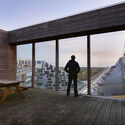
The Pritzker Architecture Prize has released the ceremony video to honor of the 2023 Laureate of the prestigious Pritzker Prize, Sir David Chipperfield. Following the announcement from earlier this year, the ceremony was held on November 14th at the Ancient Agora of Athens, presented and sponsored by the Hyatt Foundation. It included the 2023 Laureate Lecture and Panel Discussion, where David Alan Chipperfield was joined by Francis Kéré, the 2022 Laureate, and Anne Lacaton and Jean-Philippe Vassal, the 2021 Laureates.
Today is the premiere of the first episode of a new documentary series that explores the projects of Al Borde. Titled "Building with Living Trees", this first instalment highlights the stories behind Casa Jardín (Garden House), a single-family home located in the suburban area of Quito, Ecuador.
Designed for an ecologist named José, the residence is developed into three small independent pavilions with hybrid structures that combine living trees with various construction systems. These structures utilize a vernacular technique of living fences that has been employed in the Andes since ancient times, showcasing a genuine pursuit of coexistence between architecture and nature.
If you haven't gotten a chance to visit Brasília, Joana França's photographic projects offer a comprehensive interpretation of the capital of South America's most populous country. França has dedicated a significant part of her career as an architecture photographer to the pursuit of amassing an impressive archive of images of the city planned by Lúcio Costa and Oscar Niemeyer.
We recently published an exceptional selection França's aerial photographs of Brasília divided by scale - residential, monumental, gregarious and bucolic. These overhead views solidify what, in theory, is already evident: the city lacks human scale, or the human scale of Brasília is just vast and (perhaps) not very human at all.
Currently working on 45 simultaneous projects, including India’s largest bio-diversity park in India and the second largest in the world, Amit Gupta has been leading Studio Simbiosis for the past 12 years with a special focus on sustainability where performance follows experience more than form following function.
In this 2022 version of the World Architecture Festival, in Lisbon, ArchDaily had the opportunity to talk with Amit Gupta and discuss the main philosophy behind Studio Simbiosis, the challenges of building in India’s low-tech context, and the future of artificial intelligence and the metaverse in architectural design.
Nestled in the heart of the jungle, in the village of Francisco Uh May resides the AZULIK residence, within the same compound as the AZULIK UH MAY, a cultural center for the arts. Heavily influenced by the natural forms of nature itself, Roth’s home takes a biomorphic approach to design, challenging architectural conventions and presenting a harmonious relationship with nature.
OMA / Reinier de Graaf and Squint/Opera have released a new video of the "Al Daayan Health District", a low-rise hospital prototype which responds to the medical field's rapid change through the potential of modularity, prefabrication, and automation. The project features prefabricated modular units, local farms for food and medicine, and high-tech facilities across gardens and water features.
In this powerful new visual from Spirit of Space, we are introduced to Ricardo Bofill’s headquarters ‘The Factory’ or La Fábrica, Taller de Arquitectura. Once a disused and decaying cement factory from the turn of the century, with 30 silos, machine room, and galleries, it is now a significant transformative project, satisfying the Architect's longing for space via adaptive reuse.
A haven in the urban sprawl, engulfed by a floury of palm, olive, and eucalyptus trees. Spirit of Space visits the former hive of activity, now a tranquil mid-city refuge, an immense contrast to the industrial grime that used to reside here. Through moving pictures and multi-sensory experiences it explores the Brutalist form; a concrete shell… a skeleton intertwined with nature itself.
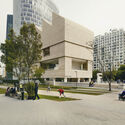
Architectural filmographers 9sekunden have collaborated with David Chipperfield architects to create a short film about the extension the Kunsthaus Museum extension in Zurich, Switzerland. The feature shows visitors' journey through the new building, coming across the interactive installation "The Sense of Things" by renowned choreographer William Forsythe. Walking through the architecture, paired with the curiosity of the people entering the space, the film highlights the interplay of culture, urbanity, and the built environment of the city of Zurich.
Seven years after the inauguration of Bosco Verticale in Milan, Stefano Boeri Architetti presented a video documentary of Trudo Tower, the first Vertical Forest in social housing. The 19-storey residential tower, which is built in Eindhoven, The Netherlands, features hundreds of various species on each of its four facades, with 125 affordable apartments that accommodate low-income residents. The miniseries consists of 3 episodes that explore how "living in contact with trees and greenery - and enjoying their advantages - is not the prerogative of rich people but could well become a possible choice for millions of citizens around the world.”
During the last quarter of 2021, Herzog & de Meuron completed the construction of three museums: M+ in Hong Kong, 433 MKM Museum Küppersmühle Extension in Duisburg, and 473 SONGEUN Art Space in Seoul. To celebrate this milestone and highlight the projects' varied approaches to the presentation of art as culturally-enriching platforms, the firm has put together a video compilation of all three projects alongside each other, showcasing the different approaches to their contexts and geographical locations, spatial requirements and materiality, and how all three of them share a collective focus to foster the exchange between people and culture.
Transcendentalist philosophers have long shared the idea that humans and nature are equal forces that should coexist in harmony. The notion has since expanded to the architecture world, with Frank Lloyd Wright shedding light on the term “organic architecture” as early as the 1900s. In recent years, driven by an increased interest in living closer to nature, architects continue to delve into the concept of integrating interior and exterior, blurring out visual and physical boundaries to bring landscapes indoors.
In Sky-Frame’s latest film, part of the series “My point of view”, a conversation with architect Dara Huang explores this notion, questioning how architecture can merge nature, sustainability and lifestyle within its form, without relying on more technology or materials to do so.
Sky-Frame Swiss-made frameless windows and sliding doors continue to revolutionize the transition between indoors and outdoors, by providing unbounded spatial experiences with spectacular vistas.
Rare are the fields, from arts and culture, that have so many things in common with architecture, as film does. Acknowledging that this is far from new, this topic has been debated by theorists and authors from both fields ever since the beginning of the 20th century. Architecture has been trying to embody subtle and poetical features from film while cinema has historically served as a means to discuss, represent, and denounce topics tightly related to architecture and cities.
An interesting example of this overlapping can be found in the contemporary production of French-Italian film company Bêka & Lemoine, whose works show a sensible look towards the details and the simplicity of the architecture and urban spaces. Currently encompassing thirty feature films, Ila Bêka's and Louise Lemoine's portfolio casts light on the everyday life of different cities around the world, revealing an attentive gaze to the most trivial aspects of human existence in the urban realm.
Today more than ever, architects are facing high expectations for the design, function and performance of a project. Careful building design takes the regional influences of climate into account, material origin, perhaps cultural building traditions. These are ways to lower the ecological footprint. But what do architects do to further enhance the building performance? That is an exciting element to explore. Finding out that today digital technologies are implemented in buildings in every region of the world is an interesting fact to discover!
Being in confinement has produced unconventional means of exploring architectural spaces and installations. Instead of putting everything on hold until life goes back to normal, designers and curators found inspiration from practices like performance arts and theatre, breaking down the walls between the subject and viewers but from a distance.
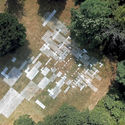
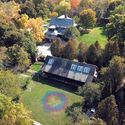
Ashley Bigham and Erik Herrmann of Outpost Office reimagined the theme of "mobility" by creating 1:1 scale drawings on the Ragdale campus using GPS-controlled field marking robots. Their unique urban installation, which addressed modern-day concerns such as public spaces, how we are engaging with them, and physicality, won first place in the 2020 Ragdale Ring competition.
Videos
'In Orbit' Installation. Image Courtesy of Studio Tomás Saraceno
Tomás Saraceno takes us around his Berlin studio, in a short segment video, shot during his recent exhibition 'Algo-r(h)i(y)thms' at Esther Schipper gallery. The Argentinian artist’s atelier, “a space for experimentation and testing out intricate ideas”, contains a room dedicated to his recent studies around spiders.
Seoul is considered one of the most densely-populated and over-priced cities in the world, reaching a staggering $ 80,000 per square meter. The extreme conditions of the city have forced local architects to operate, design, and build framing the city's urban issues, traditions, and history. This approach by architects has created the the theoretical basis of “The Condition of Seoul Architecture”, a publication by multidisciplinary practice TCA Think Tank which sees the point of view of 18 innovative South Korean architects. In this interview, Pier Alessio Rizzardi, founder of the practice, interviewed whimsical architect Moon Hoon, explaining his unique take on architecture and how his work has the ability to inspire people into another dimension.






.jpg?1645540015 "La Fábrica, Ricardo Bofill Taller de Arquitectura. Image Courtesy of Ricardo Bofill")
.jpg?1645655249 "Courtesy of Ricardo Bofill")
_%C2%A9_Richard_Powers.jpg?1645655222 "La Fábrica, Ricardo Bofill Taller de Arquitectura. Image © Richard Powers")
.jpg?1645655255 "Courtesy of Ricardo Bofill")


.jpg?1639992530 "© Paolo Rosselli")
.jpg?1639992517 "© Paolo Rosselli")
.jpg?1639992418 "© Paolo Rosselli")