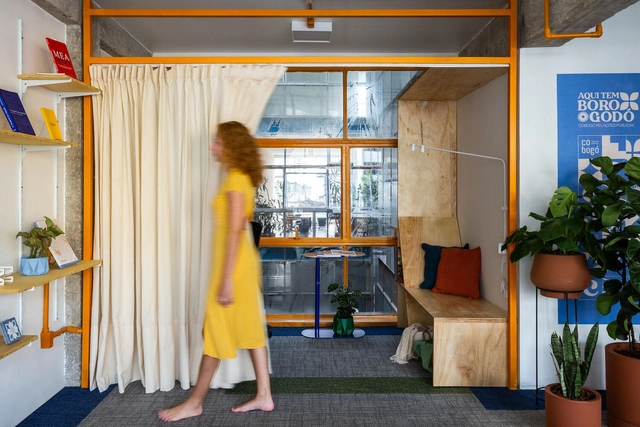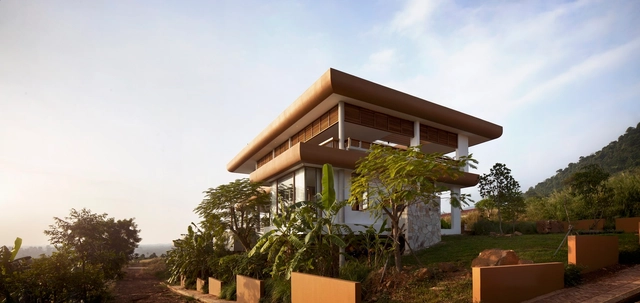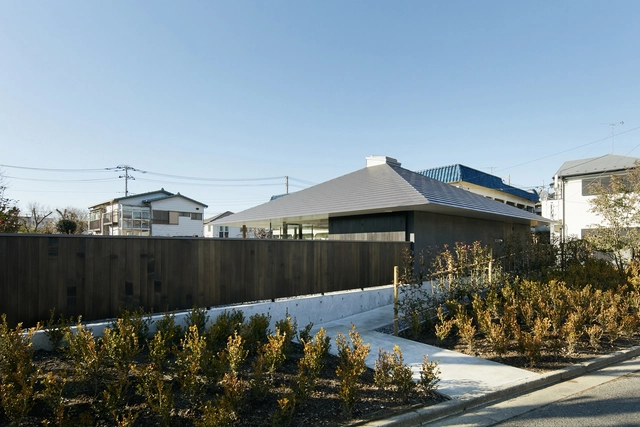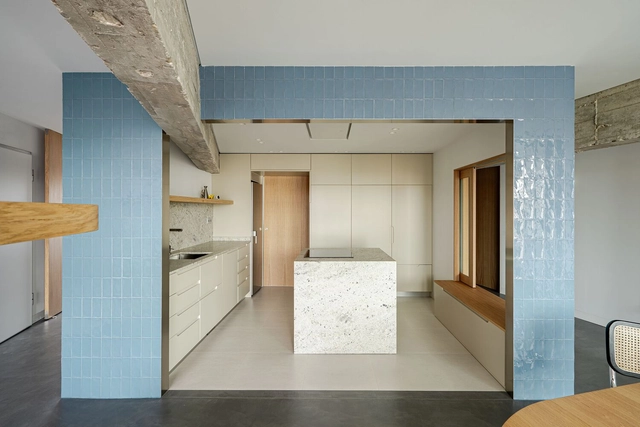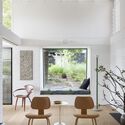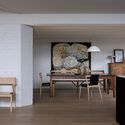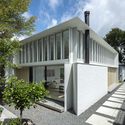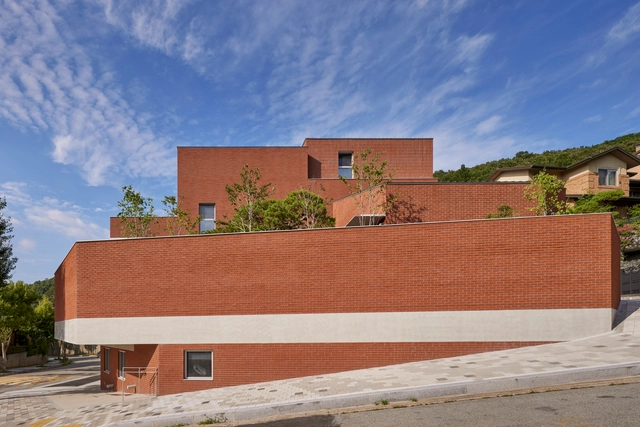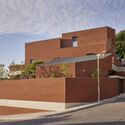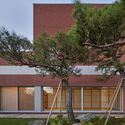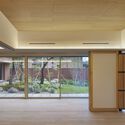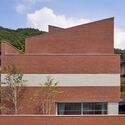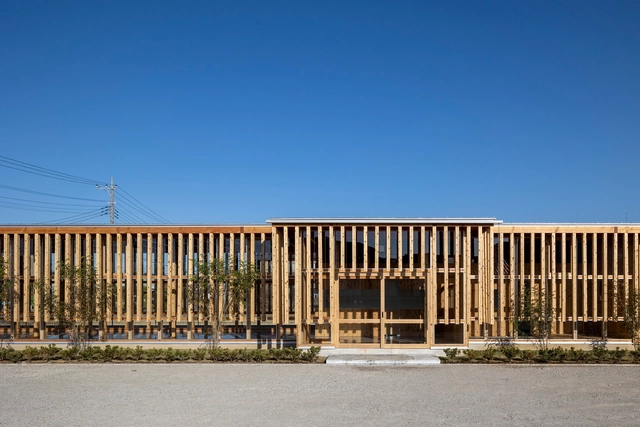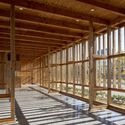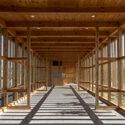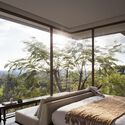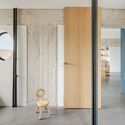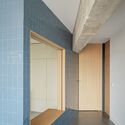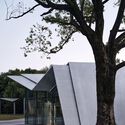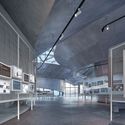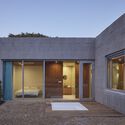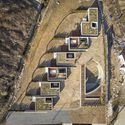
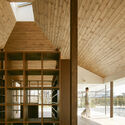
tandemDUO / Works Partnership Architecture

© Bruce Wolf

Architects: Works Partnership Architecture (W.PA)
Location: Portland, , USA
Client/Project: tandemDUO
Project area: 5,382 sq. ft.
Project year: 2010
Photographs: Bruce Wolf,

Architecture City Guide: Las Vegas

Photo by htto2007 via Flickr – Creative Commons – http://www.flickr.com/photos/http2007/4700328574/

is our destination for the Architecture City Guide series this week.  Some of the most famous hotels and casinos grace the streets of , we’ve included those and much more. We want to hear from you, so take a minute to add your favorite can’t miss buildings in in our comment section below.
The Architecture City Guide: Las Vegas list and corresponding map after the break!

Update: Kaohsiung Port Terminal Competition Proposal / Asymptote Architecture

Back in December we showed you the second place project by Asymptote Architecture for the Port Terminal Competition. We have now an update on the project, with a great video and some models you can check after the break.

Center for the Promotion of Science / Dürig AG

Courtesy of

The Center for the Promotion of Science proposal by Zürich based architecture studio Dürig AG is based on the concept of  a New composed of an orthogonal grid of a unified structural system that embraces rationality and clarity.  The urban plan of the composition is to create defined individual building segments within the subdivided block of nine distinct segments. Within this development, Dürig AG has designed a Scientific Research Institute of which the Center for the Promotion of Science is an integral part.

More on this project after the break.

Salt Repository / Erginoğlu & Çalışlar Architects

© Cemal Emden

Architects: Erginoğlu & Çalışlar Architects
Design Team: Kerem Erginoğlu, Hasan C. Çalışlar, Fatih Kariptaş, Emre Erenler, Elmon Pekmez, Türkan Yılmaz
Location: Istanbul,
Client: Medina Turgul DDB
Contractor:
Project area: 3,000 sqm
Project year: 2008 – 2009
Photographs: Cemal Emden

Napa River House / Craig Steely Architecture

Courtesy of

Taking the existing site conditions into consideration, the architects chose to avoid disturbing both the stone pathways and root structure of the mature oak trees by using a single footing and tube frame system.  The structural system, originally inspired by a chairlift tower, provides the opportunity for the main living area of the house to float out into the existing oak canopy.

Architects: Craig Steely Architecture
Location: Napa, California, USA
Principal Designer: Craig Steely
Project Team: Luigi Silverman, Seth Pare-Mayer, Chris Talbot
Project Area: 2,382 sqf interior, 1,097 sqf exterior
Photographs: Courtesy of Craig Steely Architecture

Nautilus Sky Borne Buildings / Archipelontwerpers

© Courtesy of

Architects: Archipelontwerpers – Eric Vreedenburgh, Coen Bouwmeester, Niel Groeneveld, Jaap Baselmans, Guido Zeck
Location: , The Netherlands
Construction engineers: Broersma – Pim Beeking
Principal: KBM-Molenburg
Photographs: Courtesy of Archipelontwerpers

Mountain House in Pernink / FAM Architekti

© Tomáš Balej

Architects: Pavel Nasadil / FAM Architekti
Location: , Czech Republic
Collaborators: Marek Nábělek, Hana Svobodova, Tomas Straka
Project area: 66 sqm
Project year: 2006 – 2010
Photographs: Tomáš Balej

Building Refurbishment And Roof Extension In Tel-Aviv / Koniak Architects

© Sezar Mendelbaum

Architects: Koniak Architects
Location: Tel-Aviv,
Project year: 2010
Photographs: Sezar Mendelbaum

AD Classics: Barcelona Pavilion / Mies van der Rohe

© Flickr User: wotjek gurak

As part of the1929 International Exposition in Barcelona Spain, the Barcelona Pavilion, designed by , was the display of architecture’s modern movement to the world.  Originally named the German Pavilion, the pavilion was the face of Germany after WWI, emulating the nation’s progressively modern culture that was still rooted in its classical history. Its elegant and sleek design combined with rich natural material presented Mies’ Barcelona Pavilion as a bridge into his future career, as well as architectural .

More on the Barcelona Pavilion after the break.

Sustainable Residence / Studio 804

Courtesy of Studio 804

Located in City, , this environmentally conscious, modern home performs completely off the grid in an area desperately in need of revitalization. Being the first LEED Platinum home in the City Metropolitan area, the building serves as an example of sustainable practice and living for buyers who desire life in the city close to the urban core. This house is a combination of passive strategies and active systems which visually call out the environmental standards to which the design aspires.

The Sustainable Residence is designed by Studio 804, a not‐for profit design/build program that serves as the final design studio for graduate students at the University of Kansas School of Architecture and Urban Planning. The student led process creates prefabricated architecture while thoughtfully responding to global problems of density and sustainability using smaller scale, local solutions.

Follow the break for more photographs and drawings of this residence.

Architects: Studio 804, Inc.
Location: Kansas City, Kansas
Project Architect: Dan Rockhill, JL Constant Distinguished Professor of Architecture, University of Kansas
Project Team: Alison Lampier, Andrew Thomas, Becca Maness, Caleb Reed, Collin Jacobs, Danielle Blodgett, Erik Biggs, Garret Wilson, Jason Sadler, Jesse Brubacher, Josh Bender, Megin Sevier, Molly Fogarty, Patrick Noble, Sam Edelstein, Ben Chapman, Blake Perkins, Frank Lindemann, Jared Eder, Kate Frick, Kyle Davis, Stephanie Winn
Contractor: Studio 804, Inc.
Engineer: Norton & Schmidt
Project Area: 2,400 sqf
Project Year: 2009
Photographs: Courtesy of Studio 804

AD Round Up: Interiors Part VI

On our sixth selection of previously featured interiors we are still looking back at projects published on 2009. Check them all after the break.

Bank in Donoratico / Massimo Mariani
The project concerns the redesign of a building at Donoratico (in Livorno) located next the head office of the bank “Banca di Credito Cooperativo di Castagneto Carducci” (also designed by architect Mariani in 2002). The building is on two levels (read more…)

Copa Arquitectura: A competition by Architecture for Humanity

Football is one of the best vehicles for social change (not to mention it’s fun to play). As fans of social change AND fun, Architecture for Humanity, Nike, and Fu.De (Football for Development) have teamed up to host a design competition for a prototype football, education, and health center for Liga FOS — a project that promotes social development through sport in vulnerable Buenos Aires suburbs.

This is an invitation process for architects and designers. At least one member of your team must speak Spanish fluently. And, though we’re not picking favorites, at least one member from your team must reside in one of the Copa America 2011 countries. They are: Argentina; Bolivia; Brazil; Chile; Colombia; Ecuador; Japan; Mexico; Paraguay; Peru; Uruguay; Venezuela.

Registration and submission deadline is March 21. For more information on the schedule, requirements and prizes go to the competition’s official website.

Yountville Town Center / Siegel + Strain Architects

© David Wakely Photography

For decades, the residents of , California, a rural town in Napa County, relied on a small 1920s-era community hall and a hodgepodge of spaces rented from others to host community events. The hall was in need of renovation, ill-equipped to support art classes, and lacking in outdoor recreation spaces. In addition, the town had outgrown its library. In 1998, after surveying residents’ needs, the municipality embarked on a planning process for an expanded town center at the heart of town.

The Yountville Town Center weaves new and existing buildings and outdoor rooms into a place designed to enrich community life. Located on a 2.5-acre site on Yountville’s main street, the town center consists of a new 10,000-square-foot community center, the renovated 4,800-square-foot community hall, and the addition of a sheriff’s substation to the adjacent post office. The new community center houses a branch library, multipurpose room, teen center, and meeting and program spaces. It opens onto a new town square framed by the existing community hall and the post office.

Architects: Siegel + Strain Architects
Location: Yountville, California, USA
Civil Engineer: Coastland Engineering
MEPFP and Energy Consultant: Timmons Design Engineers
Structural: EndresWare
Landscape: John Northmore Roberts
Lighting Designer: Alice Prussin Lighting Design
Geotechnical Engineer: Miller Pacific Engineering Group
Rehbein Environmental Solutions: Glenn Rehbein Companies
Photographs: David Wakely Photography

2011 Burnham Prize Competition: McCormick Place REDUX

The Chicago Architectural Club is pleased to announce the 2011 Burnham Prize Competition. This year’s competition is co-sponsored by the American Institute of Architects Chicago and Landmarks Illinois. The competition is intended to examine the controversial legacy and questionable future of the McCormick Place East Building, the 1971 modernist convention hall designed by Gene Summers of C.F. Murphy Associates which is sited on the lakefront in Burnham Park. Registration for the 2011 Burnham Prize Competition has been open since 1 February 2011. Submissions are due 4 April 2011. More competition information after the break.

CODA / Stanisic Associates

© Patrick Bingham-Hall

Architects: Stanisic Associates
Location: 33 Epsom Road, ,
Project Team: Rob Harper, Peter Rush, Angela Rheinlaender, Adam Hobbs
Interior Architect: L3 Design
Landscape Architect: Aspect Sydney
Structural Engineer: SCP Consulting
Client: GMD + GHD Pty Ltd
Project area: 3,748 sqm
Project year: 2009
Photographs: Patrick Bingham-Hall

Using BIM to design a ‘Net Zero’ home

Courtesy of John Zona III

In nature, nothing is perfectly square, and organisms orient themselves by the sun. Both truths explain the fresh design of the “net zero” Zona home.

The Jacksonville, Florida, residence, designed using ArchiCAD software from , the personal home of by architect John Zona III and his wife. It features a main residence and guest cottage/studio, both with American football-shaped footprints to minimize the considerable cooling demands of homes in Southern climes.

Transparent House II / Krueck & Sexton Architects

© Bill Zbaren

Designed for an art collector and his family on coastal , the Transparent House II is located on a triangular site facing an Intracoastal Sound. Having been stricken with a serious illness and sequestered as a child, the client’s desire for openness and light manifests itself in the design of the house. Minimal visual and acoustical disruptions provide a serene environment for the art, while the building’s siting and facade design take maximum advantage of the spectacular setting. Changing conditions of water, earth, and sky can be observed from within, as nature is viewed as an unfolding piece of art itself.

]

Architects: Krueck & Sexton Architects
Location: Gulf Coast
Structural Engineers: Tylk Gustafson Reckers Wilson Andrews
General Contractor: Oscar J. Boldt Construction
Project Area: 20,000 sqf
Project Year: 2005
Photographs: Bill Zbaren, Mariusz Mizera

Indesem 2011: Losing Ground

Indesem (International Design Seminar) is an architectural event that takes place every two years at the faculty of architecture in Delft, . It is a week long workshop for students and recent graduates, accompanied by a publicly accessible lecture series featuring renowned architects and theorists reflecting on the current theme.

The 2011 edition of Indesem will focus on the theme ‘Losing ground’; the changing position of architect and architecture with respect to the digitalized network society and the necessary shifts in practice and thinking when designing in this changing paradigm. For more information on the theme, lectures and workshop you can go to the event’s official website.

Fountain at Pilsen / Ondřej Císler

© Vasil Stanko and Karel Kocourek

The three fountains located in the Republic Square of were designed by Ondřej Císler and constructed in 2010 following a 2004 two-stage competition. It took five years for local authorities to accept the design that jurors of the competition very positively received. When in 2010 Pilsen was announced to be a European City of Culture in 2015, the decision to finally construct the fountains was approved.

More on the project after the break.

The Factory / Mateo Arquitectura

© Adrià Goula

Architects: Mateo Arquitectura / Josep Lluis Mateo
Location: ZAC Ile Seguin, Rives de Seine,
Technical Project Manager: SNC LAVALIN
Coordinating Architect: Patrick Chavanne
Landscape: D’ici-la
Site Area: 3,000 sqm
Project Area: 17,300 sqm
Budget: 37, 8 million euros
Project Year: 2008-2010
Photographs: Adrià Goula