Romullo Baratto is an architect with a PhD from FAUUSP and Managing Editor of ArchDaily. He previously coordinated the editorial team of the 11th São Paulo Architecture Biennial and served as Managing Editor of ArchDaily Brasil, where he led the platform to win the FNA Award—the first time the honor was granted to a media outlet. He collaborated on the editing of the book "Concrete Jungle", published by gestalten, and has curated architecture exhibitions in Brazil, Chile, Denmark, and Italy, as well as delivered lectures and moderated debates in Spain, the United States, and Portugal. His doctoral thesis investigates the urban landscapes of São Paulo through cinema. His work spans academic research and editorial practice, communicating architecture through texts, interviews, lectures, curatorship, and photography. Follow him on Instagram @romullobf.
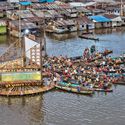
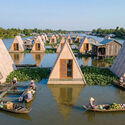
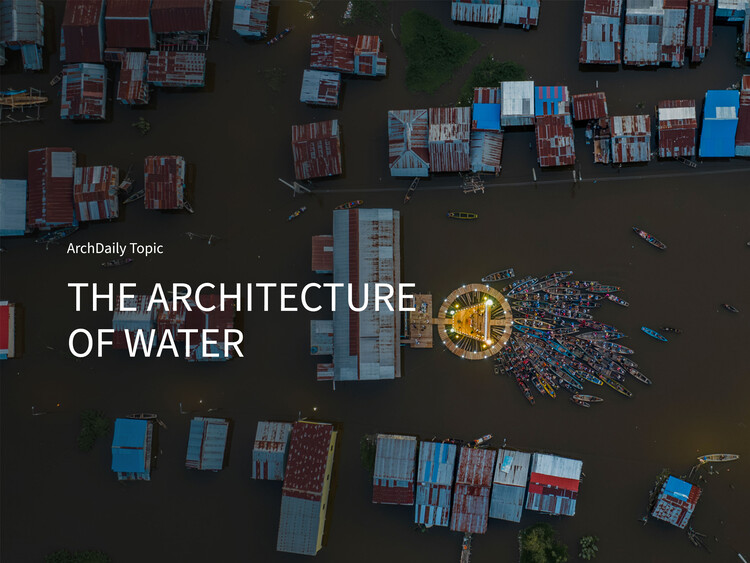
Water is life. Animals, plants, fungi, and bacteria all depend on it: water structures their cells, carries their nutrients, and hosts the chemistry that keeps them alive. Even the rare exceptions confirm the rule. Some seeds and spores can lose nearly all their water and enter a dormancy so deep that their metabolism almost stops, yet it is water that brings them back. In the most literal sense, water connects us.
But it also divides us. Every year, thousands of people leave North Africa in overcrowded boats bound for Lampedusa, seeking better living conditions in Europe; more than 30,000 have died or gone missing in the Mediterranean since 2014. Water draws borders and controls flows. Before the war on Iran began in February 2026, the Strait of Hormuz carried around 25% of the world's seaborne crude oil, with effects felt in fuel prices far from the Gulf. Water also sits at the center of the environmental debate, where its excess can be as lethal as its absence. Severe floods increasingly strike countries that have contributed least to global emissions, while the largest polluters remain better equipped to resist. If water is life, it can also mean death. Ultimately, water is political.
What makes a building worth preserving? Age is the most common answer, but not always the best one. A building from the 1950s or 70s may carry as much historical significance as a medieval cathedral; it simply demands a different framework, one that weighs political context, cultural meaning, and architectural innovation over the mere passage of time. This is especially true for modernist architecture across the so-called Global South, where the movement took on unique forms of expression.
It is precisely this conversation that ArchDaily and World Monuments Fund are now opening together. WMF brings on-the-ground conservation expertise across the world, and ArchDaily brings the editorial capacity to contextualize that work and connect it to a global audience. The goal is to do both at once: preserve places and tell their stories, shaping how modernist heritage is understood far beyond the field of preservation itself.
This article is part of our new Opinion section, a format for argument-driven essays on critical questions shaping our field.
For centuries, most of the world has looked at itself through a 16th-century instrument of spatial representation. On September 4, the United Nations General Assembly voted to change that, adopting a resolution that asks governments, schools, media organizations, and technology companies to retire the Mercator projection wherever the relative size of countries actually matters, in favor of equal-area alternatives like the 2018 Equal Earth projection. The vote passed 164 to 1. The United States was the sole vote against.
From left to right: Oanh Nguyen Henriksen (Photo: Tuala Hjarnø), Susana Rojas Saviñón (Photo: Estudio Ome), Javier Ors Ausín, Sumayya Vally (Photo: Lou Jasmine), Charles Kettaneh and Nicolas Fayad (EAST Architecture Studio, Photo: Julien Lanoo)
Since its launch in 2020, the ArchDaily Next Practices Awards have spotlighted forward-thinking architecture practices that are redefining the boundaries of the discipline. Over five editions, the initiative has recognized 105 practices from 44 countries, amplifying voices from around the world and fostering a global conversation about architecture's evolving role in society. Across the winning practices, recurring values emerge: contextual sensitivity, sustainable material use, co-creation with communities, experimental and interdisciplinary approaches, memory and heritage, social responsibility, and human-scale interventions.
The program reflects what is next: the ideas, practices, and projects that should be brought forward. 'Next' embodies practices that find solutions to today's urgent challenges while anticipating the needs of tomorrow. By spotlighting these practices, we hope to illuminate the paths that can lead to a more meaningful and resilient future for architecture and beyond.
ArchDaily was born within a university, founded by two architecture students who believed that architectural knowledge should reach further than it did at the time. Eighteen years later, that conviction remains unchanged — but perspectives, tools, and opportunities have grown. We launched the Student Ambassador Programto give the next generation of architects a direct role in bridging their universities with the global architectural conversation.
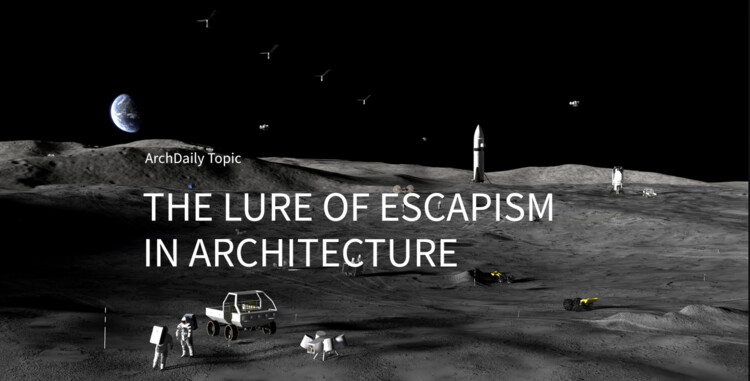
At a moment when architects across the globe are revisiting earthen construction, reassessing vernacular technologies, and forging visceral connections between communities and the land beneath their feet, others are sketching habitats for the Moon and designing the built environments of a Martian colony. Architecture firms, engineers, and space agencies are investing serious intellectual effort into structures that would need to be raised from scratch on another world. Two impulses, one returning to the soil, the other reaching for the stars, are unfolding simultaneously within the same discipline. And the tension between them raises an uncomfortable question: what, exactly, are we trying to escape?
ArchDaily is looking for Social Media Collaborators to join our content team. Our Social Media Teams transform ArchDaily's content into engaging, high-performing digital formats for various social media channels.
Your role involves hands-on content creation and repackaging, as well as a high degree of collaboration and creativity to amplify architectural ideas to a global audience.
Elia Zenghelis. Photo: Harvard Graduate School of Design
Elia Zenghelis, Greek architect, co-founder of the Office for Metropolitan Architecture (OMA), and one of the most influential architectural educators of the late twentieth century, died on August 30, 2026, at the age of 89. His death marks the passing of a figure whose influence on architectural thought extended far beyond the buildings he designed, shaping the intellectual formation of several generations of architects through decades of teaching across Europe and the United States.
Born in Athens in 1937, Zenghelis studied architecture at the Architectural Association School of Architecture in London, completing his studies in 1961. He joined the practice of Douglas Stephen and Partners, where he worked until 1971, while simultaneously beginning to teach at the AA in 1963. At the school, he became a prominent voice for a more radical, avant-garde architectural discourse, helping to transform the AA into a fertile ground for radical ideas.
When Francis Kéré set out to build a school in his home village of Gando, Burkina Faso, he chose clay, a material his own community associated with scarcity, not architecture. To prove it could hold, he built test bricks and submerged one in water for five days before showing his neighbors it hadn't failed. Then he trained the villagers themselves to raise the walls, rather than bringing in a construction crew from the city. More than 200 people from Gando have since worked as builders because of that choice. The school carries something a materials list alone cannot: the trace of the hands that will go on living in the village long after the scaffolding came down.
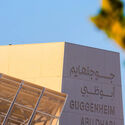
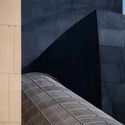
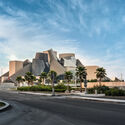
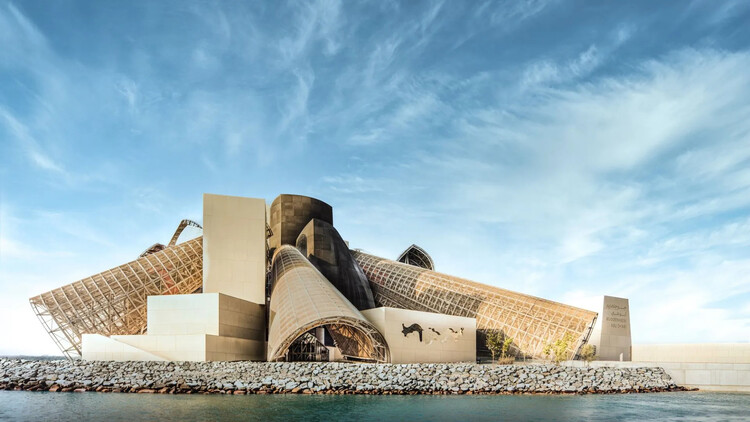
Abu Dhabi's Department of Culture and Tourism has announced that Guggenheim Abu Dhabi will open to the public on December 11, 2026, on Saadiyat Island. The museum, designed by the late Frank Gehry, becomes the fourth institution in the Guggenheim's global network, joining outposts in New York, Venice, and Bilbao.
The project was first announced in 2006. Construction began in 2011, was suspended for several years amid economic strain and contract changes, and resumed in 2019. A 2025 completion date, set in 2021, ultimately slipped to this December.
Barcelona has just become the first city in the history of the UIA World Congress of Architects to host the event twice. Thirty years separate the two editions, and the distance between them says as much about architecture's changing self-understanding as anything spoken from a stage. In 1996, the congress placed the city at the center of the debate, consolidating a post-Olympic urban model that would go on to be studied and contested for decades.
The archive of more than 40 years of professional activity by architect João Luís Carrilho da Graça will be integrated into Casa da Arquitectura, reinforcing the national scope of the institution's collection. The signing ceremony will take place this Saturday, February 15, at 3:30 p.m., at the CA Archive premises.
Fernando Guerra, one of the most prolific photographers in the field of architecture, is set to be the subject of a documentary directed by Sara Nunes and produced by Portugal's Building Pictures. The Flying Photographer, the film's working title, is drawn from a dedication by Álvaro Siza, an architect whose works and life Guerra has been extensively documenting.
Cortesia de Secretaria Municipal de Cultura de São Paulo
To celebrate the diverse groups that built the cultural heritage of São Paulo and helped shape the city's identity, the Municipal Secretariat of Culture will host the Jornada do Patrimônio (Heritage Journey) on August 18 and 19, under the theme "One City, Many Hands."
The event offers a free, diverse program aimed at connecting the public with historical and emotionally significant spaces that define the city's history. In total, 320 activities will take place, including tours, lectures, workshops, building visits, guided tours, and book launches.
Walls of Air is the theme guiding Brazil's participation at the 16th International Architecture Exhibition in Venice. Jointly curated by Laura González Fierro, Sol Camacho, Gabriel Kozlowski, and Marcelo Maia Rosa, the Brazilian Pavilion features 17 projects from different regions of the country, selected through an open call, as well as a series of large-scale cartographic drawings addressing various aspects of the country's urbanization through the lens of architecture.
Inaugurated in 1960, Brasília is perhaps the city in the world that most closely followed the principles and guidelines of modern architecture and urban planning in its design and construction. A synthesis of the vision of some of the most respected figures in the history of Brazilian architecture, its layout and buildings drew the world's attention to the nation's economic growth and Brazil's expansion into its own interior.
"Brasília is the dream come true of architects and urban planners. It is the only city in the world built where there was nothing but the cerrado, in central Brazil, and where the builders had complete freedom to apply the principles of the most modern urban planning without restrictions."
For the 59th meeting of the free course Arquitetura Paulistana, taught by architect Marco Artigas, students visited the headquarters of the production company Paranoid, designed by the firm Sub Estúdio in a warehouse in the industrial neighborhood of Vila Leopoldina, São Paulo.
The property was divided into two parts: an enclosed section with a mezzanine and a staircase connecting the two levels, and a completely open, double-height space with the feel of an outdoor area, albeit covered under the same warehouse structure. A white wall separated these two spaces.