1. ArchDaily
  2. Urban Planning
Urban Planning: The Latest Architecture and News

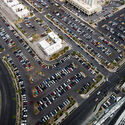
How Automated Parking Systems Reclaim Urban Space

 | Sponsored Content

Cities are slowly reshaping themselves. Walkable streets, bike-friendly networks, and mixed-use neighborhoods are becoming planning priorities as climate goals, changing lifestyles, and remote work reshape daily patterns. Yet even as these people-centered ideas gain momentum, most cities still rely heavily on private cars, creating a tension between the urban futures we're designing for and the mobility habits that persist today.

This tension has pushed architects and developers to rethink one of the hardest pieces of the urban puzzle: parking. Mixed-use buildings are multiplying, stacking homes, workplaces, and services into tighter footprints, and every square meter has to work harder. The challenge is no longer simply where to put the cars, but how to integrate parking in ways that support density, livability, and long-term adaptability—allowing cities to evolve without letting vehicles dominate their form.

The Singapore Pavilion at the Venice Architecture Biennale Reimagines the City-State as a Dining Table

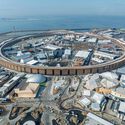
2025 marks the 60th anniversary of Singapore's independence, commemorating its separation from Malaysia on August 9, 1965. The occasion is celebrated in the country's national pavilion at the 19th Venice Architecture Biennale with a multisensory installation that honors Singapore's diversity and reimagines city-making through food, culture, and collective design. Titled RASA–TABULA–SINGAPURA, the installation invites visitors to take a seat at the Table of Superdiversity: an enticing reimagining of city-making and nation-building through the universal act of dining. According to the curatorial team from the Singapore University of Technology and Design (SUTD), the purpose of the installation is to showcase how the convergence of multicultural differences, collective histories, design, and new technology creates opportunities for more inclusive and adaptive urban futures.

The Singapore Pavilion at the Venice Architecture Biennale Reimagines the City-State as a Dining Table - Image 1 of 4The Singapore Pavilion at the Venice Architecture Biennale Reimagines the City-State as a Dining Table - Image 2 of 4The Singapore Pavilion at the Venice Architecture Biennale Reimagines the City-State as a Dining Table - Image 3 of 4The Singapore Pavilion at the Venice Architecture Biennale Reimagines the City-State as a Dining Table - Image 4 of 4The Singapore Pavilion at the Venice Architecture Biennale Reimagines the City-State as a Dining Table - More Images+ 20

The Cayala Paradox: How Are Private Districts Shaping Public Space Design in Guatemala?

Subscriber Access | 

Ciudad Cayalá, a privately developed, mixed-use community on the outskirts of Guatemala City, is often described as a "theme park" of white lime-washed walls, red tiles, and cobbled plazas. A closer examination, however, reveals a more complex urban narrative. Its significance, however, lies in its capacity to create a safe and well-managed public space, proposing a modern reinterpretation of historic urban principles that mark the region's architectural and urban heritage. Behind the Antigua-style façades lies an urban experiment: a modern re-engagement with architectural elements like arcades, courtyards, and open plazas, which propose a privately-managed public space as a solution to urban challenges in the region.

The Cayala Paradox: How Are Private Districts Shaping Public Space Design in Guatemala? - Imagen 2 de 4The Cayala Paradox: How Are Private Districts Shaping Public Space Design in Guatemala? - Imagen 1 de 4The Cayala Paradox: How Are Private Districts Shaping Public Space Design in Guatemala? - Imagen 3 de 4The Cayala Paradox: How Are Private Districts Shaping Public Space Design in Guatemala? - Imagen 6 de 4The Cayala Paradox: How Are Private Districts Shaping Public Space Design in Guatemala? - More Images+ 5

Architectural Rebuilding as Cultural Memory: The Paradox of Ever-Fresh Heritage

Architecture—one of the few cultural artifacts made to be publicly lived with, preserved, and often capable of standing for centuries—contributes significantly to the cultural identity of places and people. Historically, buildings have expressed institutional attitudes, influence, and power; they are clear demonstrations of culture. Yet longevity complicates preservation: when a structure is rebuilt, repaired, or entirely reassembled, in what sense is it still the same building?

There's the classic Ship of Theseus puzzle from Plutarch. if a ship's planks are replaced one by one over time, is it still the same ship? Thomas Hobbes adds a twist—if the original planks are reassembled elsewhere, which ship is "the original"? The paradox tests what grounds identity: material fabric, continuous use and history, or shared recognition. In architecture and conservation, it reframes preservation as a choice among keeping matter, maintaining form and function, or sustaining the stories and practices that give a place meaning.

Architectural Rebuilding as Cultural Memory: The Paradox of Ever-Fresh Heritage - Imagen 1 de 4Architectural Rebuilding as Cultural Memory: The Paradox of Ever-Fresh Heritage - Imagen 2 de 4Architectural Rebuilding as Cultural Memory: The Paradox of Ever-Fresh Heritage - Imagen 3 de 4Architectural Rebuilding as Cultural Memory: The Paradox of Ever-Fresh Heritage - Imagen 4 de 4Architectural Rebuilding as Cultural Memory: The Paradox of Ever-Fresh Heritage - More Images+ 17

Büro Ole Scheeren Designs a New Mixed-Use Urban Complex in Shenzhen, China

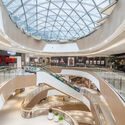
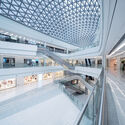
The international firm Büro Ole Scheeren has unveiled images of the Houhai Hybrid Campus, a new urban complex in Shenzhen's Houhai district. The development is situated in a strategic area within the original Shenzhen Special Economic Zone (SEZ), bridging the city's commercial center and its bayfront. The release of the Hybrid Campus images coincided with the 45th anniversary of Shenzhen's designation as a Special Economic Zone, a milestone marking the city's transformation from a fishing village into a global innovation hub. Currently under construction, the Hybrid Campus integrates work, living, culture, commerce, leisure, recreation, and nature into a unified urban complex, scheduled to open in late 2026.

Büro Ole Scheeren Designs a New Mixed-Use Urban Complex in Shenzhen, China - Imagem 1 de 4Büro Ole Scheeren Designs a New Mixed-Use Urban Complex in Shenzhen, China - Imagem 2 de 4Büro Ole Scheeren Designs a New Mixed-Use Urban Complex in Shenzhen, China - Imagem 3 de 4Büro Ole Scheeren Designs a New Mixed-Use Urban Complex in Shenzhen, China - Imagem 4 de 4Büro Ole Scheeren Designs a New Mixed-Use Urban Complex in Shenzhen, China - More Images+ 3

AFL Architects’ All-Electric Stadium in Oxford Receives Planning Approval

Oxford United Football Club's planning application for a new all-electric football stadium has been approved by Cherwell District Council. The scheme was developed by a team that includes AFL Architects, Mott Macdonald engineering services, Fabrik landscape design, and Ridge and Partners built environment consultants. Designed for a capacity of 16,000 spectators, the master plan also proposes a 1,000-person events space, a 180-bed hotel, a restaurant, a health and wellbeing centre, and a new public plaza with gardens.

AFL Architects’ All-Electric Stadium in Oxford Receives Planning Approval - Image 1 of 4AFL Architects’ All-Electric Stadium in Oxford Receives Planning Approval - Image 2 of 4AFL Architects’ All-Electric Stadium in Oxford Receives Planning Approval - Image 3 of 4AFL Architects’ All-Electric Stadium in Oxford Receives Planning Approval - Image 4 of 4AFL Architects’ All-Electric Stadium in Oxford Receives Planning Approval - More Images+ 1

The Future of Urban Development in Mongolia: Insights from the Hunnu City Design Competition

 | Sponsored Content

Mongolia, the world's second-largest landlocked country, spans 1.5 million square kilometers. Yet, over 50% of its population—approximately 1.7 million people—reside in Ulaanbaatar, a city that occupies just 0.3% of the nation's total land area. This disproportionate population concentration has led to significant regional development imbalances and mounting urban challenges in the capital.

In response to these issues, Ulaanbaatar has undergone a series of comprehensive urban development initiatives. Since the first master plan was introduced in 1954, six such plans have been created. The latest, the Ulaanbaatar 2040 Master Plan, includes a strategic vision to decentralize urban growth through the development of two new satellite cities—one of which is the Hunnu City project.