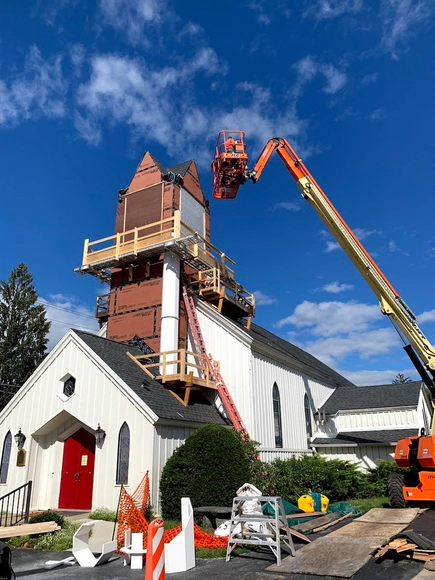
Historical buildings are both a connection between the past and the present, and a way to preserve local memory and culture. They are witnesses of a past era and living examples of specific constructive techniques, styles and materials from another time. Maintaining them is therefore essential in making local communities feel a sense of belonging and shared history, especially if the building is a meeting place in itself, like a church. This is the case of Calvary Episcopal Church – located in the city of Burnt Hills, New York –, a wooden frame construction completed in 1849 that survived a large fire in 1967. In the prominent bell tower, severe leaks became so common that it was feared the structure and 1,000-pound bell were on the brink of collapse. To remedy the situation while maintaining its familiar, signature look, the decision was to use PVC materials, known for their durability.
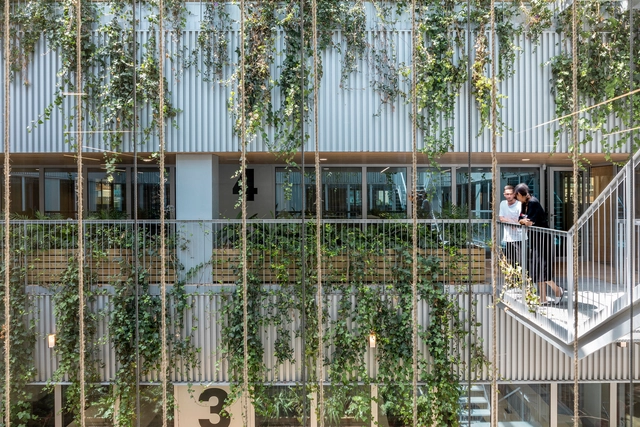
Exeter College Cohen Quad, London / ABA / Photo by Studio8. Image Courtesy of ABA
In March 2021, ACO and AIT-Dialog successfully launched a virtual tour through the seven continents of the world, inviting architects, urban planners, engineers and landscape architects to become part of "beyond.aco | architecture across continents". Now the journey continues: Join them at their next live event on 8 November 2022 and look forward to inspiring lectures from international speakers.
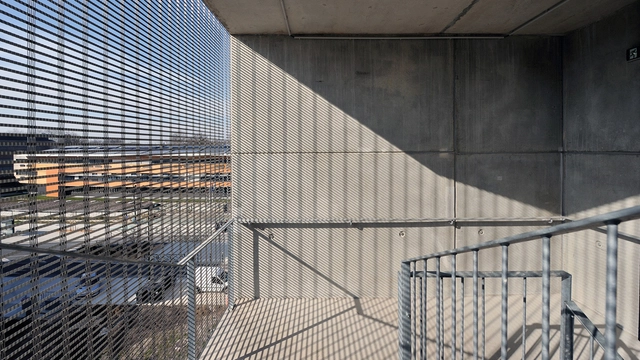
Versatility is the main characteristic of wire mesh. They can be used indoors, as ceilings and walls, but also outdoors, covering railings or wrapping entire buildings. In addition to its many possible uses, versatility is intrinsic to the material: Depending on the choice of warp and weft wires and the type of weave, the result is an individual mesh with a specific look and light effect, that can be further expanded with different materials or colored mesh surfaces. Another notable quality of the material is the safety it provides, either in guard rails on walkways, vehicle bridges with sidewalks, central atriums, elevated playgrounds, multi-storey parking lots, or internal or external stairways.
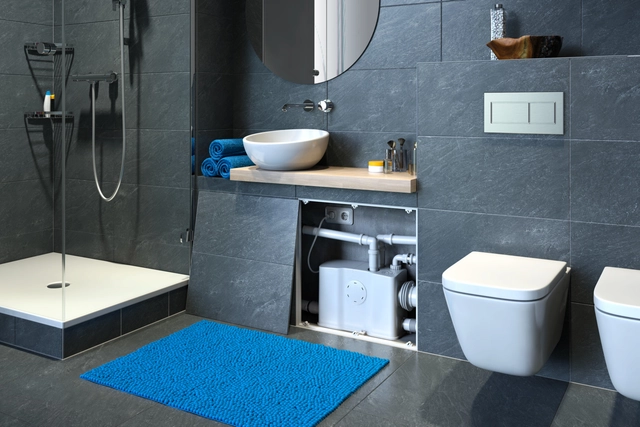
We have written a lot about the adaptive reuse of buildings and how this should become an even more important activity for architects in the future. Focusing on interiors, it consists of adapting spaces to new demands, promoting quality and comfort, and often incorporating new technologies into a space. Whether adding a new bedroom, organizing a home office, or transforming a historical building into an office, the architects' creativity allows them to create interesting environments without the need for demolishing. But one thing that tends to make designers scratch their heads in concern is how to include bathrooms and all the complication that it entails. This is because adding a simple toilet usually requires breaking slabs, walls, and floors, working with thick plumbing, and, above all, spending a lot of money and time. There is, however, the possibility of using a macerating pump system - a straightforward, affordable solution for creating a complete or half bathroom practically anywhere.
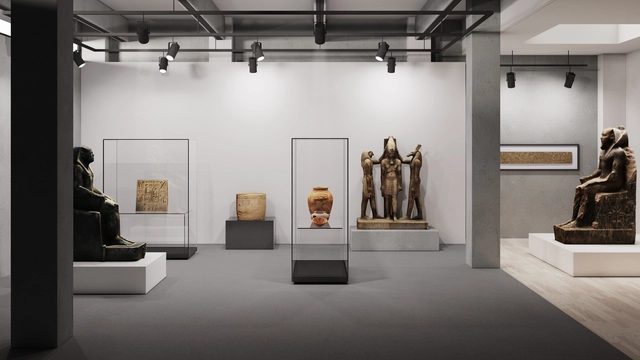
Museums play a critical role in preserving local cultures, promoting a better understanding of our collective heritage, and fostering dialogue, curiosity and self-reflection. In recent years –and largely driven by the Covid-19 pandemic– technological advances have enabled users from all over the world to visit exhibitions virtually, at any time and from the comfort of their own home. However, although online tours are a good way of increasing accessibility, there is something about the in-person museum experience that will never get old: the ability to witness, embrace and closely admire artefacts, paintings and sculptures in their true form, as well as the chance to experience the unique ambiance and essence of a traditional museum setting. Viewing the Mona Lisa virtually will never live up to appreciating it face-to-face at The Louvre, for instance.
IE University, in collaboration with All Things Urban, would like to invite you to our "Cities and Jobs Series". A series of webinars are being hosted by the two organizations, for the launch of IE’s new Bachelor program in Urban Studies (for which applications are now open). The multidisciplinary program examines urban issues in a holistic way to prepare the future generation of urbanists to tackle the pressing challenges of our cities.
Cities only occupy 2% of the planet’s surface, but they accommodate more than 50% of thepopulation. They consume 75% of global energy, produce 80% of global CO2 emissions, and generate more than 80% of the global GDP today.These numbers put cities at the center of any discussion about global warming, urbanization, progress, and social issues.
The three online webinars will tackle conversations from “Urban Artificial Intelligence: how can we urbanise technology?” to “Urban Green Infrastructure: How can nature save cities” and “Urban social inequalities: How can cities include people?”
The façade is the only part of the building that can be seen from the outside and has the function of communicating a message derived from its design. It therefore deserves special attention in every detail. A façade that is well proportioned in terms of colours and materials, which facilitates the connection between the interior and the exterior, will generate an initial attraction for pedestrians, inviting them to enter.
From a small house clad in classic tiles, to big brands such as Apple or Louis Vuitton, façades are used as an architectural expression to give us a glimpse of the first elements that we will later find inside the premises. In interior design, the entrance hall of a home concentrates many clues as to what we will find next. The effect of this first impression would be even more positive if the façade included a design that leaves the user hungry for more.
Linear Suspended Lighting. Image Courtesy of Alcon Lighting
Lighting plays a crucial role in architecture: to allow users to see, safely inhabit spaces, and carry out their daily activities. But its power has long exceeded these basic functions, primarily driven by technological advances and new design trends that have led to greater innovation and creativity. Contemporary lighting design has the ability to completely transform a room, impacting visual comfort and setting the tone by defining volumes, drawing attention to texture and enhancing colors. It can also determine shape and size perception; for example, in a room that is particularly small, having extra lighting reflect off light-colored walls will help the space appear larger. Similarly, light has been proven to affect mood, concentration and overall well-being. Whereas an adequately illuminated environment is associated to warmth and improved energy levels, poor lighting can lead to health deficiencies, including headaches, eyestrain and even depression.
The Power of Air by Sidnie Ancion, Meg Kalinowski, Anabella Acevedo Peña – UD Spring Semester 2022. Image Courtesy of City College of New York
The Spitzer School of Architecture at the City College of New York has been challenging the strictures of traditional design education for decades. Now, the esteemed school’s revamped Master of Urban Design program continues this trend of innovative education by reframing the urban environment as a laboratory where students play active research roles.
Flexibility has been an increasingly appreciated characteristic in the field of architecture. In the extremely dynamic societies and spaces that we inhabit, it makes sense for buildings to have the ability to continuously adapt their spatial layout and even their structure to changing needs. Providing a space that can be adaptable and not completely static is a priority in today's world and can extend to many different types of projects, from domestic to public. In offices and convention centers, for example, having the opportunity to create reserved rooms when needed makes these large open spaces much more versatile.
Movable partitions, whether sliding or on pulleys, are particularly useful solutions in these cases, but they can also get in the way and often do not perform well acoustically. Skyfold specializes in developing vertically retractable walls, which are completely hidden in the ceiling when closed, therefore solving some of the aforementioned issues regarding movable partitions. Their newest product, Prisma, adds total transparency, clean lines and a lightweight structure to this functionality.
Architects and designers may already be familiar with the benefits of using a true real-time visualization tool during their daily workflows to iterate and test ideas quickly. But when it comes to crafting the ultimate photorealistic shot, design often starts again in a completely different tool...until now.
Introducing an easier real time to high-end rendering experience with the release of the Enscape compatibility with V-Ray 6 for SketchUp and Rhino.
As climate change continues to reach unprecedented levels, many are pointing towards enhancing circularity in the construction sector. Essentially, the circular economy aims to eliminate waste and the continual use of resources by repeatedly reusing, repairing or recycling materials. The cyclical approach is able to meet demand and minimize CO2 emissions by extending a product’s lifespan, which is especially important when dealing with limited resources. Unlike the traditional linear extractive method –where everything goes through an extremely contaminating process of 'take-make-waste'–, circularity keeps materials in use for as long as possible to extract maximum value. This, in turn, reduces pollution, regenerates natural systems and contributes to a healthier built environment, hence building economic, natural, and social capital.
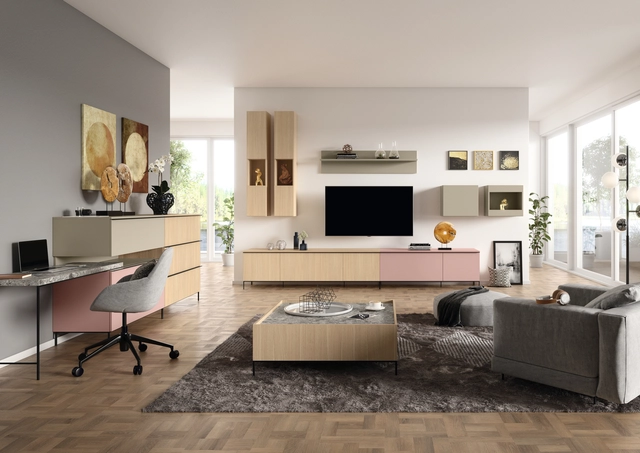
With its discreet design and coordinated colours, the workstation fits perfectly into the living area. Image Cortesia de EGGER
Although things seem to have returned to normal, it is undeniable that the COVID-19 pandemic has changed everyone. The truth is, its impacts on the economy and society can still be felt and will remain for some time. As a consequence, most people have become more conscious about public health, disease dissemination and the importance of science in everyday life. Many began to place more importance on time spent with family and at home, while companies have realized that not all office spaces are really essential and that home office can be just as effective.
The result is that people have began modifying their spaces to accommodate new uses which might have been unthinkable before. Our homes had to become, in a few weeks, places for rest, work, study, sports and leisure. Most were not prepared for this change, but gradually both residents and architects and designers found ways to adapt to the new reality. We've learned that accommodating new functions into a home means more than just setting up a table in the only free corner of the apartment. The pandemic also accelerated certain global trends and changed our relationships with products, companies and services, in terms of sustainability, social justice, digitization and individualization. The common factor between these different elements is that now they no longer require you to make a choice between one thing or another. Instead, all these elements are now connected, making life, people and products more agile and long-lasting. Under the motto “Create Transitions”, EGGER shows how decors and wood-based products can create and shape change in everyday living.
Spanish cities are clear examples of the overlapping of historical periods. Medieval urban layouts coexist with modernist urban plans, and their buildings show traces of Roman, Arab, Gothic, and Romanesque architecture. Moreover, in the era of Maritime Expansion, Spanish architecture was exported from the Iberian Peninsula to much of the world, especially the Americas. It is also difficult to speak of Spanish architecture without mentioning the Catalan genius Antoni Gaudí, whose distinctive style remains unparalleled in architectural history – inspiring and unsettling, without fitting into any particular single stylistic movement. In recent decades, Spanish architects have remained highly respected throughout the world. From the complex structures of Calatrava and the virtuosity of Enric Miralles, to the respect for context of Rafael Moneo. There are many others that should be noted, such as Ricardo Bofill, Alberto Campo Baeza, and the recent Pritzker winners, RCR Arquitectes.
Architects and designers often struggle with questions such as how to win more work, how to leave behind unprofitable, ineffective marketing methods, how to level up their design firm, and to say yes to more fulfilling work, and more. One way of facing these challenges is through continuing education and training.
IE University's free online sessions of their Business of Design series feature outstanding guest speakers with tips to enable architects and designers to become better managers, business developers, and entrepreneurs.
Architectural projects have been growing in complexity at an exponential pace while delivery times have shortened. In response to these demands, specialized visualization studios have become essential to architects and firms with high demands and tight deadlines. Brick Visual, the Budapest-based high-end visualization studio, reflects on its 10 years in the industry and the current state of architectural visualization.
Brick Visualwas founded in 2012 by a few ambitious young professionals whose dream was to create visuals for the most reputed architecture firms around the globe. From a small downtown apartment in Budapest, the handful of visualizers worked to address the needs of its clients while building a culture of innovation and artistic excellence. Since then, the small Hungarian collective transitioned into an international team of nearly 100 experts, who are based in their loft headquarters in Budapest, and satellite offices in Cluj-Napoca, Romania, and Verona, Italy.
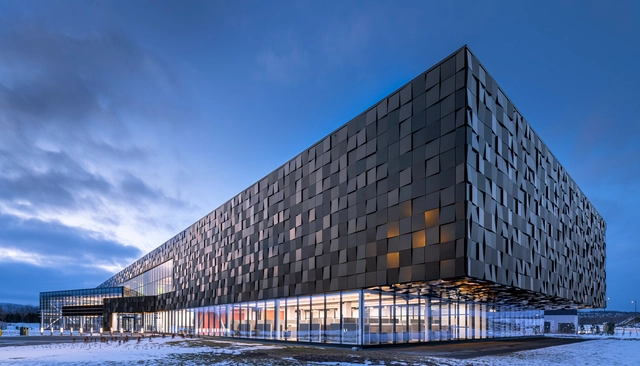
Blending in with its urban context or standing out to draw attention, a façade tells a building’s story. It is an expressive medium through which we engage with architecture, defining first impressions and setting the tone for the interior by experimenting with transparency, movement, texture and color, among other aesthetic possibilities. Of course, the envelope also plays a crucial functional role, acting as a protective barrier against extreme weather conditions and directly impacting light transmittance, energy efficiency and acoustic comfort. Architects therefore face an important challenge: to achieve a balance between an attractive look and performance. To do so, it is pivotal to specify the right materials during the design stage.
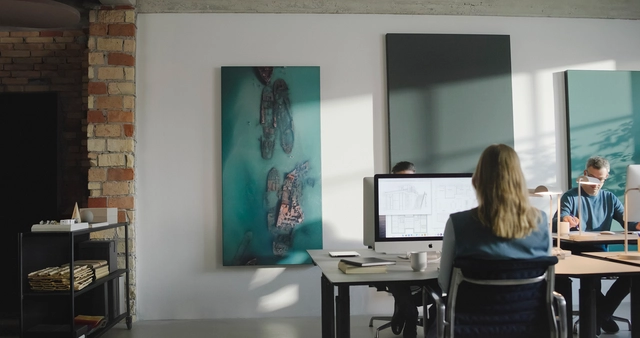
The noisier the environment, the harder it is to concentrate on the sounds we really want –and need– to hear. We spend about 90% of our time indoors, either at home or at work, often with little concern for acoustic qualities, making our body remain in a constant warning state. In offices this is an even more critical issue. While traditional open plan working spaces encourage teamwork and effective communication, many professionals face the challenge of being able to concentrate with the frequent noises, whether from a nearby conversation, the construction site next door, or a noisy espresso machine. Among the problems that noise pollution can cause in the human body are stress, accelerated heartbeat, increased blood pressure, insomnia, and a constant state of vigilance. Studies also show that poor acoustics negatively affect productivity.
This can be further amplified by the environment itself, often composed of "hard" surfaces (masonry, concrete, glass) that reverberate sound several times over, making it necessary for people to raise their voices to be understood. Furthermore, acoustic devices are generally perceived as accessories that are not very aesthetically pleasing, often with clumsy designs and with little or no flexibility.