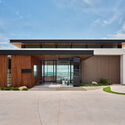
Wood and coastal architecture have always gone together. It's one of the defining materials of coastal structures. But creating that aesthetic in an environment where weather is a constant part of life demands more from the wood you choose.
Rain isn't unique to coastal areas. What makes the coast different is the combination and frequency of exposure. Humidity, ocean winds, salt-laden air, direct sun, and frequent storms repeatedly take wood from wet to dry and back again. In many coastal regions, these aren't occasional weather events. They are simply part of the climate. That makes two characteristics especially important when selecting wood for coastal construction: durability and dimensional stability.
Seamless surfaces and minimal joints have become a defining signature of contemporary architecture, prized for the clean lines, and uniformity they bring to a building's envelope. Yet in façade engineering, this pursuit is rarely just about appearance. Regardless of the material used, increasing panel dimensions can influence durability, material recyclability, performance against external factors, and other considerations such as impact resistance and long-term maintenance. By combining ease of installation and transportation efficiency with design flexibility, monomaterial façade systems use large-format panels while addressing practical challenges related to flatness, thermal movement, and structural support. Yet, what other material-related considerations behind large-format panels can make a difference in building envelope construction today?
As architectural projects grow more complex and requirements evolve, the ability to iterate quickly is increasingly important to the design process. For Bellway, one of the UK's largest homebuilders, faster design iteration and visualization have become key to meeting these demands. It is not just a way to present finished designs, but also a tool for testing ideas, communicating options, and making decisions earlier in the development process.
Can Gio Pavilions / DE-SO Asia. Image Courtesy of NS BlueScope
The Steel Architectural Awards ASEAN 2026, presented by BlueScope, has announced the 12 finalist projects selected to advance to the ASEAN-level appraisal. Representing outstanding achievements in architecture across Indonesia, Malaysia, Thailand, and Vietnam, the finalists were selected through the Country Awards programs and now move forward to regional evaluation by an international judging panel.
Now in its second ASEAN edition, the program celebrates architectural projects that demonstrate excellence in design, innovation, sustainability, and the creative application of coated steel solutions. Under the 2026 theme, "Shaping Resilient Futures: Timeless Design with Coated Steel," the Awards highlight projects that respond meaningfully to their context while delivering enduring value for future generations.
First Prize Winner: Helical. Image Courtesy of Buildner
Buildner is pleased to announce the results of its Architect's Chair Competition Edition 5, the fifth edition of the annual international competition inviting architects and designers worldwide to create a signature chair that reflects their individual design philosophy and vision.
Chair design exemplifies the interdisciplinary nature of architecture, bringing questions of proportion, structure, material, ergonomics, and craftsmanship together at the scale of a single object. This year's submissions explored a broad range of approaches, from highly minimal, structurally efficient solutions to designs rooted in cultural references, material experimentation, and new fabrication methods.
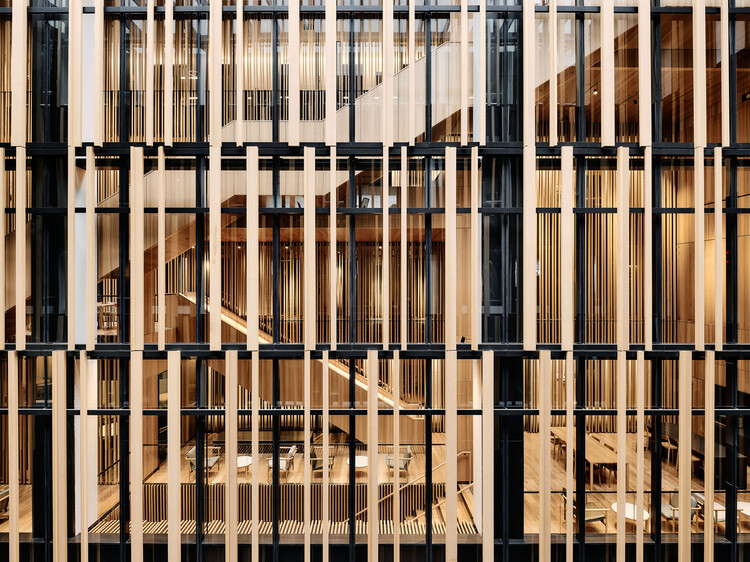
The relationship between humans and wood has endured since the Greco-Roman era, when a variety of techniques were developed to maximize its unique properties and characteristics. Beyond its warmth, texture, and natural appeal, wood has proven its ability to meet a wide range of technical requirements while adapting to diverse environmental and geographic conditions, maintenance demands, and fire-resistance standards. In response to the evolving needs of the built environment, interior and exterior finish materials that replicate the appearance of wood have emerged as viable alternatives. Among them, Wood Finish Aluminum offers a durable, high-performance solution for long-lasting projects, providing a textured wood-look appearance while maintaining minimal environmental impact.
Wellbeing is no longer confined to exclusive resorts, spas, or hospitality settings. Today, it has become an essential part of contemporary living, inspiring homeowners to create private spaces dedicated to relaxation and personal care. Collections such as LEMI's Home Spa Collection explore this growing interest in residential wellness through a selection of massage beds and relaxation loungers.
Videos
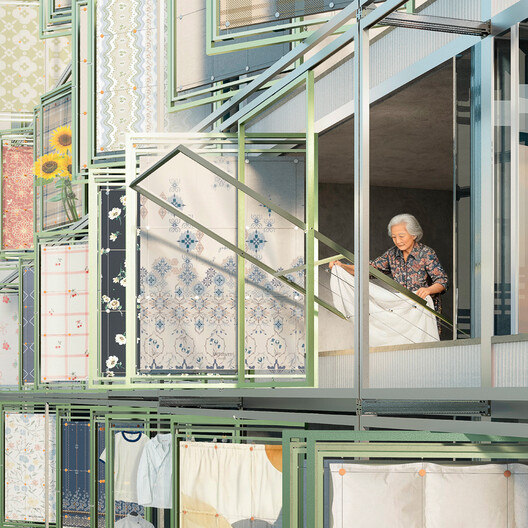
Light of Tomorrow by VELUX 2026 winning project “Sun the Quilt” by students from Xi'an University of Architecture and Technology in China. Image Courtesy of VELUX Group
How can daylight tackle global challenges? This question lies at the heart of Light of Tomorrow by VELUX, a global student competition that encourages architecture students to explore the future potential of daylight in the built environment. In its 12th edition, the competition received hundreds of responses from around the world, culminating in eight finalist projects presented to an international jury at the UIA World Congress of Architects in Barcelona. The 2026 global winner, Sun the Quilt, developed by students from Xi'an University of Architecture and Technology in China, was chosen for its strong concept, design thinking, and innovative use of daylight that transforms an everyday domestic ritual into an innovative facade system shaped by daylight, climate, and care.
Selecting wood for outdoor applications involves more than appearance alone. Durability, stability, versatility and sustainability all influence how a material performs over time. Understanding these factors can help architects, builders and homeowners choose the right wood for exterior projects.
Wood remains one of the most desirable materials for exterior applications. Its natural appearance, warmth and versatility make it a popular choice for decking, siding, windows, doors, outdoor structures and architectural detailing.
On Spain's Costa Brava, the little-known brutalist housing block Les Feixes, in L'Estartit, becomes the main stage of "Caçador de Geometries" (Geometry Hunter), a short film produced by Simon and directed by filmmaker Matilda Vidal de Llobatera. Its premiere marks the launch of the sixth edition of the Living Places – Simon Architecture Prize, the only award that uses video to explain architecture from the perspective of those who inhabit it. Curated by Fundació Mies van der Rohe since 2016, it is now open and, coinciding with its tenth anniversary, it joins the program of Barcelona 2026, World Capital of Architecture.
For years, advances in architectural visualization have been measured by image quality. Physically accurate lighting, sophisticated material systems, and real-time rendering have made photorealistic imagery an industry expectation. Yet architectural practice has evolved in a different direction.
Today, clients, consultants, engineers, and design teams contribute earlier and more frequently throughout the design process. Design reviews no longer simply present decisions. They increasingly become part of how those decisions are made.
First Prize Winner: Below Shadows. Image Courtesy of Buildner
Buildner has announced the results of its fourth annual Home of Shadows international architecture ideas competition. The competition series is designed to focus on the vital interplay between light and shadow in creating functional and inviting living spaces. It highlights the importance of natural light in home design, essential for creating comfortable, inviting, and practical environments.
Light is viewed as a language through which architects communicate emotions in their designs, with shadows playing an equally significant role in influencing the ambiance of a space. The balance between light and shadow allows for the creation of spaces with depth and texture, setting different moods for various purposes. Often, this balance can be achieved through the strategic placement of windows and doors.
Second Prize Winner: A stair, a spiral, or a park. Image Courtesy of Buildner
Buildner has announced the results of its third edition Architect's Stair international architecture ideas competition. The event invited designers to reflect on one of architecture's oldest and most symbolic elements: the stair. Beyond its functional role as a connector of levels, the stair was positioned here as a medium of architectural storytelling—an invitation to explore ideas of procession, sequence, space, and form.
An architecture degree provides the foundations of the discipline, but the transition into professional practice often extends well beyond the classroom. Building experience, developing a portfolio, and navigating the realities of architectural offices are challenges that many graduates face in their first years of practice.
Beyond the structural grids lies a layer of design that dictates how a room feels the moment someone crosses the threshold. Recorded live at Milan Design Week 2026 in partnership with INDX|GLOBAL, the final episode of the Room For Dreams podcast covers the unseen atmospheric energy that gives architecture its emotional weight.
Videos
Competition Site facing east, White Bay Power Station in foreground. Image Courtesy of NSW Government
The White Bay Power Station precinct and Glebe Island, two key sites in one of the last major redevelopment sites on Sydney's inner harbour, are the focus of a new international design competition launched by the New South Wales Government. The open, two-stage Bays West International Design Competition seeks a design-led Urban Framework that will guide the transformation of the precinct into a new waterfront neighbourhood.
Ellisse, location: Armando Cose, Designer: Philippe Malouin
Communicating an idea using only the essentials is a far greater challenge than it often appears. From Japanese haikus to the refined sculptures of Constantin Brâncuși, many artistic expressions have sought to condense the maximum meaning with the minimum of elements. This economy of form is not a sign of scarcity, but of intensity: every stroke, every word, every silence gains weight. There is something intrinsically appealing in what presents itself as simple and well-resolved, whether it is a text that wastes no words, a tennis player who moves with purposeful gestures, or a melody that is both direct yet unexpectedly profound.
That same principle, which transcends various artistic languages, resonates deeply in contemporary design. When reduced to the essential, furniture or everyday objects reveal a form of beauty that arises from precision and transcends their function. This is exemplified by HUM, the new collection of taps developed by designer Philippe Malouin for QuadroDesign, in which a simple gesture is transformed into a complete language.
Marina Opatija and the Kvarner Bay shoreline from above. Image Courtesy of Smart & Sustainable Marina Rendezvous
M3 Monaco's Smart & Sustainable Marina Rendezvouscompetition returns for its sixth edition with an open-architecture Call for Ideas centered on Marina Opatija, on Croatia's Kvarner Bay. This article sets out what the competition asks of designers: a focused, high-impact intervention built around three required buildings, the pillars and sustainability criteria behind the brief, the key dates leading to the August 2026 deadline, and how to enter, free of charge, for professionals and students alike, with the top finalists pitching their work at the Yacht Club de Monaco.