

-
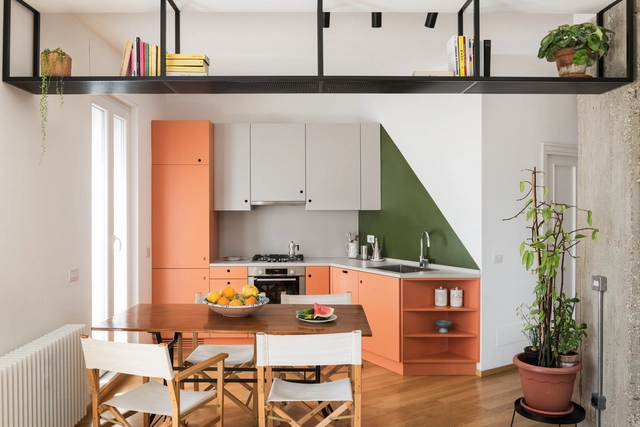
Architects: STUDIOTAMAT
- Area: 95 m²
- Year: 2023
-
Professionals: Ediltel B


“Reinventing Cities,” C40’s renowned global design competition, has just announced its fourth edition. The competition’s main goal is to “transform underutilized sites or buildings into beacons of sustainability and resilience and act as a showcase for future zero-carbon urban developments.” This year, 15 cities have stepped up the challenge, inviting professionals from various disciplines to reimagine underutilized urban sites and design transformations prioritizing sustainability and inclusivity.
With a commitment to zero-carbon, urban resilient projects, Reinventing Cities has engaged over 3,500 businesses worldwide with 40 projects currently under development globally. This year’s competition is characterized by its ambitious environmental and social objectives; with participating cities spanning continents, including Almere, Bilbao, Bologna, Brussels, Glasgow, Milan, New York, Palermo, Renca, Rome, San Antonio, San Francisco, São Paulo, Seattle, and Venice.
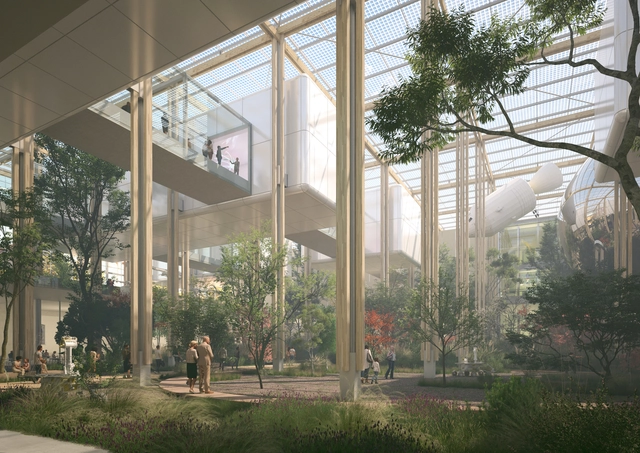
In the contemporary context, museums face contradictory sets of ideas: becoming attractions on and of themselves but presenting an understated image that shifts the attention to the exhibits, creating a safe and protected environment for the artifacts, yet opening them up to the public, becoming repositories of history yet catalysts for innovation. Searching for the balance between all of these constraints has resulted in the flourishing of diverse types of museums and cultural institutions, from those dedicated to the remembrance of a single event or persona to temporary homes for cultural events or spaces that expand their cultural offering beyond exhibition areas.
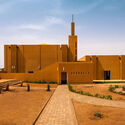
This curated selection of Best Unbuilt Architecture highlights projects submitted by the ArchDaily community that demonstrate the fusion of art, technology, and innovation within the realm of museums and cultural centers. Among the featured designs are works from renowned architectural offices, including CAA architects, NextOffice – Alireza Taghaboni, and Fentress Architects, along with several emerging firms. Ranging from a sculptural art museum in Dubai to a local cultural and recreational complex in Senegal, or an immersive science museum in Rome, Italy, this diverse compilation strives to showcase the spectrum of scales and purposes of cultural institutions.
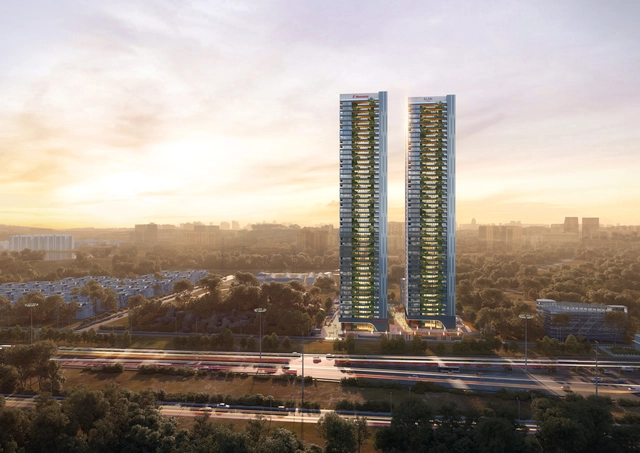
Architecture competitions are platforms where innovation meets imagination, where the boundaries of what we know about design and architecture are relentlessly pushed. Serving as spaces for architects and designers to realize groundbreaking ideas, competitions challenge our conventions and shape our future environments. While countless creative concepts are proposed, only a handful are realized. In fact, these winning designs stand as a showcase for the creativity of architects, redefining our future built environments.
These winning projects demonstrate the global initiative to rethink the way we interact with spaces. HOKA fosters community interaction, while RITSO Resort merges tradition with modernity. Science Forest transforms museums into hubs for dialogue, and Elan-Meenakshi apartments in Hyderabad integrate urban living with green spaces. Ranging from Vietnam, Greece, Rome, to India, these examples showcase the transformative potential of architecture competition winners, reshaping our perception and interaction with the spaces we inhabit.
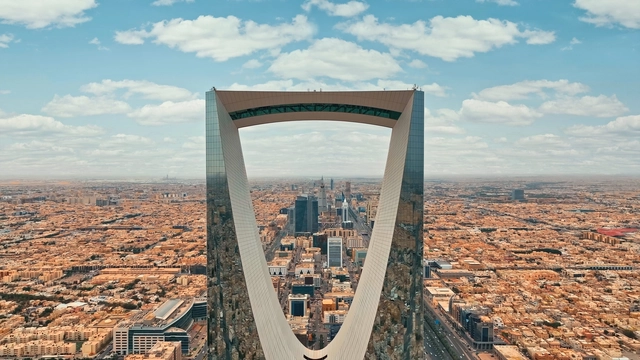
The Bureau International des Expositions (BIE) announced yesterday, on Tuesday, November 28, that Riyadh, the capital city of the Kingdom of Saudi Arabia has been selected to host the 2030 World Expo, by securing the necessary two-thirds majority of votes in the first round. Marking another milestone for the Gulf, following Dubai's Expo 2020 and Qatar's hosting the FIFA World Cup in 2022, this five-yearly event draws millions of visitors and investments. Under the theme, "The Era of Change: Together for a Foresighted Tomorrow", Expo 2030 Riyadh will run between 1 October 2030 and 31 March 2031.
Competing against South Korea's port city of Busan and Rome in Italy, Riyadh won the bid with 119 votes, while Busan received 29 votes, and Rome got 17 votes out of the 182 members of the Paris-based Bureau International des Expositions (BIE). Other explored subjects were the themes of “Transforming Our World, Navigating Toward a Better Future” by Busan and “People and Territories: Regeneration, Inclusion and Innovation”, for Rome.
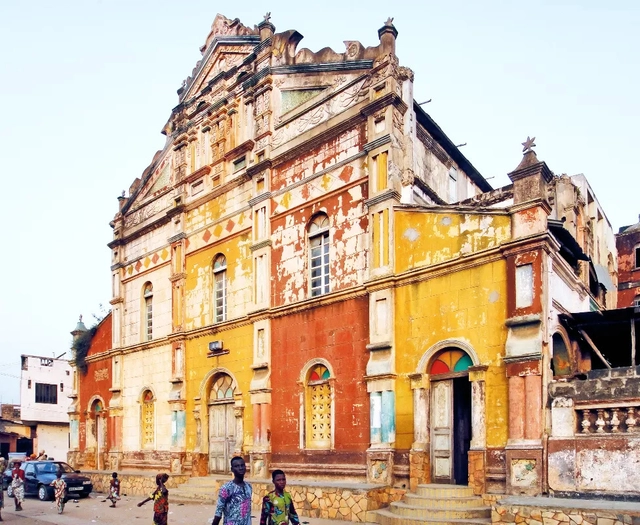
Buildings that are designed to layer stories and memories, evoke a sense of aspiration, define cultural narratives, and build a national identity will always be important in all societies. When buildings have this power to shape communities, make an impact on a city’s image, and change the course of socio-economic growth, then they can be identified as iconic. Though the term “iconic” is subjective, it is one that pushes the boundaries of architecture in any context. It calls for spatial originality, proposes innovative material technology, and necessitates a radical socio-economic investment to be realized.
However, since the economies of developing countries in the global south cannot meet the requirements of these architectural structures, is there a more suitable socio-economic model for monumental structures in this context? Can the incremental principles of small adaptable changes and growth be applied to the finite iconic aspiration of this architecture?
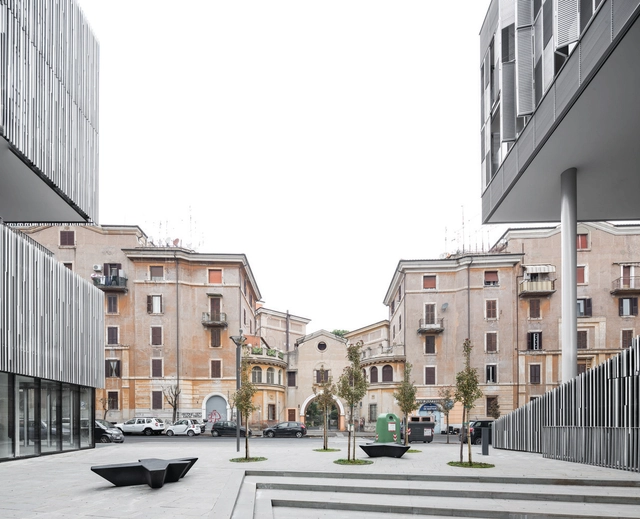
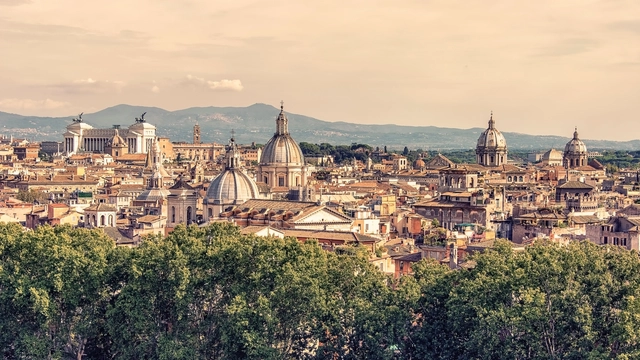
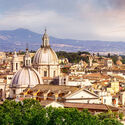
Spanning over 3 millennia with one of the highest concentrations of architecture in the world, Rome is a transcendental influence on the world's culture. Often called “The Eternal City,” it developed as the capital and seat of power of the Roman Empire, regarded by many as the first Imperial city and among the first ancient metropolises. As a city continuously occupied for over 28 centuries, Rome has maintained its countless layers of history to become a perfect depiction of old meets new. Rich in history, academia, and art, the Italian capital is now one of the most visited cities in the world.
Rome's historic center, which stretches from Piazza del Popolo to Piazza Venezia and from the east bank of the Tiber up to Piazza di Spagna, is listed as a UNESCO World Heritage Site. Along with its historical significance, the presence of renowned contemporary architects and designers in the city has made Rome an influential design destination. In 2019, it was the 14th most visited city in the world, welcoming over 8.6 million tourists seeking to discover the ways in which the history of the Ancient Romans blends with contemporary life, making it the third most visited city in Europe and the most popular tourist destination in Italy.
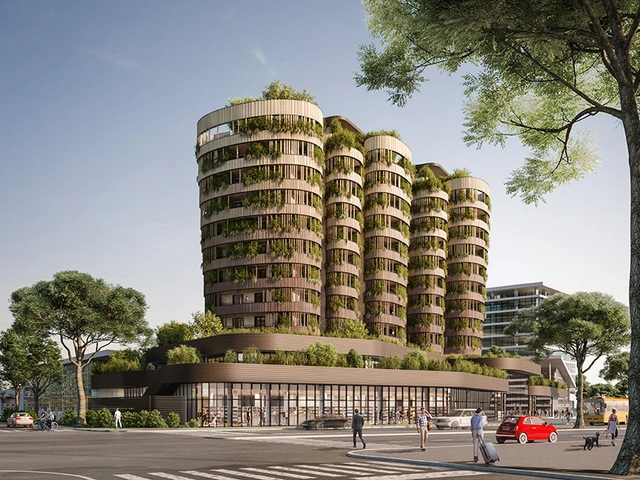
Mario Cucinella Architects has unveiled the design for the new Piazza dei Navigatori in Rome, Italy. Planned as a mixed-use development, the design is predominantly for residential spaces, with a retail and office component, parking, and "plant rooms". The development is located in an area rich in natural elements, which heavily inspires this urban agglomeration.
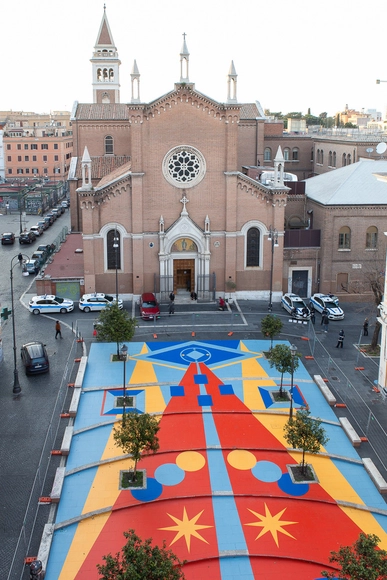
This article was originally published on Common Edge.
In 2018, the Roman neighborhood of San Lorenzo hit the headlines when a young girl was found dead in a derelict building. The media focused on the area’s decline, ignoring its long political and cultural history. Known as a “red” territory, San Lorenzo was one of the few districts to resist Mussolini’s 1922 March on Rome. Built in the late 19th century to house a working-class population of artisans as well as rail and factory workers, there’s a gritty feel to the neighborhood, defined by remnants of its industrial past and buildings that still bear the scars of Allied bombing in World War II. This small, centrally located neighborhood is wedged between Termini, the main train station, Verano, the monumental cemetery opened in 1812, and the Città Universitaria La Sapienza (La Sapienza University).

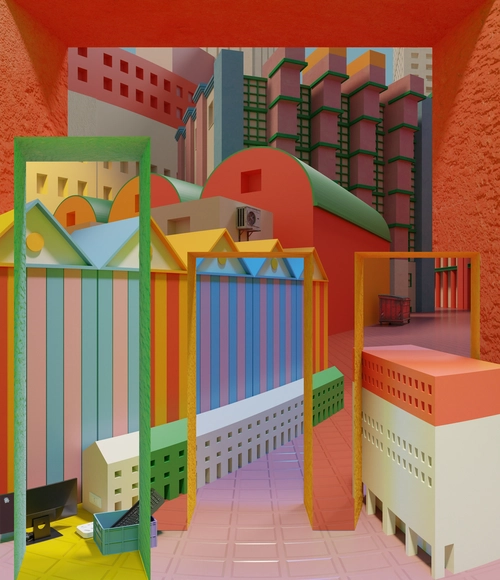
Through the “Search History” exhibition at MAXXI Museum in Rome, Lara Lesmes and Fredrik Hellberg, directors of the architecture and art studio Space Popular, set out to explore the work of Also Rossi and to translate his notions of “urban fact” and “analogous city” to the virtual realm. The installation is a reflection on the proliferation of metaverse platforms and the concept of virtual urbanism. The exhibition is part of the fifth edition of Studio Visit, a partnership between Alcantara and the MAXXI Museo nazionale delle arti del XXI secolo, which challenges designers to put forward a personal reinterpretation of the works of the masters in the MAXXI Architecture Collections.
This article was originally published on Common Edge.
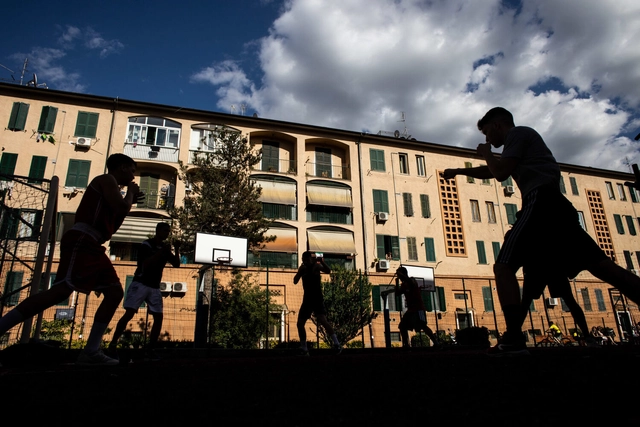
On first impression, Quarticciolo is a handsome district in Rome. A human-scaled public housing complex comprising red and yellow midrise buildings arranged around internal courtyards and gardens. Designed by architect Roberto Nicolini during the Fascist regime, this village feel isn’t found in the massive postwar residential schemes elsewhere in the capital. Like other rationalist architects, Nicolini was inspired by the ancient city. Basing the layout on a classical orthogonal grid pattern, he allowed just one tall structure, the Casa del Fascio (the Fascist party headquarters), a fortress tower that looms over the main square. Most of the buildings were constructed between 1938 and 1943 to house a working-class population that was forcibly moved from Rome’s historic center to the outskirts to make way for Mussolini’s grand public works.
In line with the United Nations agenda of climate neutrality by 2050, the Rome City Council has announced the establishment of a Laboratory titled “Laboratorio Roma050 – il Futuro della Metropoli Mondo", a project proposed and led by Italian architect Stefano Boeri, which aims to draw up an ecological vision for Rome in 2050. The urban regeneration project consists of 12 young architects and urban planners under the age of 35, along with 4 renowned architects as mentors, who collectively have specific experience in terms of studies and research regarding the Italian capital.


The “Reconstructing the Future for People and Planet” Conference, hosted by Bauhaus Earth and the Pontifical Academy of Sciences (PAS), has begun at the Casina Pio IV in the Vatican Gardens. The conference opened with a speech from Ursula von der Leyen, president of the European Commission. The extensive program brings together renowned scientists, architects, spatial planners, and policymakers to discuss the transformation of the built environment from a driver of climatic and societal crises into a force for regeneration.
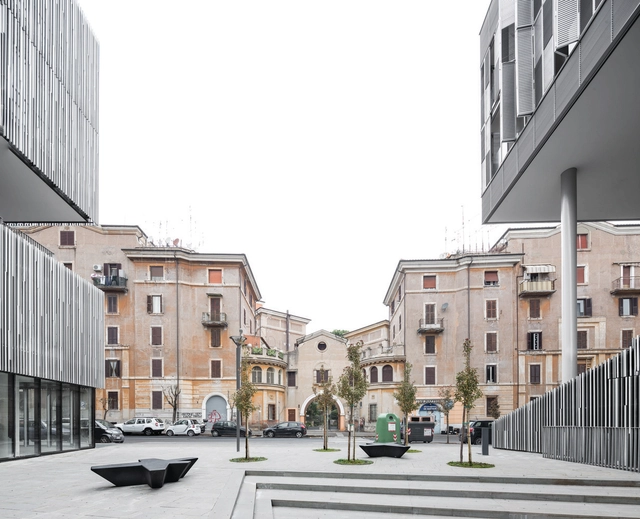
Spanning over 3 millennia with one of the highest concentrations of architecture in the world, Rome is a transcendental influence on the world's culture. A city rich in history, academia, and arts, the Italian capital is considered as one of the oldest continuously-occupied cities in Europe, and has maintained its countless layers of history to become a perfect depiction of old meets new, earning its nickname of "The Eternal City".
Rome's historic center, which stretches from Piazza del Popolo to Piazza Venezia and from the the east bank of the Tiber up to Piazza di Spagna, is listed as a UNESCO World Heritage Site. Along with its historical significance, the presence of renowned contemporary architects and designers in the city has made Rome an influential design destination. In 2019, it was the 14th most visited city in the world, welcoming over 8.6 million tourists to make it the third most visited in the European Union, and the most popular tourist destination in Italy.