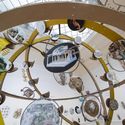
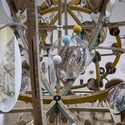
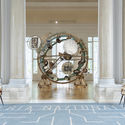
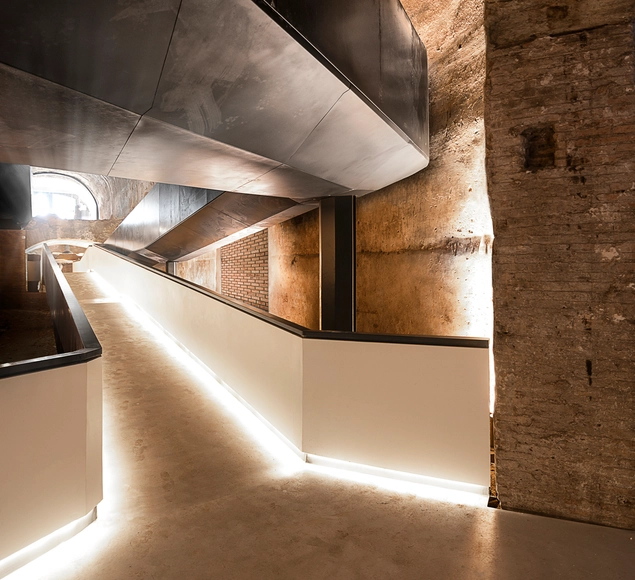
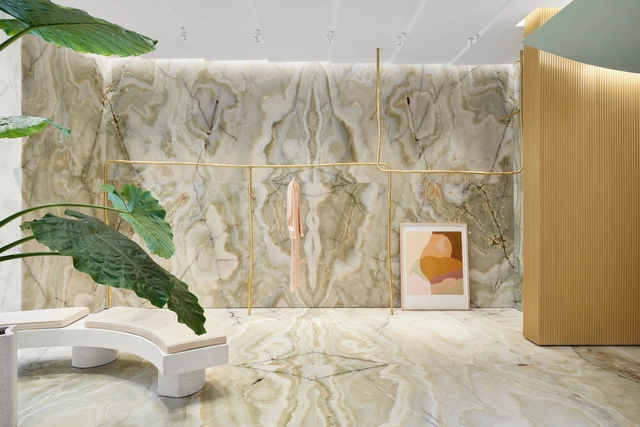
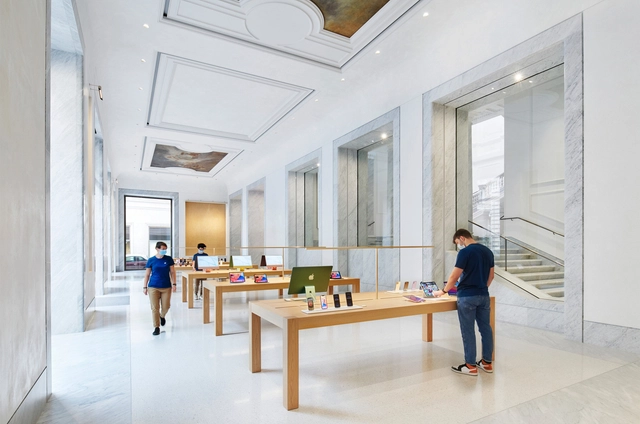
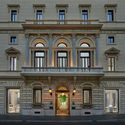
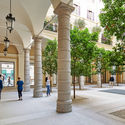
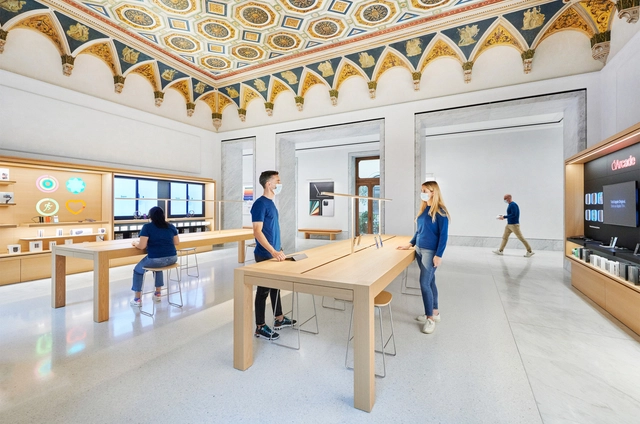
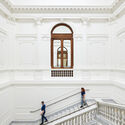
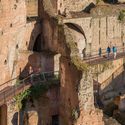
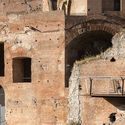
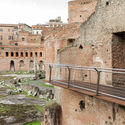
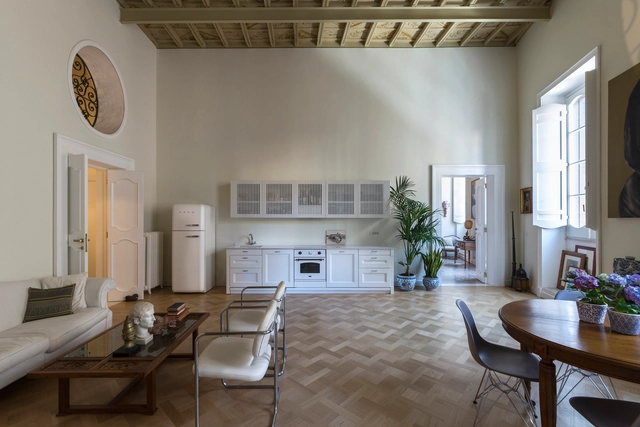
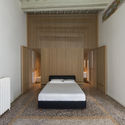
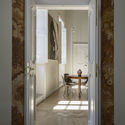
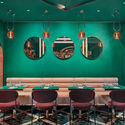
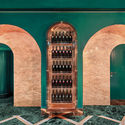
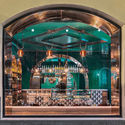
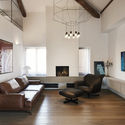
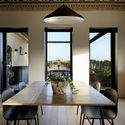
Last week, Apple opened its largest store in Europe, housed inside Rome’s 19th century Palazzo Marignoli. Designed by Foster+Partners, Apple Via del Corso celebrates the historic building by revealing its 1890s murals, frescos, and graffiti works from the 1950s, hidden from view for decades. The project creates a juxtaposition between the historical layers, the artwork and the signature minimalist aesthetic of Apple stores.
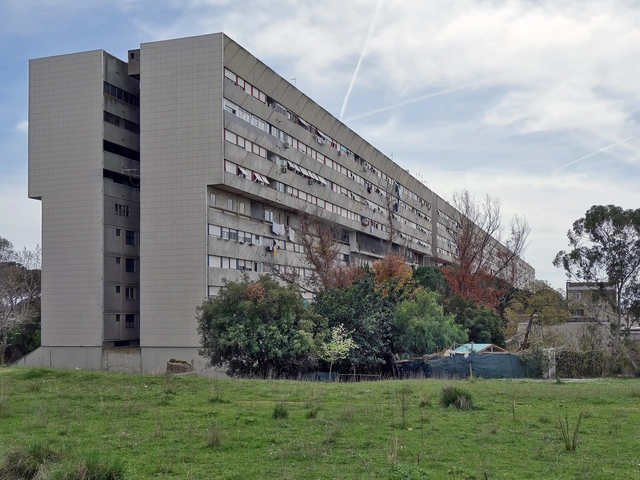
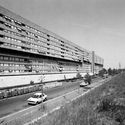
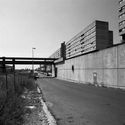
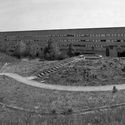
The Corviale housing complex, located in the south-western periphery of Rome, was designed in the 1970s as a solution to the growing number of dormitory districts in the Roman suburbs, caused by the significant population increase between the 1950s and 1970s - when the population grew from approximately 1.6 million to 2.7 million inhabitants - followed by suburban sprawl.
The project, also known as Serpentone because of its huge proportions, was developed by a team of architects under the leadership of Mario Fiorentino between 1972 and 1974. Construction took place between 1973 and 1982, but the original plan to use the fourth floor of the main building for commercial uses, services, and common areas, was dropped because the contractor went bankrupt. The floor was eventually taken over by informal settlements, and this event is considered to be the root of the problems with this emblematic project in the history of housing in Italy.
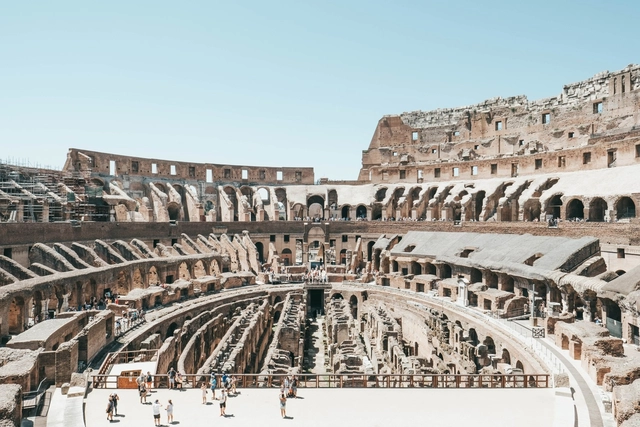
The Colosseum. Image Courtesy of Henry Paul/Unsplash
The Colosseum will undergo a renovation with a new, retractable floor platform. In ancient Rome, thousands gathered to watch enslaved gladiators, criminals, and wild animals fight to the death. These fighters and caged animals would emerge from the ground through secret tunnels beneath the arena’s wooden and sand-covered floor. Colosseum director Alfonsina Russo told the Times that the plan is to host concerts and theater productions on the new floor.
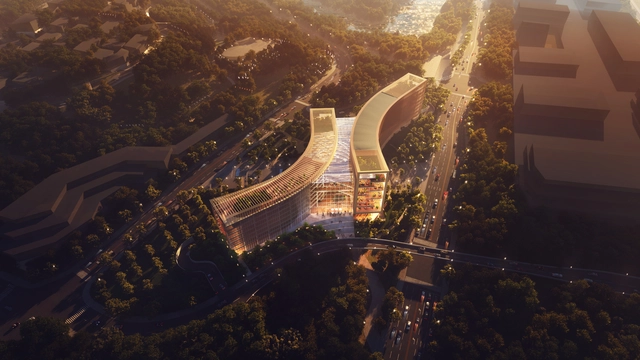
For this end of the year special roundup, ArchDaily has compiled a selection of Best Unbuilt Architecture, submitted by established and well-known firms. Including conceptual, in progress and, even in some cases, under-construction projects, this curated list covers a wide spectrum of programs and approaches.
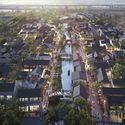
From KPF, Sasaki, COOKFOX, and FCBStudios to name a very few, this week’s article highlights worldwide interventions. It actually encompasses a terminal transformation in Manhattan, an integrated mixed-use development in Central Belfast, regeneration of an entire district in Shanghai, and the modernization of the infrastructure at Davis research station in Antarctica.
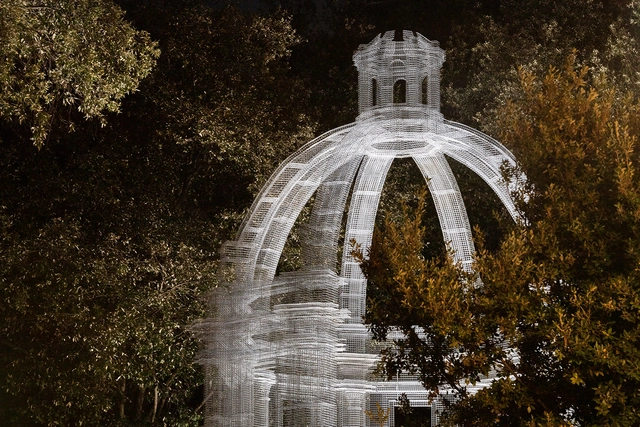
Etherea, the installation conceived by Edoardo Tresoldi for the Coachella festival in 2018, has landed in Rome for "Back to Nature”, an exhibition project curated by Costantino d’Orazio. The large transparent mesh sculpture will dialogue with the trees of the Parco dei Daini, in Villa Borghese, until December 13, 2020.
Floor Plan Croissant is a project directed by Boryana Ilieva founded to examine cinematographic spaces and bring the spatial language of the director to her own architectural understanding. However, later these translations took a social turn: as an architect and cinema lover, Boryana perceives a general gap between cinema and architecture, or in other words, a space that allows architects to explore beyond the screen. With this in mind, her work is based on extracting the plans from the main protagonist places in outstanding films, since she believes that a movie theater plan forms a phantom matrix around which the directors not only construct arguments, but rather they also place hidden messages.
Architect and educator Astra Zarina wasn’t just the teacher of Tom Kundig, Ed Weinstein, and Steven Holl (who designed ‘T’ Space); she was also an advocator for public spaces, cohesive urbanity, and the communities that these attributes fostered. ‘T’ Space’s newest exhibit Rome and the Teacher, Astra Zarina celebrates Zarina’s life and teachings in the context of recognizing overlooked pedagogical figures, particularly women. A recent article by Metropolis Magazine describes this exhibit in detail and with it, Zarina’s own life story.
https://www.archdaily.com/922753/t-spaces-new-exhibit-celebrates-the-overlooked-history-of-an-influential-female-architect-and-educatorLilly Cao
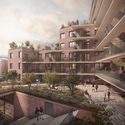
Bee Breeders has revealed the winners of the 2019 Rome Collective Living Challenge competition. Teams were asked to to propose solutions for collective living in Italy's capital city. Participants were tasked with designing a concept for affordable co-living around affordability and community. Organizers sought ideas that could be implemented across Rome to increase the city's housing stock.
Panteon is a magazine about architecture, released twice a year. Panteon aims to be a platform for architectural debate using the city of Rome as a pretext, as an infinite warehouse from which to draw answers to a potentially infinite number of questions.
The topic of the call is "Billboards”
Panteon is an anachronistic venture: anachronistic is the content, anachronistic is the product, anachronistic is its use.
The protagonist is the architecture of the city of Rome, all built between 1911 and 1989 within the GRA, our contemporary city wall, whose analogies are arbitrary and questionable.
Panteon aims to be a platform for architectural debate using the city of Rome as a pretext, as an infinite warehouse from which to draw answers to a potentially infinite number of questions.