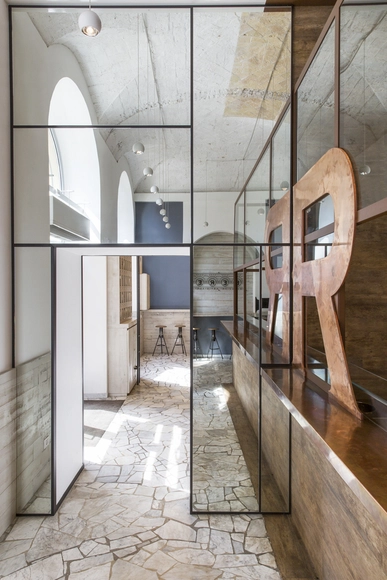
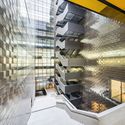
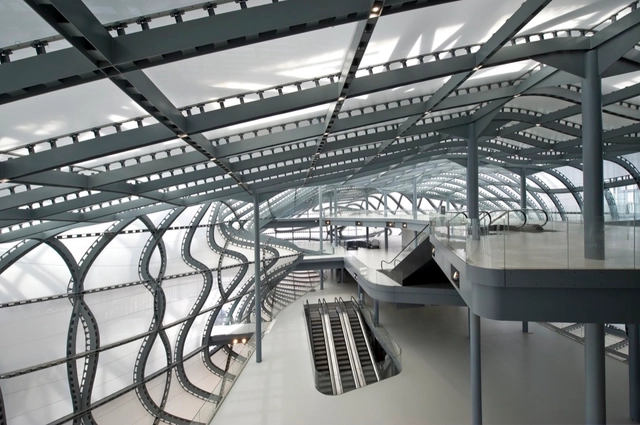
On the occasion of the centenary of Finland's Independence (Suomi 100), Rome’s Casa dell’Architettura is to host the “Architecture in Finland. From Alvar Aalto to new generations. Talk with Avanto Architects and Design Office KOKO3” conference on Tuesday 17th October 2017.
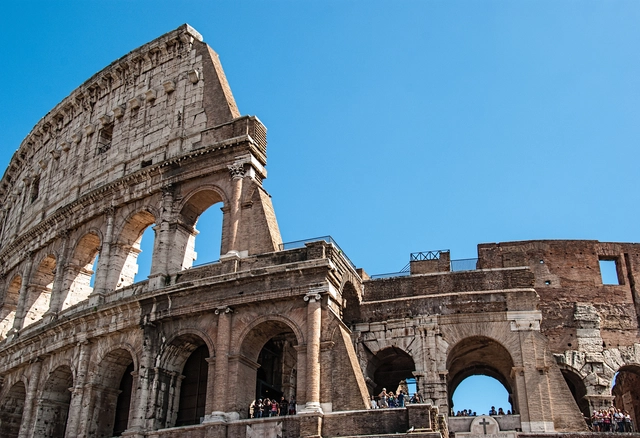
For the first time in more than 40 years, visitors will be able to access the uppermost levels of Italy’s most popular historical site, the Colosseum, following the completion of a major restoration project.
Beginning November 1st, guided tours will take ticketed guests to the remaining sections of the fourth and fifth levels of the stadium, rising as high as 120 feet above ground level.
We can all recognise the great architectural landmarks of Ancient Rome: the Pantheon, the Colosseum, Trajan's Column – but do you know how they originally appeared or, perhaps more interestingly, how they sat within the context of the historic city? In this captivating 14-minute-long virtual fly-through by the Kahn Academy and Smarthistory, a YouTube channel dedicated to historical video essays, the ancient splendor of the Eternal City (at around 320AD) is presented alongside expert commentary.
https://www.archdaily.com/871002/marvel-at-the-scope-scale-and-splendor-of-ancient-rome-with-this-virtual-fly-throughAD Editorial Team
Architectural landmarks can define a city. A mention of Paris conjures images of the Eiffel Tower, whilst no description of Sydney is complete without mentioning its inspiring Opera House. How disorientating it must be, therefore, to encounter a familiar architectural wonder far removed from the city, or country to which it belongs. As it happens, many of our most famous structures have their own "twins," heavily-inspired by their originals, that you may not have been aware of.
Adam Eastland/Alamy. Image Courtesy of Laurence King Publishing
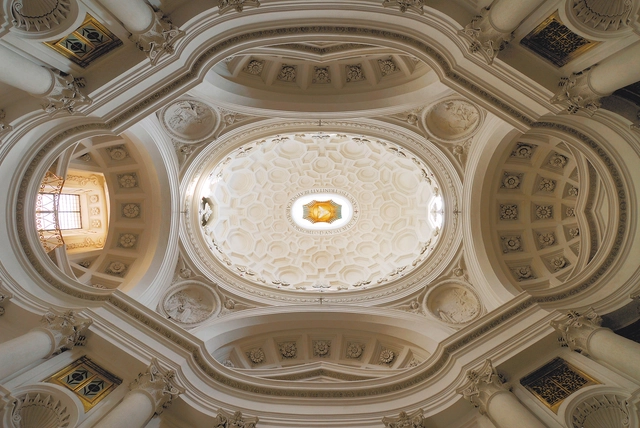
A wayward force of the High Renaissance, Baroque was broken in by Michelangelo in Rome in the sixteenth century before being given full rein by Bernini and Borromini in the seventeenth. Characterized by curves, domes, broken pediments and a gloriously inventive play on classical detailing, at its theatrical zenith it was thrilling architectural opera – far from the chaste and graceful classicism that both preceded it and ousted it in the eighteenth century. Deeply romantic, it also had something of the subversive about it.
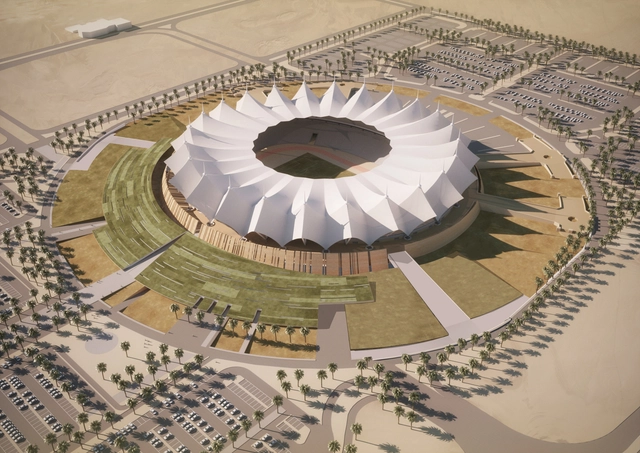
Rome-based Schiattarella Associati has unveiled its designs for the King Fahd International Stadium, a refurbishment project that will modify the existing structure, located in Riyadh, Saudi Arabia, to accommodate almost 50,000 spectators.
In order to link the ground level with the concourse level of the structure, the design focuses on creating an artificial hill at the base of the stadium.
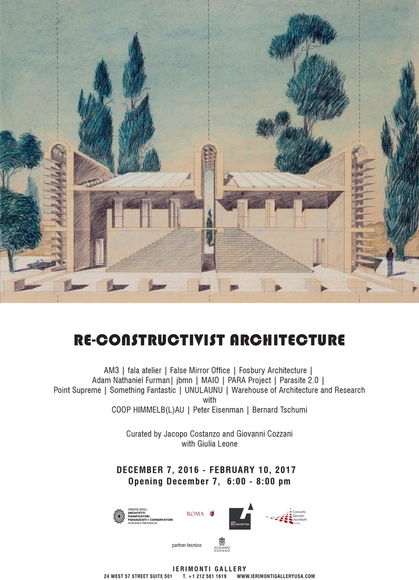
This reconstruction is primarily of language. The architects draw from archives—mental, digital or printed on paper—distant from the typical parametric and highly schematic rationales that characterized the last thirty years of design in architecture. Within the theoretical system that drives architectural composition, these archives inevitably become homages, references, and quotes.
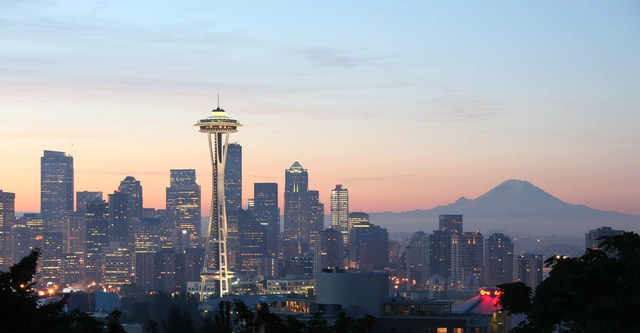
Space Needle / John Graham & Company. Image Courtesy of Wikimedia user Rattlhed (Public Domain)
Buildings, perhaps unlike any other art form or edifice, have a capacity to influence or become part of a place's cultural identity and history. Defining an architectural monument is, however, an ambiguous exercise – most of their ilk only reach this status years after completion. AD Classics are ArchDaily's continually updated collection of longer-form building studies of the world's most significant architectural projects. Here we've assembled five structures and buildings which, often aside from original intentions, embody that most ephemeral feeling: a sense of progress.
https://www.archdaily.com/802463/ad-round-up-5-monuments-to-progressAD Editorial Team
Courtesy of Flickr user Phil Whitehouse (licensed under CC BY 2.0)
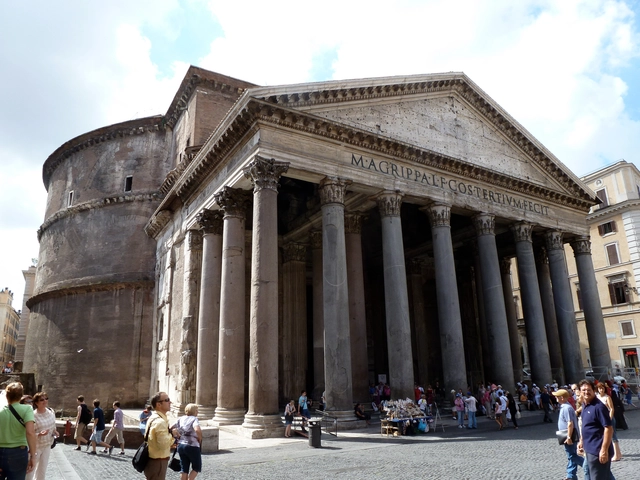
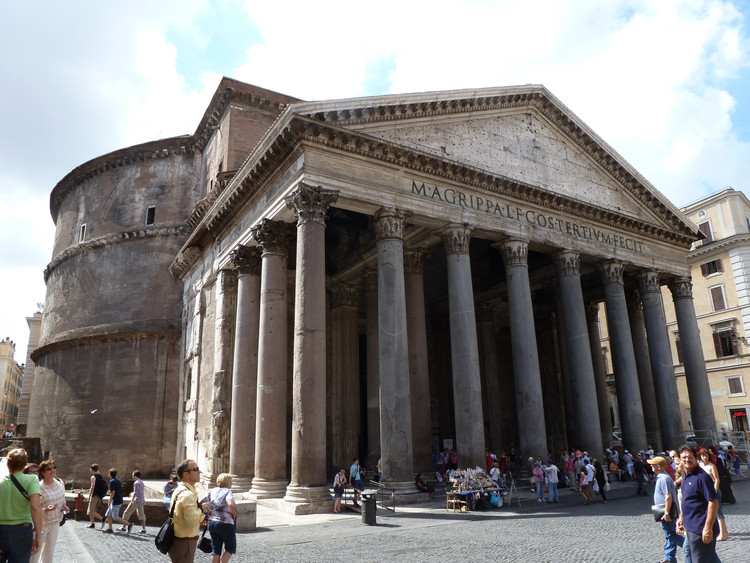
Locked within Rome’s labyrinthine maze of narrow streets stands one of the most renowned buildings in the history of architecture. Built at the height of the Roman Empire’s power and wealth, the Roman Pantheon has been both lauded and studied for both the immensity of its dome and its celestial geometry for over two millennia. During this time it has been the subject of countless imitations and references as the enduring architectural legacy of one of the world’s most influential epochs.
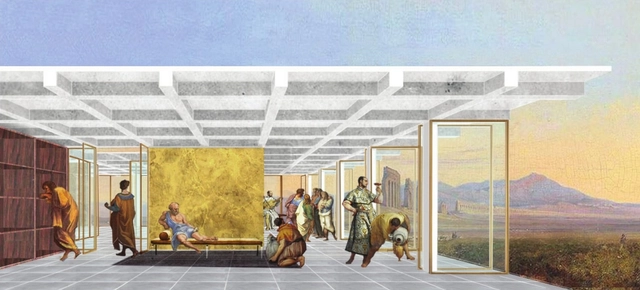
The encounter between CAMPO and Le FRAC Centre-Val de Loire of Orleans produced MISUNDERSTANDINGS, a project which, addressing one of the most important archives of architectural experiments worldwide, opens a reflection on the operative value of museums and collections for the contemporary discourse and practice of architecture.
Casa Cecchini a S. Maria di Galeria, Roma, 1971 - A. Anselmi (with C. Giannini) - edited by Warehouse of Architecture and Research with Valentino Danilo Matteis
Their theoretical, critical and historical approach attempts to rediscover a thoughtful dimension behind the architectural subject. Each firm will present a residential project for the Roman countryside, a design exercise meant as a typological investigation, or, more generally, as a meditation on the autonomy of the architectural discipline. The thirteen projects for thirteen houses showcased in the exhibit are intended as a homage to the city of Rome and its countryside.
Generazione: a call from Rome, credit by Alessio Agresta, Jacopo Costanzo, WAR.
The second chapter of the series in Rome, at Casa dell’Architettura, with MAIO from Barcelona and Point Supreme from Athens.
The participants of the series - all born in the Eighties - are paired in couples, in order to obtain an interesting dialogue in each and every meeting.
About the lecture, we are asking to make the main references [architectural and non-architectural] emerge as much as possible, to show how they affect each one practice.