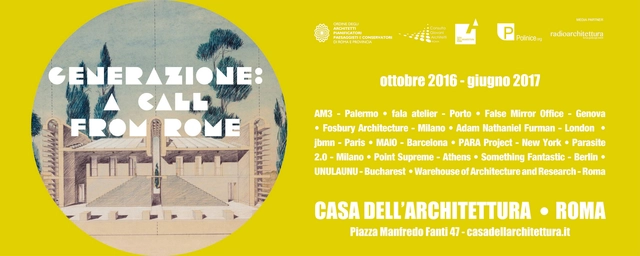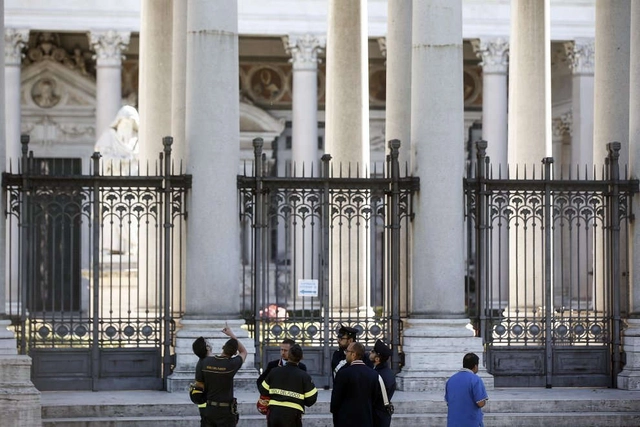
Generazione: a call from Rome, credit by Alessio Agresta, Jacopo Costanzo, WAR.
The series will start next Friday, and the lectures will be every month up to June 2017 in Rome, at Casa dell’Architettura. The participants - all born in the Eighties - will be paired in couples, in order to obtain an interesting dialogue in each and every meeting.
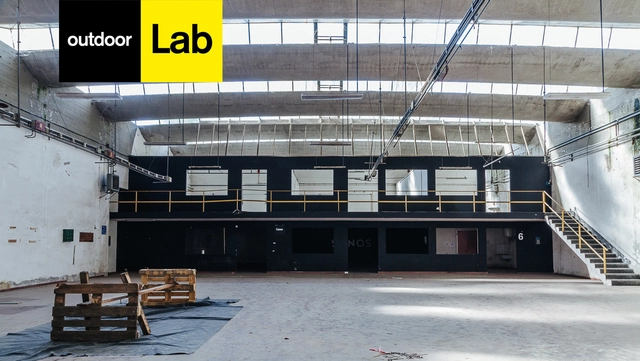
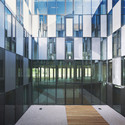
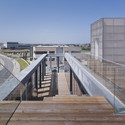
OUTDOOR LAB is an initiative promoted by NUfactory within the Outdoor Festival 2016. The competition aims to exploit one of the former pavilions of the Guido Reni military station, reflecting on the theme of conversion that the space is experiencing: transform an old industrial laboratory in a meeting space, production, sharing and experimentation.
The BSR is delighted to announce that the competition is now open for a Scholars' Prize in Architecture. This is an exciting and valuable opportunity for an early-career architect or post-Part II student of architecture to spend three months in Rome (January-March 2017), and be a member of a vibrant residential community of architects, artists and researchers in the humanities and social sciences.
https://www.archdaily.com/783297/call-for-entries-british-school-at-romes-scholars-prize-in-architectureAD Editorial Team
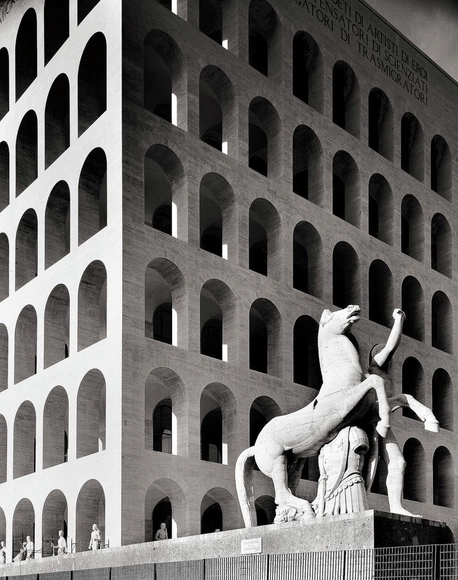
Palazzo della Civiltà Italiana (the Colosseo Quadrato). Image via Foter
The Palazzo della Civiltà Italiana (also known as the 'Square Colosseum') is perhaps the most emblematic architectural project realised during Benito Mussolini's Fascist dictatorship, which governed Italy between 1922 and 1943. Now, sixty years later and having never been used, Italian fashion house Fendi and architect Marco Costanzi have—amid controversy—renovated the historically charged building into their headquarters, with office space to accommodate around 450 employees. Having reportedly signed a fifteen year lease with the municipality of Rome, the haute fashion house will be paying around €240,000 ($265,000) in annual rent.
With its hundreds of churches, Rome has a developed a rich history of domes. Inspired by this heritage, Jakob Straub has photographed the city's most remarkable rotundas from the ancient Pantheon up to Pier Luigi Nervi's modern sports arena. His neutral photo perspective, taken looking upwards from the center of the rotunda, opens a new view for the underlying concepts where the architecture yearns for the firmament. For Elías Torres, these “zenithal-lit” spaces constitute an important method for daylight architecture, where the exterior is also transformed into a fascinating distant reality.
Torres has analysed numerous strategies for lighting architecture effectively with daylight from above. In his book “Zenithal Light,” illustrated with an abundance of striking photos, he came to the conclusion that “Amongst the representations of the sky in the interior of architecture, the one that depicts the sun shining from above with a circular form has been the favoured one for many cultures.”
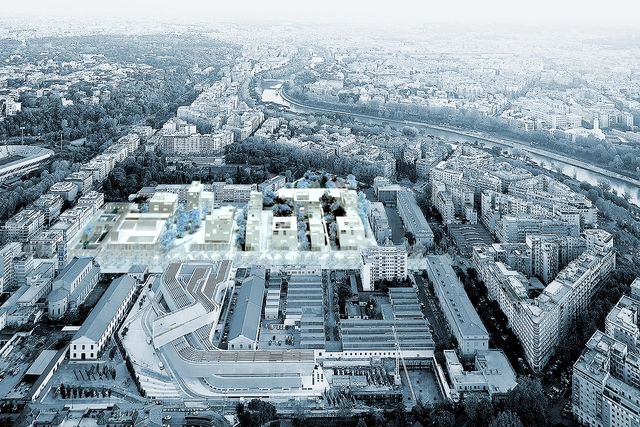
Studio 015's Winning Entry Aerial View. Image via Progetto Flaminio
CDP Investimenti has selected Studio 015 Paola Viganò as the winner of the Progetto Flaminio International Design Competition to master plan a new district surrounding the City of Science in Rome. After launching the competition in December 2014, CDP Investimenti Sgr and the Municipal Government received over 240 entries. Of those, six teams were shortlisted and given 24,000 euros each to develop and submit their final proposals. Learn more about the winning proposal after the break.
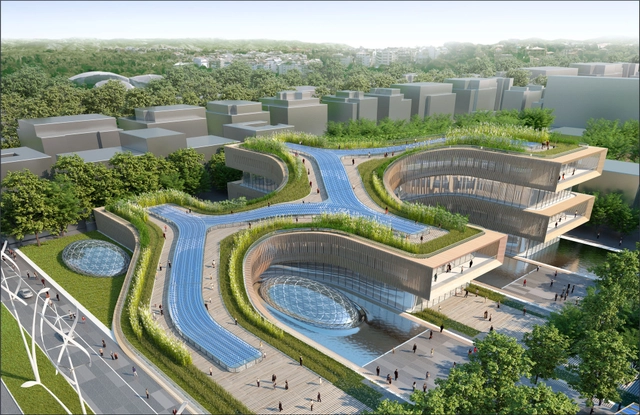
Developed for an international planning and architectural competition, this proposed masterplan for the Città della Scienza by Vincent Callebaut Architectures, coffice - studio di architettura e urbanistica, and Studio d'Architettura Briguglio Morales fuses sustainability with history to propose a self-sufficient urban ecosystem in Italy. Operating on the principle of living facades, the Città della Scienza revitalizes the forgotten military district into a vibrant, continually regenerating living city.
Read on after the break for a closer look at the plan.
Adam Nathaniel Furman's tenure as the recipient of the 2014/15 Rome Prize for Architecture at the British School at Rome has come to an end. The project that he has investigated over the past months, entitled The Roman Singularity, sought to explore and celebrate Rome as “the contemporary city par-excellence” – “an urban version of the internet, a place where the analogical-whole history of society, architecture, politics, literature and art coalesce into a space so intense and delimited that they collapse under the enormity of their own mass into a singularity of human endeavour.”
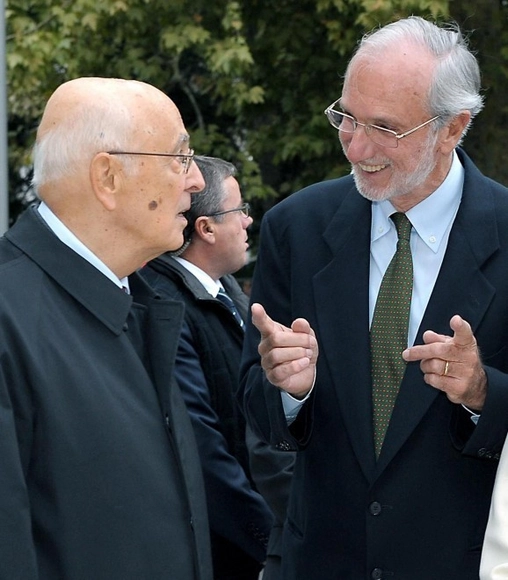
President Giorgio Napolitano and Renzo Piano (2012). Image Courtesy of La Repubblica
In The New Yorker's latest Postcard from Rome Elizabeth Kolbert talks to Renzo Piano in his Senate Office at the Palazzo Giustiniani, just around the corner from the Pantheon. Piano, who was named a Senator for Life by Italian President Giorgio Napolitano in September 2013 (when he was 75 years of age), immediately "handed over the office, along with his government salary, to six much younger architects." He then "asked them to come up with ways to improve the periferie - the often run-down neighborhoods that ring Rome and Italy’s other major cities." Kolbert attests to Piano's belief in the power of museums and libraries and concert halls. For him, "they become places where people share values [and] where they stay together." "This is what I call the civic role of architecture."
The Cassa Depositi e Prestiti Investimenti Sgr has recently acquired the former Precision Electrical Components Factory in Flaminio, located between Via Guido Reni and Viale del Vignola, that will now be transformed into the new City of Science district.
Adam Nathaniel Furman, architect and winner of this year's Blueprint Award for Design Innovation, is currently undertaking his tenure as the recipient of the 2014/15 Rome Prize for Architecture at the British School at Rome. His ongoing project, entitled The Roman Singularity, seeks to explore and celebrate Rome as "the contemporary city par-excellence" - "an urban version of the internet, a place where the analogical-whole history of society, architecture, politics, literature and art coalesce into a space so intense and delimited that they collapse under the enormity of their own mass into a singularity of human endeavour."
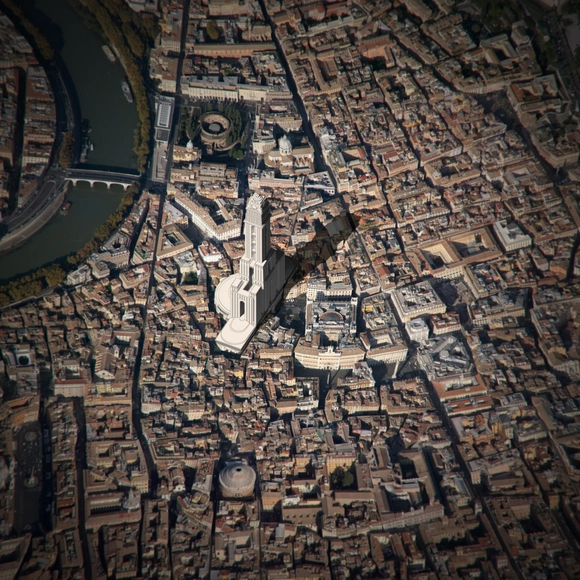
In this short essay inspired by the work of Dietrich C Neumann, an architectural historian at Brown University (Providence, RI USA), Furman examines what would have been "the tallest building in the world [...] housing Italy’s new Parliament, lecture halls, meeting rooms, a hotel, library, enormous sports facilities, lighthouse, clock, astronomical observatory, telegraph and telephone stations, [reflecting] sunlight off its acres and acres of white Carrara marble." In the shadow of Italian Fascism, Mario Palanti saw an opportunity to transform the skyline of the Italian capital by pandering to the egotistical ambitions of a dictator. Ultimately the extent of his vision was matched only by his failure.
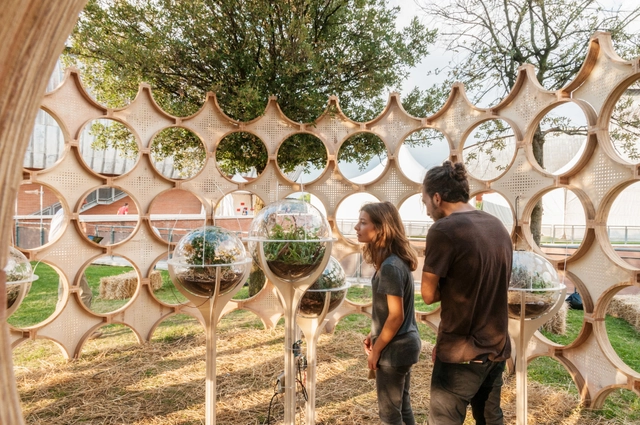
Within the walls of OFL Architecture's open-air wooden pavilion, the term "built environment" truly earns its keep. In Wunderbugs, humans become spectators of the natural world as insects toil away in six spherical ecosystems, and sensors weave movements into a web of data. Upon entering the pavilion, visitors are transformed into components of an interactive soundtrack harvested from the sensors and broadcast in the space, uniting the insect and human experience. The project was conceived for the second annual Maker Faire Europe in Rome, where it was installed earlier this month.
Enter the interactive acoustic experience of Wonderbugs after the break.
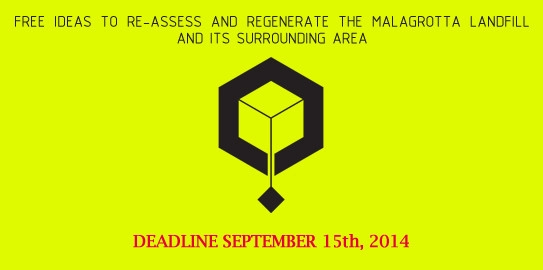
A major competition for reuse has just been announced for the Malagrotta Landfill, one of the European Union's biggest landfill sites. After Malagrotta was closed in August 2013 due to its controversial size and negative impact on the surrounding community, the Municipality of Rome began a process of redevelopment through community engagement. Multi-displinary teams are tasked with a creating a proposal to reinvent the sprawling 240-hectare property while considering its original purpose. The competition is designed to begin a conversation on the long-term vision for the property.
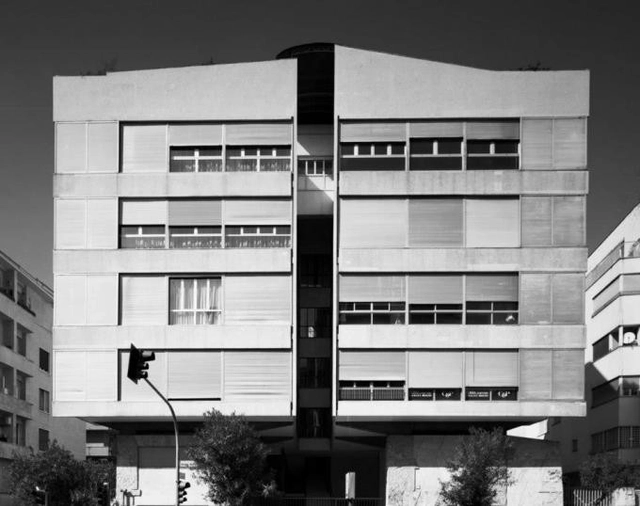
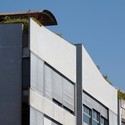
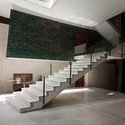
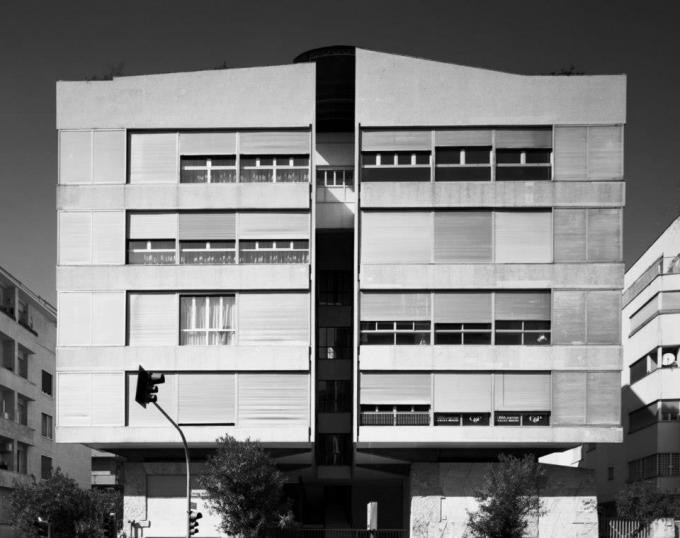
As one architectural scholar described it, Luigi Moretti’s 1950 Casa “Il Girasole” is “a bit of madness on the solidity of Roman walls.” [1] Yet, this clever apartment building in the heart of Rome is far from the work of a madman. Its subtle historical allusions and deliberately ambiguous composition betray the genius of the architect’s creative and analytical mind. Moretti, whose notable commissions include Villa La Saracena (1957), Montreal’s Stock Exchange Tower (1964), and the Watergate Complex (1971), achieves a complexity of form and materiality in “Il Girasole” that distinguishes the project from its mid-century contemporaries and has earned it recognition as one of the earliest forerunners of postmodern design.
MAXXI and Insula architettura e ingegneria with Based Architecture present “Cose Turche”, a conversation of six voices about Istanbul, aimed to recognize and trace the pulsating identity of a metropolis, which in its present metamorphosis is able to tell us about significant pieces of third millenium urban culture.