The latest Future Trends Survey, published by the Royal Institute of British Architects (RIBA), indicates an "all-time high" for architects' workload with "confidence levels about future workloads continuing to rise." The February report shows +41 in the Future Trends Workload Index, up from +35 in January, with the highest balance figures coming from London (+54) and Scotland (+60). The optimistic report suggests that there "still appears to be significant spare capacity within the profession," noting that many practices actually under-employed in the last month.
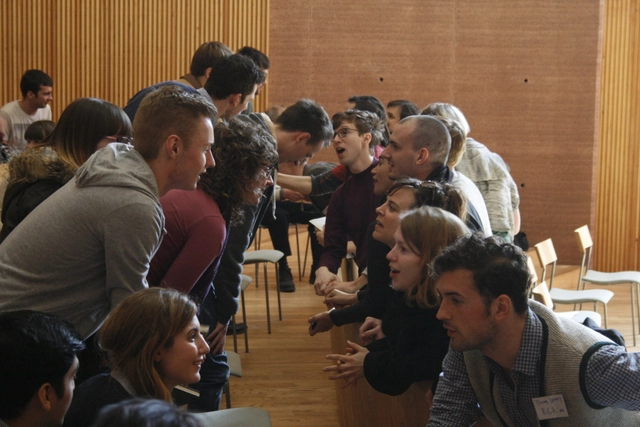
Lines Drawn, the latest gathering of student delegates by the Architecture Students Network (ASN), recently met at the Centre for Alternative Technology (CAT) to discuss the future of architectural education. Seventy RIBA Part 1, 2 and 3 students (including those on their placement years) from across twenty two schools of architecture gathered together to address and unify their voice in calling for improvements to the current pedagogy of UK’s architectural education to reflect a changing society.
The weekend conference provoked questions surrounding the merits and pitfalls of the Part 1, 2 and 3 British route to qualification, raising aspirations of a more flexible education system. Sparked by the latest directive from the European Union (EU), which seeks to "establish more uniformity across Europe by aligning the time it takes to qualify" and by making mutual recognition of the architect's title easier between countries, the discussions centred around how architecture students' opinions can be harnessed at this critical moment of change to have voices heard.
Continue reading for ArchDaily's exclusive pre-coverage of the ASN's report.
The RIBA's recent report "City Health Check: How Design Can Save Lives and Money" looks at the relationship between city planning and public health, surveying the UK's 9 largest cities in a bid to improve public health and thereby save money for the National Health Service. The report includes useful information for city planners, such as the idea that in general, it is quality and not quantity of public space that is the biggest factor when it comes to encouraging people to walk instead of taking transport.
Read on for more of the results of the report - and analysis of these results - after the break
The 2014 RIBA Norman Foster Travelling Scholarship has launched and is inviting applications from schools of architecture around the world. A £6,000 grant will be awarded to one student by a panel of judges which includes Lord Foster and the President of the RIBA.
Mies. UK recently spoke to Roger Stephenson OBE, Managing Partner at Manchester based stephenson:ISA Studio, about his award winning practice's approach to "using craft in a contemporary way". The office most recently completed an addition to Chetham's School of Music, winning the 2013 RIBA Regional Building of the Year Award, RIBA National Award, and the RIBA Regional Award. This project is the latest in a long list of innovative buildings that are part of a "rigorously coherent, contextually progressive architecture" that has made the practice one of best known regionalist design offices in the UK.
Read the interview in full, and watch a three minute tour of Chetham's School of Music, after the break.
The RIBA has announced that the Lubetkin Prize, awarded annually for the past thirteen years to the architects of the "best new building" outside the European Union, is to be replaced with the new "international prize" in 2015. As a result, there will be no RIBA International Awards or Lubetkin Prize awarded in 2014. According to the RIBA, "the Lubetkin Prize has been a useful platform to highlight the work of RIBA members around the world. We are currently working on creating a prize that has even greater international impact and look forward to announcing more details in the future." The Lubetkin Prize's last recipients were Wilkinson Eyre and Grant Associates for Cooled Conservatories, Gardens by the Bay in Singapore.
The Royal Institute of British Architects (RIBA) has announced the President’s Medals Student Awards at a special event in London. The awards, known to be the world's most prestigious awards in architectural education, were inaugurated in 1836 and are therefore the institutes oldest award (even older than the RIBA Gold Medal). Three medals - the Bronze for a Part I student, the Silver for a Part II student, and the Dissertation Medal - are awarded to "promote excellence in the study of architecture [and] to reward talent and to encourage architectural debate worldwide."
Around 300 schools of architecture from over 60 countries were invited to nominate design projects and dissertations by their students, of which students of the Bartlett School of Architecture at University College London won all of this year's primary awards.
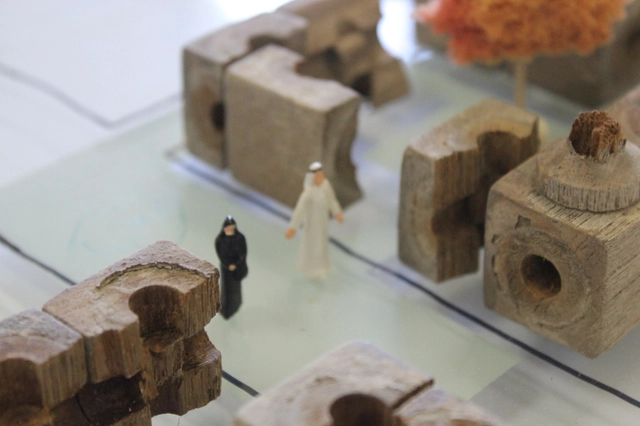
Alicja Borkowska and Iris Papadatou from you&me architects have been announced as the UK winners of the inauguralOld Doha Prize, a competition to redesign part of the old city of Doha in Qatar.
Four teams of architects have "worked intensively to develop contextual design responses to address the challenge of regenerating and maintaining the heritage of the city" as part of a British-Qatari collaborative project to "reimagine the urban landscape of old Doha." As a city defined by its strong heritage, coupled with ambitious plans for the future, the competition aimed to discover ways of regenerating parts of the city centre in a sustainable, yet vibrant, way.
Having been officially in the role for only two months, Hodder spent some time with us discussing his hopes for the next two years. Find out why he described himself as a fan of Scandinavians and prog-rock after the break...
According to some, Peter Zumthor, Daniel Libeskind, and Renzo Piano should not be referred to as architects (at least in the UK), since they are not registered with the Architects' Registration Board.. Image Courtesy of Keystone / Christian Beutler (Zumthor); Flickr CC User Tomasz Kulbowski (Libeskind); Architectural Review (Piano)
In August, the AIA posted a topic on its LinkedIn discussion board entitled "Misrepresenting Oneself as an Architect on LinkedIn". Ever since (and once again), the issue of protecting the title of "Architect" has been a hot topic, as explained in this article on Fast Company. This follows the revelation in BD last year that the Architects' Registration Board ordered the British architectural media to cease referring to Renzo Piano and Daniel Libeskind as Architects. With the topic appearing so frequently, and in different countries each time, Fast Company conjures images of a "raging global debate". But what, really, is going on in the world of architecture to fuel such a debate? Read on to find out more.
A few weeks ago the RIBA doled out the 18th Stirling Prize to London-based architects Witherford Watson Mann. The decision was a good one. It was good for WWM and good for the profession – a youngish practice being recognized for a small but beautiful piece of work.
The scheme’s application of brickwork and joinery removes the work from the expediencies of modern construction technology and building products, which almost exclusively characterize the contemporary built environment. It genuinely feels like a project made at a different point in history, the result of the quite particular interests of three minds, Stephen Witherford, Chris Watson and William Mann. It is direct and personal. It reminds me of Stirling’s work..
And not just for its powerful draftsmanship, plan and restricted palette of materials, but for its intimacy. An intimacy that is apparent in much of Stirling’s oeuvre. I do not refer to the production of intimate spaces per se but the formulation of an architecture that is authored not by a factory but a few minds.
The latest Stirling prompted me to look back, and reconsider the work of Stirling himself.
According to the Royal Institute of British Architects (RIBA), the number of people aged over 60 is expected to increase by 40% over the next twenty years, suggesting that "our post-retirement years will be longer and healthier." There is no doubt, therefore, that people in this age group will have a greater economic, social and political power - but how will this affect our cities?
The latest Future Trends Survey, published by the Royal Institute of British Architects (RIBA), indicates both stability and optimism. The Future Trends Workload Index increased to +26, a rise of four balance points from August 2013, "building upon the steadily increasing positive trend" seen since the start of this year. The survey also shows evidence that "the growing optimism about an upturn in overall workloads is now widespread" throughout the UK.
The Royal Institute of British Architects (RIBA) has announced the winners of the President’s Awards for Research 2013. The awards recognize high-quality research and encourage its distribution and incorporation into the wider profession to foster innovation and strategic thinking. From an urban healing agenda for reform in Bahrain to a book that explores the incredible potential of concrete, the 2013 winners of the President’s Awards for Research are:
Following the news that the 2013 RIBA Stirling Prize was been won by Witherford Watson Mann for Astley Castle at a ceremony in London last week, the critical response to the project has been extremely positive. Joseph Rykwert (who recently won the RIBA Gold Medal) said that "Witherford Watson Mann have been gentle surgeons, saving the essential, eliminating the incidental". Check out the critical responses from The Financial Times' Edwin Heathcote, The Guardian's Oliver Wainwright, Building Design's Ellis Woodman, and the Architects' Journal's Rory Olcayto after the break...
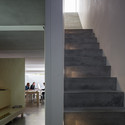
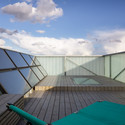
The 2013 RIBA Manser Medal has been awarded to Carl Turner Architects for Slip House in Brixton, London. The Manser Medal is awarded for the best newly designed private house, and this year was announced in a ceremony at Central Saint Martins in London, along with the winners of the 2013 RIBA Stirling Prize. The jury's citation for Slip House noted that "inside and out this house is immaculate in its detail, coordination and execution."















_Landmark_Trust.jpg?1380664454)