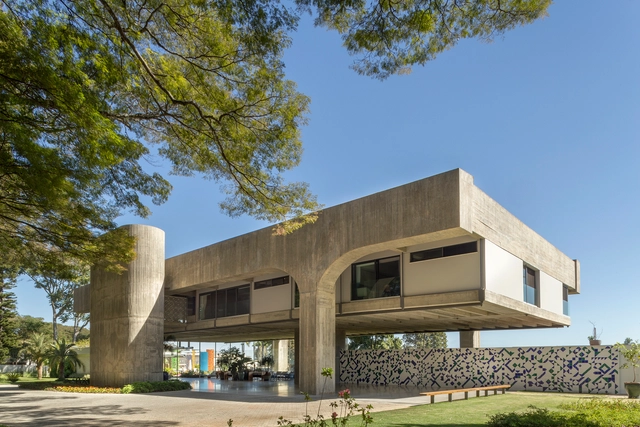


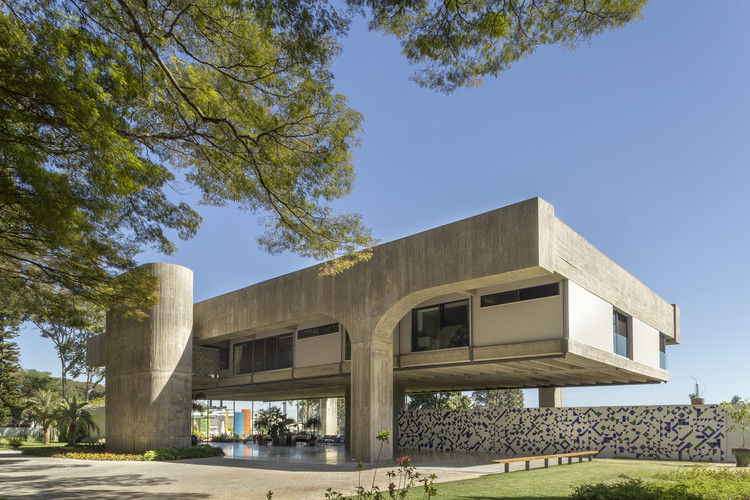
-
Architects: Arquitécnika
- Area: 1968 m²
- Year: 2019
-
Manufacturers: AutoDesk, Sherwin-Williams, Alutec, Arte em Cinema, Bontempo, +22


.jpg?1592208513&format=webp&width=640&height=580)
Menokin Foundation has begun construction on its “Glass House Project”, a new initiative in the preservation of historic landmarks. Protecting what remains from the 1769 house, the intervention will replace missing walls, floors, and sections of the roof with glass. Designed by Machado Silvetti, in collaboration with glass engineer Eckersley O’Callaghan, and landscape designer Reed Hilderbrand, the project will be developed in phases, to be completed in 2023.
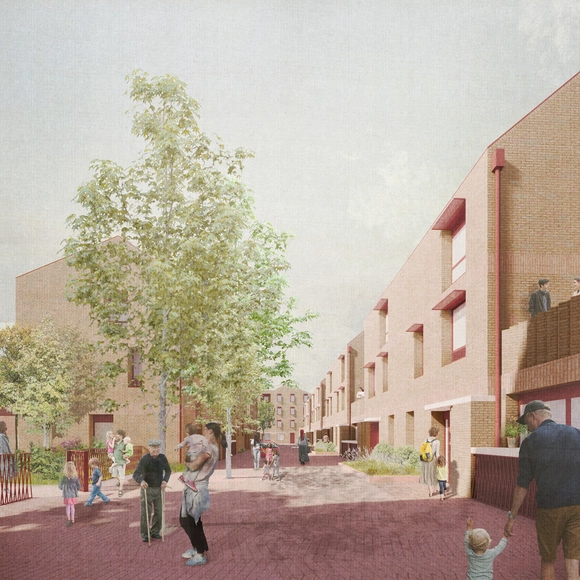
Morris + Company’s affordable rental housing development has just been given planning permission by a virtual committee. Located in Barking and Dagenham, the modern 56 high-quality affordable rental homes are designed for “residents ranging from single occupants to couples and families”.
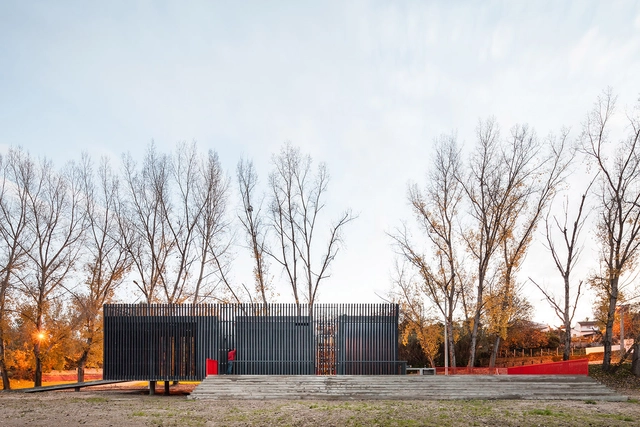
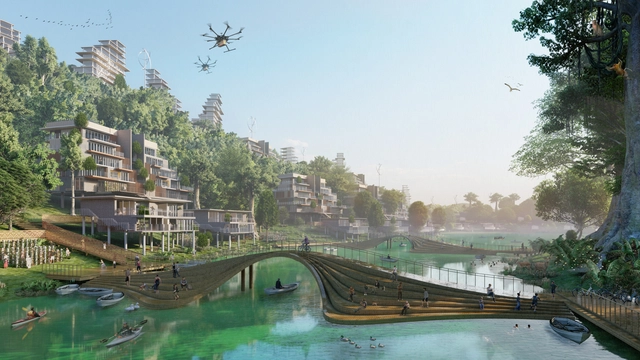
Presented part of international competitions, this week’s best-unbuilt architecture gathers award-winning projects submitted by our readers. Highlighting as usual diverse approaches from across the globe, ArchDaily is rounding up in this article, a curated selection of cultural, civic, and urban proposals.
In Singapore, an adaptive reuse project transforms a power station into a creative industrial hub, while in Indonesia, a smart city design for the new capital generates an ecologically responsible environment. Moreover, Kjellander Sjöberg designs and develops an original city block in Stockholm, and TheeAe imagines a city hall for China. Other proposals include an entire reflective surface for a public square in Italy, a new city district in Tampere Finland, a University building in Warsaw, and a school for contemporary art in Vienna.
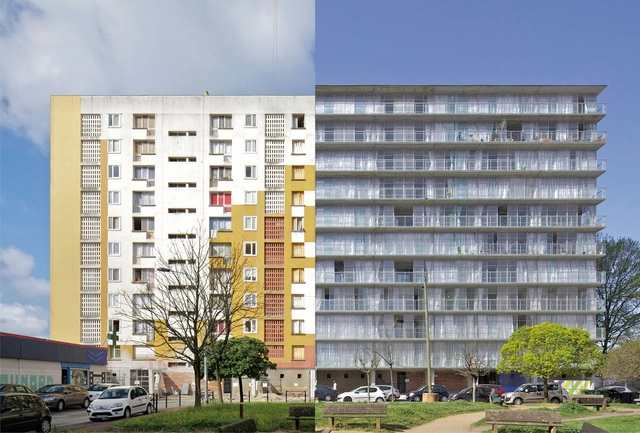
Last year’s granting of the Mies van der Rohe Award to a social housing refurbishment project brought into the spotlight a topic of interest for many European cities: the moral and physical rehabilitation of post-war housing blocks.
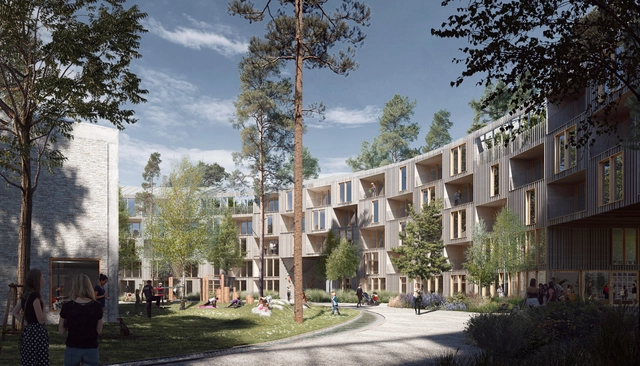
Schauman & Nordgren Architects, a Copenhagen and Helsinki based architecture and urban planning studio, was selected as the winner of the two-stage competition, organized by the city of Turku in Finland, to transform a former elderly home site into a new 15.000 m2 housing neighborhood.
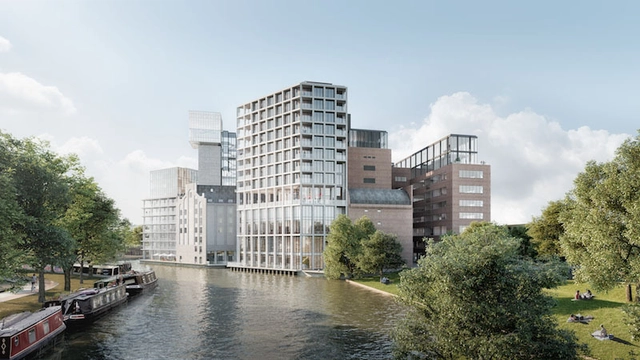
Part of a bigger vision and a master plan by Peter Zumthor, Studio Akkerhuis’ new 55.000 square meter project in Leiden’s 19th-century flour mill complex is under construction. With a landscape by Piet Oudolf and Lola, the development that recently won the "Future Project - Commercial Mixed Use” at WAF, will include shops, galleries, apartments, workspaces, a hotel, and a spa.
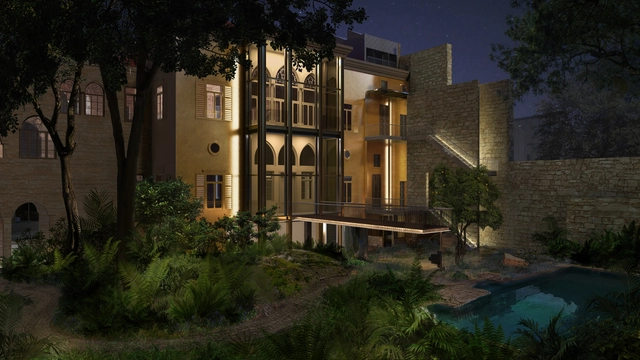
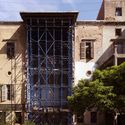
AKK Architects, an architecture practice founded by architect Annabel Karim Kassar, with offices in Beirut, Dubai, and London, is transforming a historical 19th-century Lebanese home into a contemporary family home. Bayt K was shortlisted for the WAF future projects awards under House category.
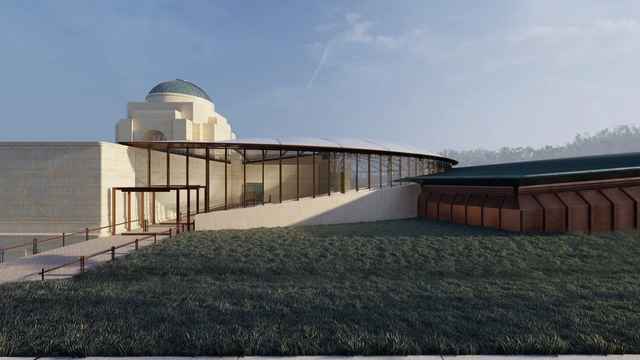
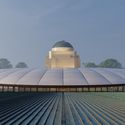
The AWM or the Australian War Memorial will undergo a series of development and refurbishments works, in order to renovate its galleries and its buildings. COX architecture will design the new Anzac Hall with its connection to the main structure, while Scott Carver will be in charge of the southern entrance.
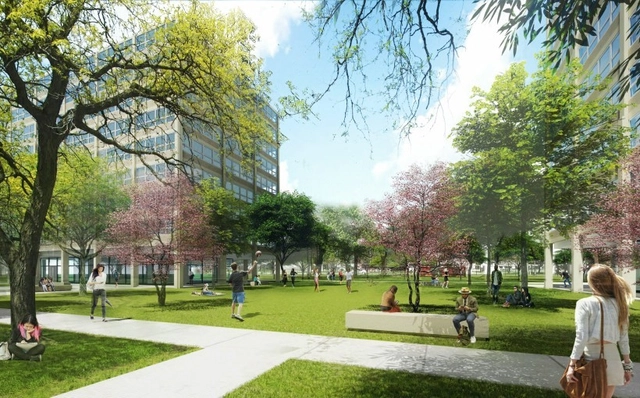
The Mies van der Rohe residential building, the Bailey Hall built in 1955, at Illinois Institute of Technology will be subject to renovation works by Dirk Denison Architects. The Chicago-based firm will modernize the mechanical, structural, and interior works, modifying its original function, and introducing a new configuration to host up to 330 first- and second-year students, while the exterior will remain faithful to the original design and the ground floor lobby will still hold on to the Mies’ iconic recessed glass lobby.
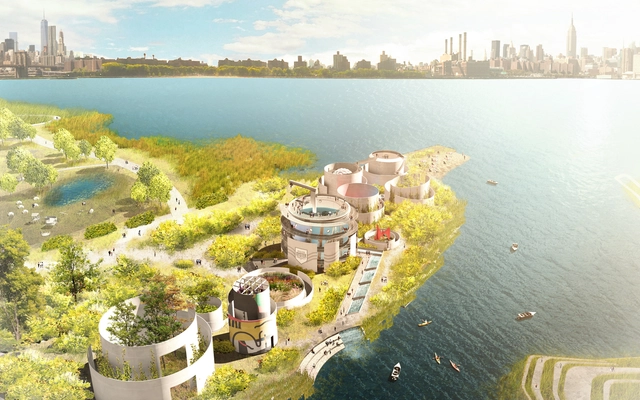
In New York, activists and professionals have been working for many years to try to save 10 decommissioned tanks, from demolition by putting forward alternative usage of these structures. Partnering with STUDIO V, an architectural firm and landscape architects Ken Smith Workshop, they came up with an inventive proposal that reimagines these industrial relics as a 21st-century park, a novelty in the traditional definition and configuration of public spaces.
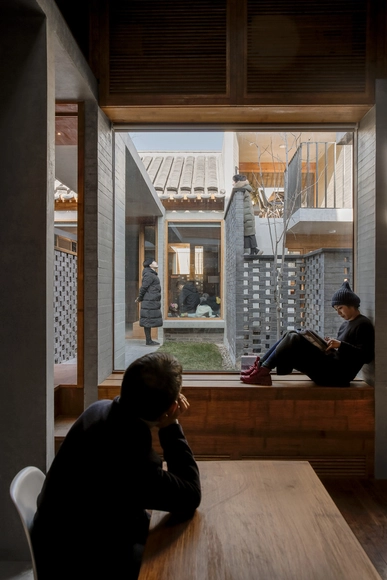
China seems to be at the peak of a refurbishment fever. Not only hutongs in historic downtowns, but abandoned industrial factories are becoming new tech or cultural hubs, and even buildings in the risk of collapse are refurbished to extend their lifespan. Why is this happening? Who is investing? How could this happen in a country where you cannot buy properties?
In this edition of Editor's Talk, our editors from ArchDaily China share their thoughts on how in a fast-paced development process, such as the one China is going through, there is a refurbishment fever in its biggest cities.
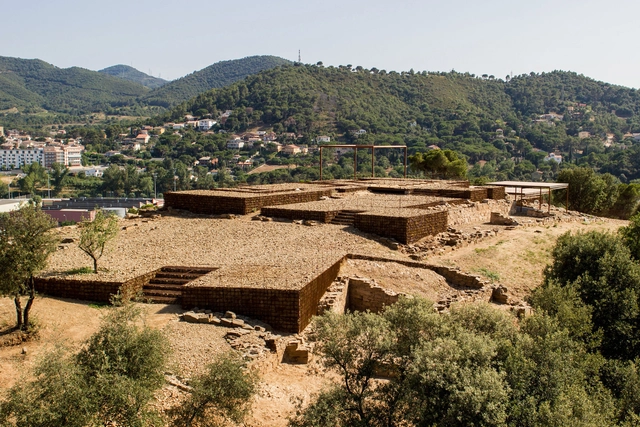
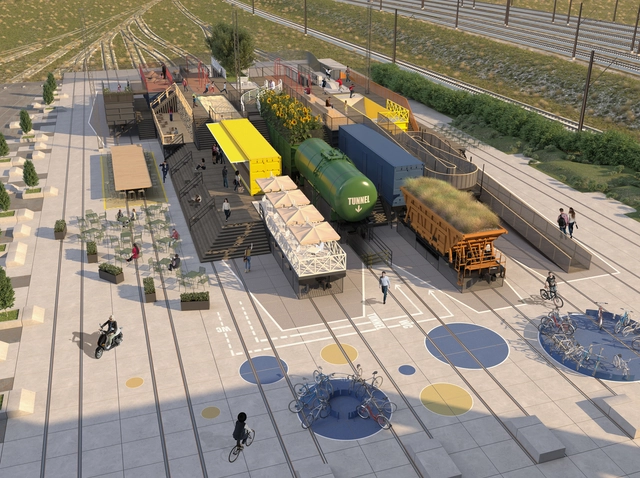
The 2019 CANactions International Architecture Festival focused on an exploration of a notion of "Hromada" — Ukrainian name for the 'community', which is embedded into the country's historic and cultural codes and reflected in contemporary social movements and architectural forms.
Architect Illya Rastvorov is one of the winners of this year’s CANactions Youth Competition presented in Kyiv, Ukraine. For his proposal, the architect transformed the railroad depot of the Copenhagen Railway Station in Denmark into the “Copenhagen Playground”, a recreational area that caters to people of all ages and enhances the social conditions of the city.
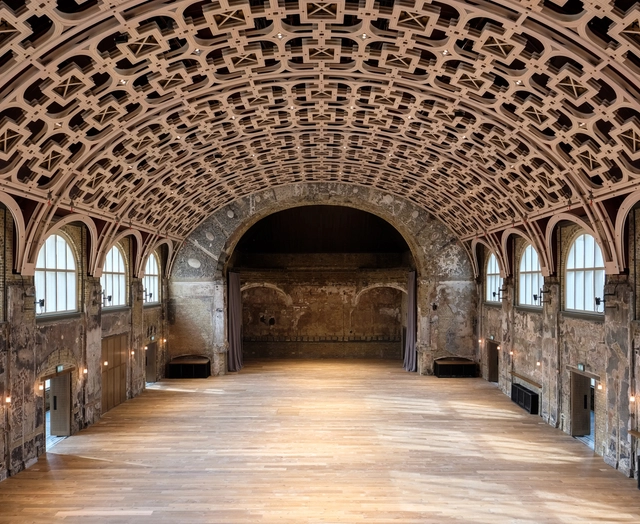
As technology moves forward, so does architecture and construction. Architects, designers, and planners around the world now have infinite tools and resources to design and build the cities of today and the future. As promising as this may sound, new construction is also consuming our world’s limited resources faster than we can replenish them.
This situation leaves architects with an important responsibility: the rehabilitation and reuse of the existing built environment. This means using creative thinking and design to save and incorporate old or historic buildings that currently exist, in the present and future of our cities, by adapting them through creative and sensitive treatments.
“The greenest building is the one that is already built." (Carl Elefante, FAIA)
The world’s urban population will double by 2050, and cities need to come up with sustainable ways to accommodate this mass movement. We often see projects being built as quickly as possible to support growth, however, rapid growth often leads to cities and buildings that lack originality.
A smarter and more sustainable solution is to increase the density of existing centers, as well as to recover existing structures through refurbishment and repurposing. But, turning something old into something new is a challenging process — it requires a bold vision and a rigorous commitment to design.
_5738.jpg?1556027783&format=webp&width=640&height=580)
Although ancient buildings carry compelling architectural presence, demolition or radical change is often their fate. While some architects prefer to introduce thoroughly new structures, others choose to honor the works of historic architects, who built the basis and foundations of structures that helped shape up cities today.
For the refurbishment of Paris’ Hotel Fouquet Barrière, located one block facing Avenue des Champs Elysées, Edouard François was selected to renovate the entire property, including offices, spa services, façade, and courtyards. François’ design strategy was rather unambiguous, using only two keywords as reference: “COPY-EDIT”; a reinterpretation of the “old” through contemporary technologies and modified material.





















_5498.jpg?1556027648 "© Laurian Ghinitoiu")
_5957.jpg?1556027812 "© Laurian Ghinitoiu")
_5926.jpg?1556027680 "© Laurian Ghinitoiu")
_7973.jpg?1556027669 "© Laurian Ghinitoiu")
_5738.jpg?1556027783)