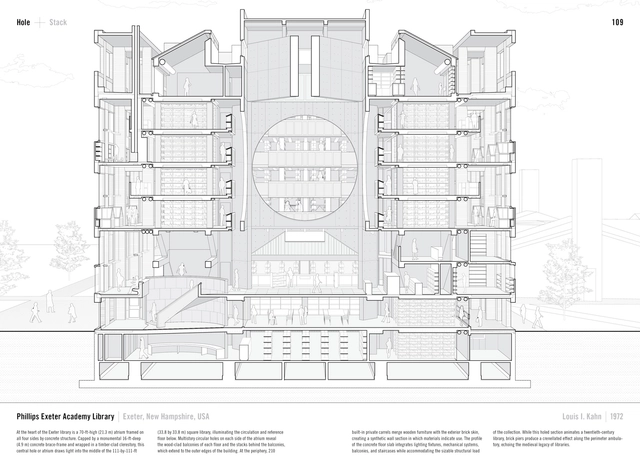
Phillips Exeter Academy Library by Louis I. Kahn (1972). Published in Manual of Section by Paul Lewis, Marc Tsurumaki, and David J. Lewis published by Princeton Architectural Press (2016). Image Courtesy of LTL Architects
For Paul Lewis, Marc Tsurumaki and David J. Lewis, the section “is often understood as a reductive drawing type, produced at the end of the design process to depict structural and material conditions in service of the construction contract.” A definition that will be familiar to most of those who have studied or worked in architecture at some point. We often think primarily of the plan, for it allows us to embrace the programmatic expectations of a project and provide a summary of the various functions required. In the modern age, digital modelling software programs offer ever more possibilities when it comes to creating complex three dimensional objects, making the section even more of an afterthought.
With theirManual of Section(2016), the three founding partners of LTL architects engage with section as an essential tool of architectural design, and let’s admit it, this reading might change your mind on the topic. For the co-authors, “thinking and designing through section requires the building of a discourse about section, recognizing it as a site of intervention.” Perhaps, indeed, we need to understand the capabilities of section drawings both to use them more efficiently and to enjoy doing so.
Milano Arch Week has published details of their 2019 event, hosting a week of lectures, conversations, workshops, and itineraries on the main challenges of contemporary urban transformation. Running from 21st to the 26th May 2019, Milano Arch Week “explores the future of architecture and cities through a polyphony of voices; architects, urban planners, landscape designers, scientists, philosophers, artists, and curators from all over the world.”
https://www.archdaily.com/917130/milano-arch-week-publishes-program-featuring-talks-by-stefano-boeri-and-rem-koolhaasNiall Patrick Walsh
They say diversity is key for a strong portfolio. Now OMA's Rem Koolhaas can add “featured artist on a musical album” to his resume. New York-based duo Tempers, in collaboration with German artist Katja Eichinger, feature Koolhaas in a mall-themed concept album.
Plastic Island. Image Courtesy of Emily-Claire Goksøyr
Kanye West is, according to Kanye West, a reformed man. After months of making headlines over his bizarre political views, he stated on Wednesday that, “my eyes are now wide open and now realize I’ve been used to spread messages I don’t believe in. I am distancing myself from politics and completely focusing on being creative !!!”
While this most likely means a return to his music career, this statement could also indicate a renewed interest in his design projects. The rapper’s interest in architecture is more than just a passing one; he’s collaborated with noted architects such as Jacques Herzog and Rem Koolhaas and has declared on multiple occasions his desire for everything to be “architected.”
https://www.archdaily.com/905122/this-week-in-architecture-a-little-less-conversationKatherine Allen
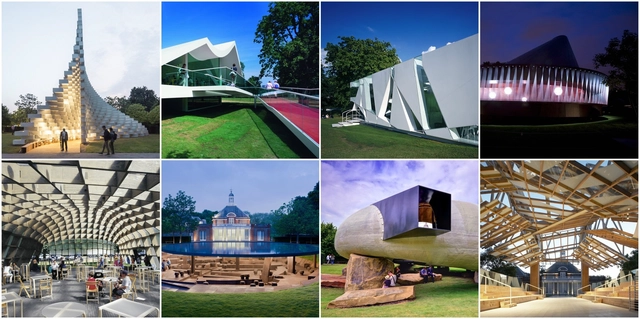
If the surest sign of summer in London is the appearance of a new pavilion in front of the Serpentine Gallery, then it’s perhaps fair to say that summer is over once the pavilion is taken down. The installations have gained prominence since its inaugural edition in 2000, acting as a kind of exclusive honor and indication of talent for those chosen to present; celebrated names from the past names include Zaha Hadid, Rem Koolhaas, and Olafur Eliasson.
This article was originally published on April 22, 2016. To read the stories behind other celebrated architecture projects, visit our AD Classics section.
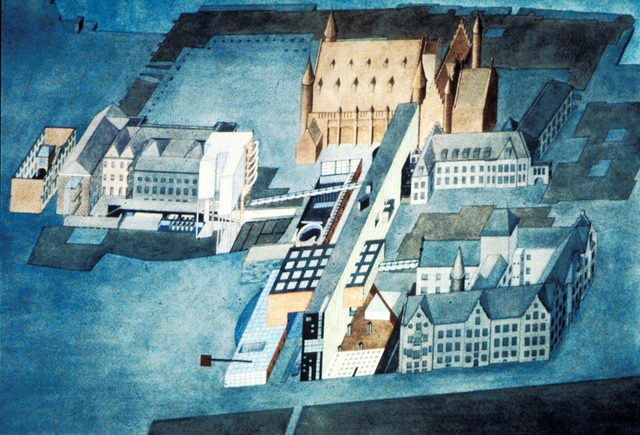
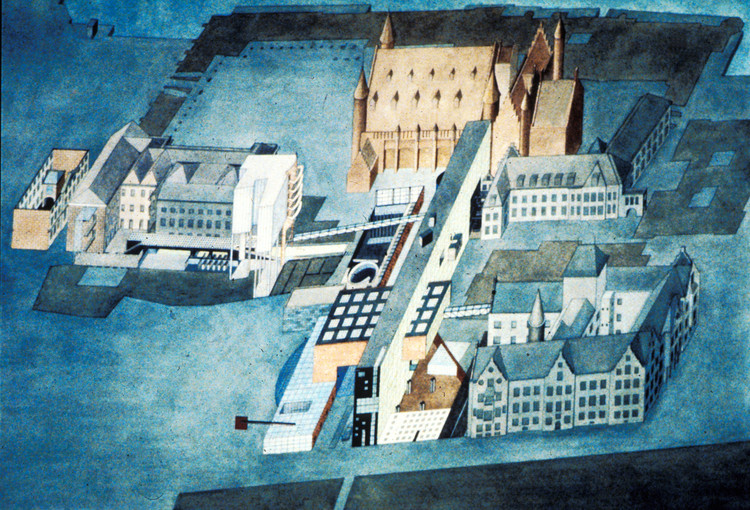
Designed shortly before Zaha Hadid left the Office of Metropolitan Architecture (OMA)—led by Rem Koolhaas—to found her practice, Zaha Hadid Architects, the proposed extension for the Dutch Parliament firmly rejects the notion that imitation is the sincerest form of flattery. Rather than mimic the style of the existing historic buildings, OMA elected to pay tribute to the complex’s accretive construction by inserting a collection of visibly postmodern, geometric elements. These new buildings, unapologetic products of the late 1970s, would have served as unmistakable indicators of the passage of time, creating a graphic reminder of the Parliament’s long history.
This article was originally published on November 13, 2013. To read the stories behind other celebrated architecture projects, visit our AD Classics section.
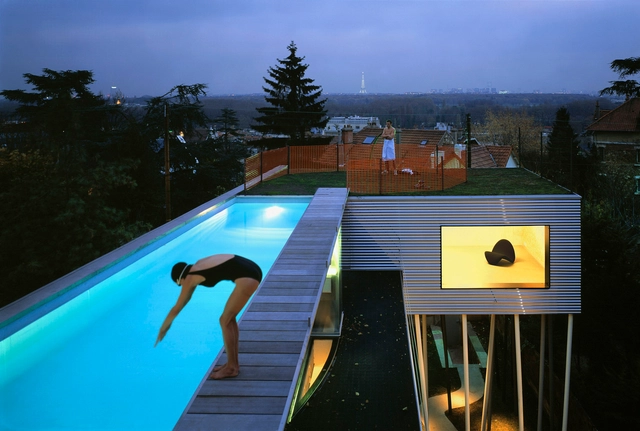
Much of the spatial composition of the Villa dall'Ava was influenced by its site, in a garden on a hill. It was completed in 1991 in the residential area of Saint-Cloud, overlooking Paris. The clients selected OMA to design a house with two distinct apartments—one for themselves and another for their daughter—and requested a swimming pool on the roof with a view of the Eiffel Tower.
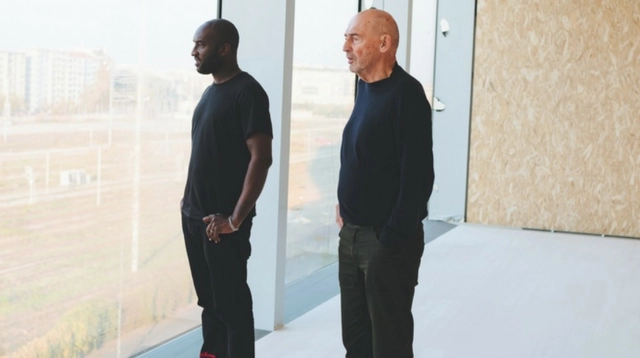
System Magazine and Buro 24/7 recently brought together Virgil Abloh and Rem Koolhaas to discuss contemporary consumerism and millennial design. Abloh, a rising American fashion designer and artistic director at Louis Vuitton, explains how his background in architecture has shaped his research into consumerism and culture. Koolhaas expands the discussion to explore Abloh's work with IKEA and his thoughts on residential design and the future of work.
Confirmed speakers at the 2018 World Architecture Festival.. Image Courtesy of World Architecture Festival
Rem Koolhaas, Dutch architect and founder of the Rotterdam-based firm OMA, has been announced as the closing keynote speaker at the World Architecture Festival. The event will take place in Amsterdam at the RAI Exhibition and Convention Centre on from 28-30 November.
https://www.archdaily.com/901662/rem-koolhaas-to-give-closing-keynote-at-2018-world-architecture-festival-in-amsterdamKatherine Allen
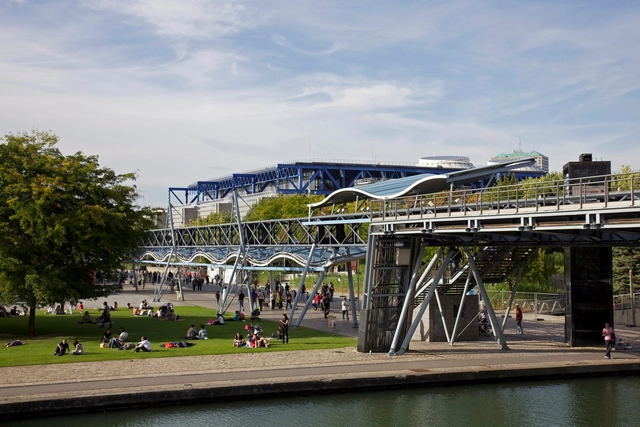
What does the Parisian park look like? For many, the answer to that question comes in the form of a painting: Georges Seurat’s ASunday Afternoon on the Island of La Grande Jatte, in which the well-dressed bourgeoisie leisurely enjoy a natural oasis on a verdant island within their industrializing city.
At the Moscow Urban Forum, Rem Koolhaas spoke to Vladimir Pozner about his life and work, including how he has been influenced by Russian architecture. The pair discuss how the city of Moscow has evolved and the role that it currently has in the world. The event was originally streamed live on YouTube, meaning you can watch the recording of the discussion above.
As identity-based politics continues to grow in influence, we may do well to examine the effect it has on the way we think about and design our cities. In a recent interview with the Washington Post, Rem Koolhaas discusses these changes - and how they mark an evolution from the generic city concept he introduced in S,M,L, XL.
https://www.archdaily.com/898006/rem-koolhaas-on-identity-and-conformity-in-the-digital-cityKatherine Allen
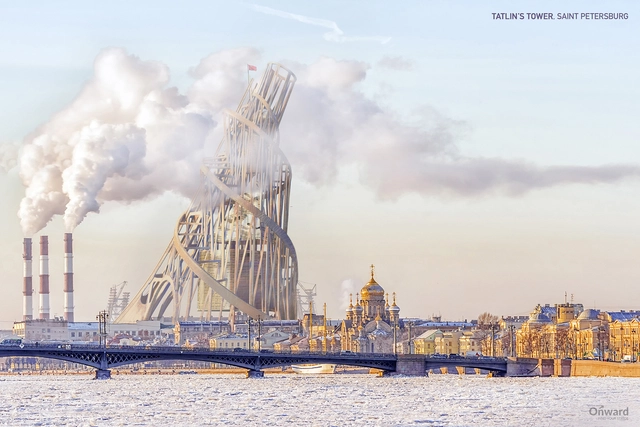
It only takes a pen, paper, and an innovative mind to create remarkable structures. Bringing these architectures to life, however, is where challenges arise. While some architects have shown their creativity and ambition by designing and constructing some of the craziest structures the world has ever seen, other architects were only left with an ambitious drawing. Whether due to financial limitations or designs that are way ahead of their time, some projects never saw the light of day.
Although you won’t be visiting these structures anytime soon—or ever, as far as we know—take a virtual tour of what could have been 7 of the world’s most iconic, innovative structures, courtesy of renders produced by Onward, the blog from Onstride Financial.
Lasting for close to two decades now, the annual Serpentine Gallery Pavilion Exhibition has become one of the most anticipated architectural events in London and for the global architecture community. Each of the previous eighteen pavilions have been thought-provoking, leaving an indelible mark and strong message to the architectural community. And even though each of the past pavilions are removed from the site after their short summer stints to occupy far-flung private estates, they continue to be shared through photographs, and in architectural lectures. With the launch of the 18th Pavilion, we take a look back at all the previous pavilions and their significance to the architecturally-minded public.
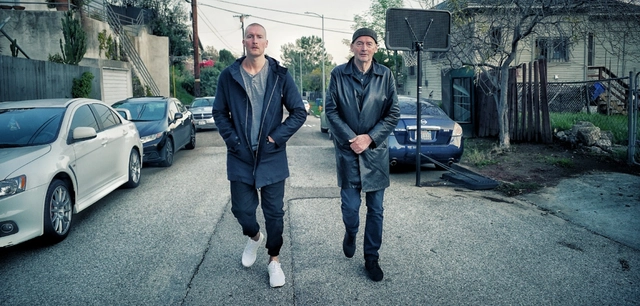
ArchDaily had the chance to catch Rem Koolhaas and his son, Tomas Koolhaas, together, when they met for a weekend in Los Angeles. In their first ever interview together, following the release of “REM” online, we spoke with the pair about the documentary that was four years in the making. The film had Tomas following his father from the desert to the ocean to the 2014 Venice Biennale, as well as inside several OMA projects around the world, like the Seattle Central Library in America and Maison à Bordeaux in France.
The pair reveal what their father-son relationship is like, how the profession of architecture and filmmaking inform each other, and shine a light on the challenges of filming a well-known family member. Work aside, what came across the most strongly throughout the conversation was the respect they had for each other’s craft, and their gratitude for the chance to work so intimately as father and son.
On Sunday evening, rapper Kanye West took to Twitter to announce the creation of a new architecture wing for his popular Yeezy company. With “Yeezy Home,” West is “looking for architects and industrial designers who want to make the world better,” leading to a flurry of speculation, excitement—and a certain amount of ridicule—across the online world.
Whether or not you welcome the news, or believe it will be realized, there is undoubtedly an interesting relationship between West and architecture which merits exploration, and which may provide clues as to Yeezy Home’s future, if indeed it has one. With that in mind, we dive into three questions: How likely is Yeezy Home to happen? What might the architecture of Yeezy Home look like? And how can architects get involved?
https://www.archdaily.com/893988/kanye-wests-new-architecture-venture-who-what-why-and-reallyNiall Patrick Walsh





.jpg?1539856634&format=webp&width=640&height=580)


.jpg?1539856634)





.jpg?1533397440 "© <a href='https://upload.wikimedia.org/wikipedia/commons/f/f6/Parc_de_La_Villette_%40_Paris_%2828926264776%29.jpg'> Creative Commons User Guilhem Vellut</a> licensed under <a href=’https://creativecommons.org/licenses/by/2.0/'>CC BY 2.0</a>")
.jpg?1533397475 "© <a href='https://upload.wikimedia.org/wikipedia/commons/d/d2/Folie_N8_%40_La_Villette_%40_Paris_%2833893431256%29.jpg'> Creative Commons User Guilhem Vellut</a> licensed under <a href=’https://creativecommons.org/licenses/by/2.0/'>CC BY 2.0</a>")
.jpg?1533397559 "© <a href='https://upload.wikimedia.org/wikipedia/commons/b/b4/Canal_%40_La_Villette_%40_Paris_%2833091237904%29.jpg'> Creative Commons User Guilhem Vellut</a> licensed under <a href=’https://creativecommons.org/licenses/by/2.0/'>CC BY 2.0</a>")