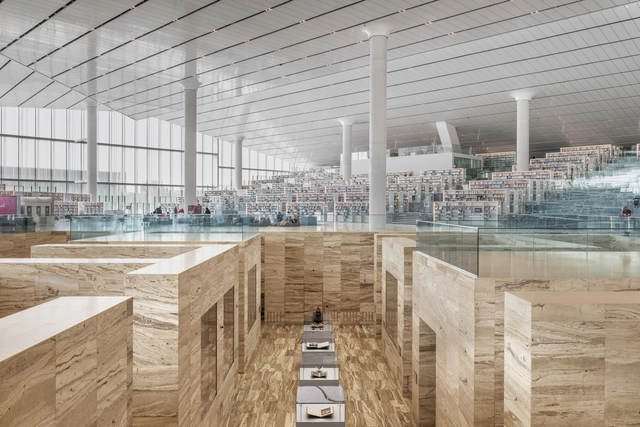
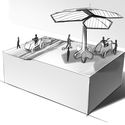
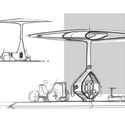
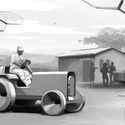
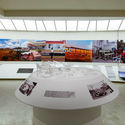
Following Qatar's ambitious museum-building project to further promote cultural institutes in the country, Her Excellency Sheikha Al Mayassa bint Hamad bin Khalifa Al Thani, Chairperson of Qatar Museums has announced that OMA, Herzog & de Meuron, and ELEMENTAL will be designing three new museums in Doha that explore the themes of Islamic art, contemporary art, and evolution of the automobile industry respectively.
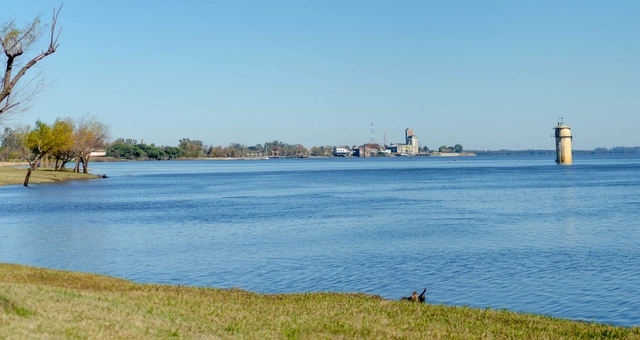
Foto panorámica de la playa de Paysandú. Imagen de Gabriel Stock Uruguay. Image via Shutterstock
The Municipality of Paysandú commissioned OMA (Office of Metropolitan Architecture) to draw up the project for the urban transformation of Paysandú's waterfront. Covering an area of about 350 hectares, the Master Plan extends from the "General José Artigas" International Bridge, which links Paysandú with Argentina on the northern border, to the mouth of the Sacra Stream.
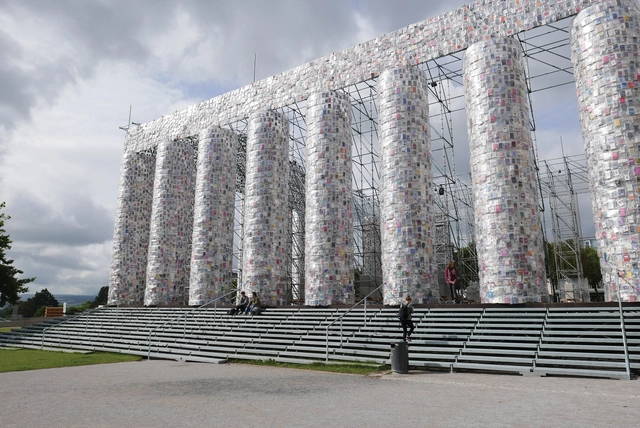
Marta Minujín, Parthenon of Books, Dokumenta 14, Kassel, Germany, 2017. Image by Anne-Catrin Schultz.. Image Courtesy of Real and Fake in Architecture–Close to the Original, Far from Authenticity?
The term “fake” has been in the media frequently in the early 21st century, referring to headlines and fictional statements that are perceived as real and are influencing public opinion and action. Replacing the historically more common term “propaganda,” fake news aims at misinformation and strives to “damage an agency, entity, or person, and/or gain financially or politically, often using sensationalist, dishonest, or outright fabricated headlines.” Tracing fake news and differentiating “real” information from personal opinions and identifying intentional (or unintentional) deceit can be complicated. It is similarly complex to trace the duality of fake and real in the built world. To explore the larger context of fake statements in architecture and environmental design, a look at the definition of fake and related terms might be necessary.
Architecture education is not only about learning how to design and construct buildings but it gives a whole new perspective on our built environment and on how design can contribute to create quality spaces and experiences. Moreover, a big percentage of this design thinking can be used by professional architects as a resource to create other spatial configurations that vary from the traditional building, opening up to a diverse world of possibilities in terms of spatiality and materials.
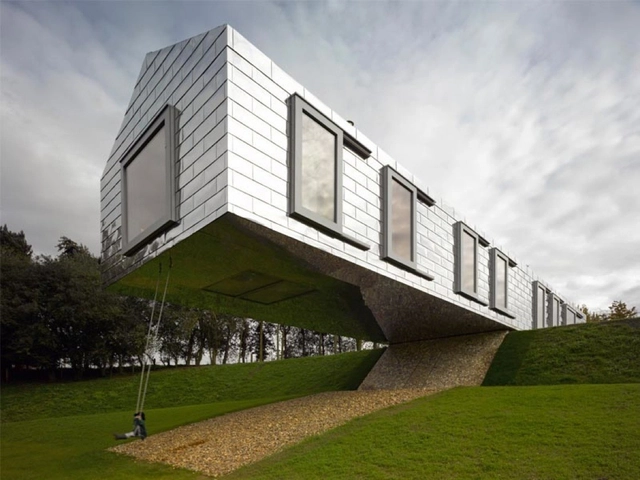
As a design feature, cantilevers can exist for any number of reasons, as rational results of form-making, impressive feats of engineering, or just unnecessary spectacles. Either way, they often result in buildings that appear both heavy and light at the same time and they present safely precarious situations for their inhabitants. The video describes what cantilevers are as well as some of the structural principles which govern their design like tension, compression, moment, and shear. It also goes over some great examples by architects like MVRDV, Rem Koolhaas, Ensemble Studio, and Richard Rogers. Finally, it concludes with appreciation for structural engineers and lists a few of the ones responsible for some of the most daring of delicate dangles.
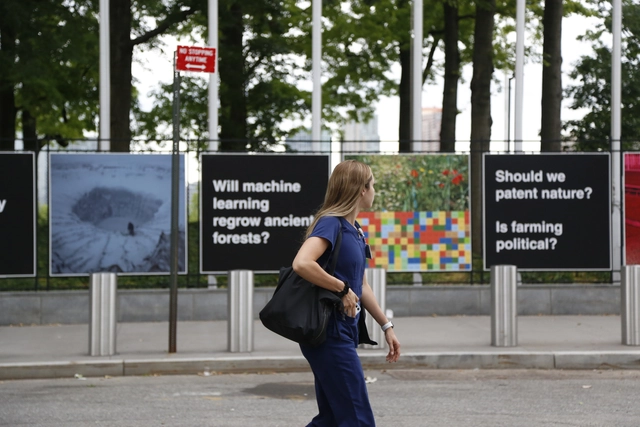
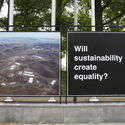
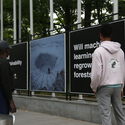
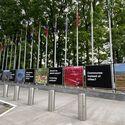
OMA's research and publication branch AMO has taken over the fences of the United Nations Headquarters in New York for a public exhibition showcasing a follow-up of the 2020 Countryside, The Future project. Curated by Rem Koolhaas and Samir Bantal, director of AMO, Countryside at the United Nations, invites reflection and public discussion on the topics of agricultural innovation, ecological change and food production in anticipation of the UN Food Systems Summit taking place in September 2021.
Liminal spaces are everywhere, both literally, and as a popular topic of intrigue on Reddit and other image-sharing platforms. Posting photographs of empty dilapidated spaces followed by collective reminiscing of childhood experiences is proving to be a popular activity these days. At one time or another, the spaces depicted in these eerie photos seemed like a good idea, a useful solution to the problem of providing shelter for crowds in the act of movement or commerce. Architecture had specific terms for these spaces too and defined them through theories that explained their role in our culture. In this video, architectural professor Stewart Hicks presents how architects think about liminal spaces, what goes into them, why they exist, and why some architects and artists still work to produce their effect.
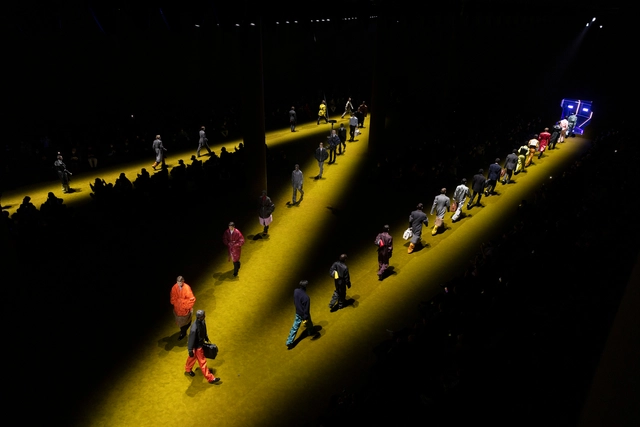
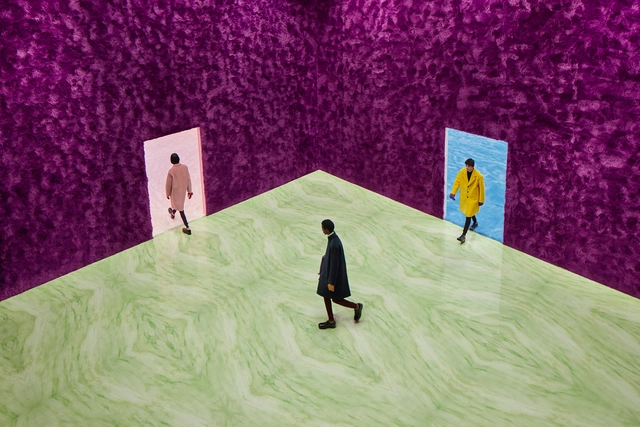
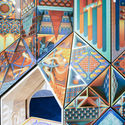
Responding to the challenge of designing a space for the launch of the Prada FW Menswear 2021 Collection by Miuccia Prada and Raf Simons, Rem Koolhaas and AMO have designed four connected geometric rooms that allow for the continuous circulation of the models showcasing their different garments. The general theme of the design centers sensory stimulation. Like the designs presented, the materials used and their distribution throughout the space speak of a more intimate connection with our surroundings, reminding us that fashion and architecture are more than just a functional container; they are an opportunity to actively excite and provoke our senses.
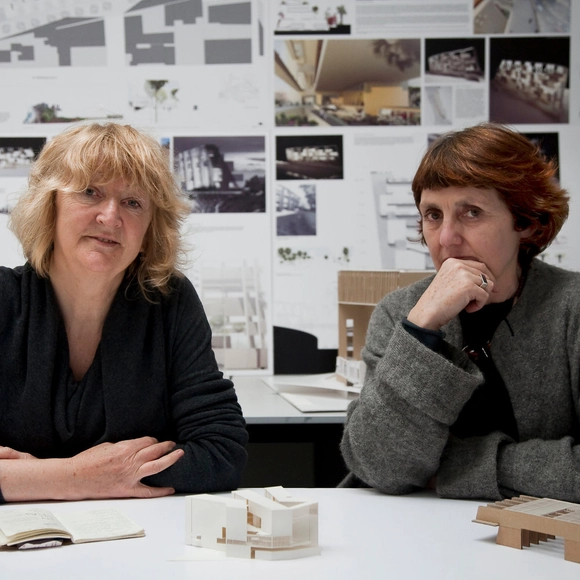
This year, architecture’s highest honor, the Pritzker Prize, has been granted to Grafton Architects, a Dublin-based architectural firm mainly ran by female partners Yvonne Farrell and Shelley McNamara. For the first time ever in its 42-year history, due to the constraints set by Covid-19 global pandemic, the organizers of the Pritzker Prize decided to use Livestream the award ceremony. Having reached the end of 2020, ArchDaily has summed up what current and previous Pritzker Prize winners have accomplished during this turbulent year.
Architecture school is a place of experiment and a testing ground for innovative ideas. The academic work and student projects can bring to light the focus of an entire career, shape the backbone for an architectural theory, and crystalize values. How do their studies and formative years reflect on the later work of different architects? Taking a journey along decades, we explore the transition from architecture school to practice, the reverberance of academic explorations and early projects in the work of several architects and practices, highlighting the different pivotal steps that have shaped the beginning of their architectural journey.
The inertia of politics and governance in a time when major societal changes occur at an increasingly faster pace and the dissatisfaction with the decision process makes room for bottom-up actions, activism and bold endeavours. In the light of so many examples of social activism, do architects have the tools to make their own stand? Does architecture have the power to disrupt the status quo?
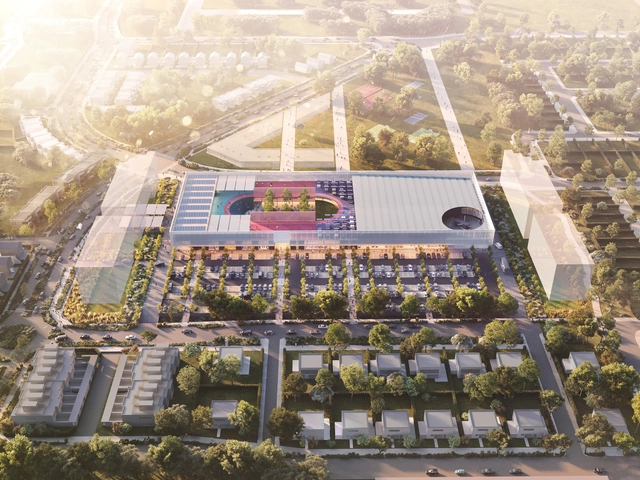
OMA is designing a 10,000-square-metre shopping center integrated with community spaces in Melbourne, Australia. Entitled the Wollert Neighborhood Centre, the project is located in Wollert, Whittlesea, one of Victoria’s fastest-growing regions, in the suburbs of Melbourne.
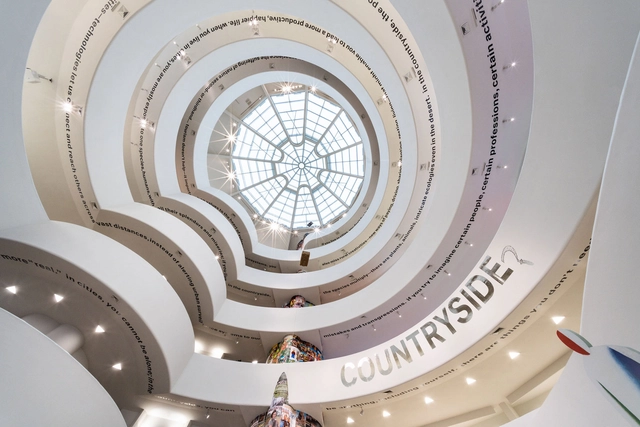
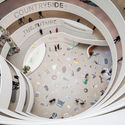
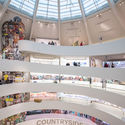
Entering the Guggenheim Museum, visitors find themselves surrounded by a feast of vivid colors and mismatched fonts. Passing the gigantic green tractor at the entrance, they move across the ground floor, littered with stickers, like a lunchbox, or a lid of a laptop. A thick pillar that pierces the internal atrium has become a garish advertising column. A bale of hay, a drone, and some other object (impossible to identify) levitate high overhead. A cardboard cutout of Joseph Stalin on robot wheels moves down the ramp, scaring off visitors. Big reflective letters say: “Countryside, The Future”.
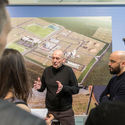
Architect Rem Koolhaas, the founder of the Office of Metropolitan Architecture (OMA) and Samir Bantal, director of OMA’s internal think-tank AMO, created this utterly confusing environment to exhibit years of research on the space beyond the boundaries of the 21st-century city.
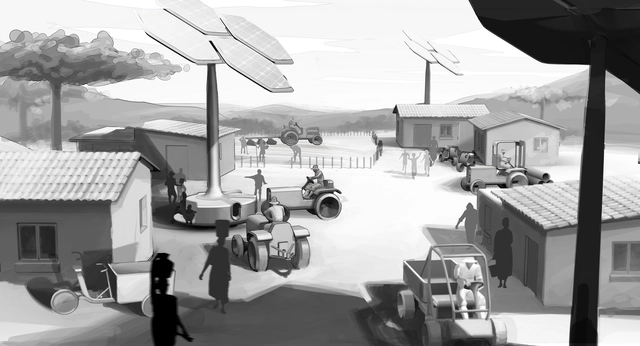
AMO, the think tank of the Office for Metropolitan Architecture (OMA), co-founded by Rem Koolhaas and led by Samir Bantal, has announced a recent research collaboration with Volkswagen. Focused on rural areas and the countryside, the partnership will look into the future of rural mobility, through a first conceptual study on electric tractors.
Videos
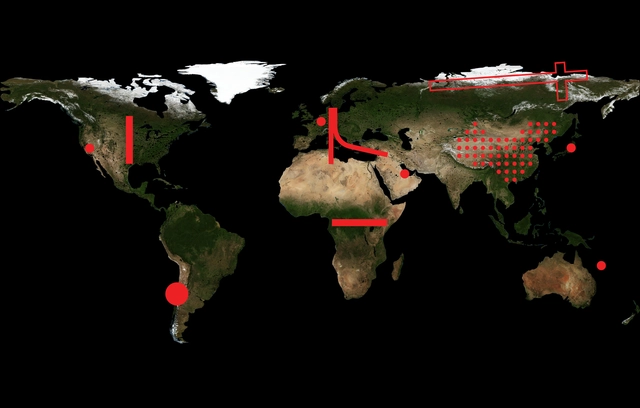
AMO’s selection of unique and highly specific conditions distributed over the globe serves as a framework for their research and represents where the world is headed.. Image Courtesy of OMA
Opening in February 2020, the Solomon R. Guggenheim Museum is showcasing an exhibition by Rem Koolhaas and AMO, the think tank of the Office for Metropolitan Architecture (OMA). Entitled Countryside, The Future the exhibition seeks to investigate urgent environmental, political, and socioeconomic transformations in the nonurban areas.
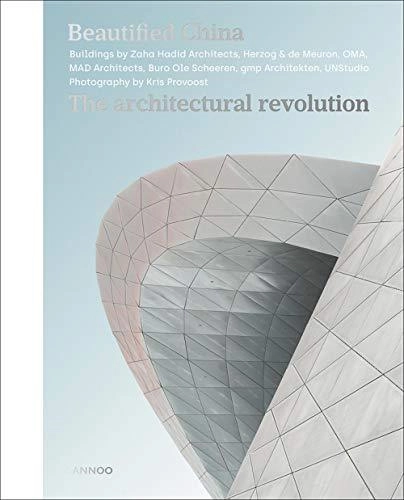
A photo essay by Belgian architectural photographer Kris Provoost capturing the boldest and most iconic structures of the architectural revolution in China.
With the extensive list of acclaimed alumni of his firm, OMA, it is not a stretch to call Rem Koolhaas (born 17 November 1944) the godfather of contemporary architecture. Equal parts theorist and designer, over his 40-year career Koolhaas has revolutionized the way architects look at program and interaction of space, and today continues to design buildings that push the capabilities of architecture to new places.
In February 2020, the Solomon R. Guggenheim Museum will present an exhibition titled “Countryside, The Future.” The brainchild of a team led by Rem Koolhaas and AMO, the exhibition will mark the latest chapter in one of Koolhaas’ fields of study from recent years; the impact of an increasingly urbanized world on the non-urban areas “left behind.” This investigation is for good reason.
https://www.archdaily.com/925800/what-will-the-countryside-be-for-when-we-all-live-in-citiesNiall Patrick Walsh