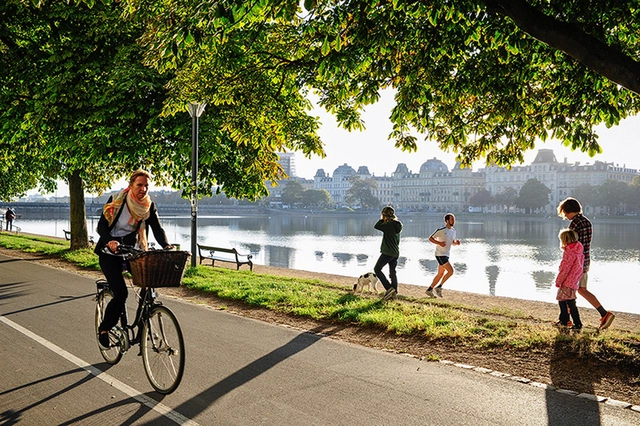
The Knight Foundation has announced the launch of the nonprofit Gehl Institute, led by Gehl Architects' Jeff Risom. With the Foundation's financial support, the Institute strives to boost urban livability by increasing public engagement and economic opportunity through the reformation of public space. A series of studies will investigate the behavioral effects of streets, parks, and plazas on their occupants. The results, coupled with community involvement in the planning process, will be applied toward developing “people-first” public spaces that respond to their unique contexts. Through this approach, the Gehl Institute hopes to foster a new design field that addresses the widening social and economic concerns that accompany urbanization. For more information, visit gehlinstitute.org.
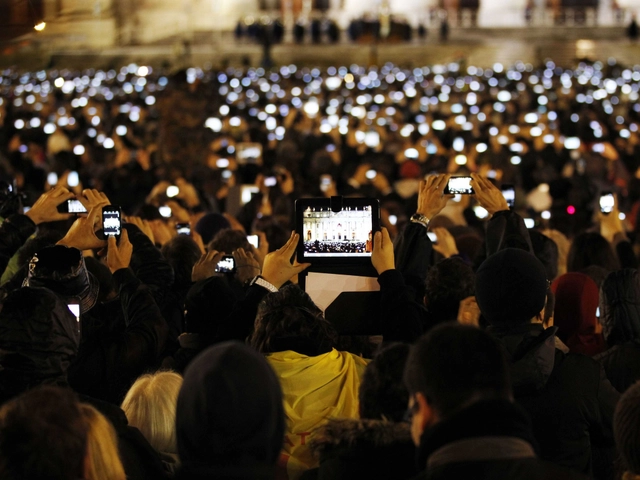
St. Peter's Square through the lens of a camera. ImagePapal Conclave 2013, Vatican City
In an article for the Washington Post, Philip Kennicott argues that "technology has scrambled the lines between public and private." He questions whether, in an age of "radical individualism" spurred on by our fascination with solitary communication, our collective understanding and appreciation for the public, civic space has been diminished. Kennitott foreshadows that "one thing is certain: We will live in more crowded spaces, and we will increasingly live indoors, cocooned in climate-controlled zones with a few billion of our closest friends" as rapid urbanisation merges with the changing climate.
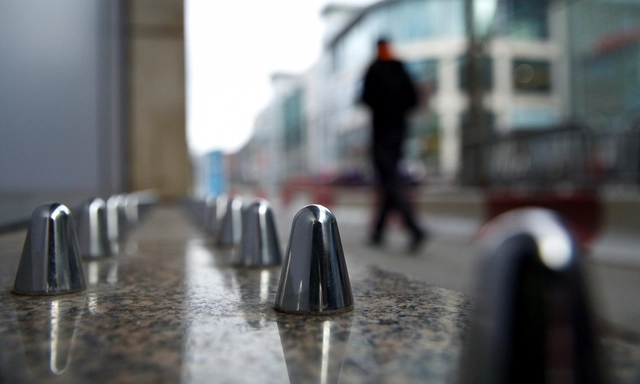
To many, the harsh turns the modern city has taken are not apparent. We see benches and bus stops that masquerade as shelters, but Guardian writer Alex Andreou's sudden plunge into homelessness opened his eyes to the hostile realities of these and other structures. In "Anti-Homeless spikes: 'Sleeping rough opened my eyes to the city's barbed cruelty'," he sheds some light on misconceptions about homelessness and explains the unfortunate trend of designing unlivable architecture to deter those affected.
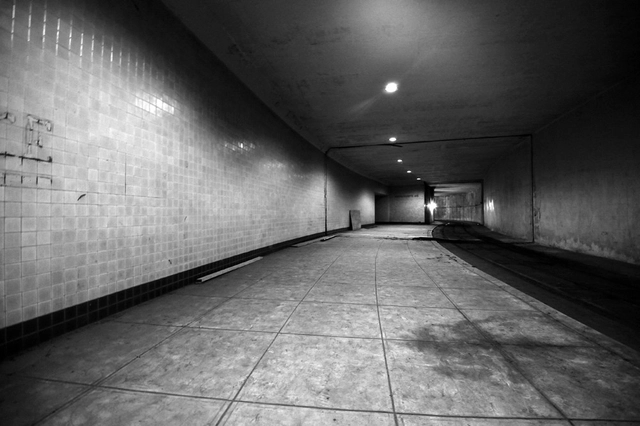
East Platform. Image Courtesy of the Arts Coalition for the Dupont Underground
The Arts Coalition for the Dupont Underground (ACDU) has taken on the task of revitalizing an abandoned trolley station beneath Dupont Circle in the Northwest quadrant of Washington D.C. The nonprofit organization recently signed for a 66-month lease of the property with the District of Columbia’s Office of the Deputy Mayor for Planning and Economic Development. Within that timeframe, the group will transform the space into a permanent cultural hotspot capable of hosting performances, art exhibitions, and other public functions. Learn more, and contribute to the ACDU’s Fundable campaign for this project, after the break.
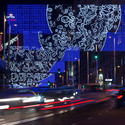
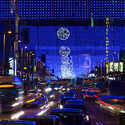
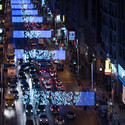
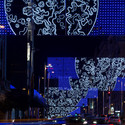
Miguel de Guzmán, a noted photographer and Spanish audiovisual producer, has shared with us one of his most recent works. MOON is the lighting project by Brut Deluxe that has taken Madrid's Gran Vía, delivering a perfect urban setting for the year-end celebrations. This context is also the location of a new film by Imagen Subliminal, who has already delighted us in the past with audiovisual proposals for projects like The POP-UP House and Casa del Espinar. The full Moon, after the break.
When it comes to public space, many assume that while truly public space is always good, "privately owned public space" is always bad. However, in this article originally published by Metropolis Magazine as "A Plaza is No Guarantee of Democracy," NBBJ's Carl Yost argues that the distinction is not so binary. As architects, it's our job to smooth over the difference between the two, while we're at work - but most importantly while we're not.
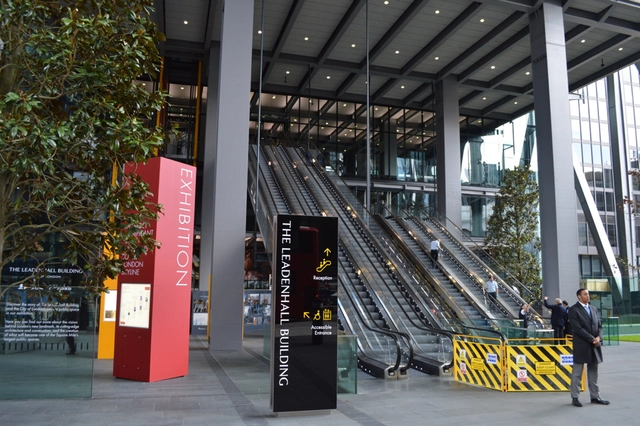
The past few months have seen the opening of high-profile projects with contested public space. The Leadenhall Building, London’s “Cheesegrater,” rises above a public plaza that the Financial Times called “problematic,” with “an astonishing array of defensive measures to make it clear that while it may be open to the public, it is still ours” (that is, the landlord’s). In New York, the World Trade Center plaza has taken fire from critics, both domestic and international, who chafe at restrictions on visitors’ behavior.
It evokes the debate over “privately owned public space,” or POPS, that arose during Occupy Wall Street, when protesters camped out in Zuccotti Park, a Lower Manhattan plaza that is privately owned by Brookfield Office Properties yet must remain open to the public. Many rightly pointed out the restrictions that POPS pose to free speech and assembly, when owners can evict people they consider unwelcome.
If there is one thing to be learned from the unsuccessful prohibition period of the 1920s, it is that we, the people, will go to great lengths to exercise our right to drink alcohol in the company of others. Our determined forefathers could have simply enjoyed a small-batch bathtub brew in the comfort of their own homes, but instead they established a system of secret places to congregate and consume collectively, even under threat of federal prosecution. Though it is no longer a felony to consume alcohol, New Yorkers are still pushing the legal limits of drinking with others, challenging the open container laws that prohibit public drinking.
Drinking is a recreational activity. It is a means of stepping beyond the realm of normal perception and seeing things differently, in the metaphorical sense (though sometimes a literal one). It is an act of recreation and repose, the parallel of peering at passerby from a park bench. In New York City, as in most of the United States, it is illegal for any person to possess an open container of an alcoholic beverage in any public place, “except at a block party, feast or similar function for which a permit has been obtained." Rarely do individuals have the resources for a block party or occasion for a full-scale public feast. More likely, they simply seek to crack open a can with neighbors on their front steps or with friends in Central Park, thereby enjoying a beverage in one of the country’s most vibrant and diverse public spheres for a mere penance. Unfortunately, that is not a legal option. Even the outdoor space we own is not completely open to our discretionary use: a resident cannot drink on his own stoop because it is “a place to which the public or a substantial group of persons has access."
https://www.archdaily.com/519234/alcohol-and-urbanism-a-case-study-breaking-new-york-city-s-open-container-lawRennie Jones
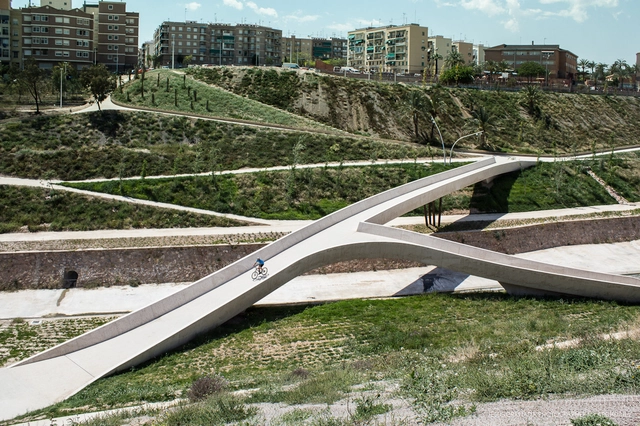
The results of the 2014 European Prize for Urban Public Space have been announced. The prize organized by the Centre of Contemporary Culture of Barcelona (CCCB) rewards both the designers and the facilitators (such as councils or community groups) that have contributed to the best urban interventions of the year. The award is given for ingenuity and social impact, regardless of the scale of intervention, meaning that small, relatively unknown practices can rub shoulders with some of the best-known practices in Europe.
See the 2 Joint Winners and 4 Special Mentions after the break
Amanda Burden, former animal behaviorist turned New York’s chief city planner, has discovered what makes cities desirable: great public spaces. During her time with the Bloomberg administration, Burden oversaw the fruition of the city’s most transformative public projects, including New York’s beloved High Line. In the video above, she reveals the many unexpected challenges of planning (and maintaining) parks people love, and why it is so important for cities to have great public spaces.
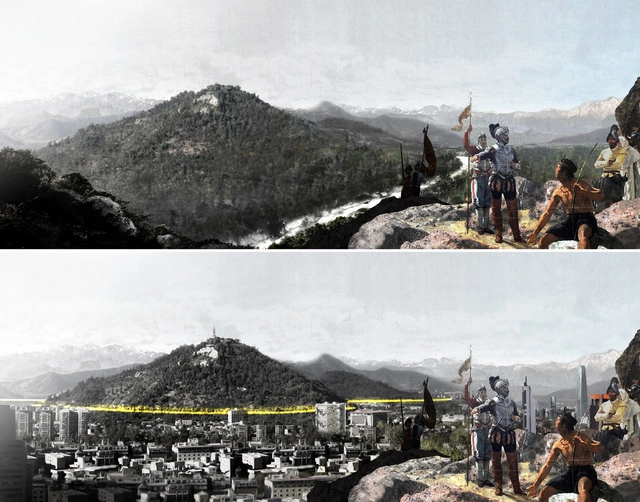
ELEMENTAL has given us details on a proposed 14.5 km pedestrian and bike path within Santiago, Chile that will run along the base of San Cristobal Hill and connect the city's many distinct communities. According to ELEMENTAL, the proposal - named "Metropolitan Promenade" - seeks to facilitate the use and quality of the city's public spaces.
The total project will cost about $16 million USD and will be constructed in two stages. The first is expected for March 2015 and will deal with 7.2 kilometers in the western sector of the park. The second stage, which should be ready in September 2015, will complete the following 7.3 kilometers in the eastern sector of the park.
Read the full architect's description, after the break.
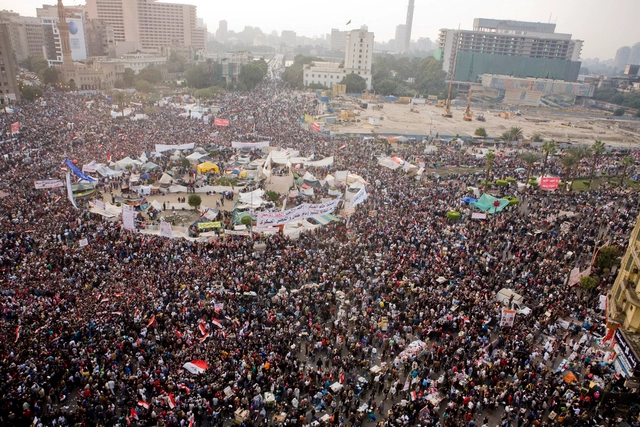
Tahrir Square during the Egyptian revolution of 2011. Image
In this tongue-in-cheek "Dictator's Guide to Urban Planning", the Atlantic explores the various ways that public spaces, and cities as a whole, have been used to suppress uprisings and bolster the control of authoritarian governments. Covering everything from Baron Haussmann's 19th Century Paris to the recent revolution in the Ukraine, the article reveals the fundamental relationship between public space and democracy. You can read the full article here.
The RIBA's recent report "City Health Check: How Design Can Save Lives and Money" looks at the relationship between city planning and public health, surveying the UK's 9 largest cities in a bid to improve public health and thereby save money for the National Health Service. The report includes useful information for city planners, such as the idea that in general, it is quality and not quantity of public space that is the biggest factor when it comes to encouraging people to walk instead of taking transport.
Read on for more of the results of the report - and analysis of these results - after the break
Janette Sadik-Khan demonstrates how paint, lawn chairs and a bit of imagination can quickly transform city streets, creating immediate public and commercial vitality. Sadik-Khan, listed as one of Business Insider's "50 Women Who Are Changing the World," is responsible for re-purposing 26 acres of dense New York City car lanes into pedestrian-friendly space. "More people on foot is better for business," she says. Despite commanding a two billion dollar budget, her economical approach as commissioner of NYC's Department of Transportation are testaments to her design sensitivity, relying on rapid-testing and regular iteration to expand the city's public domain.
https://www.archdaily.com/438069/janette-sadik-khan-nyc-s-streets-are-not-so-mean-anymoreJose Luis Gabriel Cruz
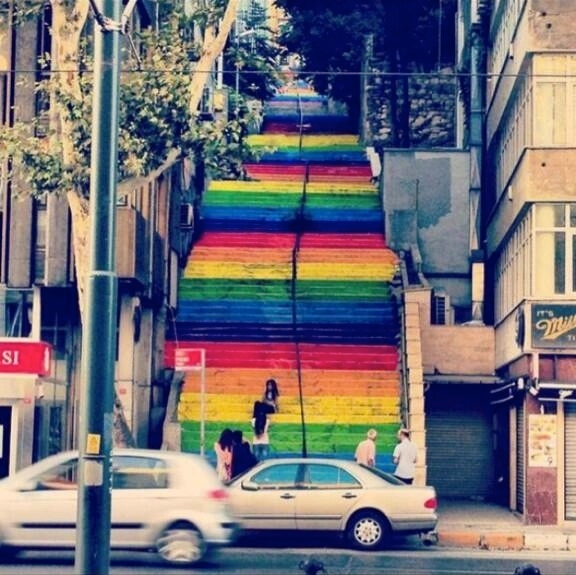
Last June we covered some of the anti-government protests that were taking Turkey by storm - but the Turks are still making headlines! Last week, one Istanbul resident decided to paint a derelict public stair only to find it hastily covered up by government workers. In an act of “guerilla beautification” and silent protest, people across Turkey have once again taken to the streets to paint their stairs and public walkways in rainbow colors. For the full story, check out this article on The Lede by Robert Mackey.
"Open House" is artist Matthew Mazzotta's latest invention: a compact, faded pink house that unfolds into a ten-piece outdoor theater that seats nearly 100 people. Facing a raised earthen stage, it's a public space made from the remnants of a privately owned blighted property. Reversing the loss of public space that the city of York, Alabama has experienced, Open House has transformed a wasted ruin of a house into an outdoor theatre open to various community events.
"Most social movements become social moments when they appear in a public square," says Seyla Benhabib, a professor of Political Science at Yale University, in the video above. "These are informal spaces of deliberation and communication."
A few days ago, Google+ released the short video above about these digital spaces, what they call the "virtual public square". Of course, the physical places that people use to express themselves are certainly no less important; however, it is interesting to consider the vital role social media and virtual communication now play in the unraveling of political events.
In 2011, UN-HABITAT and Project for Public Spaces (PPS) signed a 5-year cooperative agreement to aspire to raise international awareness of the importance of public space in cities, to foster a lively exchange of ideas among partners and to educate a new generation of planners, designers, community activists and other civic leaders about the benefits of what they call the "Placemaking methodology." Their partnership is helping to advance the development of cities where people of all income groups, social classes and ages can live safely, happily and in economic security and in order to reach these ambitious goals, the duo recently released 10 informative steps that cities and communities can take to improve the quality of their public spaces.
As a city, Hong Kong doesn't have it easy; impossibly dense and smothered by unsympathetic hilly terrain, the gymnastics that it performs to survive has lead to the growth of unique urban spaces. Cities Without Ground deconstructs the unfathomable spaghetti of pedestrian bridges, tunnels and walkways, which make up pedestrian Hong Kong. The book, created by motley trio of architects and academics: Jonathan Solomon, Ciara Wong and Adam Frampton, graphically dissects this labyrinth in a series of snappy axonometric drawings of 32 various routes through the city.
Read more about the story of Hong Kong's pedestrian maze after the break...