_EL.jpg?1508927947&format=webp&width=640&height=580)
_EL.jpg?1508928100 "© Éric Laignel")
_EL.jpg?1508928567 "© Éric Laignel")
_EL.jpg?1508929204 "© Éric Laignel")
_EL.jpg?1508929248 "© Éric Laignel")
_EL.jpg?1508927947)
-
Architects: Saguez & Partners
- Area: 46000 m²
- Year: 2016
-
Manufacturers: Kvadrat Soft Cells, Louis Poulsen, Duravit, Forbo Flooring Systems, Tarkett Sports, +21


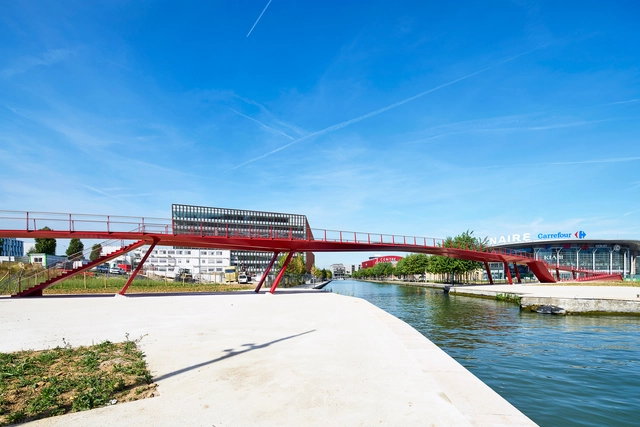

Dutch Firms Team RAU, SeARCH, and karres +brands have been named as one of the winners of the Inventons la Metropole de Grand Paris, the largest European competition for city planning, architecture and public space. Their project, Triango, reinvents Paris’ Triangle de Gonesse into a dynamic and lively business park which promotes sustainability in every sense of the word.
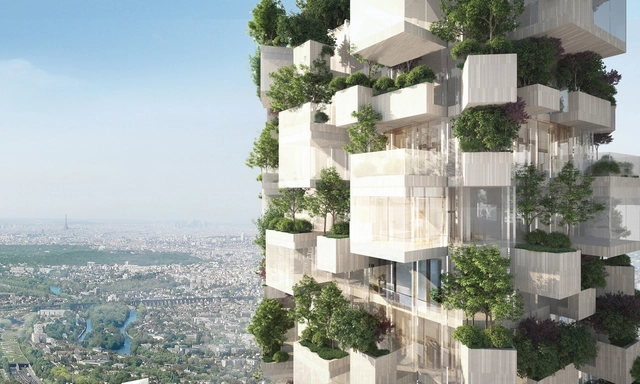
The next Vertical Forest tower will be located in France, as Stefano Boeri Architetti have revealed renderings of their designs for Forêt Blanche, a 54-meter-tall mixed-use tower located within the Paris metropolitan region in Villiers-sur-Marne.
The latest in the family of Vertical Forest concepts, which have included built and planned projects for China, Europe, South America and the United States, Forêt Blanche will be covered by 2000 trees and plants – a green surface equivalent to a hectare of forest and more than 10 times the building footprint.


As part of Paris School of Architecture's 2017/18 research theme, which is discussing the infrastructural implications of the United Kingdom's withdrawal from the European Union, the institute has launched an international architecture competition seeking Brexit Monuments.
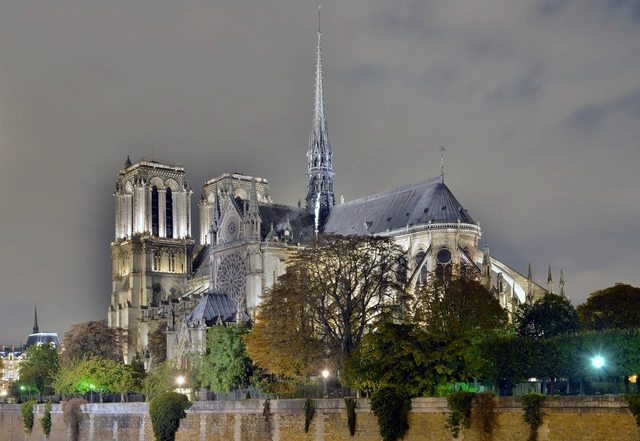
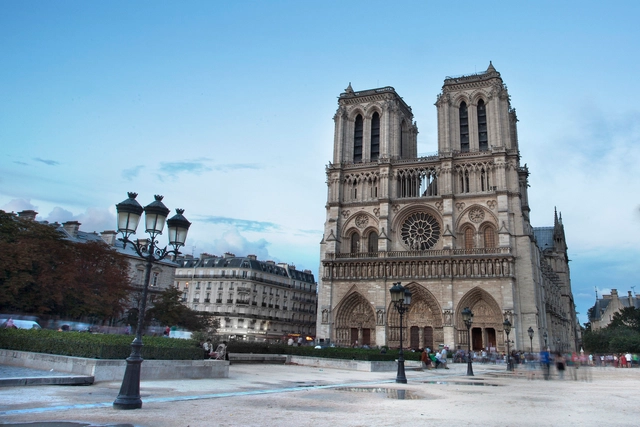
Broken gargoyles and fallen balustrades replaced by plastic pipes and wooden planks. Flying buttresses darkened by pollution and eroded by rainwater. Pinnacles propped up by beams and held together with straps.
According to the Friends of Notre-Dame de Paris, the iconic Parisian cathedral is in "desperate need of attention." Perhaps more concerningly, the holy site and French national monument is also in "a worrisome state of preservation." Built of limestone—a material notoriously susceptible to erosion—the building is in an accelerating state of wear-and-tear, demanding renewed funding efforts and expertise to secure its immediate and long-term future. From the lead roof to the stone buttresses, the world-renowned gargoyles to the stained glass windows, every inch of the structure requires differing levels of attention.

The architectural consortium of Nouvelle AOM has been announced as the winner of the international competition for the renovation and redesign of Paris’ Tour Montparnasse, beating out finalist Studio Gang and a shortlist of top firms.
Lauded by the jury for its “powerful, dynamic and bold new identity,” the winning entry will introduce an entirely new vegetated facade system that will improve both the tower’s immediate surroundings and the neighborhood as a whole.
"This was a huge challenge, as the Tower isn't like any other," the jury explained. "Nouvelle AOM's project perfectly captures the spirit of the 21st century, giving the Tower a multifaceted identity revolving around attractive, innovative new uses. The Tower will breathe new life into the Montparnasse neighbourhood."



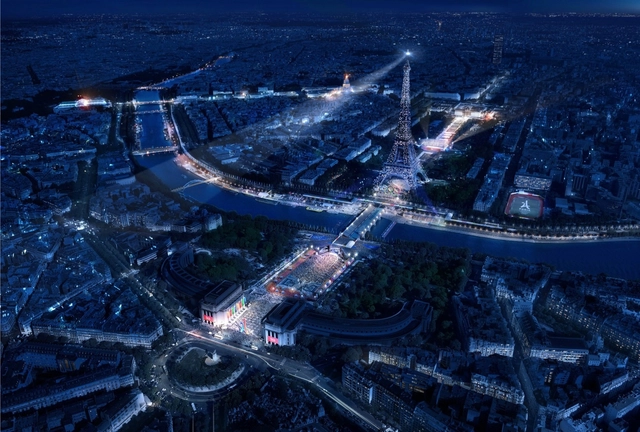
Clarification Update 10/4/17: Populous and Egis were selected in 2016 to collaborate on the Paris 2024 bid; this news piece reflects the bid’s approval by the International Olympic Committee. However, the team to lead the next planning phase for Paris 2024 has yet to be decided. Stay tuned for further information.
The Paris 2024 Olympic bid, featuring planning for 38 Olympics and Paralympic venues across the city by the team of Populous and engineering consultants Egis, has received approval as part of the International Olympic Committee’s naming of the 2024 host city.
This article was originally published by Common Edge as "It’s a Book. It’s a Building. It’s a Behavioral Intervention!"
A few years ago, while visiting, or rather exploring, Notre-Dame, the author of this book found, in an obscure corner of one of the towers, this word carved upon the wall:
'ANÁΓKH
These Greek characters, black with age, and cut deep into the stone with the peculiarities of form and arrangement common to Gothic calligraphy that marked them the work of some hand in the Middle Ages, and above all the sad and mournful meaning which they expressed, forcibly impressed the author.

C'est officiel : on peut se baigner en eau vive à #Paris ! Venez vous jeter à l'eau à #ParisPlages #LaVillette! @FrancoisDagnaud @jfmartins pic.twitter.com/bv4B4gw6Qc
— Anne Hidalgo (@Anne_Hidalgo) 18 de julho de 2017
On July 15, the city of Paris announced the opening of three natural swimming pools that receive their water supply from the Seine River, located in the La Villette Basin in the 19th arrondissement of the city. Spanning a total of 1,600 square meters, the new attraction is divided into a children's area, with depths of up to 40cm; an area of medium depth of 1,2m; and a larger pool, with depths of about two meters.
The swimming pools are part of the "Swimming in Paris" project, presented for the first time by the City Council of The French Capital in June 2015, with the goal of "encouraging the practice of swimming for Parisians and Tourists." According to an official statement from the city government, the project aims to allow, by 2020, the "modernization of water parks and the creation of new swimming pools and areas for bathing."

Paris and the entire country of France is world-famous for its cuisine, with a non-exhaustive list of delicacies and culinary systems. The culinary reputation of Paris is very rich, cultured and diverse. French food culture, according to UNESCO, is important for 'bringing people together to enjoy the art of good eating and drinking' and the power to create 'togetherness, the pleasure of taste, and the balance between human beings and the products of nature'.

For Hamburg-based photographer Sebastian Weiss, buildings are dramatis personae, or "characters". Inspired by Ash Amin and Stephen Graham's 1997 book The Ordinary City, in which the authors described the city as the "theater of life", this photo-essay of architectural landmarks in the French cities of Arcueil, Nanterre, and Paris examines the personalities of public buildings.
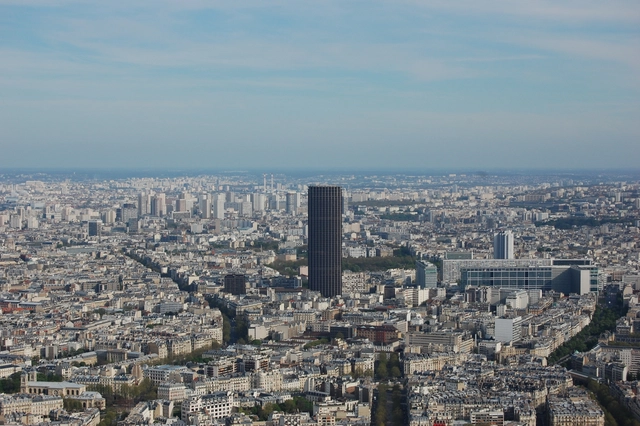
Studio Gang and nAOM (Franklin Azzi Architecture / Chartier Dalix / Hardel-Lebihan Architectes) have been selected as the two finalist teams competing for the redesign of Paris’ infamous Tour Montparnasse, beating out a star-studded shortlist that included OMA, MAD Architects (China) + DGLA (France), Architecture Studio, Dominique Perrault Architecture, and PLP Architecture.
The competition asked teams to submit a vision for the tower that “not only creates a powerful, dynamic and bold new identity for the Tour Montparnasse but also addresses all the challenges involved in terms of user accessibility, comfort and energy performance.”
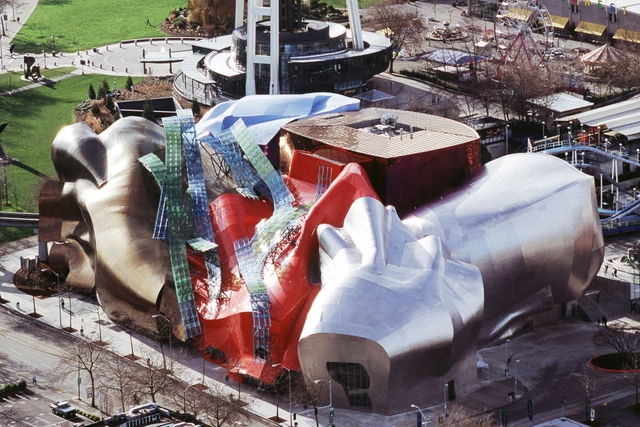
In 2017, many of the world's cities have become potpourri time capsules of architecture. We live in an eclectic era in which a 19th-century industrial loft, post-war townhouse, and brand new high rise condominium are all comparably desirable properties. This increasingly varied urban landscape—and the appetite for variety of the people who live there—makes it more difficult than ever for new architecture to grab the public's attention.
To combat this, architects often attempt to produce an "iconic" work: a building whose design is so so striking that it attracts even a layperson's focus. Sometimes this ambition pays off as timeless, and sometimes it irreversibly pock-marks the skyline. What follows is a collection of attention grabbing structures. Will they be remembered as eccentric landmarks or glaring eyesores? You decide.
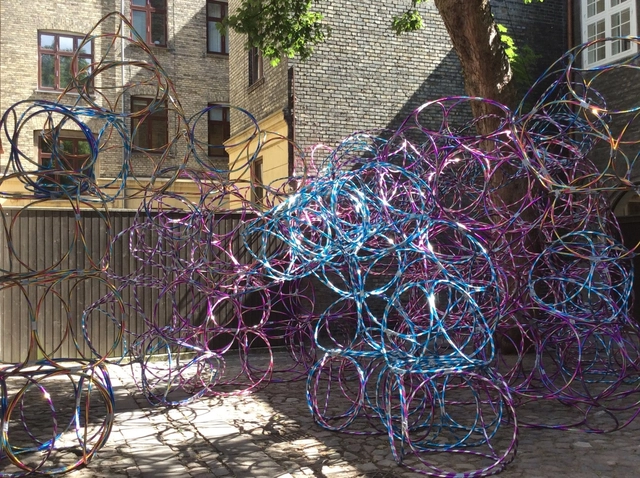
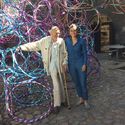
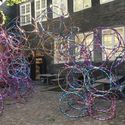
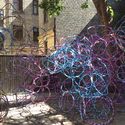
Architect and theorist Yona Friedman has brought his playful “People’s Architecture” installations to Rome’s MAXXI Museum, Paris’s Les Halles and Denmark where they were recently assembled in a workshop at the Danish Association for Architects. Built using plastic hula hoops, each installation is assembled spontaneously, creating new variations of space with each turn. Says Friedman: “Architecture for people proposes a variant of the original “Ville Spatial.” It is based on a structure easy to modify, a structure not necessarily raised over ground level, keeping that option open if wanted.”

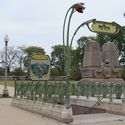
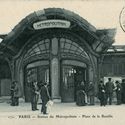
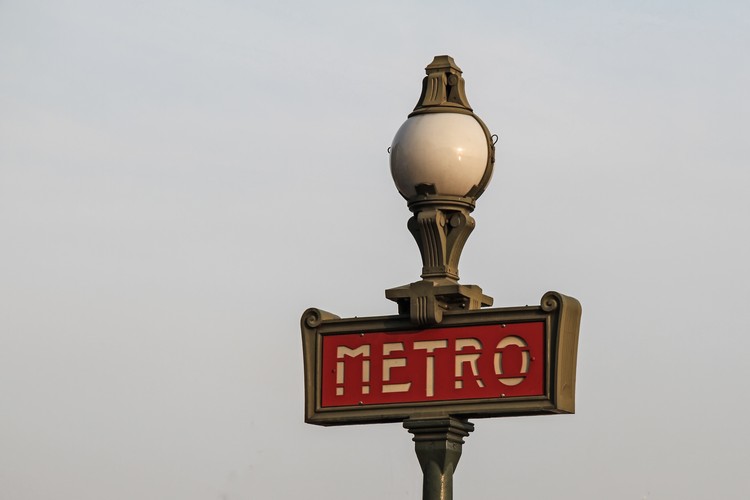
Scattered throughout the streets of Paris, the elegant Art Nouveau entrances to the Métropolitain (Métro) subway system stand as a collective monument to the city’s Belle Époque of the late 19th and early 20th Centuries. With their sinuous ironwork patterned after stylized plants, the Métro entrances now count among the most celebrated architectural emblems of the city; however, due to the city’s wariness in the face of industrialization and architect Hector Guimard’s decision to utilize a then-novel architectural aesthetic, it would take decades before the entrances would earn the illustrious reputation that they now enjoy.