-
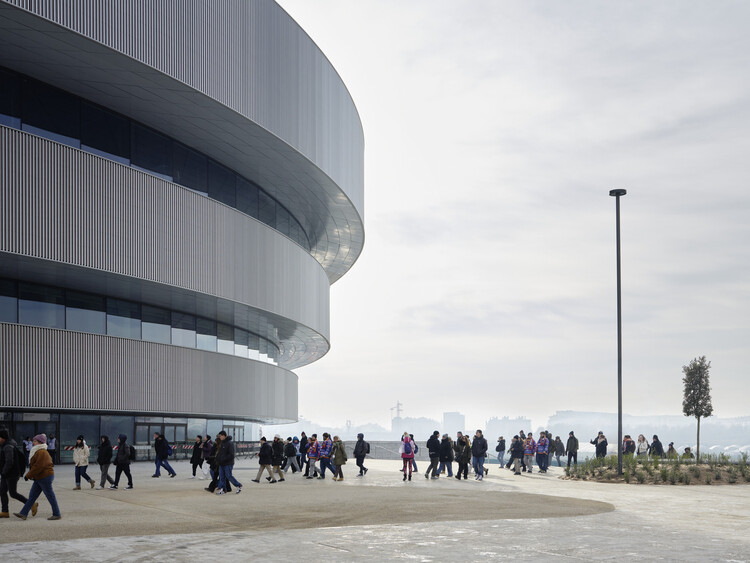
Architects: Riegler Riewe Architekten
- Area: 105 m²
- Year: 2023
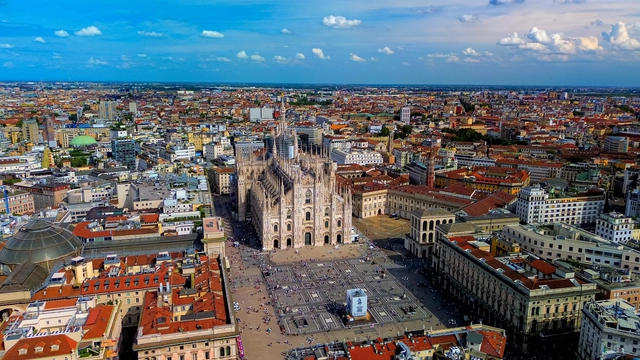
Milan, a global hub of fashion and finance, increasingly asserts itself as a leading center for architecture and design. Its status as Italy's second-largest city underpins its vibrant cultural scene, attracting both established and emerging creative talent. Additionally, Milan is home to esteemed educational institutions recognized for their focus on heritage preservation and conservation. Its cultural and design significance is increasingly pronounced, as a growing number of creators are relocating to establish their presence in this vibrant creative hub.
Among Milan's most iconic landmarks are the flamboyant Gothic Duomo di Milano, the historically and artistically significant Santa Maria delle Grazie, and the ornate Galleria Vittorio Emanuele II, along with numerous Renaissance and Baroque sites. The city also boasts some of the most innovative modern and contemporary architecture, showcasing a unique dialogue between tradition and modernity. This synergy is exemplified by the contributions of architects like Aldo Rossi, Gio Ponti, Stefano Boeri, Mario Cucinella, Zaha Hadid, Grafton Architects, Herzog & de Meuron, and Foster and Partners.
The following guide highlights key historical landmarks alongside exemplary contemporary architecture curated by ArchDaily. This guide serves as an indispensable resource for those planning to explore Milan during the 2026 Design Week, presenting a blend of essential sites designed by renowned local and international architects.

The Milano Cortina 2026 Winter Olympics officially opened on Friday, February 6, with a ceremony staged across four locations in northern Italy. The main opening event took place at San Siro Stadium, one of Milan's most significant modernist landmarks, and combined dance and performing arts, referencing Italian culture with performances by international artists, including pop star Mariah Carey. Although several competitions had already begun on February 4, the opening ceremony marked the start of a broader programme of sporting, social, and cultural events distributed across Milan and the three Alpine host areas: Cortina d'Ampezzo, Valtellina, and Val di Fiemme. The Games are scheduled to run until February 22, concluding with a closing ceremony at the Verona Arena, ahead of the Paralympic Games, which will take place from March 6 to 15. As a large-scale international event, the Olympics place significant demands on sports infrastructure, transportation networks, accommodation, and tourism capacity, offering early indications of the longer-term urban, architectural, and territorial impacts the Games may leave behind.

Nearly one week before the start of the Milano Cortina 2026 Winter Olympics, the organizing committee has released official information on the event's Cultural Olympiad: an arts and culture programme accompanying the Olympic and Paralympic Games. The programme is recognized by the IOC as one of the three pillars of the Olympic Movement, alongside sport and education. Conceived as a widespread platform involving territories, institutions, and communities across Italy, the Cultural Olympiad aims to highlight the Italian Alps and Milan's cultural heritage while promoting Olympic values through art, history, and participation beyond the official sports venues.


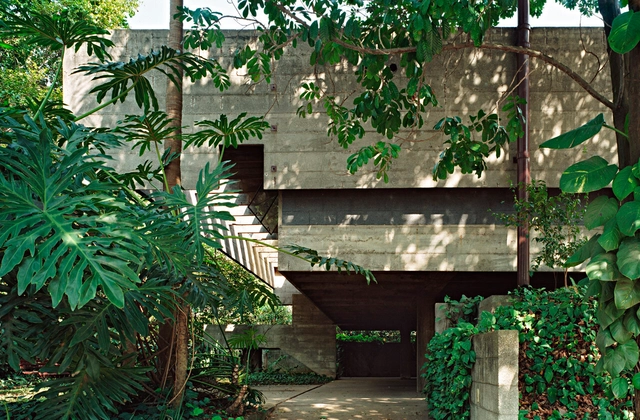
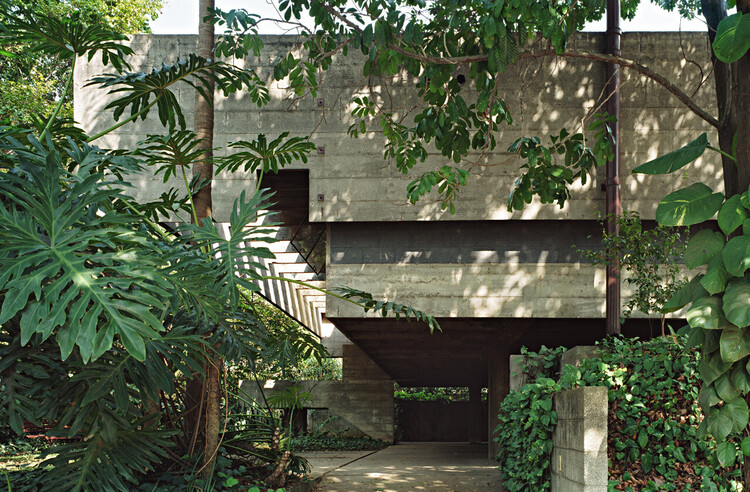
The built environment is expected to reduce carbon emissions, support biodiversity, and respond to changing ecological conditions, all while providing housing for communities and reflecting their cultural values. In this shifting landscape, a once-maligned architectural style emerges in a surprising new form. Brutalism, long associated with institutional gravitas and material austerity, is now being reframed through an ecological lens. This hybrid movement, known as eco-brutalism, combines the power of concrete with greenery and climate-sensitive design strategies. The result is a set of spaces that are visually arresting, conceptually complex, and increasingly popular among designers, urban planners, and the general public. This movement includes not only the direct lineage of 1960s Brutalism but also contemporary projects that, while not strictly Brutalist, share its material honesty, monumental scale, and use of expressive concrete forms.
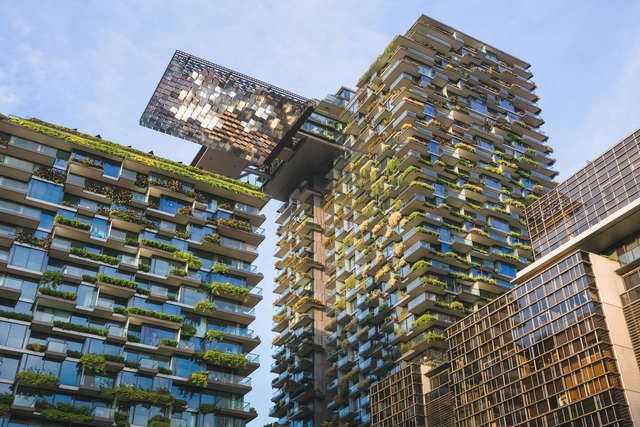
Our contemporary society has been witnessing a surge in skyscraper construction in urban centers worldwide for various reasons—including engineering advancements, increased urban density, space constraints, and, arguably, a competitive drive for building the tallest structures. The allure of all-glass facades and the pursuit of curtain walls with larger panes of continuous glass have often come at the cost of functionality.
In these towers, operable windows are sacrificed for aesthetics and expansive views, with a central core layout that maximizes 360-degree views while creating architectural "solar heat-gain monsters." Without natural or cross ventilation, these glass skyscrapers trap significant heat from solar radiation within habitable spaces, relying almost exclusively on mechanical HVAC systems to cool these spaces. This raises the question: is passive ventilation strategy becoming obsolete in high-rise design, or can operable systems be integrated effectively into our high-tech towers?
Make the most of Milano with our curated fair and city guides – put together by our expert team of architects and designers to make sure you know exactly what to see and where to go. As Designboom, Architonic, and ArchDaily, our core vision is to inspire, connect and empower. And while we can’t physically steer you in the right direction on the city streets or Salone del Mobile’s redesigned 2024 floor plans, we can make sure you have the optimal tools to locate the biggest discoveries, best new contacts, and most exciting stories: our two curated Milan guides, one to the fair and one to the city.
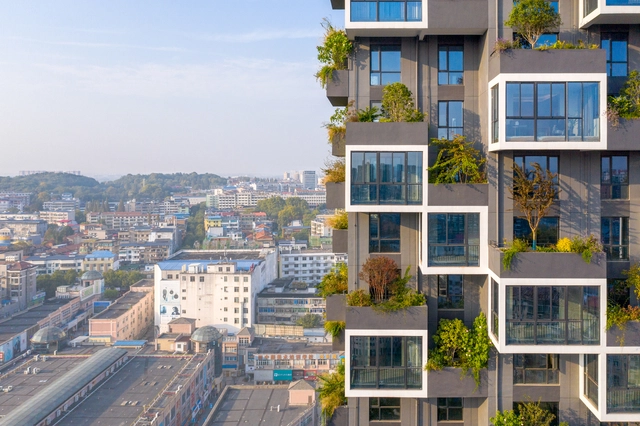
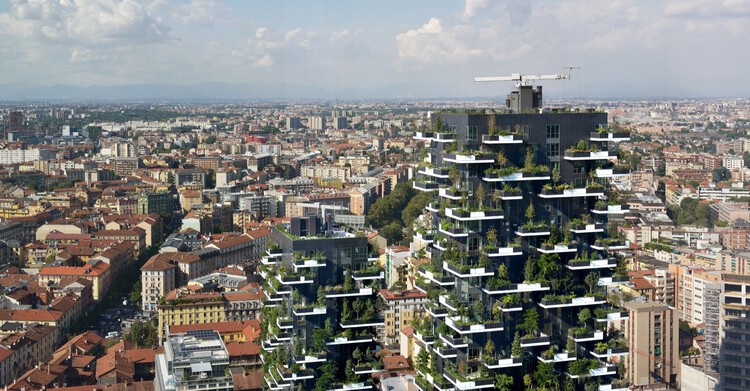
The “Green Obsession” campaign launched by Stefano Boeri Architetti has been declared the winner of the SDG Action Awards, the most important recognition of projects that support the United Nation’s 17 Sustainable Development Goals. As part of the SDG Action Campaign, the United Nations set out to reward initiatives that “mobilize, inspire and connect communities in order to promote positive change.” The winning initiative aims to help improve the relationship between nature and design by implementing the principles of urban forestation. Green Obsession represents a series of conferences, public programs and a book, “Green Obsession: Trees Towards Cities, Humans Towards Forests”, published in 2021 and supported by the Graham Foundation.
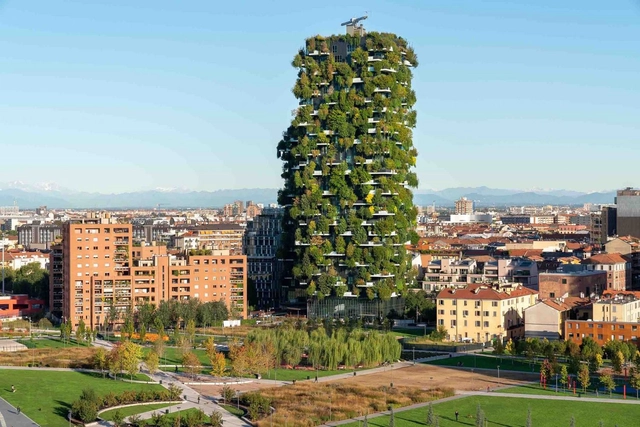
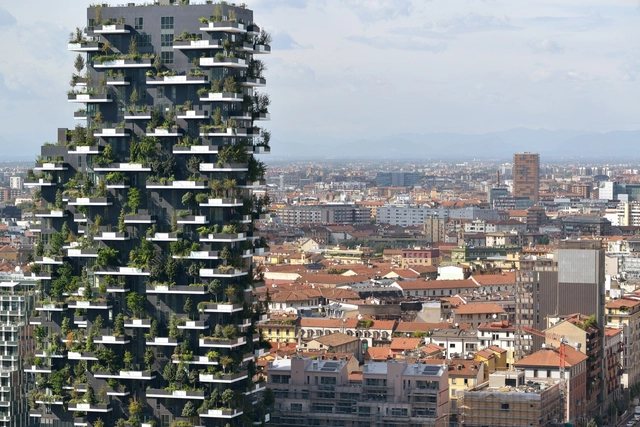
Milan’s urban fabric has long been defined by change. In a city known for its historic monuments, from the Piazza Duomo and Milan Cathedral to works like Velasca Tower, contemporary architecture must balance many existing contexts. Emerging as a global center for design and culture, Milan has become home to new buildings and structures addressing this condition as iconic landmarks and expressive forms. Actively building upon its legacy, Milan has turned its attention to the sky.
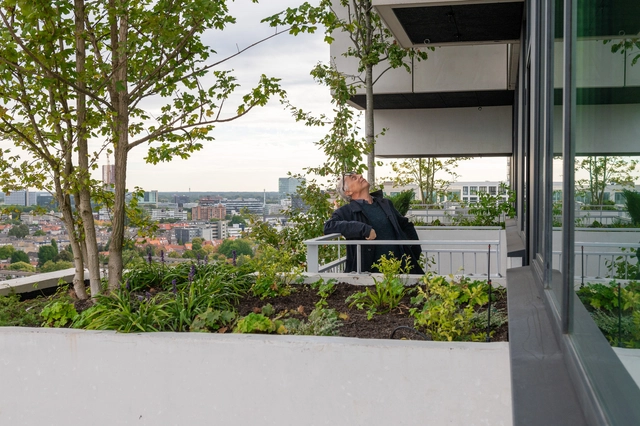
Stefano Boeri has been awarded the Lifetime Achievement Award at the sixth edition of the Madrid Design Festival. According to the organizers, this recognition pays homage to a “great figure in design”. It acknowledges the significance of his contributions to the disciplines of architecture and urban planning, as well as publishing and academia. The award ceremony, held at the Institución Libre de Enseñanza (ILE), was conferred by the architect Rafael Moneo, who personally handed the award to Stefano Boeri.


Seven years after the inauguration of Bosco Verticale in Milan, Stefano Boeri Architetti presented a video documentary of Trudo Tower, the first Vertical Forest in social housing. The 19-storey residential tower, which is built in Eindhoven, The Netherlands, features hundreds of various species on each of its four facades, with 125 affordable apartments that accommodate low-income residents. The miniseries consists of 3 episodes that explore how "living in contact with trees and greenery - and enjoying their advantages - is not the prerogative of rich people but could well become a possible choice for millions of citizens around the world.”
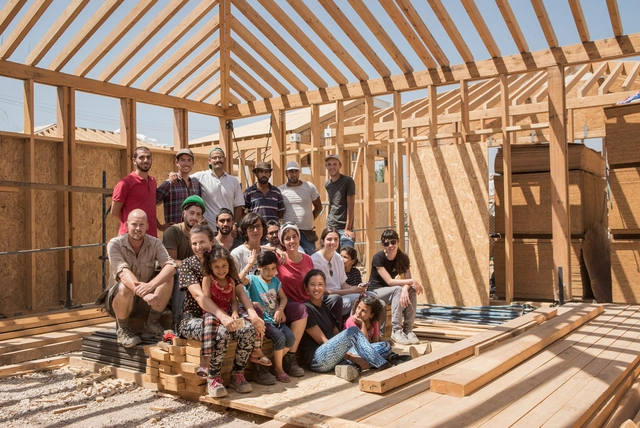
For the past few months, the architecture community has been trying to bring its contribution to the fight against the pandemic. The global spread of this crisis might have triggered a coordinated, and thus a more visible effort, but this isn’t the first time professionals step up in crises. Over the years, natural disasters and emergencies have determined several architects to get involved in disaster relief initiatives, as well as a wide range of humanitarian actions. In this article, we take a look at different occasions various architects and practices made a significant contribution to, helping affected communities overcome hardship.
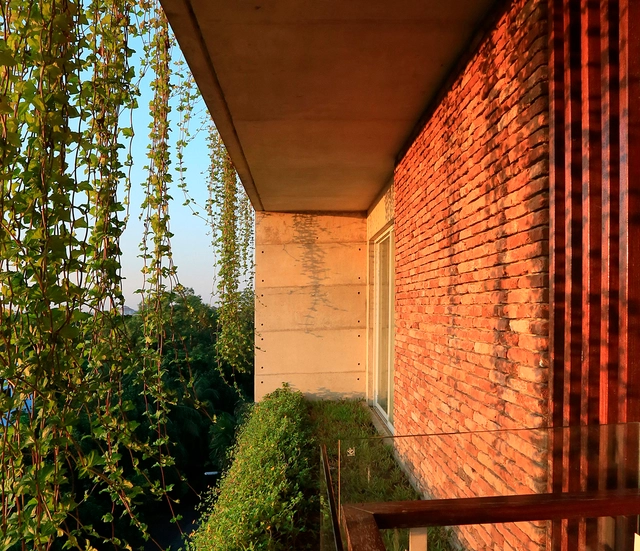
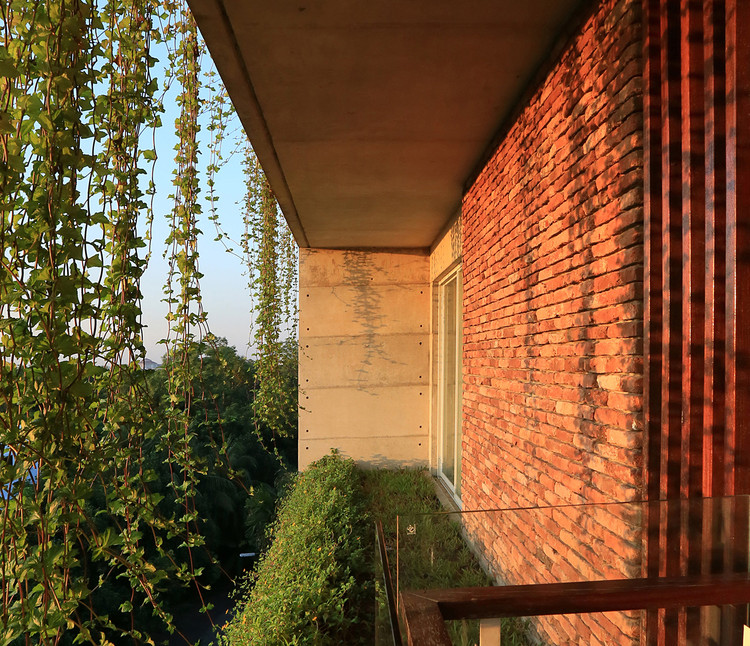
With the COVID-19 pandemic sweeping through the world's urban centers, governments worldwide are urging citizens to hunker down at home in a bid to quell the virus' spread. For apartment dwellers under quarantine, balconies have become the new platforms for entertainment and social interaction, making now an opportune moment in rethinking how we design and build these outdoor urban spaces.
_Paolo_Rosselli__DSC2950.jpg?1588226670&format=webp&width=640&height=580)
Until the recent outbreak of the COVID-19 pandemic, the climate crisis was perhaps the fundamental design problem of our Anthropocene era. The threat of climate change has forced us as designers to reevaluate how we realize designs at all scales. Eco-friendly interior finishes, net-zero energy skyscrapers, and strategies to prevent the rising sea levels from pushing residents in coastal cities more inland are just some of the innovative solutions that have come from the increased urgency to mitigate the effects of the climate on our world.
Stefano_Boeri_Architetti_il_polo_del_gusto_di_amatrice_-_ph.PaoloRosselli_I0A6470.jpg?1568100246&format=webp&width=640&height=580)






.jpg?1639992530&format=webp&width=230&height=230&crop=true)
.jpg?1639992517&format=webp&width=230&height=230&crop=true)
.jpg?1639992418&format=webp&width=230&height=230&crop=true)




Stefano_Boeri_Architetti_il_polo_del_gusto_di_amatrice_-_ph.PaoloRosselliI0A6167.jpg?1568099416&format=webp&width=230&height=230&crop=true)
Stefano_Boeri_Architetti_il_polo_del_gusto_di_amatrice_-_ph.PaoloRosselliI0A6446.jpg?1568099701&format=webp&width=230&height=230&crop=true)
Stefano_Boeri_Architetti_il_polo_del_gusto_di_amatrice_-_INAUGURAZIONE_ph._Giovanni_Nardi_dk_1001.jpg?1568099903&format=webp&width=230&height=230&crop=true)
Stefano_Boeri_Architetti_il_polo_del_gusto_di_amatrice_-_ph.Rosselli_X0A1740.jpg?1568100144&format=webp&width=230&height=230&crop=true)
Stefano_Boeri_Architetti_il_polo_del_gusto_di_amatrice_-_ph.PaoloRosselli_I0A6470.jpg?1568100246)