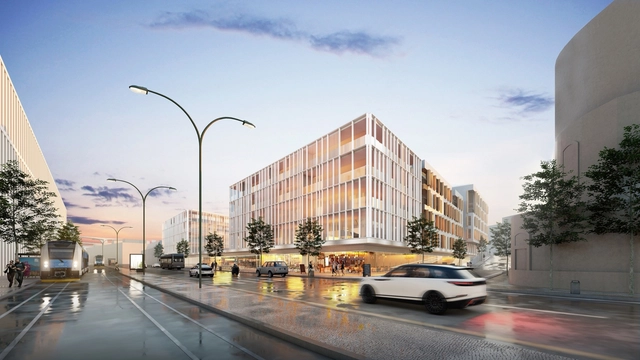
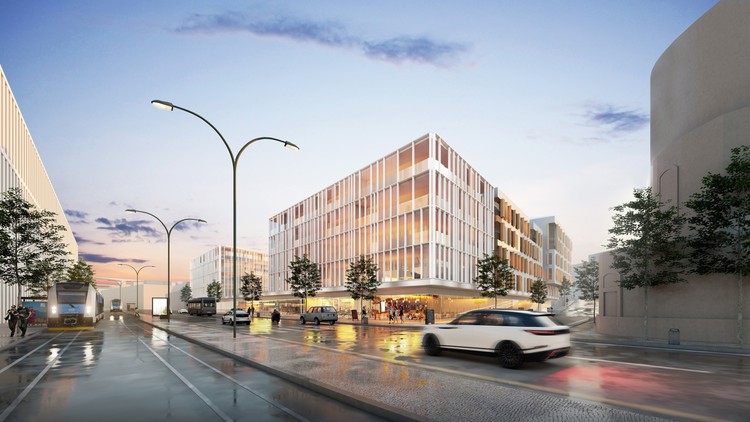
EAA-Emre Arolat Architecture has revealed their design for Alcantara Gardens in Lisbon, Portugal. The 23,000-square-meter scheme contains residential, apartments, office spaces, and public amenities behind facades inspired by vernacular design.


EAA-Emre Arolat Architecture has revealed their design for Alcantara Gardens in Lisbon, Portugal. The 23,000-square-meter scheme contains residential, apartments, office spaces, and public amenities behind facades inspired by vernacular design.
.jpg?1413947919&format=webp&width=640&height=580)
_5838.jpg?1559756527&format=webp&width=640&height=580)
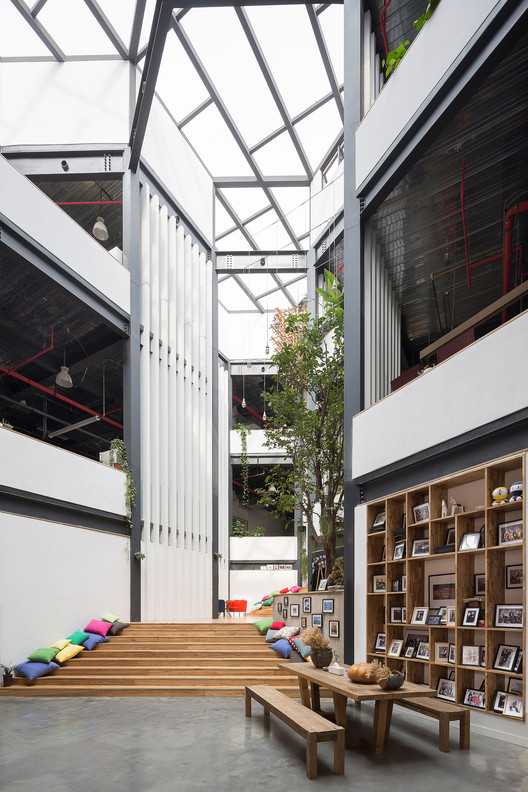
We are delighted to introduce Open More Doors, a new section by ArchDaily and the MINI Clubman that will take you behind the scenes of the world’s most innovative offices through exciting video interviews and an exclusive photo gallery featuring each studio’s workspace.

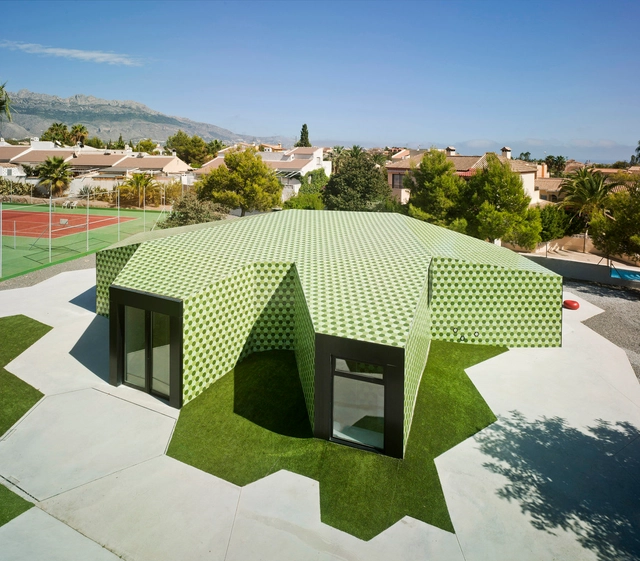

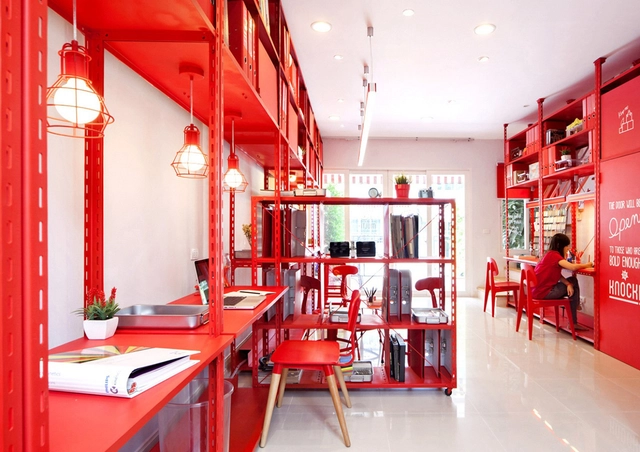
The functional distribution plays a fundamental role in the contemporary design of offices and places for work. The study of the architecture plan shows an interesting form of approach; not only allows for proper logistics and circulation but find efficient variations and innovations that will enable better workspaces that adapt to the current needs.
We have selected more than 50 plans of projects that will inspire you, recognizing the different ways in which architects have faced the challenge to design offices, in all different scale ranges.
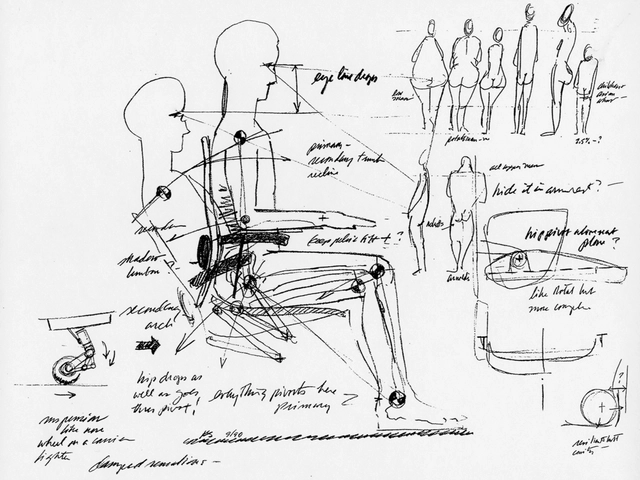
It's common sense: a good design is based on people and what they really need. As architects, are we deepening enough to give the correct answers to the requirements we face in each project?
Herman Miller is a great example of this understanding. Founded in 1905 by Dirk Jan De Pree, the American company produces equipment and furnishings for offices and housing, including a high level of research to understand the human body and the way we inhabit our daily spaces. These investigations, supported by usability testing and multidisciplinary work, results in a large number of furniture pieces and spatial designs that are now used by people around the world.
We had the opportunity to visit their headquarters in Zeeland, Michigan to understand how these studies have been carried out for several decades.
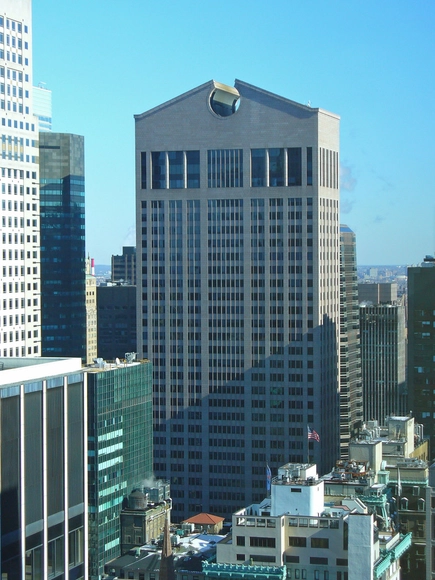
It may be the single most important architectural detail of the last fifty years. Emerging bravely from the glassy sea of Madison Avenue skyscrapers in midtown Manhattan, the open pediment atop Philip Johnson and John Burgee’s 1984 AT&T Building (now the Sony Tower) singlehandedly turned the architectural world on its head. This playful deployment of historical quotation explicitly contradicted modernist imperatives and heralded the mainstream arrival of an approach to design defined instead by a search for architectural meaning. The AT&T Building wasn’t the first of its type, but it was certainly the most high-profile, proudly announcing that architecture was experiencing the maturation of a new evolutionary phase: Postmodernism had officially arrived to the world scene.
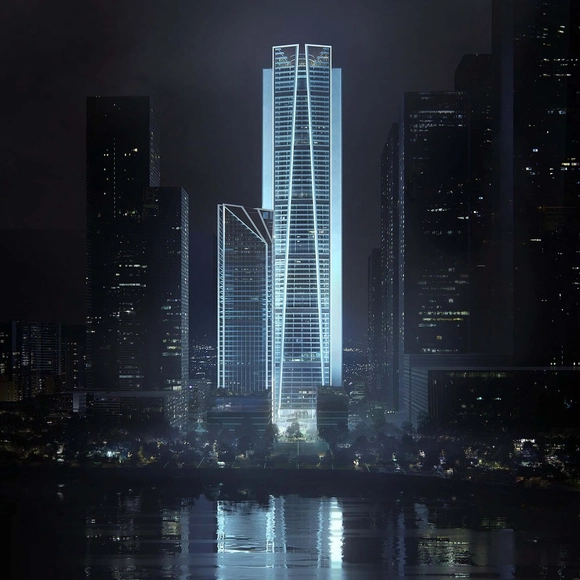
Foster + Partners has released details of their proposed China Merchants Bank HQ in Shenzhen. The soaring 350-meter tower, intended to house the bank’s 13,000-strong workforce, will be complemented by a sister tower 180 meters in height, containing a luxury hotel and mixed-use office, cultural, and retail spaces.
The taller office tower is comprised of large-span column-free floorplates supported by offset cores at either side. A glazed façade has been shaped to avoid downdrafts, thus making the surrounding open spaces on the ground floor more comfortable for the public.
.jpg?1546524182 "China Merchants Taiza Bay, Shenzhen. Image Courtesy of Foster + Partners")




A New York City icon that once rivaled structures such as the Statue of Liberty and the Empire State Building, the World Trade Center, colloquially known as the Twin Towers, was one of the most recognized structures in history. Designed by Japanese-American architect Minoru Yamasaki, it held the title of Tallest Building in the World from 1972–1974. Up until its unfortunate demise, the WTC site was a major destination, accommodating 500,000 working people and 80,000 visitors on a typical weekday.

Schmidt Hammer Lassen has released images and details of its competition-winning design for the headquarters of Solvay, an advanced materials and chemicals company, to be located in Brussels, Belgium. Working in collaboration with Modulo Architects and VK Engineers, the Danish firm has prioritized sustainability and resilience in the zero-carbon, near-zero-energy building.
The winning team was chosen from a competitive international field including OMA, Valode & Pistre, Wilmotte & Associés, and Henning Larsen.

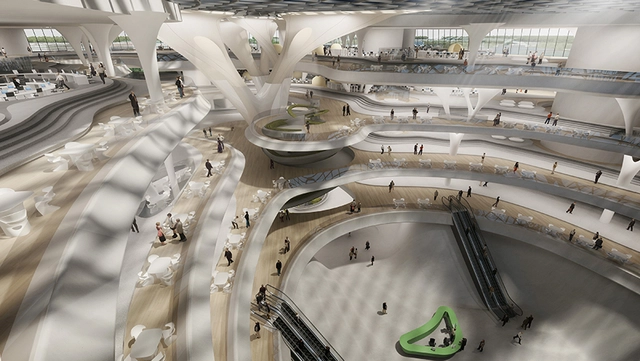
This article was originially published by Metropolis Magazine as "Architects, Armed with Data, Are Seeing the Workplace Like Never Before."
A workplace that improves employee productivity and efficiency has been a white whale of corporate managers for decades. But even before the office as we know it today was born, designers and innovators were already studying sites of labor, such as the factory, to devise strategies to boost worker performance. By the 1960s, Robert Propst, the inventor behind Herman Miller’s Action Office line of workplace furniture, and others were conducting workspace research that would ultimately lead to the creation of the modern cubicle.
These developments relied largely on observation and intuition to organize office workers in purportedly effective ways. Now, advances in technology allow designers to take a more sophisticated approach, using sensors, internet-connected furniture and fixtures, and data analytics to study offices in real time. “You can take into account every single employee, and people are very different,” says London architect Uli Blum. “It’s about solving the fundamental problems of getting people the environment they need. And the easiest way is to ask them,” he adds. But finding out the needs of hundreds, sometimes thousands, of workers can quickly become an exercise in futility.

.jpg?1413947921 "© Relja Ivanić")
.jpg?1413947930 "© Relja Ivanić")
.jpg?1413947937 "© Relja Ivanić")
.jpg.jpg?1413947946 "© Relja Ivanić")
.jpg?1413947919)
_6158.jpg?1559756694 "© Laurian Ghinitoiu")
_6015.jpg?1559756499 "© ArchDaily")
_5936.jpg?1559756682 "© Laurian Ghinitoiu")
_6206.jpg?1559756718 "© Laurian Ghinitoiu")
_5838.jpg?1559756527)