With recent streamlining and increased flexibility of architectural licensing programs, the time it takes to earn a license has decreased for the seventh year in a row, and the average age of licensure has concurrently dropped. On average, it takes just over 13 years to become an architect, from the time a student enrolls in school to the date they receive a license.
From architectural lectures to coverage of local projects and events, The Architectural League of New York presents a wide range of topics through its video series to further its goal of advancing the art of architecture. Through this presentation of some of the world’s most interesting and influential architects, designers, and works, The Architectural League draws international audiences to help shape the future of the build environment by stimulating discussion and provoking design-based thinking.
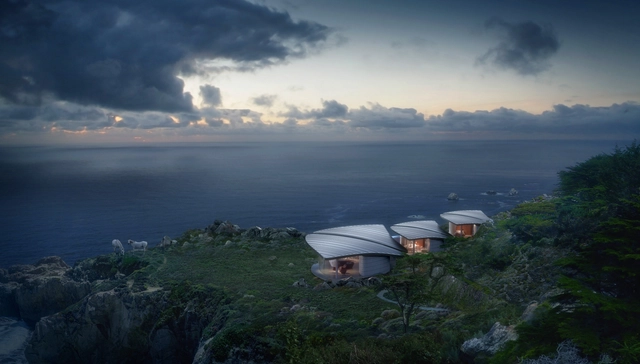
Form4 Architecture has won first place at the International Design Awards for its project, Sea Song, which additionally was honored by the Green Good Design Awards presented by The European Centre for Architecture, Art, Design, and Urban Studies, in collaboration with The Chicago Athenaeum’s Museum for Architecture and Design.
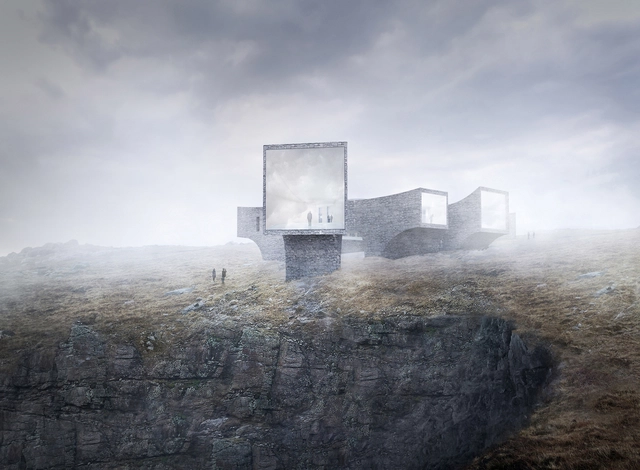
Reiulf Ramstad Arkitekter and Dualchas Architects have unveiled their plans for the St Kilda Visitor Center, which will be located on a cliff-top site at Geodha Sgoilt in the Uig area of the island of Lewis in the Outer Hebrides. Through the project, visitors will be able to experience the drama of St Kilda without physically visiting the famous archipelago, which lies over 50 miles to the southwest.
A triple world heritage site, St Kilda is famous not only for its sea cliffs and marine life but more for the story of how a community survived at the remote location before being evacuated in 1930.
By telling the story of this abandoned community, the current community of Uig hopes to catalyze economic development and reverse the population decline they have been suffering.
Aedas has unveiled the plans for its Chongqing Xinhua Bookstore Group Jiefangbei Book City mixed-use project, a complex of retail, residential, office, and hotel space with a Xinhua Bookstore at its core. Based on an ancient Chinese prose that states “knowledge brings wealth,” the project aims to integrate the concept of a book with the cultural elements of Chongqing to create an interactive commercial space.
Visiting Wortham Fellow at the Rice School of ArchitectureMichelle Chang has created A,B 1:2, a twisted “half house” installation in the university’s jury room. Built at a half scale, the project superimposes and bisects two simple cubes, playing with light and shade through skewed windows in order to demonstrate how architects and artists think about space, as well as how drawings and renderings translate into physical constructions.
The American Institute of Architects (AIA) has reported that the Architecture Billings Index (ABI) has remained positive in July for the sixth consecutive month, and tenth out of the last twelve months as demand across all project types has continued to increase. The July ABI score was 51.5, down from 52.6 in June, but nonetheless still reflects an increase in design services, as any score above 50 indicates an increase in billings. The new projects inquiry index was 57.5, down from a mark of 58.6 the previous month.
Beatriz Colomina, Professor of Architecture at Princeton, recently gave an interview to Architect Magazine on the current exhibition of her thesis—“Playboy Architecture 1953-1979”—at the Elmhurst Museum in Chicago. Her interest in the correlation between Playboy and architecture began nearly thirty years ago with her exploration on the role of gender and architecture in the work of Adolf Loos and Le Corbusier. From there, she began to observe numerous parallels between Playboy and the world of design.
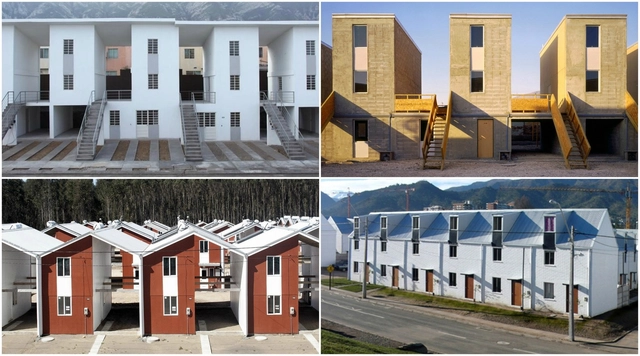
Earlier this year, we reported that 2016 Pritzker Prize winnerAlejandro Aravena announced that his practice, ELEMENTAL, released four of their social housing designs available to the public for open source use. A recent article published by Urbanisms in beta discusses what exactly “open source use” means to the architecture world, and how we may see these designs applied to projects in the future.
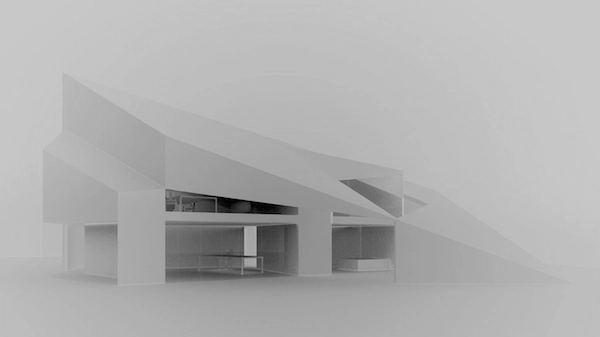
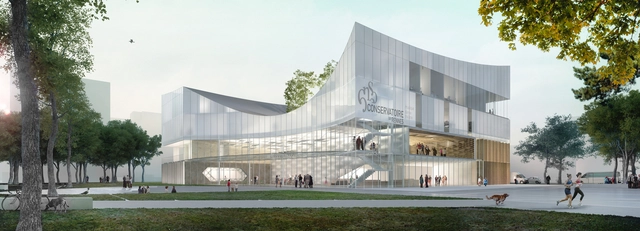
France-based Tetrarc Architects has revealed their design for the new Conservatory of Rennes in France. Intended to be the cornerstone of a new urban project, the fifty-meter long cubic volume is intersected by “cuts and curves that give it an elegant, sculptural presence.” This cultural facility will bring five programs under one roof, including spaces for musical activities, an auditorium, dance theaters, administration spaces, and an area for the Pont Supérieur Music Department.
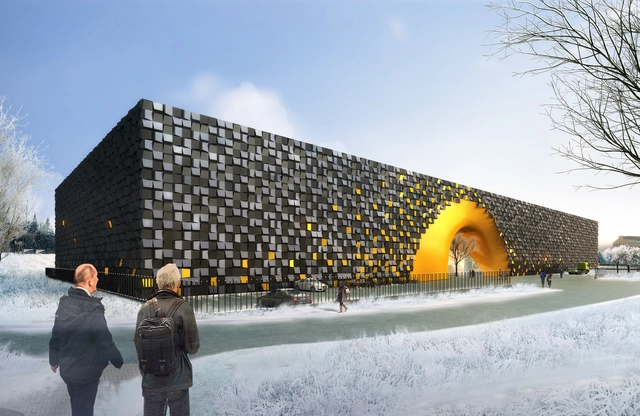
LIAG Architects has unveiled their design for a new art storage building. Commissioned by the Rijksmuseum in Amsterdam, the aim of the project was to create a large open space, while simultaneously meeting other needs such as protecting art that can't be exposed to daylight, controlling the temperature in certain zones, and using minimum amounts of energy to operate the building.
The American Institute of Architects has launched the second annual I Look Up Film Challenge, which invites architects to produce short documentaries about the impact of architecture. The 2016 Challenge kicked off with a short film on Auburn University’s design-build program known as Rural Studio. The documentary shows how the small town of Newbern, Alabama has been impacted through the program’s design and construction of a new library and fire station. Through a series of short interviews, the film shows the team's design process from early schematic design discussions through the end of construction.
New York-based architecture firm Leong Leong has created an installation for the third annual Sight Unseen OFFSITE exhibition as a part of the citywide NYCxDESIGN festival.
Titled TOPO, the installation was a scaleless environment composed of more than one thousand foam rollers. Collectively, they form a landscape “that is both an intimate sanctuary and an expansive horizon.” The installation was situated in a room of mirrors, giving the effect that it extends indefinitely.
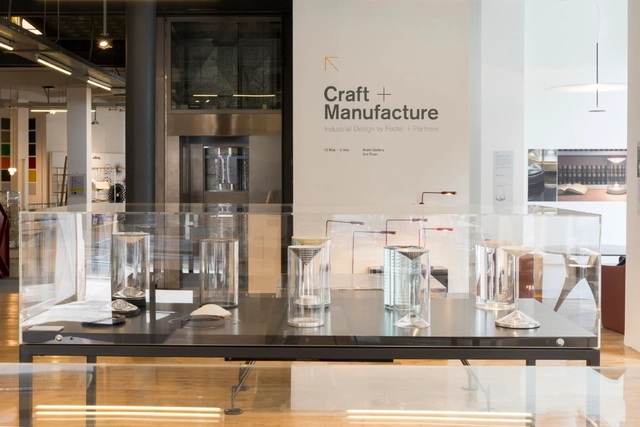
Foster + Partners' Craft + Manufacture: Industrial Design exhibition is currently on display at The Aram Gallery in London. It is the firm’s first exhibition dedicated to the industrial design work they have created over the past fifty years. It shows how “the science, art, and craft of making things” has been the foundation of the firm, and how the “collaborative nature of the design team pioneered by Norman Foster” has been translated into their architectural practice.
The Centre de Cultura Contemporània de Barcelona (CCCB) has announced the finalists for the 2016 European Prize for Urban Public Space. An international jury of architects, critics, and directors of museums and institutions from across the continent selected 25 projects from 276 entries representing 33 countries. According to the organization, "[the shortlisted projects recognize] the creation, recovery, and improvement of public spaces, as clear indicators of the democratic health of our cities.” All finalists will have their work featured in an exhibition that will tour Europe over the next two years, and also will be published in an online archive that features past finalists. The 2016 winner of the award will be announced at the CCCB on July 4.
The Pavilion of Turkey at the 2016 Venice Biennale will feature an exhibition titled Darzanà: Two Arsenals, One Vessel, which links the cultural heritage between the language and architecture of dockyards in Istanbul and Venice. Curated by a team of Turkish architects, the display will present “a last vessel," that has been built using waste materials found at the Haliç dockyards in Istanbul, and transported to the Biennale.
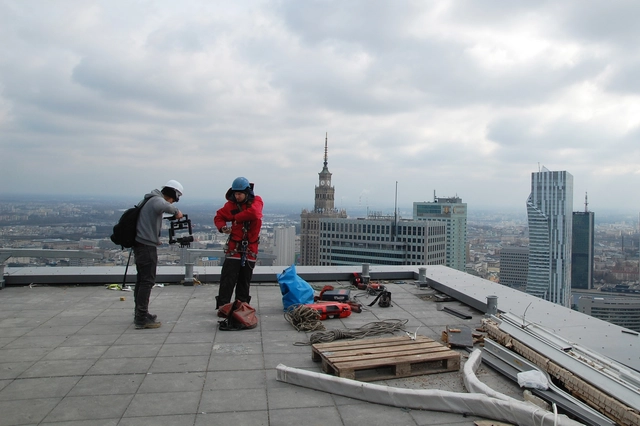
Construction workers are one of the most critical yet underrepresented groups of people in the architecture industry. Often times, the safety of labor conditions are pushed aside in favor of budget constraints and strict deadlines. The Fair Building, an exhibition hosted by the Polish Pavilion at the 2016 Venice Biennale, will address these issues and ask: “why don’t buildings come with ‘fair trade’ marks?”
Responding to the theme of “Reporting from the Front”, the curatorial team, Martyna Janicka, Dominika Janicka, and Michal Gdak, based their pavilion design around the idea that “construction sites represent the frontline in architecture.”
Anna Puigjaner has been selected from nearly 200 applications as the winner of the Harvard University Graduate School of Design 2016 Wheelwright Prize. The $100,000 travel grant was awarded for her proposal, Kitchenless City: Architectural Systems for Social Welfare, for which she will study “exemplars of collective housing in Russia, Brazil, Sweden, China, Korea, and India, which reflect a variety of approaches to organizing and distributing domestic spaces.” Puigjaner notes that this typology is "deeply understood as a tool for social transformations," and through her investigation, she hopes to apply new thinking to the housing dilemmas of today. The prize will fund her travel and research over the next two years.