We'd like to discuss this common critique. The point of the role of visualizations in our communication is relevant but, even though we fully understand where the criticism comes from, arguments such as these are in our opinion not correct.
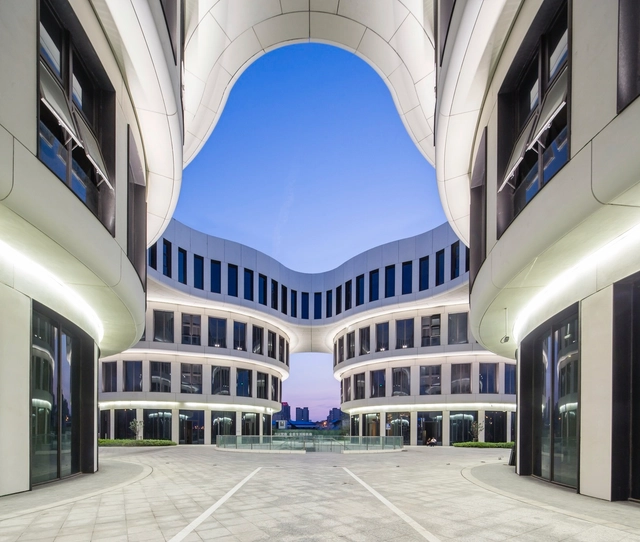
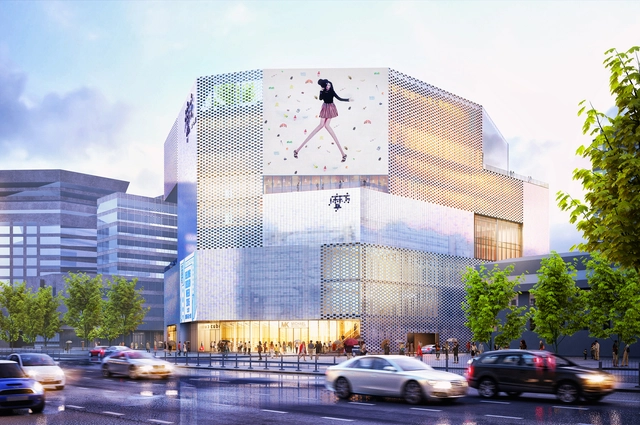
Exterior construction has almost wrapped up on MVRDV’s Chongwenmen M-Cube shopping center in Beijing, featuring a shimmering façade that changes color from grey to pearlescent. The approximately 40,000 square meter center sits in the central Chongwenmen district, just moments from the Forbidden City, and will serve as a centralized hub for retail, cuisine and leisure. The project is set to be completed in summer of this year.
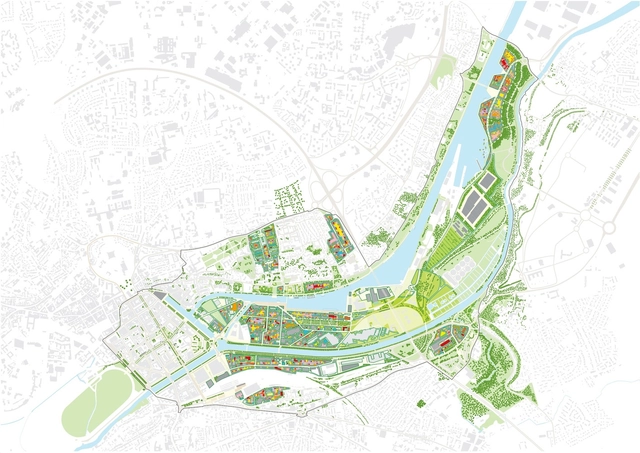
After two years of further development, MVRDV has released new images of their masterplan for Caen in Normandy, "La Grande Mosaïque." The masterplan, which was first revealed in May 2013, re-envisions a 600 hectare area of the center of Caen and the Caen Peninsula, connecting the city to the neighboring towns of Hérouville Saint-Clair and Mondeville.
The design attempts to counter the effects of the area's de-industrialization, integrating historic and environmental elements of the area into the new masterplan. The release of these new images also marks the opening of an exhibition of the design, which will be on public display in "Le Pavillon" in the old city port until the 13th March 2016 in an attempt to engage local residents.
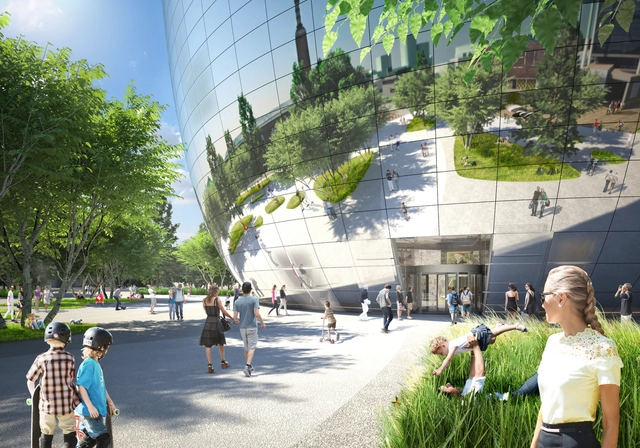
MVRDV, working alongside The Urbanist Collective and LLJ Architects, has been selected in a competition to transform downtown Tainan in Taiwan with their design for new green corridor and urban lagoon connecting the city to its waterfront. Transforming the area of Tainan known as the T-axis, the design will see the city's Haian Road turned into a public park and connected to the city's canal by demolishing the existing China-Town Mall, a commercial structure built alongside the canal in 1983 and described by MVRDV as a "rotten tooth of downtown Tainan."
Rotterdam will soon have a new cabinet of curiosities to add to its collection of architectural icons. For many years the city's Museum Boijmans van Beuningen, originally established in 1849, has required a safer space to house its world-class collection of painting, sculpture and prints – a collection which is said to have a total value of €7billion ($7.5billion). Last week the Municipality of Rotterdam voted in favour of the building’s construction and, with zoning approved, "the world’s first fully accessible art storage facility" is now slated to open its doors in 2018.
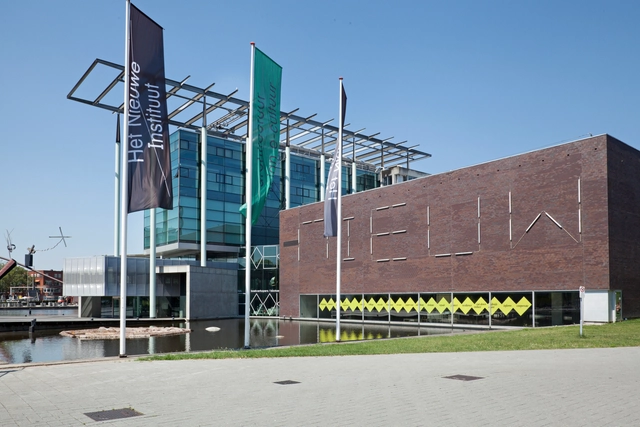
The New Institute (formerly the NAi). Image Courtesy of Het Nieuwe Instituut
Rotterdam-based practice MVRDV have begun a transfer of their early work, spanning fifteen years from 1993 to 2008, to Het Nieuwe Instituut — the central architecture archive of The Netherlands. This collection, which will eventually be made available to the public, will be in the institute's first primarily digital donation (approximately eight terabytes of data) and consisting of material from 400 of the practice's 680 total projects, including the Villa VPRO, the Silodam in Amsterdam, and the Markthal Rotterdam, as well as unrealised projects such as Meta City Datatown, Pig City, and 3D City Cube.
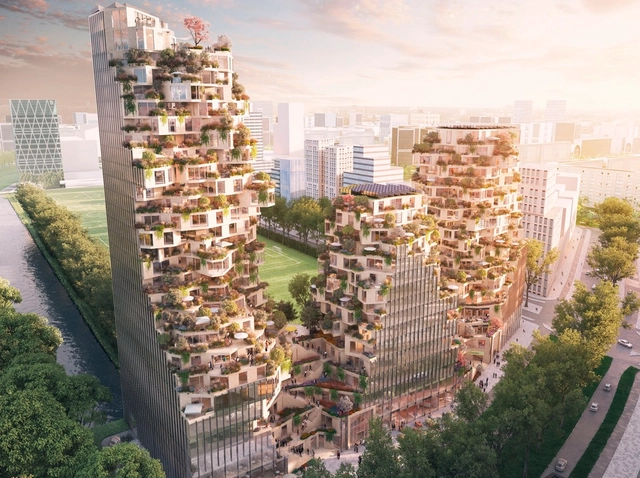
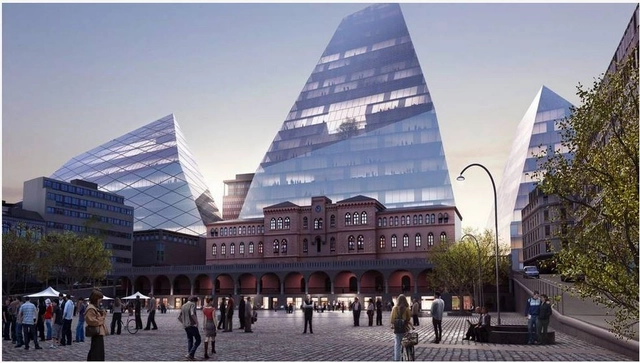
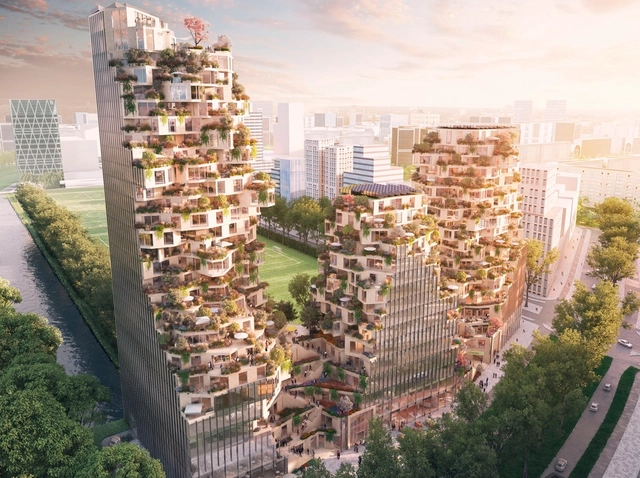
The City of Amsterdam has selected MVRDV and OVG Real Estate to realize a new mixed use development in its Zuidas Business District - "P15 Ravel Plaza." Chosen through an international competition, the design calls for three asymmetrical towers grounded by office and retail, topped with housing and intertwined by an expansive public green space that wraps itself in and around the building.
"This plan effectively increases the attractiveness of Zuidas," said Klaas de Boer, director of Zuidas, Amsterdam City Council.
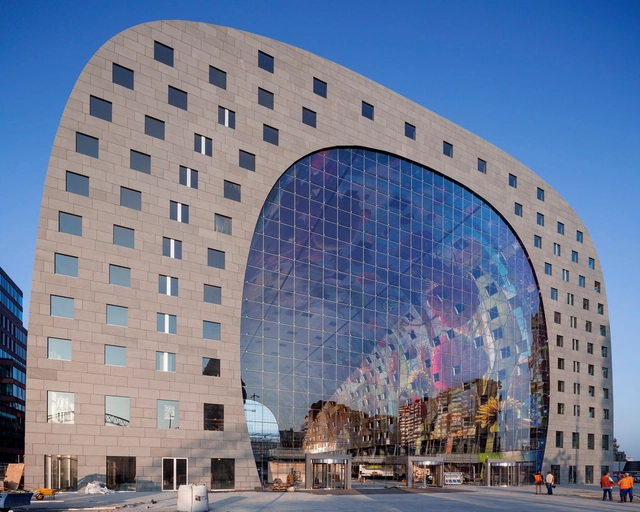
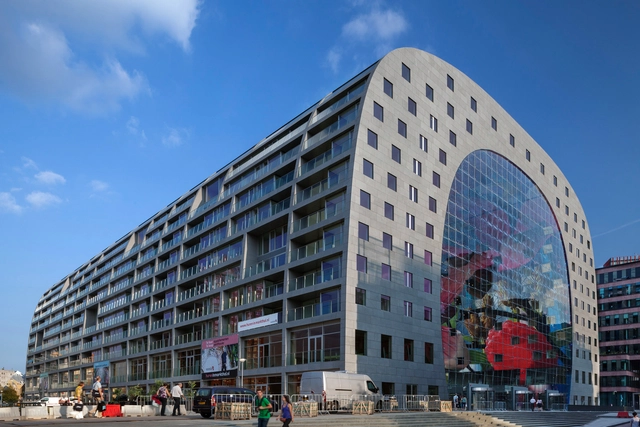
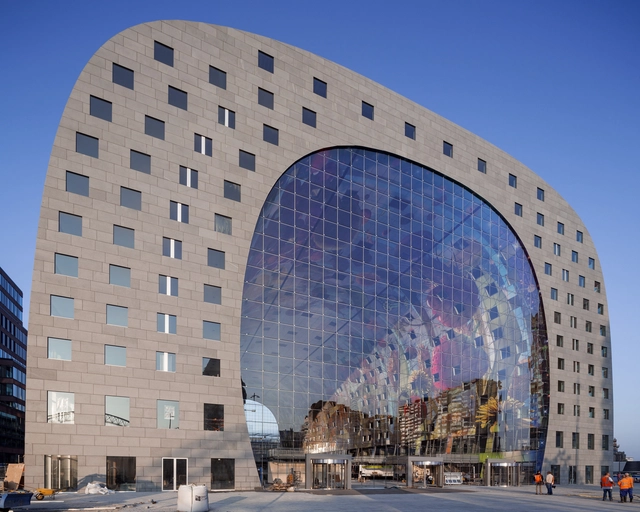
Becoming "the Sistine Chapel of Food" required a lot of invisible hard work. As Rotterdam's Markthal turns one year old, MVRDV's Head of Public Relations and Business Development Jan Knikker reflects on how the PR and media hype around Markthal Rotterdam was organized. This article is also supplemented by an interview conducted by ArchDaily with Winy Maas and Jan Knikker, which connects the parallel lines of the building's design and its PR campaign.
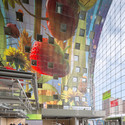
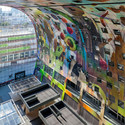
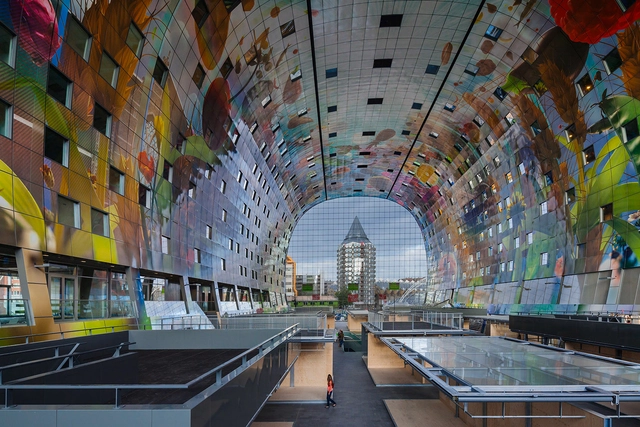
If I say that this is a PR story will you believe a single word? Markthal Rotterdam is a PR story with astonishing results: since its opening by queen Maxima in October 2014, our office MVRDV has nearly doubled in size to 110 staff members and it’s still growing. We - and The Financial Times - call it the “Markthal Effect”. In the first year the building reached over 8 million visitors, more than the Eiffel Tower, Bilbao Guggenheim or Tate Modern. 800 articles were published worldwide. It was hailed as a Sistine Chapel for food, a symbol of urban renaissance, a cool place to go. With the roughly 4 million visitors that came from outside of Rotterdam, the city saw its tourism grow.
How did that happen? It would be an easy assumption to think that a great building naturally attracts this kind of attention. But it all started quietly. In 2004 developer Provast and MVRDV won the competition with a plan that resembles the current design, except with one big difference: the colorful art piece which brightens up the inside of Markthal was at that stage also all over the outside facade. In any other city that would have lead to an instant protest movement against the zeppelin hangar covered in a gigantic fruit wallpaper. But not in Rotterdam. Public awareness started only once the construction became noisy.
Today marks one year since Queen Máxima of the Netherlands opened MVRDV's Markthal in Rotterdam to great public fanfare. In the 12 months since this event, the building has come to be recognized by the architectural establishment as being among the most important of MVRDV's designs. Perhaps more interestingly though, it has become widely popular among the general public - on Google you can find references to "Rotterdam's Sistine Chapel" in a variety of languages, and articles about the building have appeared in publications everywhere from Colombia to Vietnam.
MVRDV Head of Public Relations and Business Development Jan Knikker's article, published today on ArchDaily, shows that this widespread recognition was not accidental; it was the result of a widespread and comprehensive PR strategy initiated by MVRDV and carried out by a team that included every one of the building's major stakeholders. It's a fascinating and provocative tale that offers an insight into one of the least trusted facets of architectural practice. However, it also largely ignored one important element that undoubtedly contributed to the building's popularity: its design.
In order to connect the two parallel lines of Markthal's design and its PR campaign, we spoke to Knikker and founder of MVRDV Winy Maas to talk about Markthal, PR, awards and architectural media. Read on for the full interview.
In 2000 Bart Lootsma released Superdutch, a bestselling opus on the mythology of Dutch architecture and its thought leaders, which provided a glimpse into the enduring humanist approach to design that has earned global praise for the country's architects. In the book, Lootsma profiled a handful of Dutch firms including UNStudio, West 8 and MVRDV. Fifteen years later, students from Canada's Simon Fraser University formed a collective called Groep Drie to continue the conversation. From Herman Hertzberger to Ben van Berkel, Groep Drie sat down with The Netherlands' most innovative designers to talk urbanism, spiritualism, color, and more.
Read on to find out what The Netherlands' leading architects had to say.
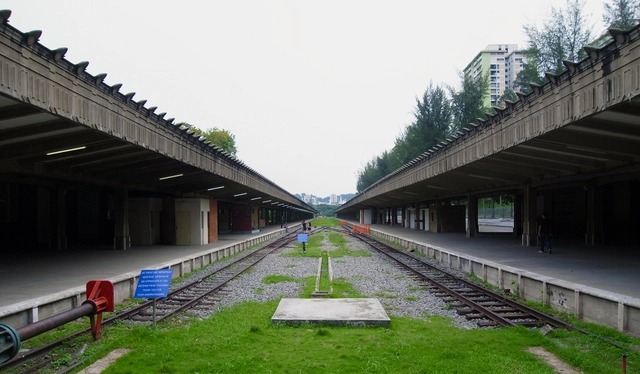
MVRDV, OMA and DP Architects are among five shortlisted teams competing to design the Singapore Rail Corridor. Spanning the island south to north, from the Tanjong Pagar Railway Station to the Woodlands Checkpoint, the corridor is the site of Singapore’s previous rail link to Malaysia. With this competition, the Singapore government hopes to develop a feasible plan to transform the 24 kilometer stretch into a public greenway that connects four important urban nodes: Buona Vista, the Bukit Timah Railway Station area, the former Bukit Timah Fire Station, and Kranji.
“The expanse of the corridor running through the centre of the entire country presents an unprecedented opportunity to develop a new typology of landscape with transformative effects for the country as a whole. This is a project that has the potential to improve quality of life for generations to come," says OMA Partner Michael Kokora.
64 teams responded to the government's call for ideas, and now only five have been selected to move onto the competition's second stage. These five teams are...
Winy Maas is one of architecture’s most aggressive researchers. Through his office MVRDV and affiliations with universities in Europe and America, Maas produces a seemingly unstoppable stream of insights into the environments in which architects now operate. As an advisor to the educational program of the Strelka Institute in Moscow, the architect is currently contributing to the production of eleven radical visions of the future, based on extrapolating trends that shape contemporary life, in Russia and around the world. Maas recently sat with writer, curator, and Strelka faculty member Brendan McGetrick to discuss his unusual educational trajectory, learning from the conservationist Richard Leakey, facing death in Sudan, and the beauty of architects experimenting with algae.
The medium of film has long been employed to visualise, document and narrate architectural and urban space. Since the advent of more accessible devices to capture and record these journeys and explorations it has been used more frequently by practices and students in an attempt to develop new ways of experiencing built designs. #donotsettle, a YouTube channel established by two architects and urban enthusiasts while studying at TUDelft in The Netherlands, seeks to reconcile the disparity between film as architectural representation and as an experiential medium. Although not high in production value, their films are exciting examples of how user-oriented architectural 'vlogging' can uncover an entirely new way of understanding the world around us, imbued with a refreshing level of enthusiasm and authenticity.
Nearly 100 architects, designers, and consultants have been developing designs for a competition for the new government quarter in Oslo. Drawing an initial 24 entries, the intent of the competition was to generate viable solutions for the future relocation of all government ministries (excluding the defense ministry), emphasizing an urban atmosphere and public elements. In the six shortlisted proposals from both local and international firms, including BIG, Snøhetta, and MVRDV, the themes of building tall and introducing green space emerged.
Now a ten-member committee of industry professionals will assist Statsbygg, the public construction advisers collaborating on the government's behalf, with the evaluation of each design. Take a look at the six proposals after the break.
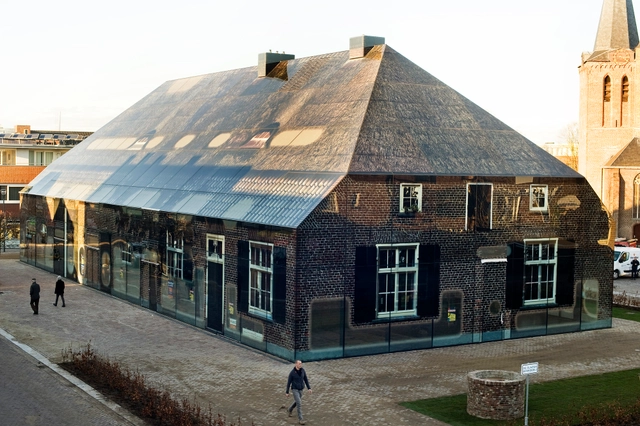
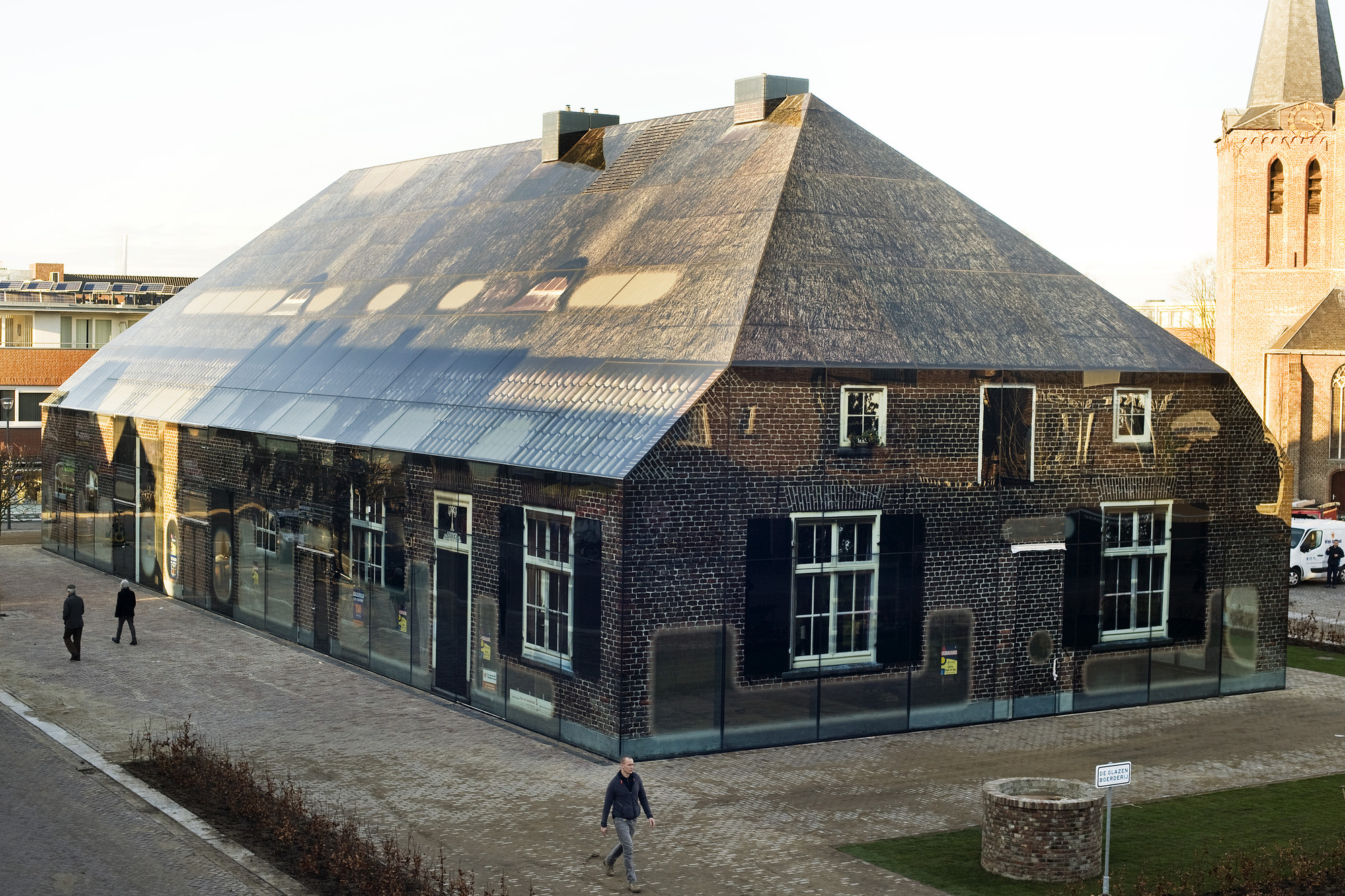
If you search the web for information on MVRDV's Glass Farm, you'll find plenty of people writing about the project's 33-year history, and about its context in the small town of Schijndel. You'll even find plenty of people theorizing on the nature of those glass walls, and the relationships between image and authenticity and between modern technology and modest tradition. But strangely, you'll find almost no information on how the project made use of Digital Ceramic Printing, a relatively new process which was able to handle the many colors, variable transparency and fine tolerances required to display an entire farmhouse facade across a thousand glass panels.
In this new installment of our Material Minds series, presented by ArchDaily Materials, we spoke to MVRDV's project leader on the Glass Farm Gijs Rikken, and to Niv Raz, an Architect at Dip-Tech - the company who produces the printers, ink, software and support required for the process.
In the late 20th and early 21st centuries, one of the major changes within cities around the world has been the rise of so-called "privately-owned public space," a development which has attracted the attention of many urbanists and is still being widely debated. However, for MONU Magazine, the increasing prevalence (and arguably, acceptance) of such privately owned spaces for public use gives us an opportunity to discuss another aspect of public space: interior urbanism. With the rise of the shopping mall and the increasingly diverse functions required by buildings such as libraries, interior spaces now resemble exterior public spaces more and more.
The following interview is an excerpt from the 21st issue of MONU Magazine, in which MONU's Bernd Upmeyer and Beatriz Ramo interview MVRDV founder Winy Maas, discussing the concept of interior urbanism in the work of MVRDV, in particular in their Rotterdam Markthal, Glass Farm and Book Mountain projects.
MARK #53 surveys American low-income housing from coast to coast. Michael Webb provides the historical and cultural context for some recent success stories in affordable development and presents three buildings in California designed by Kevin Daly Architects, OJK Architects and Planners, and Rob Wellington Quigley.
Larger low-income developments in New York and Los Angeles, by David Adjaye and Michael Maltzan respectively, speak to overcoming the challenge of aesthetic innovation on a tight budget. In the southern and western states, we find the Rural Studio at Auburn University and Design Build Bluff at the Universities of Utah and Colorado tackling the low-income housing issue outside the city, realizing rural homes for less than €20,000 each.
Then, it’s time for dinner and a show. Tour MVRDV’s mixed-use Markthal, a food paradise for casual grazers and sit-down diners alike, before talking with Jan Versweyveld, who designed the scenography for a stage adaptation of The Fountainhead.



_Rob_'t_Hart.jpg?1456927640 "The 5th-floor forest at MVRDV's EXPO 2000 Dutch pavilion, photographed during the expo in 2000. Image © Rob't Hart")



.jpg?1447417528)
.jpg?1447417508 "Courtesy of MVRDV. Image © APLUS CG")
.jpg?1447417489 "Courtesy of MVRDV. Image © APLUS CG")

.jpg?1447417570 "Courtesy of MVRDV. Image © APLUS CG")
.jpg?1447417528)