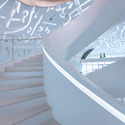
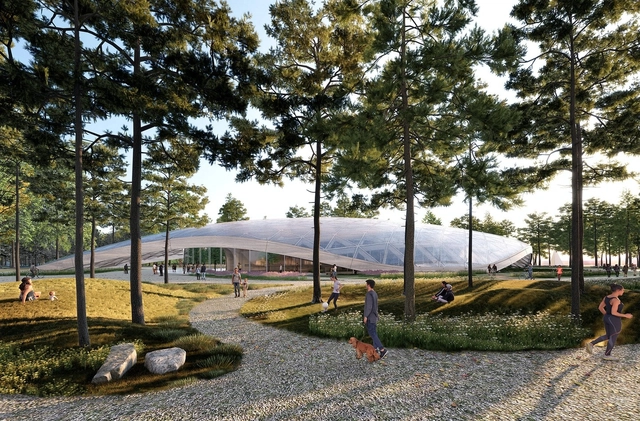
In Mexico, until recently, unknown to many, an architectural project has been slowly revealing itself to society. The Environmental Sciences Museum (MCA for its Spanish acronym) of the University of Guadalajara in the state of Jalisco is one of the most ambitious architectural projects in Western Mexico. Not only because of its unusual architecture but also because of how it seeks to communicate the mission of a natural history museum, one that can hardly be called traditional.
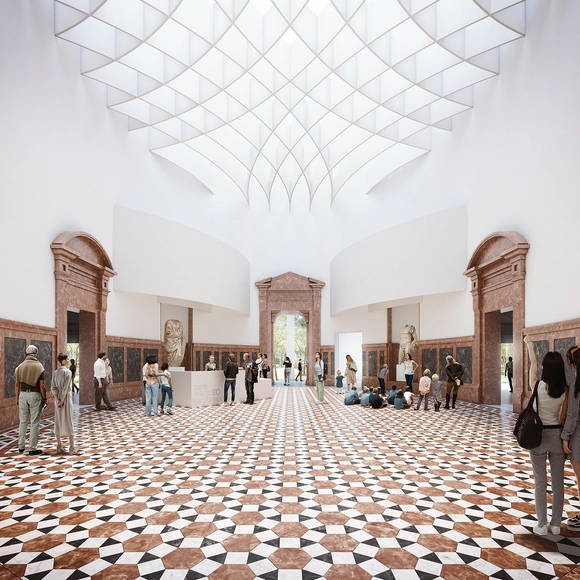
The jury's verdict for the competition for the new Museum of Fine Arts in the city of Vannes, Brittany, France, was recently revealed, and the winner of the first prize was the renowned Nieto Sobejano studio (based in Madrid and Berlin), with French architect Richard Faure as associate.
Steven Holl Architects, in collaboration with Marcela Steinbachová and SKUPINA Studio, have won first place in the international competition of the Terezín Ghetto Museum in Czech Republic. Founded in 1780 as a military fortress, Terezín served as a Jewish Ghetto during World War II where an estimated 33,000 people died. The existing Terezín Ghetto Museum honors individuals who have lost their lives with a new design that is set to serve as a memorial of hope and light.
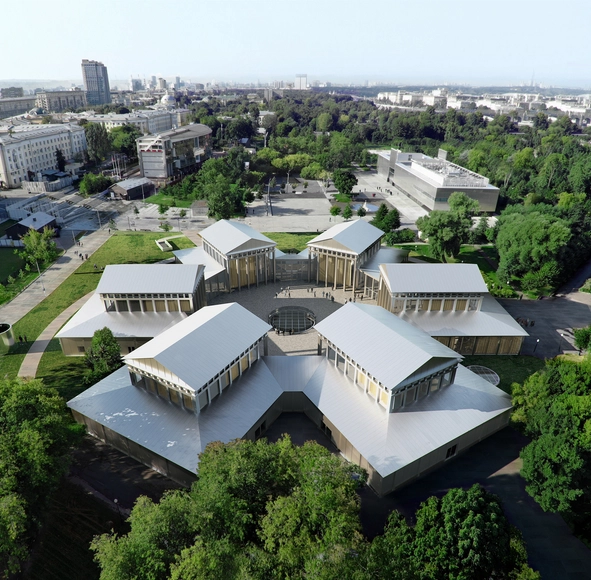
Louvre Museum Pavilions / France . Image Courtesy of Studio Malka Architecture
Housing objects of artistic, cultural, historical and scientific importance, the term ‘museum’ is derived from the Latin language. In regards to classical antiquity, in Ancient Greek ‘mouseion’, meaning ‘set of muses’ was a philosophical institution, a place for contemplation and thought. These muses refer to the 9 muses in Greek mythology, the goddesses of the arts and sciences, and patrons of knowledge. Early museums’ origins stem from private collections of wealthy families, individuals or institutions, displayed in ‘cabinets of curiosities’ and often temples and places of worship. Yet these ‘collections’ are predecessors of the modern museum, they did not seek to rationally categorize and exhibit their collections like the exhibitions we see today.
In definition, the modern museum is either a building or institution that cares for or displays a collection of numerous artifacts of cultural, historical, scientific or artistic importance. Through both permanent and temporary exhibits, most public museums make these artifacts available for viewing and often seek to conserve and document their collection, to serve both research and the general public. In essence, museums house collections of significance, whether these be on a small or large scale.
Rendering of Crow Museum of Asian Art at the O’Donnell Athenæum at UT Dallas, view of arrival and drop off from northwest. Image Courtesy of Morphosis Architects
The new arts campus, designed by global architecture and design firm Morphosis, has broken ground in Dallas, Texas. This marks the beginning of the first phase of construction for Edith and Peter O’Donnell Jr. Athenæum, a twelve-acre expansion of the University of Texas at Dallas (UT Dallas). The Athenæum complex will feature three main buildings: the Crow Museum of Asian Art (Phase I), a performance hall (Phase II), and a museum for the traditional arts of the Americas (Phase III). Phase I of the plan, the Crow Museum of Asian Art, is expected to be completed in 2024. The whole project is catalyzed by a $32 million donation from the O’Donnell Foundation.
This new cultural district, located at the southeastern edge of the UT Dallas campus, aims to become an arts destination for students, faculty, and the community. It also represents the latest milestone in a period of significant growth of the arts at UT Dallas, a school that had historically focused on science, engineering, technology, and business.
The Josef and Anni Albers Foundation/Le Korsa has announced that Niger-born architect Mariam Issoufou Kamara, founder of award-winning practice atelier masōmī, has been selected to design Bët-bi, a new museum and center for culture and community in southwestern Senegal. Located near a series of megaliths in the vicinity of the historic city of Kaolack, Bët-bi is set to be a state-of-the-art museum that sits at the forefront of West Africa’s flourishing arts scene and wider cultural renaissance.
This week’s curated selection of Best Unbuilt Architecture highlights educational and cultural projects submitted by the ArchDaily community. Through examples from all around the world, the article explores how these spaces of knowledge and discovery are designed to inspire and inform.
Featuring a monolithic museum in Portugal, a digital heritage centre with a media facade in Korea and a mobility research centre in Turkey, the round-up spans various kinds of educational and cultural spaces, as well as different attitudes towards the built or natural environment. The following projects reveal the ideas that shape spaces of knowledge in different contexts, illustrating diverse approaches toward what constitutes an institution of culture.
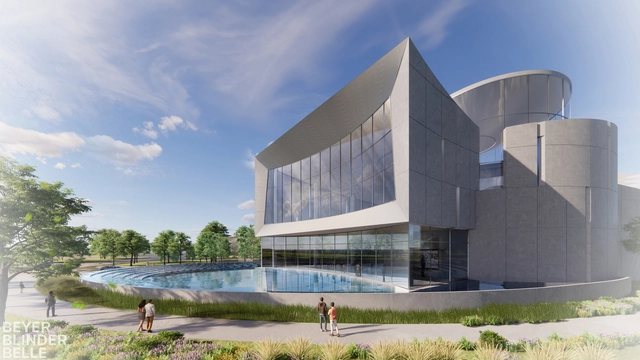
The Holocaust Memorial Resource and Education Center of Florida (HMREC) and architecture firm Beyer Blinder Belle have unveiled the design of Orlando's new Holocaust Museum for Hope & Humanity. The 43,000-square-foot lakefront structure will be the world’s first Holocaust museum designed around survivor and witness testimonies, serving as a distinctive destination for the region and a global point of attraction.
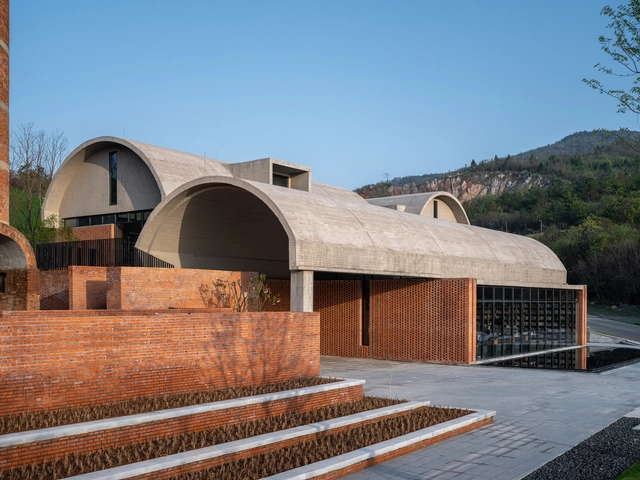
The oldest record of barrel vaults is estimated to date back to 4000 BC. These provided the spans in the Sumerian ziggurat at Nippur in Babylonia, built from fired bricks amalgamated with clay mortar. This type of vault was built as a continuous round arch and became a characteristic architectural element of Roman architecture, later used also in Renaissance architecture.
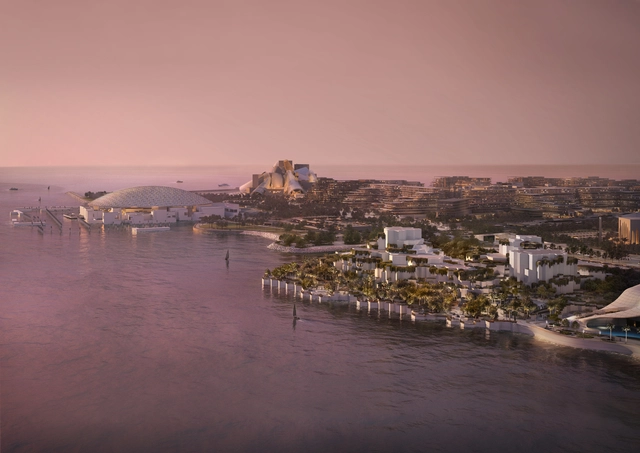
Abu Dhabi unveiled plans for a Natural History Museum designed by Dutch practice Mecanoo. The project resembles natural rock formations, and geometric shapes are present across all design elements, accompanied by the presence of water and vegetation. The 35,000 square-meter venue will feature gallery display areas, temporary exhibition spaces and theatre spaces, as well as an innovative research facility for the study of zoology, palaeontology, marine biology, molecular research and earth sciences. The new institution is intended as a space for education and, at the same time, as a think-tank for future innovation in these respective fields.
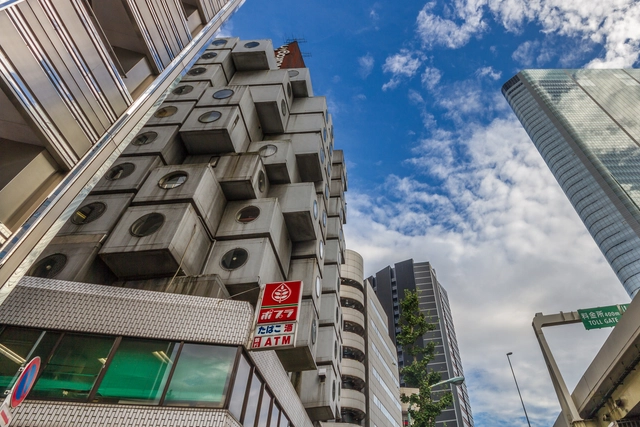
Following months of uncertainties and preservation attempts, Kisho Kurokawa's iconic Nakagin Capsule Tower will be demolished on April 12th of this year. Tatsuyuki Maeda, one of the current owners of the tower, explained that a team will try to preserve some of the capsules, and regenerate them as accommodation units and museum installations across the world.
New images have been released by Studio Gang showcasing the construction progress of the firm's American Museum of Natural History Expansion in New York. Dubbed as the Richard Gilder Center for Science, Education, and Innovation, the project will link together 10 museum buildings, improving circulation and creating one monumental campus of exhibition galleries, state-of-the-art classrooms, an immersive digital theater, and a redesigned library.
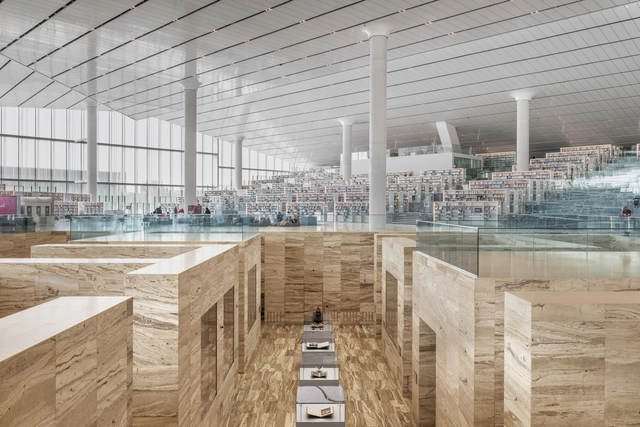
Following Qatar's ambitious museum-building project to further promote cultural institutes in the country, Her Excellency Sheikha Al Mayassa bint Hamad bin Khalifa Al Thani, Chairperson of Qatar Museums has announced that OMA, Herzog & de Meuron, and ELEMENTAL will be designing three new museums in Doha that explore the themes of Islamic art, contemporary art, and evolution of the automobile industry respectively.
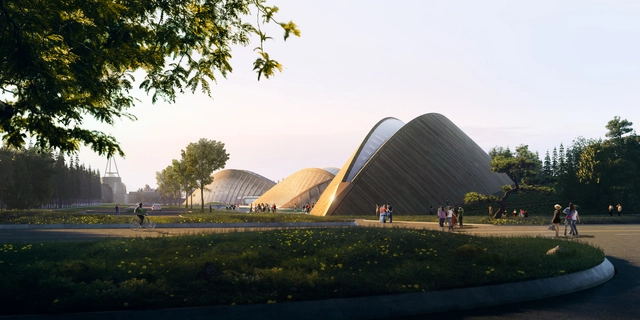
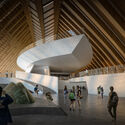
MAD Architects unveiled the design for the Sanxingdui Ancient Shu Cultural Heritage Museum, a project meant to immerse visitors in the still largely unknown Shu civilization. Comprising a series of curved wooden structures scattered within the existing environment of dense greenery and clear waters, "The Eyes of Sanxingdui" weaves together architecture and landscape into a cultural public space.
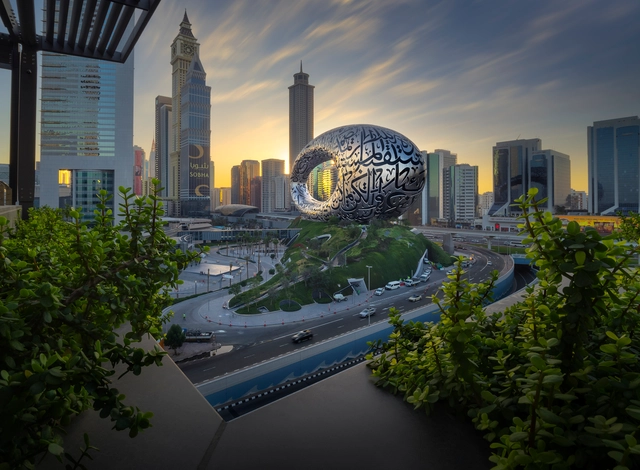
New images of Dubai's Museum of the Future by Killa Design and Buro Happold have been unveiled ahead of its official opening on February 22nd, 2022. The museum promises a one-of-a-kind experience that merges science, technology, and the environment through distinct themes and immersive environments that tap into all five senses. The project aims to "transform the very perception of the future as we know it", showcasing a world that is imaginable 50 years from now.
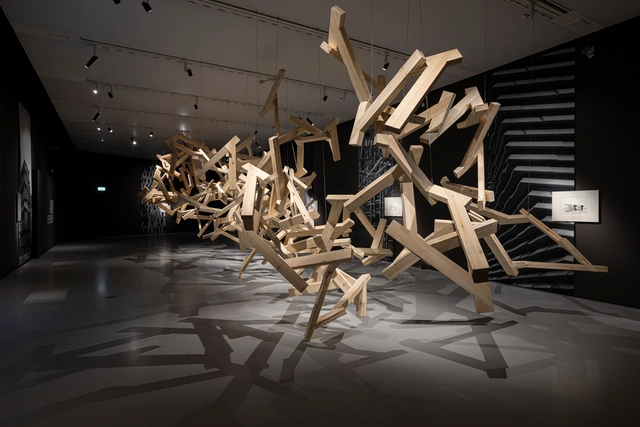
The Manggha Museum of Japanese Art and Technology in Cracow, Poland, is holding an exhibition titled “Kengo Kuma, Experimenting with Materials”, which features a selection of Kengo Kuma & Associates projects, mock-ups, and installations shipped from the firm's office in Tokyo, along with a large "cloud-like" wooden pavilion designed by the architecture office and the Faculty of Architecture and Fine Arts of the Andrzej Frycz Modrzewski Krakow University. The exhibition is open to visitors until May 2022.
Across the globe, museums function as cultural landmarks – spaces of significance that quite often become defining symbols of a city’s architectural landscape. Historical examples such as the Museum de Fundatie in the Netherlands and The Louvre Museum in France continue to attract millions of visitors, with contemporary architectural interventions to them redefining their spatial contribution to their local context.
Last year, a series of new museums, expansions and several museum renovations have opened their doors to the public, adding a new dimension to the cultural landscape around the world. From the long-awaited re-opening of the Neue Nationalgalerie in Berlin, to Ryue Nishizawa's Jining Art Museum merging with the landscape, and MVRDV's reflective Art Depot, discover the architecture of the latest venues of art and culture.