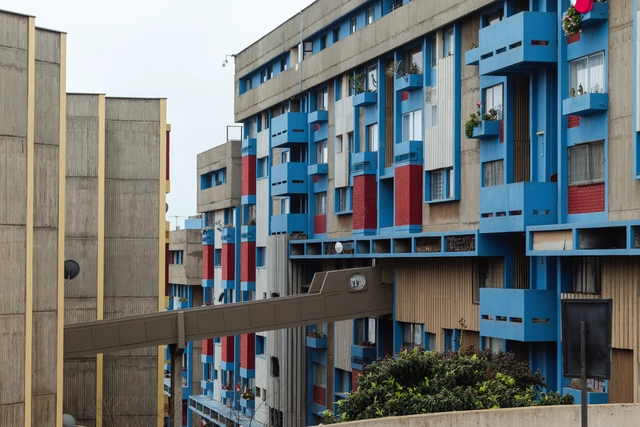
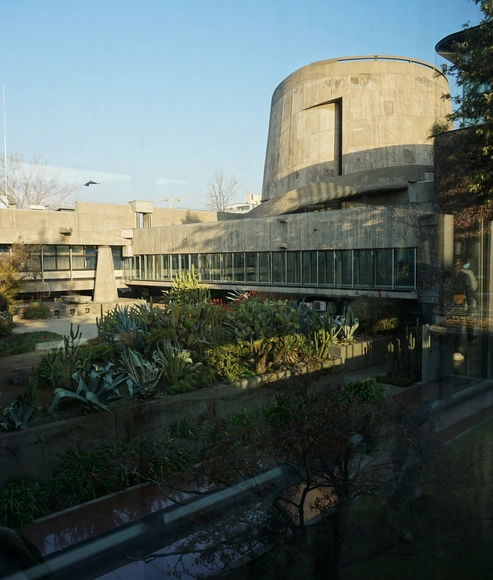
Located in the city of Viña del Mar, Chile, the Conjunto Habitacional 7 Hermanas (7 Sisters Housing Complex) stands out among the urban landscape of Viña del Mar for its architectural qualities, colors, materials, and magnitude. When you look up, you can see between the leafy ravine that overlooks the Quinta Vergara urban park, the group of buildings located in the Forestal sector, which take over the slope and the plateau of the hill, crowning itself as one of the most important works of modern architecture in the region of Valparaíso.
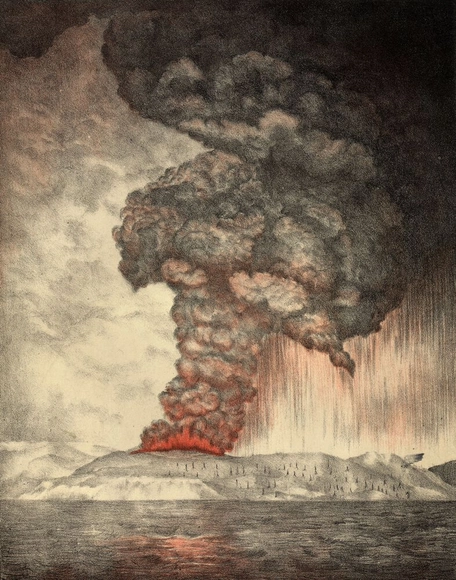
On August 27th, 1883, the volcano of Krakatoa in the Indonesian islands erupted. Ashes and rocks flew miles high. Barometers wobbled three and a half times as they recorded the atmospheric pressure wave circumnavigating the globe. The noise was heard across the Indian Ocean and Australia. And for years, small ash particles floated in the atmosphere, diffusing the sun’s light and scattering colors around the world.
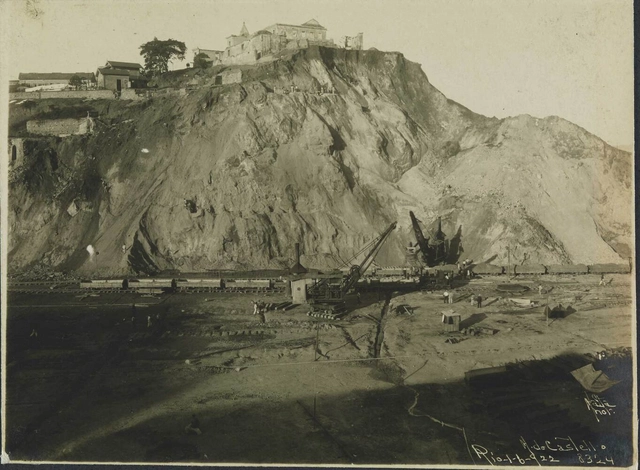
Augusto Malta, Demolition Morro do Castelo, Rio de Janeiro, RJ, June 1, 1922. . Image Courtesy of Biblioteca Nacional Digital Brasil, Fundação Biblioteca Nacional.
At the inauguration of the First Brazilian Congress of Eugenics in July of 1929, the physician and anthropologist Edgar Roquette-Pinto addressed an audience preoccupied with the question of how a country as vast as Brazil could best increase and improve its population. To accomplish this, Roquette-Pinto exalted “eugenia” as the new science that, together with medicine and hygiene, would guarantee the efficiency and perfection of the race. With the following words, the Brazilian scientist underscored a positivist agenda that brought architecture to the very core of the eugenics—the so-called science of race “improvement”—movement: “It is critical to emphasize that the influence [on our race] does not stem from the natural environment but rather from the artificial environment, created by man.” With these opening remarks to the Congress, Roquette-Pinto called attention to the crucial role that the man-made environment plays in the “amelioration” of what he called “the biological patrimony” of Brazil’s diverse population. In his invitation to social engineering, Roquette Pinto pointed to the environmental-genetic collusion that they hoped would bring with it the very possibility of progress.
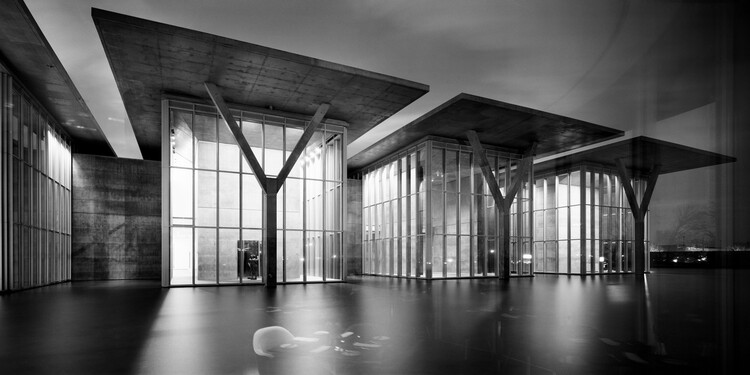
Modernist architecture came about in the early 20th century as a response to large-scale changes in technology, construction, and society; particularly through the use of glass, steel, and reinforced concrete. The style was typically associated with the function of buildings from an analytical viewpoint, rational use of materials, the elimination of ornamentation, and openness to structural innovation.
Paul Tunge is a Norwegian writer, director, and cinematographer of Arthouse Films who has been involved in film production since the early 2000s. Having written, directed, shot, and produced four independent films, alongside 3 documentaries, each of his projects has been featured during major film festivals across all continents, in galleries, and various national cinemas and cinematheques.
The Benedictine monastery chapel of Santa María de las Condes, visible from different points in the eastern part of Santiago, Chile, is a white volume, located halfway up the slopes of Los Piques hill.
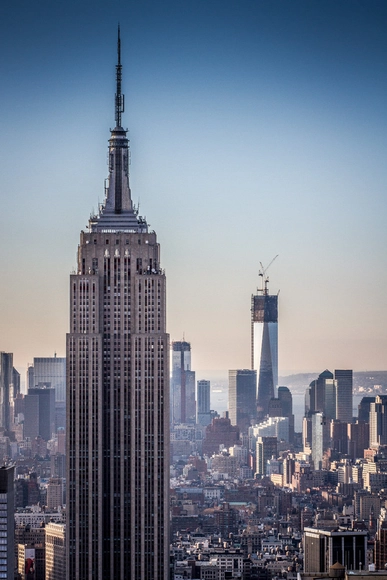
“A hundred times have I thought New York is a catastrophe, and fifty times: It is a beautiful catastrophe.” Le Corbusier. This architecture city guide celebrates Modernism in one of the world's greatest cities: New York. We embark on an architectural journey through nearly a century of innovative, revolutionary architecture: from early 20th century, revivalist Beaux-Arts; to machine-age Art Deco of the Inter-War period; to the elegant functionalism of the International Style; to the raw, exposed Brutalism characteristic of the Post-War years; and, finally, to the splendid forms of organic architecture. From world-renowned landmarks to undiscovered jewels, we invite you to explore the 2,028 blocks that make Manhattan an architectural mecca for citizens around the world.
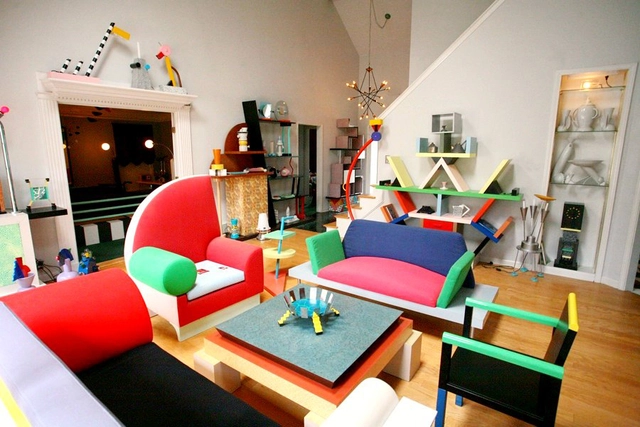
Memphis-Milano design collection 2010. By Dennis Zanone licensed under the Creative Commons Attribution-Share Alike 3.0 Unported license
Far from the US state of Tennessee, the Memphis movement emerged in Milan in the 1980s and revolutionized design. Its gaudy colors, exaggerated patterns and conflicting prints were intended to overturn the minimalism status quo of the time, also contradicting the functionalist design postulated by the Bauhaus with its purely aesthetic and ornamental forms.
During the first decades of the twentieth century, when a traditional architectural outlook of classical languages and order still ruled, the architect Luis Miró Quesada Garland (1914-1994) was a fundamental precursor to the change of mentality that would lead Peru towards a contemporary and modern architecture.
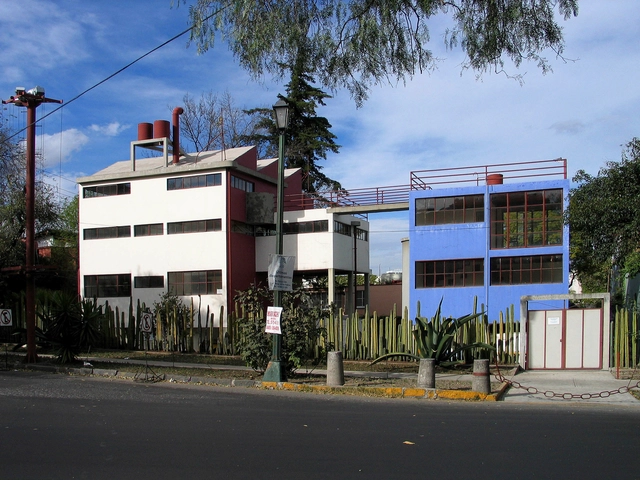
Diego Rivera and Frida Kahlo house. Via: Wikimedia, CC BY-SA 3.0 license
Geometric shapes, exposed reinforced concrete walls, visible electrical installations, large windows that prioritize natural light and ventilation, gardens that value native plants. The first works by the Mexican architect Juan O’Gorman, built between 1929 and 1932, bring an aesthetic that can be seen today, but in reality they are the pure expression of one of the currents of the 20th century modernist movement, functionalism.
Few other materials can convey architectural atmosphere as well as the glass. A to-go choice for the modernists, due to its transparent nature, glass still holds a solid place within the material palette for architects around the globe. Such unique element is the subject of Archiving Flux / Stasis, a photographic exhibition by Erieta Attali hosted by the Greek Ministry of Culture in Casa Romana, Kos Island, Greece, set to open its doors in July 21st.
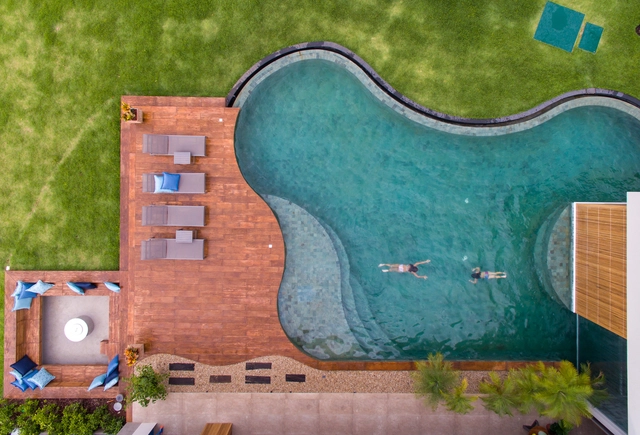
Few architectural typologies have the power to invoke a sense of being dual-natured quite as the modernist swimming pool can. The design of pools themselves implies that there are moments of activity both above and below the water. Above, and in the more obvious and visible sense, pools act as a space for leisure and athletic training. But underneath the surface, swimming pools have a long-standing history of acting as symbols of surveillance, death, and social conditions associated with an economic class.
Historic art movements and their visual characteristics have considerably paved the way for modern day architecture. For years, architects have been borrowing techniques and stylistic approaches to create their own architectural compositions, merging both disciplines together. Cubism, one of the most influential styles of the twentieth century, and heavily criticized for its experimentation with its non-representational art approach, is perhaps the most significant architecture inspiration. Just as the radical art movement rejected the then-rooted concept that art should mimic nature, architects found themselves following suit and designing structures that borrow Cubism’s avant-gardist features, creating buildings that, to this day, stand as iconic landmarks of the practice.
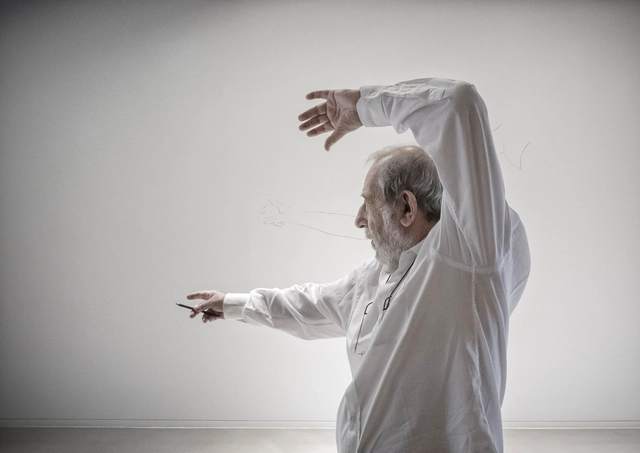
Álvaro Joaquim de Melo Siza Vieira, or simply Álvaro Siza, was born in Matosinhos, Portugal, on June 25, 1933. His first work – four houses in Matosinhos – was built in 1954, even before completing his studies at the School of Fine Arts from the University of Porto (current Faculty of Architecture of the University of Porto – FAUP), which happened a year later.
Participatory design is a democratic process that aims to offer equal input for all stakeholders, with a particular focus on the users, not usually involved directly in the traditional method of spatial creation. The idea is based on the argument that engaging the user in the process of designing spaces can have a positive impact on the reception of those spaces. It eases the process of appropriation, helps create representative and valuable spaces, and thus creates resiliency within the urban and rural environment.
Located amidst the vegetation, almost invisible to those who see it from the street, a jewel of modern Brazilian architecture is hidden in the São Paulo neighborhood of Jardim América. Casa Zalszupin, designed in 1960 by the Polish architect based in Brazil, Jorge Zalszupin, combines traces of local modernism with influences that the architect brought with him from Europe, notably Scandinavian architecture. In a recent photo series, Paul Clemence sought to capture through this house, "the architect's and designer's essence".
"The details are not the details. They make the design." – Charles Eames. Creating attractive spaces that anticipate the needs of users relies on several factors: scale, circulation, functionality, and comfort. However, the past few decades have proved that the visual appeal of a project is also greatly important, and can make or break the interior space. In this interior focus, we will explore the aesthetic side of interior design, looking at popular styles across the world and how architects and designers use elements such as color, furniture, accessories, and finishes to define their spatial identity.
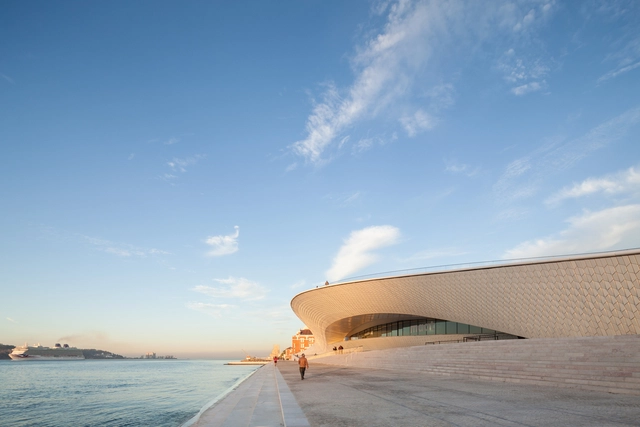
Selected the European Capital of Culture in 1994 and Ibero-American Capital of Culture 2017, Lisbon has been the destiny of tourists from many parts of the world over the past years. With thriving cultural programming, the city hosts important events related to art, music, movies and architecture. The Lisbon Architecture Trienniale and the Open House – event that coordinates free guided tours to remarkable buildings in cities around the world – are some of these relevant events in the architectural field, responsible to disseminate, discuss and reflect on issues of the area.
Besides programs related to architecture, in recent years, Lisbon has seen the emergence of new facilities, like museums, cultural centers and theaters, besides the requalification of public spaces. The construction or regeneration of these structures, directly or indirectly related to the cultural city movement, can be controversial, raising issues such as gentrification and the increase of mass tourism.








.jpg?1379203393 "The University Village / James Ingo Freed & I.M. Pei (1967). Image Courtesy of Wikimedia Commons")

_2880.jpg?1657132541 "Esquire Office / Studio Bipolar. © Suryan//Dang")










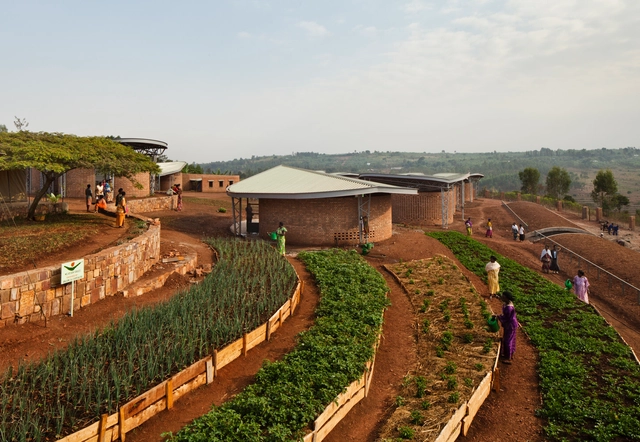
.jpg?1654436110 "Sanjaynagar Slum Redevelopment Project - Technical team holding a meeting with members of the Slum Committee. Image Courtesy of Community Design Agency")