1. ArchDaily
  2. Modern Architecture

Modern Architecture: The Latest Architecture and News

“City of Light”: The Story of Willem Dudok’s De Bijenkorf Rotterdam

Subscriber Access | 

Produced by Dutch journalist Peter Veenendaal, City of Light is a documentary that covers the design, construction, and social effects of Willem Marinus Dudok’s De Bijenkorf in Rotterdam, the Netherlands. De Bijenkorf opened in Rotterdam in 1930, and after barely surviving the Second World War, it was destroyed in 1960 to make way for a Metro Station and a new store designed by Marcel Breuer and largely forgotten. City of Light presents Dudok’s shopping center as an important model for retail architecture that came about during the formative years of the shopping mall, and includes interviews with historians, former employees, and local enthusiasts to bring the building back to life.

Despite being relatively unknown today, Dudok’s De Bijenkorf was important not only for the architectural community, but also for the city of Rotterdam. In Veenendaal’s documentary, architectural historian Herman van Bergeijk remarks that at the time of its construction, De Bijenkorf was the “largest and most modern department store in Europe." The store was immensely popular with locals; according to the video over 70,000 people visited on opening day to explore the building, and over time, it became an icon of Rotterdam's growing commercial success.

14 Modern Buildings Receive Conservation Grants from the Getty Foundation

The Getty Foundation has selected 14 modernist buildings from across the globe to receive grants under its Keeping It Modern initiative, which seeks to help conserve 20th century architecture by putting a focus on conservation planning and research.

“The use of concrete, while visually striking and radical for its time, has created a unique set of challenges for conserving some of the world’s most important modernist structures. Our new grants offer an excellent opportunity to advance research and conservation practices for this material. The accumulated knowledge that will result from the projects will be of tremendous benefit to the field," states the Getty Foundation. 

View all 14 projects, after the break.

Vitra Design Museum's Manuel Herz On The "Heroic" Modern Architecture Of Africa

On display until May 31st, the Vitra Design Museum's "Architecture of Independence – African Modernism" exhibition displays a cross-section of Africa's experimental architecture from the post-colonial years of the 1960s. Covering more than 80 projects in Kenya, Zambia, Ghana, Côte d’Ivoire, and Senegal, the exhibition aims to shed light on this little-known period of architecture history, and challenge Western notions of African countries. In this interview, originally published by Metropolis Magazine as "Q&A: Curator Manuel Herz on Africa's 'Grandiose' Modern Architecture," Curator Manuel Herz reveals the origins of the exhibition and shares his thoughts light on some of the buildings which the exhibition highlights.

Clare Dowdy: What triggered your interest in the post-colonial architecture of Central and Sub-Saharan Africa?

Manuel Herz: I was in Nairobi a couple of times around 2007 and noticed the architecture of that period was of outstanding quality but virtually unknown outside Kenya. This triggered an interest to research the whole of Sub-Saharan Africa. I found that the political urgency that existed at the time of the independence process is embodied in the architecture.

Vitra Design Museum's Manuel Herz On The "Heroic" Modern Architecture Of Africa - Image 7 of 4

Vitra Design Museum's Manuel Herz On The "Heroic" Modern Architecture Of Africa - Image 1 of 4Vitra Design Museum's Manuel Herz On The "Heroic" Modern Architecture Of Africa - Image 2 of 4Vitra Design Museum's Manuel Herz On The "Heroic" Modern Architecture Of Africa - Image 3 of 4Vitra Design Museum's Manuel Herz On The "Heroic" Modern Architecture Of Africa - Image 4 of 4Vitra Design Museum's Manuel Herz On The Heroic Modern Architecture Of Africa - More Images+ 3

11 Projects Win Modernism in America Award

Eleven buildings have been announced as winners of Docomomo US' 2015 Modernism in America Awards (#ModernismAwards), of which includes the Frederick Dunn-designed Lewis and Clark Branch Library that is currently scheduled to be demolished. Each awarded project is "emblematic of the work going on all over the country and represent buildings and building typologies of postwar society in the United States." It is hoped that these awards will shed light on the importance of preserving modern architecture. Take a look at the winners, after the break.

How Subvert Studio Proposes To Revive a Renowned Lisbon Landmark

Subscriber Access | 

With Lisbon now bouncing back from the 2008 recession, its estimated 12,000 buildings in decay offer plenty of opportunities to bring the city's buildings more in line with its new economic structure. In this article, originally published by Curbed as "What Could Be Next for a Noted Lisbon Modernist Relic?" Lisbon's Subvert Studio presents a speculative proposal for one of the city's most notable - and visible - modernist ruins.

Views from the balcony of what was once the Panoramic Restaurant of Monsanto show a band of green treetops, a stretch of white cityscape that spans Lisbon's old and new quarters, and a glimmering slice of the Tagus river beyond, mouthing toward the Atlantic. Bracketing the view is blue: a blue sky above, and below, a blue smash of broken glass, reflecting and refracting the sky's color. Wherever there is a vista at the Panoramic Restaurant of Monsanto, wherever there are windows—and the view is the focal point of the space—there is broken glass.

Last used as a club at the top of a 2,400-acre city park, the modernist structure has slipped ever further into riotous abandon since the mid-1990s. Windows have collapsed, graffiti long ago joined the reliefs by Portuguese ceramic muralist Querubim Lapa on the walls and the stained glass sculpture at the entry, chunks of ceiling have tumbled to the ground. And in recent months, a discussion has emerged: what to do with this city-owned modernist relic, which some estimate will require 20 million Euros to fix?

"Superstructure": 11 Projects That Defined Kiev's Soviet Modernism

Subscriber Access | 

Around the globe, the post-war years were a period of optimism and extreme experimentation. On both sides of the cold war's ideological divide, this optimism found its greatest expression, architecturally speaking, in modernism - but of course, the particular circumstances of each city offered a unique spin on the modernist project. According to the curators of "Superstructure," an exhibition presented at Kiev's Visual Culture Research Center from January 28th to February 28th, the utopian architectural works of Kiev represented "an attempt to transform the city into the environment for materialization of artistic thinking – in contrast to the strict unification of city space by typical construction and residential blocks." Architects such as Edward Bilsky and Florian Yuriyev, often working in collaboration with artists such as Ada Rybachuk and Volodymyr Melnychenko attempted to create projects that were a complete synthesis of architecture and art - an approach to design that often didn't sit well with the Ukrainian authorities of the time.

Featuring research by Alex Bykov, Oleksandr Burlaka and Oleksiy Radynski, "Superstructure" examined the projects which were typical of this particular cultural moment in Kiev. After the break, we present this research, and a selection of images from the exhibition.

"Superstructure": 11 Projects That Defined Kiev's Soviet Modernism - Image 1 of 4"Superstructure": 11 Projects That Defined Kiev's Soviet Modernism - Image 2 of 4"Superstructure": 11 Projects That Defined Kiev's Soviet Modernism - Image 3 of 4"Superstructure": 11 Projects That Defined Kiev's Soviet Modernism - Image 4 of 4Superstructure: 11 Projects That Defined Kiev's Soviet Modernism - More Images+ 34

Architecture of Independence - African Modernism

From February 20 the Vitra Design Museum will host "Architecture of Independence - African Modernism," an exhibition curated by architect and author Manuel Herz. Featuring numerous photographic contributions by Iwan Baan, "Architecture of Independence" explores the experimental and futuristic architecture produced in 1960s Central and Sub-Saharan Africa during the region's period of newfound independence.

Start the Year the Right Way With 18 Illustrations of Architecture Classics

To celebrate the start of 2015, Xinran Ma, a New York-based architectural designer and illustrator, has created this brutalist-inspired greetings card. Based on his work illustrating over 50 of the classic projects of modernist and brutalist architecture, this card features pieces of these recognizable buildings, remixed and adapted to create a typeface.

Xinran says that the buildings he illustrates all have one unfortunate thing in common: "they are extremely attractive and inspiring to me," he says, but "ironically they have been somehow gradually forgotten." As a result, the illustrations he produces are not just a hobby, but part of an obligation he feels "to defend, memorize and deliver the classics that I believe are immortal." Xinran has shared 18 of these illustrations with ArchDaily to spread the word about these buildings; check them out after the break, and click on the images to find out more about each one.

Start the Year the Right Way With 18 Illustrations of Architecture Classics - Image 1 of 4Start the Year the Right Way With 18 Illustrations of Architecture Classics - Image 2 of 4Start the Year the Right Way With 18 Illustrations of Architecture Classics - Image 3 of 4Start the Year the Right Way With 18 Illustrations of Architecture Classics - Image 4 of 4Start the Year the Right Way With 18 Illustrations of Architecture Classics - More Images+ 14

Save Japan’s Modern Architecture

Subscriber Access | 

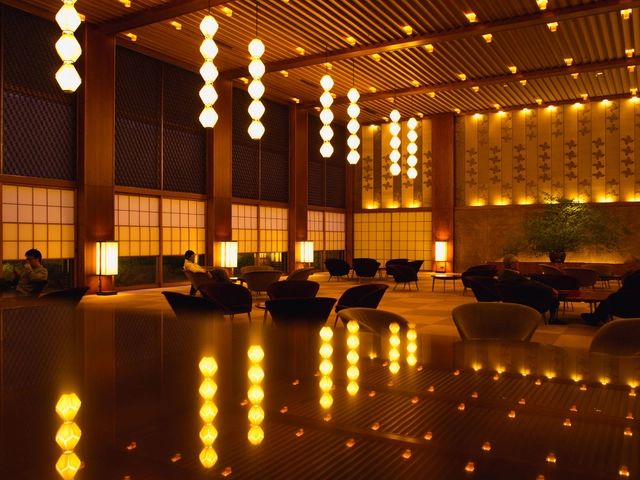
As preparations for the 2020 Tokyo Olympics escalate, so do concerns regarding the preservation of the city’s heritage; and more specifically, according to Tomas Maier, Japan’s modernist architecture. The Bottega Venneta creative director recently embarked on an “urgent visit” to Japan in an effort to evaluate the city’s risk of loosing its modernist icons. With special consideration for the overlooked and threatened Hotel Okura, Maier believes that this Yoshiro Taniguchi-designed landmark is just one of many structures at risk of falling to "progress.”

Watch the video above and learn more about how you can help preserve the Hotel Okura, here.
Spotlight: Ray Eames

Ray Eames (December 15, 1912-August 1988) is best known for her personal and artistic collaboration with Charles Eames, and together, their innovative designs shaped the course of modernism. Although Charles often gave the firm its public face (particularly in the male-oriented world of mid-century design), the two designers are almost always discussed as a couple and every project that their office pursued was in fact a team effort. When asked about any particular piece of furniture, for example, Ray always maintained that she contributed to the details of the design in a “million ways” and considered the overall form of each project in a critical fashion, emphasizing the collaborative nature of not just their partnership, but their entire office.

MoMA's Pedro Gadanho on "Bringing Architectural Modernity Home"

This article by Pedro Gadanho was originally published in Homeland: News From Portugal, the project created for Portugal's national representation at the 2014 Venice Biennale.

Nobody doubts that, in large measures, 20th century modernity has been brought to one’s living room by the media. Sure, toasters and mass-produced carpets have offered a sense of domestic modernity fostered by ever-more accessible technologies. But newspapers, the radio, and TV sets have delivered the sense that one was immersed in the long revolution happening outside. Drawing from popular media, Martha Rosler’s “House Beautiful: Bringing the War Home” series (1967-1972) gave this idea a poignant visual expression. If newspapers carried home modernity’s many conflicts and tensions, life-style magazines completed the picture with alluring visions of how to make yourself and your environment become “modern.”

20th Century Society Presents 100 Buildings 100 Years at the Royal Academy of Art

The 20th Century Society was founded in the 1970s, to protect British architectural heritage which was built from 1914 onwards - following from the protection of the Victorian Society, which protects architecture from the 19th century up until 1914. This year, to celebrate the one hundred years of architectural heritage which they are sworn to protect, they have selected one building from each year, presenting one hundred of the best, most interesting or most loved buildings from the last century with their 100 Buildings 100 Years project.

The 100 selected buildings are featured in an ongoing exhibition at the Royal Academy in London, and also feature in a new book published by Batsford Books. Read on after the break to learn more about 100 Buildings 100 Years, and see a selection of the chosen buildings from the past hundred years.

20th Century Society Presents 100 Buildings 100 Years at the Royal Academy of Art - Image 1 of 420th Century Society Presents 100 Buildings 100 Years at the Royal Academy of Art - Image 2 of 420th Century Society Presents 100 Buildings 100 Years at the Royal Academy of Art - Image 3 of 420th Century Society Presents 100 Buildings 100 Years at the Royal Academy of Art - Image 4 of 420th Century Society Presents 100 Buildings 100 Years at the Royal Academy of Art - More Images+ 5

Invisible Cities and the Curtain Wall: The Last Remnant of Modernism

Subscriber Access | 

Few of the architectural principles developed in the 20th century have been as widely accepted as the curtain wall, with the technology going from an implied feature of Le Corbusier's Five Points of Architecture to the go-to facade treatment of architects worldwide. In this article, originally published on Australian Design Review as "Invisible Cities - The Last Remnant of Modernism," Annabel Koeck argues that the curtain wall, initially prized for its glassy transparency, is now making buildings and even entire cities invisible thanks to its sheer ubiquity - at the expense of architectural expression.

Norwegian architects Snøhetta, based between Oslo and New York, designed the glass structure for the The National September 11 Memorial entry pavilion, which appears camouflaged against the backdrop of neighbouring glass curtain walls that define the New York skyline. Admittedly, Snøhetta’s pavilion was conceived by a very different brief, one defined by timidity and subtlety; yet paradoxically it was the curtain wall that facilitated this. Looking over the South Pool towards an array of glazed elevations that dominate the skyline it is ironic that a Modernist technique – the curtain wall – could now spell the end for architectural diversity in cities.

How 'Vandalizing' a Classic Exposes the Hypocrisy of Today's Modernists

Subscriber Access | 

These images from artist Xavier Delory show Le Corbusier's celebrated Villa Sovoye in a shocking state of disrepair. With stones and spray paint, vandals have tragically defaced its pristine walls and windows. Don't panic: the images shown here are photoshopped. But what if they weren't? In this article originally published by Metropolis Magazine as "Modernism in Ruins: Artist "Vandalizes" a Le Corbusier Masterpiece," AJ Artemel explores how our shock and dismay at such images exposes an underlying hypocrisy in our reverence for famous modernist works, and proposes that perhaps Modernism and vandalism are more closely related than we thought.

How 'Vandalizing' a Classic Exposes the Hypocrisy of Today's Modernists - Image 1 of 4How 'Vandalizing' a Classic Exposes the Hypocrisy of Today's Modernists - Image 2 of 4How 'Vandalizing' a Classic Exposes the Hypocrisy of Today's Modernists - Image 3 of 4How 'Vandalizing' a Classic Exposes the Hypocrisy of Today's Modernists - Image 4 of 4How 'Vandalizing' a Classic Exposes the Hypocrisy of Today's Modernists - More Images

David Chipperfield's "Sticks and Stones" Toys with Van Der Rohe's Bones in Berlin

David Chipperfield's "Sticks and Stones" Toys with Van Der Rohe's Bones in Berlin - Featured Image
© Gili Merin

In Berlin, Mies van der Rohe’s Neue Nationalgalerie has begun a new phase today with the opening of David Chipperfield’s intervention, a prologue to the imminent restoration which the famed British architect is about to undertake. Completed in 1968, the gallery was Mies’ last project and his final masterpiece; for nearly fifty years, nobody dared to touch it - until now. Marking this event is a large, site-specific installation, created by Chipperfield as an attempt to engage Mies in a spatial experiment (or perhaps a last, apologetic tribute to the 20th-century master) moments before he is about to embark on a mission which will, inevitably, transform Mies’ ultimate legacy.

David Chipperfield's "Sticks and Stones" Toys with Van Der Rohe's Bones in Berlin - Image 1 of 4David Chipperfield's "Sticks and Stones" Toys with Van Der Rohe's Bones in Berlin - Image 2 of 4David Chipperfield's "Sticks and Stones" Toys with Van Der Rohe's Bones in Berlin - Image 3 of 4David Chipperfield's "Sticks and Stones" Toys with Van Der Rohe's Bones in Berlin - Image 4 of 4David Chipperfield's Sticks and Stones Toys with Van Der Rohe's Bones in Berlin - More Images+ 8

Beyond Starchitects: An Architectural Revolution at the 2014 Venice Biennale

"The Biennale reveals that modernism was never a style. It was a cultural, political, and social practice," says Sarah Williams Goldhagen in her recent article for New Republic, The Great Architect Rebellion of 2014. This year, the Venice Biennale dissects the notion of modernism by providing a hefty cross-section of architectural history in the central pavilion. However contrary to Koolhaas' prescriptive brief, the 65 national pavilions show modernism was not just a movement, but a socially-driven, culturally attuned reaction to the "exigencies of life in a rapidly changing and developing world." Unexpected moments define the 2014 Venice Biennale: from Niemeyer's desire to launch Brazil into the first world through architectural creation, to South Korea's unveiling of a deep modernist tradition with influence across the nation. This Biennale proved to be truly rebellious - read Goldhagen's article from New Republic here to find out why.

A New Architectural Style for the Age of the Individual

Subscriber Access | 

As modernist architects broke free from vernacular architecture and developed a homogenized international style, many created sterile spaces and places out of touch with the decorative warmth of historical forms of human inhabitation. Negative reactions to the brutality of Modernist spaces encouraged architectural movements such as post-modernism and deconstructivism, but these never managed to usurp the rational modernist box as a dominant architectural paradigm.

However, the intended machine-like precision of these buildings has often become unintentionally humanized over time, through the addition of curtains, coloring, or even through accidental breakage and imperfect repairs or alterations. I believe that building on the successes and failures of modernism has spawned a new and previously unclassified architectural style: Pixelism. Find out what this new phenomenon is after the break.

Drawings from Famous Architects' Formative Stages to be Exhibited in St. Louis

Drawings from Famous Architects' Formative Stages to be Exhibited in St. Louis  - Featured Image
Zaha Hadid, The World (89 Degrees), 1984. Image Courtesy of Kemper Art Museum

As a student of architecture, the formative years of study are a period of wild experimentation, bizarre use of materials, and most importantly, a time to make mistakes. Work from this period in the life of an architect rarely floats to the surface - unless you're Zaha Hadid or Frank Gehry, that is. A treasure trove of early architectural drawings from the world's leading architects has recently been unearthed from the private collection of former Architectural Association Chairman Alvin Boyarsky. The collection is slated to be shown at the Kemper Art Museum, Washington University, St. Louis, as a part of the exhibition Drawing Ambience: Alvin Boyarsky and the Architectural Association from September 12th to January 4th, 2015.

Take a look at the complete set of architects and drawings for the exhibition after the break.

Drawings from Famous Architects' Formative Stages to be Exhibited in St. Louis  - Image 1 of 4Drawings from Famous Architects' Formative Stages to be Exhibited in St. Louis  - Image 2 of 4Drawings from Famous Architects' Formative Stages to be Exhibited in St. Louis  - Image 3 of 4Drawings from Famous Architects' Formative Stages to be Exhibited in St. Louis  - Image 4 of 4Drawings from Famous Architects' Formative Stages to be Exhibited in St. Louis  - More Images+ 5