


-
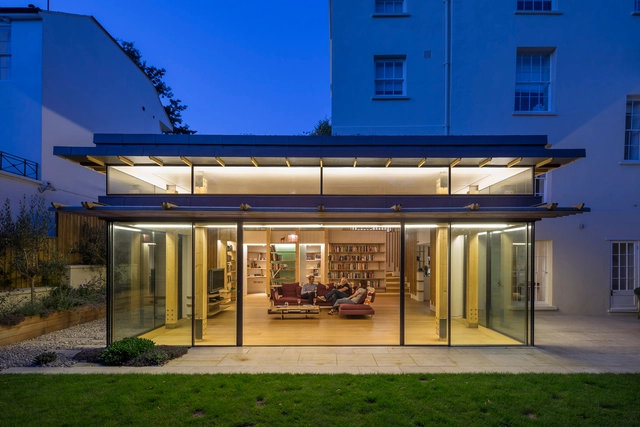
Architects: Cullinan Studio
- Area: 100 m²
-
Professionals: Cape Construction, DesignWild, Synergy Consulting
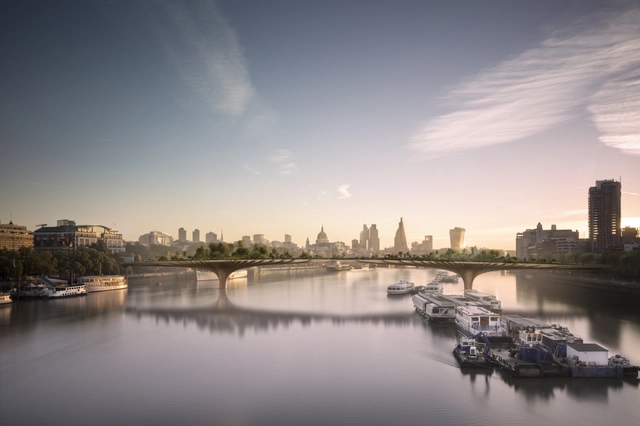
After a fortnight of highs and lows for Thomas Heatherwick and British celebrity Joanna Lumley's campaign for a garden bridge stretching across London's River Thames, Rowan Moore of The Observer has meticulously described the project as "nothing but a wasteful blight." Although he acknowledges that support for the bridge "has been overwhelming," he argues that Heatherwick - though an "inventive and talented product designer" - has a past record in large scale design which "raises reasonable doubts about whether his bridge will be everything now promised."
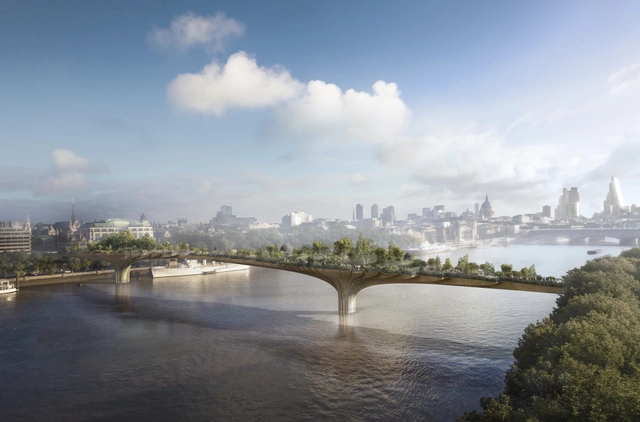
After gaining the first in a series of required planning approvals last week, Thomas Heatherwick's highly controversial Garden Bridge proposal has once again come under fire from a variety of opponents, with campaign group Thames Central Open Space (TCOS) dubbing it a "luvvies' folly," and the Guardian's architecture critic Oliver Wainwright saying that it is "not in fact a bridge – in the sense of being a public right of way across the river – but another privately managed tourist attraction, on which £60m of public money is to be lavished."
Much of this new assault is the result of the 46 conditions which came with Lambeth Council's recommendation to grant the bridge planning approval, which as BD Online uncovered, include closing the bridge between 12 and 6am, a ban on cycling, and a restriction of group sizes to 8 people or fewer, unless booked in advance.
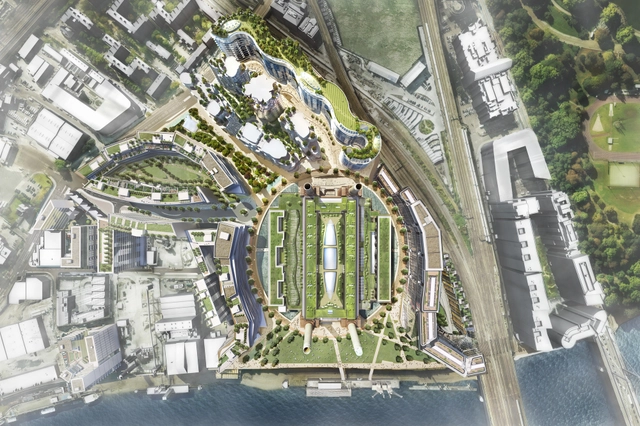
BIG is set to make its UK debut. As reported by the Architect’s Journal, the Danish practice has been selected from an international shortlist to design a public square for Battersea Power Station. Though no formal announcement has been made, the “Malaysia Square” scheme will be a key element in the Wilkinson Eyre-designed masterplan, serving as the development’s “front door.” It will connect the masterplan’s first three phases, just south of the listed landmark, which include Frank Gehry and Foster + Partners’ proposed “Electric Boulevard.”
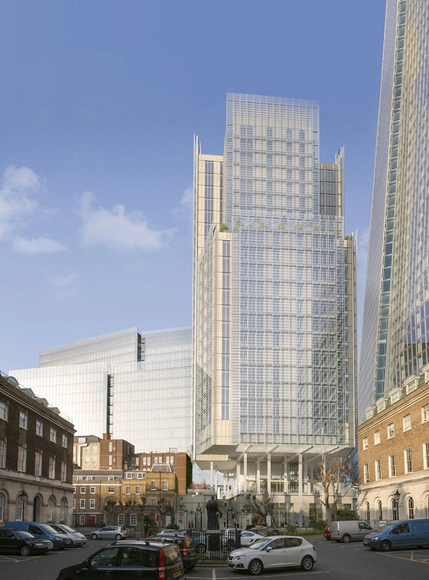
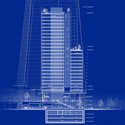
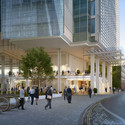
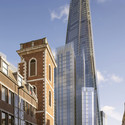
Renzo Piano Building Workshop has been awarded planning approval for Feilden House, a 26-storey residential building at London Bridge Quarter, directly adjacent to the Shard. Designed to complement the Shard and Place Buildings, the third piece of Piano's London Bridge Developments will add "generous public realm amenities" to the area at ground level.
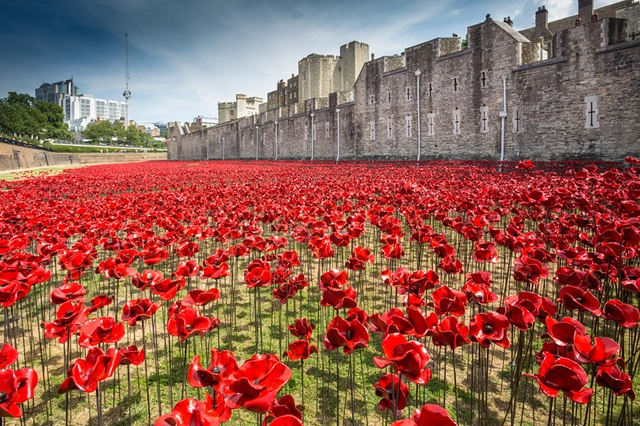
The Observer's Rowan Moore "accidentally got swept into a tide of humanity at the weekend, or to put it another way, couldn’t move for crowds." In memorial of the start of the centenary of World War One, of which today marks the anniversary of the armistice (11.11.1918), the Tower of London have installed a sea of 888,246 ceramic poppies in the former moat. The artwork, created by Paul Cummins and Tom Piper, and entitled Blood Swept Lands and Seas of Red, "has caught the national imagination." For Moore, however, "it is deeply disturbing that a hundred years on from 1914, [the UK] can only mark this terrible war as a national tragedy." He argues that "the spectacle of all these red poppies is emptier than that. [...] It is a deeply aestheticised, prettified and toothless war memorial." Read the article in full here.
.jpg?1415393405&format=webp&width=640&height=580)
The Westminster City Council has granted planning permission to Sheppard Robson for a “dramatic” rooftop extension to London’s Aldwych House. The £15m project - situated within the Westminster Conservation Area - will add 8,500 square feet of high-quality office and reception space by installing a series of geometrical-folded forms on top of the landmark Midtown office building.
A team of graduates from the Bartlett School of Architecture at University College London have developed a new hybrid building material designed for use in uniquely challenging construction environments. "Augmented Skin" combines a regimented structural core with a flexible opaque skin, which is coated in PVA to serve as casting formwork for concrete. Inspired by biological skeletal frameworks, the material can be assembled quickly at a minimal cost with maximum flexibility. The project was designed by architecture graduate students Kazushi Miyamoto, Youngseok Doo, and Theodora Maria Moudatsou, and was exhibited at The Bartlett's 2014 graduation exhibition B-Pro.
Read more about the flexibility of Augmented Skin after the break


The British city of Manchester, often seen as the UK's second city alongside Birmingham, will become the first metropolis outside of London to be given greater local autonomy over budgets and city planning. The devolution deal, which will also see the city receive the right to directly elect a Mayor (in line with large cities in the US, for example), will furnish the city with "a new housing investment fund worth up to £300million." As it is understood that the first Mayor of Greater Manchester will be elected in 2017, there's time to discuss how this new political environment in the UK might help boost building in what has described as a "Northern Powerhouse."
In the third and final installment of their micro documentary series on architecture and water, Ellis Woodman and a team at the Architectural Review (AR) have collaborated with architects, developers, urbanists and thinkers to examine the latent connections between water infrastructure and our built environment. Taking a journey by narrowboat through London, the film explores the radical ideas which may offer the keys to unlocking the potential of the urban waterway. Through recreation, interaction and radical ideas such as floating parks, amphibious houses and new public wetlands can the river become a living part of the city?
In the latest video from Crane.tv, architectural journalist and planner Peter Murray ruminates on the benefits of integrating cycling into the urban fabric of the world's biggest cities. "For the last half century, we've bowed down to the god of the motor car and have destroyed cities across the UK," says Murray, Chairman of New London Architecture and the London Society. Murray and his team at New London Architecture are charged with analyzing and advocating for the improvement of London's Built environment, acting as advisors to Mayor Boris Johnson on an array of projects including the overhaul of cycling infrastructure in the city.

A proposal to create a floating swimming pool in the Thames river will step up a gear tomorrow, as Studio Octopi will present their design for the Thames Baths at the Guardian's World Cities Day Challenge. Originally created as part of the Architecture Foundation's competition to design ways to reconnect Londoners with the river, the Thames Baths design has gained momentum over the last year, with a recent iteration of the design proposed for London's Victoria Embankment.
More on the design after the break
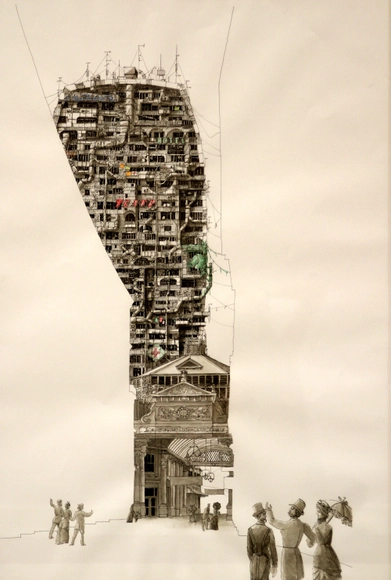
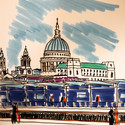
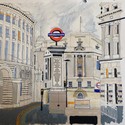
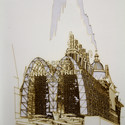
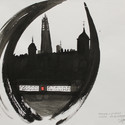
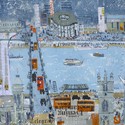
Architectural aid charity Article 25 has unveiled the drawings for its most important annual fundraising event, the 10x10 Drawing the City Auction. Featuring drawings donated by leading architects including Norman Foster, Ivan Harbour, Sheila O'Donnell, Terry Farrell and Ken Shuttleworth among many others, in previous years the 10x10 auction has raised over £90,000 for the charity, and this year it is hoped that it will top £100,000.
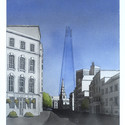
The 10x10 concept divides a section of the city up into a 10 by 10 square grid, with each participating architect assigned a section of the grid where they must find inspiration for an artwork. This year, the grid centred on the Shard, where this year's auction will be held on November 27th. In the lead-up to the auction, bidding will also be available online from November 4th-25th, at the 10x10 website.
Read on after the break for another 20 of the pieces to be auctioned
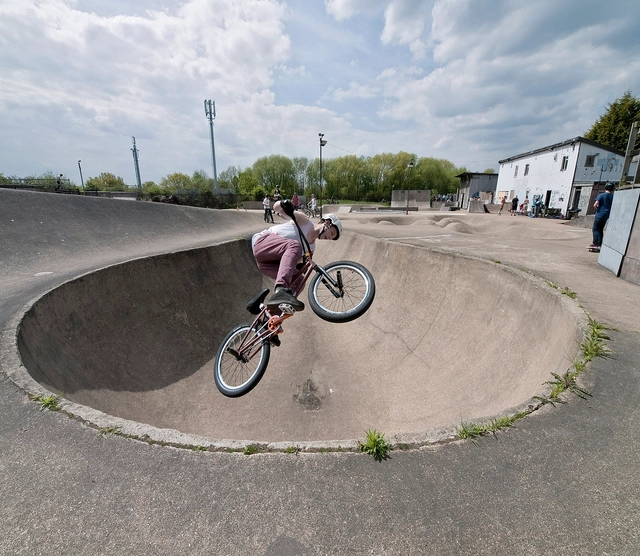
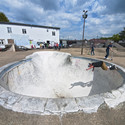
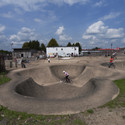
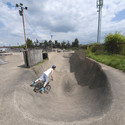
English Heritage has awarded a Grade-II listing to "The Rom," a skatepark in Hornchurch on the outskirts of London. Built in 1978, the Rom was one of the UK's first wave of purpose-built skateparks, and probably the most complete example found in the UK today. The listing makes the Rom the first protected skatepark in Europe, and just the second in the world after Tampa's "Bro Bowl" was added to the USA’s National Register of Historic Places last year.
More on the listing decision after the break
In the second installment of their new three-part micro documentary series on architecture and water (see the first part here), Ellis Woodman and a team at the Architectural Review (AR) have collaborated with architects, developers, urbanists and thinkers to examine the latent connections between water infrastructure and our built environment. Taking a journey by narrowboat through London, the film explores the radical ideas which may offer the keys to unlocking the potential of the urban waterway. When London has an ever-increasing overwhelming need for growth, how does the densification and gentrification of the city relate to the rivers and canals?
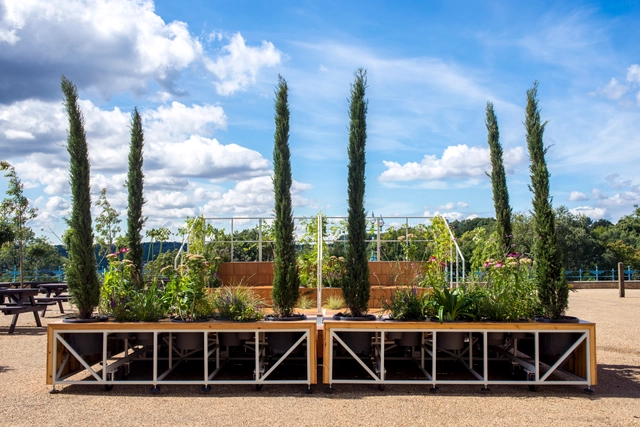
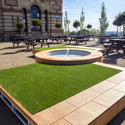
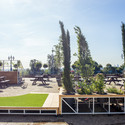
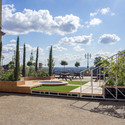
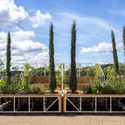
The Decorators, an interdisciplinary group of practitioners working with space in London, recently transformed the terrace overlooking the city at Alexandra Palace by installing a mobile Italian garden. As a "landscape of scattered objects" which geometrically piece together to resemble a formal garden, the designers describe the project as somewhere between "grotto and folly, garden and landscape, stage and amphitheater," all the while drawing from the historical character of the surrounding context. The scheme ultimately "breaks the monumental proportions of the main building to meet visitors with a more intimate scale on their first encounter" with the palace.
In the first part of their new micro documentary series on architecture and water, Ellis Woodman and a team at the Architectural Review (AR) have collaborated with architects, developers, urbanists and thinkers to examine the latent connections between water infrastructure and our built environment. Taking a journey by narrowboat through London, discussing a raft of radical ideas which may offer the keys to unlocking the potential of the river along the way, the films discuss how we might begin to shape the contemporary city's relationship with its urban waterways. Can "floating parks, amphibious houses, floodable public squares, new wetlands or brand new canals foster a more meaningful relationship between the citizen and the city’s waters?"