Humanity has become obsessed with breaking its limits, creating new records only to break them again and again. In fact, our cities’ skylines have always been defined by those in power during every period in history. At one point churches left their mark, followed by public institutions and in the last few decades, it's commercial skyscrapers that continue to stretch taller and taller.
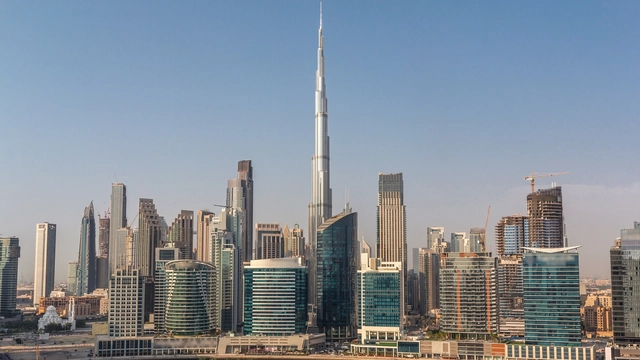
The Council on Tall Buildings and Urban Habitat (CTBUH) has developed its own system for classifying tall buildings, stating that the Burj Khalifa (828 m.) is the world’s tallest building right now. Read on for the 25 tallest buildings in the world today.
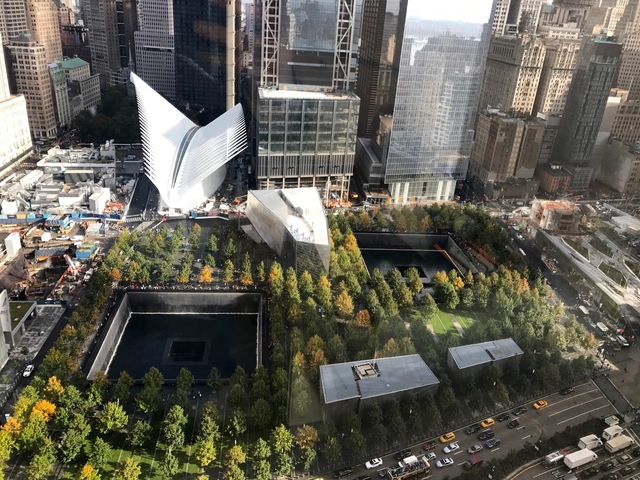
On the morning of September 11, 2001, two hijacked commercial jetliners struck the Twin Towers in Lower Manhattan, a third plane struck the Pentagon, and a fourth crashed in rural Pennsylvania. A total of 2.977 people were killed in the terrorist attacks. In the face of this unprecedented loss, the city of New York promised to rebuild Lower Manhattan as a lively neighborhood while honoring and maintaining the memory of this day. Thus began one of the largest reconstruction projects in New York City, a process that is still ongoing now, 23 years after the tragedy.
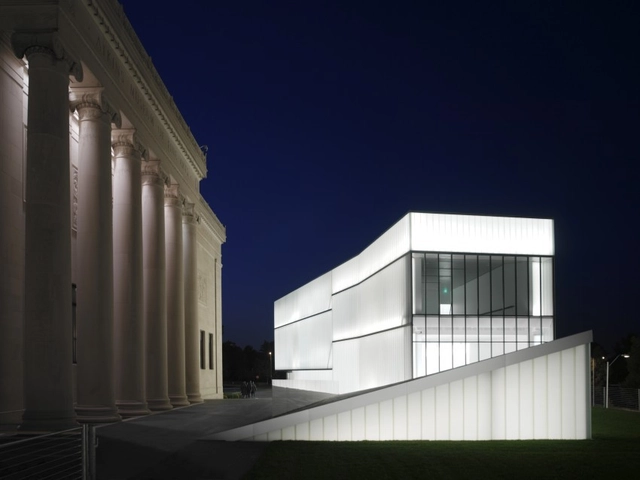
The American Midwest is making a new name for itself. While cities like New York and Los Angeles are known as global design capitals, dynamic modern architecture has begun emerging across the country’s fly-over states. Advocating world-class architecture, sustainability, and craft, Kansas City has become a leader in great American design.
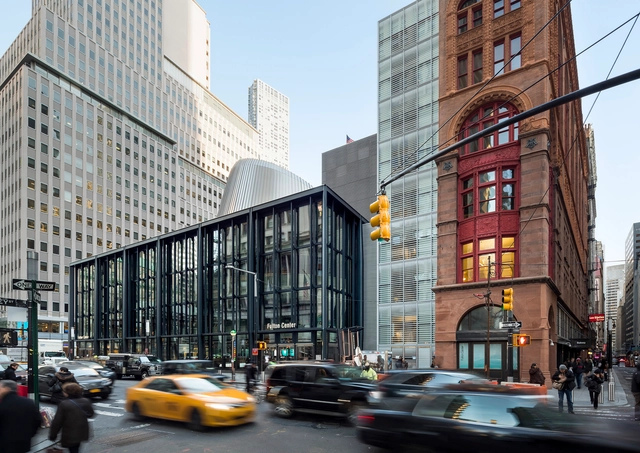
As the largest city in the United States, New York City is one of the most diverse and vibrant cities in the world, recognized by many as the center for global media, culture, fashion art, and finance. The city was founded in 1624 by settlers from the Dutch Republic and has since grown into “the city that never sleeps”.
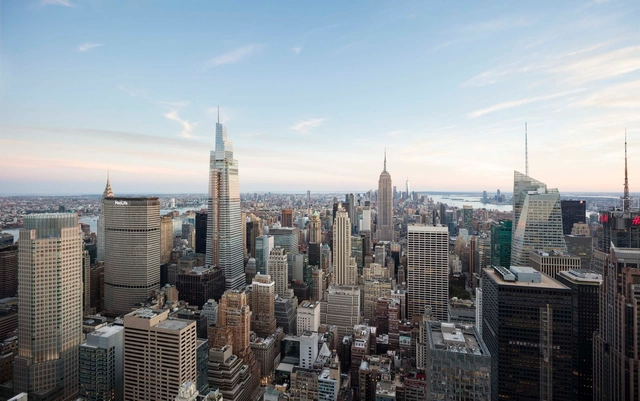
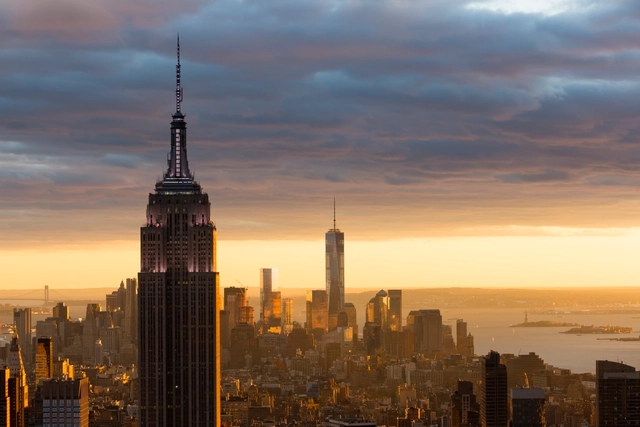
While almost every style of architecture exists in New York City, the metropolis is most well known for its skyscrapers, both in historical styles such as Neoclassical and Art Deco and in their varied contemporary expressions. The first building to bring the world's tallest title to New York was the New York World Building, in 1890. Later, New York City was home to the world's tallest building for 75 continuous years, starting with the Park Row Building in 1899.
Under the latest round of NYC's Department of Design and Construction (DDC) Project Excellence Program, Commissioner Thomas Foley has announced that the agency has selected 20 firms to provide architectural design services for New York City’s future public buildings project. 10 of the selected firms are certified Minority- and Women-Owned Business Enterprises (M/WBEs), meeting the city’s ambitious goals of supporting M/WBEs and increasing its ability to generate culturally competent designs.
In the modern era of design where advancements in technology and construction have enabled architects to build better, faster, and taller, the sky’s the limit. Every few months, another headline boasts the tallest residential tower or the newly constructed office building that breaks yet another record for its impressive height. But as time goes on and new projects are completed, trends show that the United States is falling out of the spotlight in terms of being able to claim the title of world’s tallest building, and the drawing boards show that no American city will be reclaiming this title any time soon.
Shusaku Arakawa and Madeline Gins—visual artists, conceptual writers, self-taught architects—believed that, through a radical recalibration of the built environment, humans could solve the ultimate design flaw: death. (Your move, Norman Foster.)
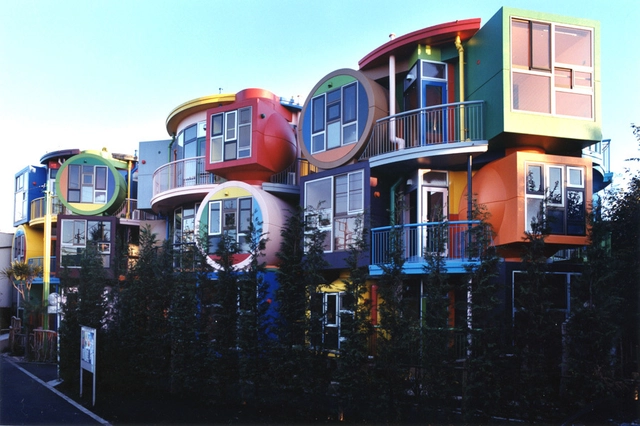
Arakawa and Gins completed five projects in their lifetimes—three in Japan, two in America—and to call them unconventional is a gross understatement. There’s an acid trip of a park; an eye-poppingly colorful, plucked-from-Pixar apartment building; and doorless lofts with bumpy, uneven flooring. Rather than whimsy or quirkiness, their ethos—dubbed Reversible Destiny—aimed to seriously promote longevity by activating and stimulating the body and mind.
If the Great Pyramid were to be built today, it would cost between 1.1 and 1.3 billion US dollars, according to a cost estimate by the Turner Construction Company—not surprising, considering how that is roughly the same amount of money that it took to build the Trump Taj Mahal or the Petronas Twin Towers. Complicated structural requirements, delayed work timelines, complex building programs, the need for good earthquake or typhoon proofing, the use of advanced mechanical and electronic systems, and costly materials and finishes can all add up to the eventual cost. But sometimes—and especially in cases in which governments or powerful clients set out to beat existing records such as the “tallest building in the world”—money is spent for no real reason except for an unabashed display of wealth, power or strength.
Emporis, the renowned global provider for building data, has compiled a list of the top 200 money-guzzlers from recent years, and not surprisingly, a lot of high-rises have made the list. Read on to see the top 20.
https://www.archdaily.com/881766/the-worlds-most-expensive-buildingsZoya Gul Hasan
The lawsuit states that the 104-story One World Trade bears a “striking similarity” to his 122-story “Cityfront ‘99” tower, which also featured a glass facade of inverted triangular planes.
https://www.archdaily.com/873750/architect-sues-som-for-stealing-one-world-trade-center-designAD Editorial Team
The latest collaboration between architects Jacques Herzog and Pierre de Meuron and artist Ai Weiwei may be called Hansel & Gretel, but it brings to mind just as much another literary classic: George Orwell’s 1984.
The immersive, site-specific installation, located within the expansive Wade Thompson Drill Hall at New York’s Park Avenue Armory, places visitors in a darkness-cloaked environment, where your every move is tracked and monitored by motion sensors, image captures and a team of surveillance drones. The work is a not-so-subtle interpretation of the expanding role of surveillance in modern-day society and the changing dynamics between the public and private realms.