LEGO has long been recognized by architects as a key inspiration in the world of creative building - but the Danish toy company's influence over the construction industry may be about to get a whole lot more direct. Yesterday, LEGO announced the establishment of its own sustainable materials research center, with an investment of 1 billion Danish Krone ($150 million US), which will search to find sustainable alternatives to the plastic used in their products and packaging.
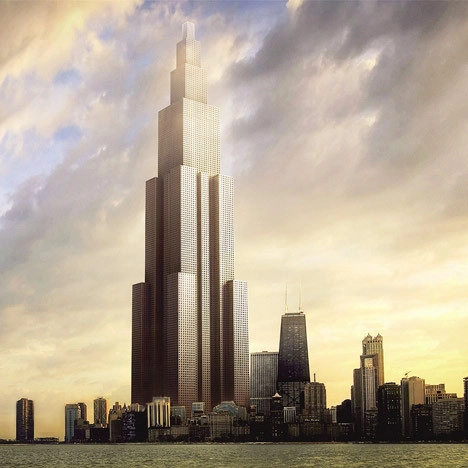
BBC News has published a profile on the new projects and ambitions of Broad Sustainable Building’s Zhang Yue. A few months ago, Yue became known as the man behind Mini Sky City, a 57-story building that went up in 19 days. Now, Yue wants to further his idea of modular construction to build Sky City, which will be the world’s tallest skyscraper, stretching ten meters taller than the 828 meter-tall Burj Khalifa in Dubai, and take only seven months to complete. In addition to being constructed from prefabricated parts, Sky City will be sustainable and built from steel to help prevent earthquake damage. Construction is expected to begin on the skyscraper in early 2016. Read more about Yue, his company, and their projects in the BBC News article.
The school, named for Cambodian Children’s Fund founder Scott Neeson and former Velcro Companies Chairman Robert Cripps, will employ multiple sustainable building practices, including water and energy efficiency via natural lighting, integrated solar shading, low energy lighting, and low flow water fixtures. An energy recovery system will further work to improve air quality inside classrooms by filtering outdoor air into the interior of the building, and on-site photovoltaic cells will provide a portion of the school’s energy needs.
Studio Gang has been selected to design a 60,000 square-foot campus for the Academy for Global Citizenship (AGC) in Chicago. Aimed to be the city's greenest campus, the net positive energy scheme will be designed as a space for learning that will "break down barriers between kids." The campus will include classrooms, an international learning laboratory, a teacher professional development center, an early childhood center, and an urban food production center.
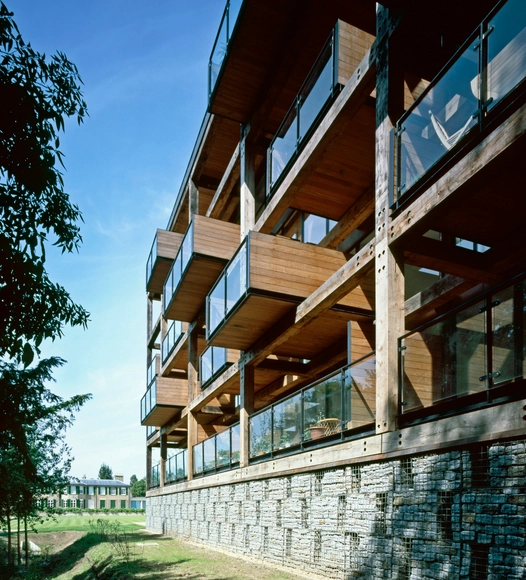
Founded in 1978, Feilden Clegg Bradley Studios has spent over thirty years refining its approach to sustainability, and is now regarded as one of the UK's leading practices in low-energy design. Yet their work still resonates on many other levels, bringing them multiple awards including the 2008 RIBA Stirling Prize for the Accordia Housing Project which they completed alongside Alison Brooks Architects and Maccreanor Lavington. In this interview from Indian Architect & Builder's May 2015 issue, Peter Clegg talks about the principles behind their work, explaining the concept of holistic sustainability which makes their designs so successful.
Indian Architect & Builder:The Yorkshire Sculpture Park, The Southbank Centre and many other projects desire to involve the social aspects for the larger good of the community. How would you describe the incorporation of these into the design process?
Peter Clegg: Architecture is an art form but also social science and we have a duty not only to work with our current client base and generate ideas collaboratively, but also think ahead and envisage the needs of future generations who are our ultimate clients. Our most creative work comes from working closely with creative clients who are more prevalent in the creative and cultural industries.
Thousands of years ago, a small civilization of hunter gatherers migrated to the coastal regions of Southeast Asia. These people progressed into a widespread tribe of travelling sea dwellers. To this day, they remain a stateless people with no nationality and no consistent infrastructure, sometimes living miles away from land. Yet these people are one of the few civilizations whose collective life practices have survived so long through human history. They are called the Badjao, and they have a surprising amount to teach us about architecture.
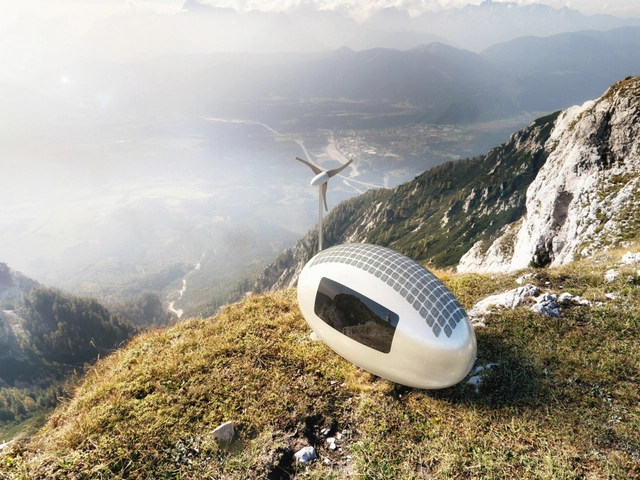
Living off the grid just got a little bit easier, thanks to Nice Architects’Ecocapsule, a self-sufficient, portable pod that is powered by solar and wind energy. Unveiled at the Pioneers Festival in Vienna, the micro-home’s spherical shape is designed to maximize the collection of rainwater and minimize energy loss.
The Ecocapsule includes a 9,744 watt-hour battery, which is charged by a built-in 750-watt wind turbine, and 2.6 square meters of solar panels. The energy system can support someone living off the grid for about a year, depending on the location, according to the architects. The unit also contains a built-in kitchenette with running water, a flushing toilet and hot water.
Learn more about the Ecocapsule and view images after the break.
In honor of Norman Foster's 80th birthday, we bring to you this extensive video interview by Louisiana Channel that gives an in-depth look into the life and career of the prolific English architect. Throughout the 40-minute interview, Foster reflects on his childhood obsession with technology, the evolution of his work, and his constant "strive for simplicity."
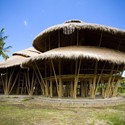
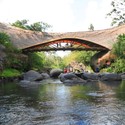
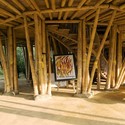
Perhaps the most surprising thing about bamboo - besides being an entirely natural, sustainable material with the tensile strength of steel that can grow up to 900 millimeters (3 feet) in just 24 hours - is that it's not more widely recognized as a fantastic construction material. Like many traditional building materials, bamboo no longer has the architectural currency that it once did across Asia and the pacific, but the efforts of Elora Hardy may help put it back into the vernacular. Heading up Ibuku, a design firm that uses bamboo almost exclusively, Hardy's recent TED Talk is an excellent run through of bamboo's graces and virtues in construction, showing off sinuous private homes and handbuilt school buildings.
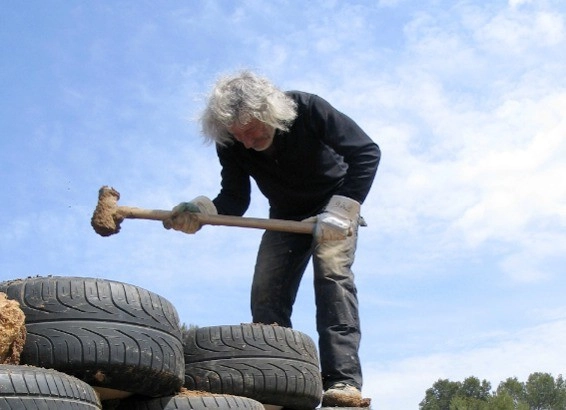
Michael Reynolds, a well-known proponent of sustainable building and the creator of the Earthship house, will construct a self-sufficient public school in Jaureguiberry, Uruguay, reports local newspaper El País.
Reynolds’ design contemplates a 270-square-meter building with solar panels and a water-collection system that will supply water for the bathrooms and kitchens. In the architect’s usual style, recycled materials such as tires and bottles will be used for construction.
In Arbuckle Industries' latest Archiculture interview, Roger Hart, an environmental psychology professor at New York’s City University, discusses the relationship between people and their surroundings. He analyzes the effects of environmental factors on both behavior and health, and advocates that the physical environment and its occupants be regarded as symbiotic entities. Additionally, Hart discusses the shifting relationship between environmental psychology and architecture, and explains how a closer collaboration between these disciplines in the design process can produce a healthier and more humanized built environment.
The world's energy infrastructure may soon undergo significant change; Tesla Motors recently unveiled the Powerwall, a compact, lithium-ion battery pack that will allow residents to autonomously consume energy by drawing from their own sun-powered reserve. For just $3,500, you can purchase an attractive, wall-mounted battery capable of storing up to 10 kilowatt-hours of energy - about a third of what the average US household uses daily. Beyond this, the company will also be offering scalable Powerpacks to businesses and utility companies that will allow limitless storage. Powerwalls will go out for delivery this summer.
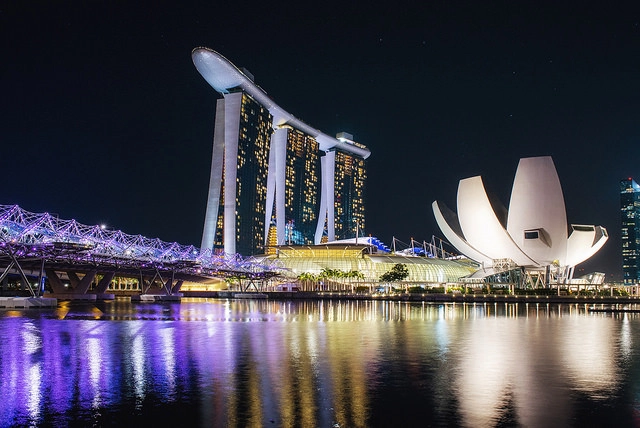
The Singapore Building and Construction Authority (BCA), together with Singapore Institute of Architects (SIA) and Singapore Green Building Council (SGBC) are jointly organizing the International Tropical Architecture Design Competition 2015 for Institutes of Higher Learning (ITAD Competition) for the fifth run this year. Themed “Urban Smart Green Office,” this year’s competition seeks for innovative and sustainable design entries that demonstrates the essentials and key constituents of a Smart Green Office Building in an urban city of participant's choice. The competition is open to tertiary students worldwide. Read on to learn more.
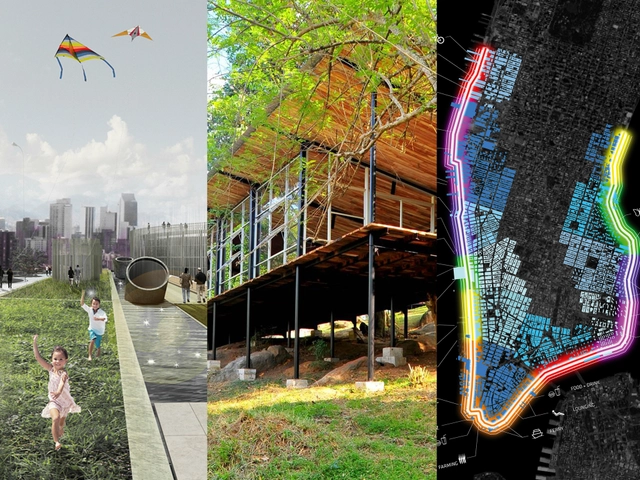
Emerging from over 6,000 entries, three winners of the fourth Global Holcim Awards for Sustainable Construction have been selected. The international competition, occurring every three years, recognizes designs that provide sustainable solutions to local issues faced by communities throughout the world. This year's winning projects addressed sites in Colombia, Sri Lanka, and the United States and will receive monetary prizes ranging from $50,000 to $200,000.
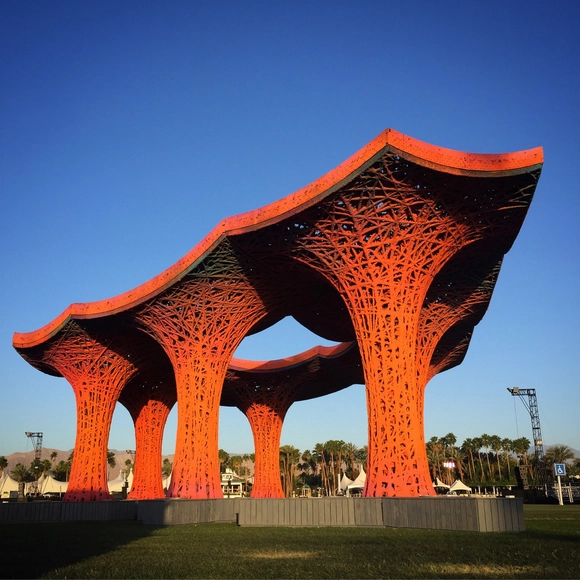
To demonstrate the structural potential of "pulp," Ball-Nogues Studio built an experimental reclaimed paper pavilion this year at Coachella. The lightweight, self-supported structure, known as the "Pulp Pavilion," was made from a low-cost blend of recycled paper, water and pigment sprayed onto lattices of organic rope. After its use as a place of refuge for festival goers, it will be either composted or recycled. See the pavilion illuminated at night, after the break.
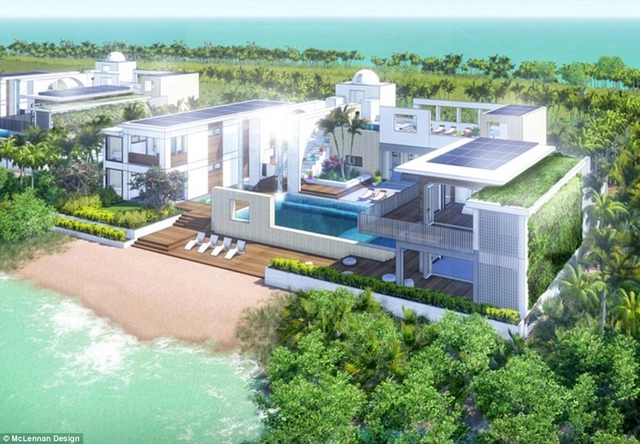
Founder of the Living Building Challenge, sustainability aficionado and architect Jason McLennan has been commissioned by famed actor Leonardo DiCaprio to design a 68-vila eco-resort on a private island in Belize. As The New York Times reports, the ambitious 42 hectare (104 acres) "Blackadore Caye, a Restorative Island" will be carried out by New York developer Delos by 2018.
The resort will feature an arc of floating suites built over the water and a network of artificial reefs and fish shelters, along with 48 millionaire villas and an indigenous plant nursery focused on manatee conservation.
“My goal was always the fact that I wanted to create something not just environmental, but restorative,” said DiCaprio to the newspaper. “A showcase for what is possible.”
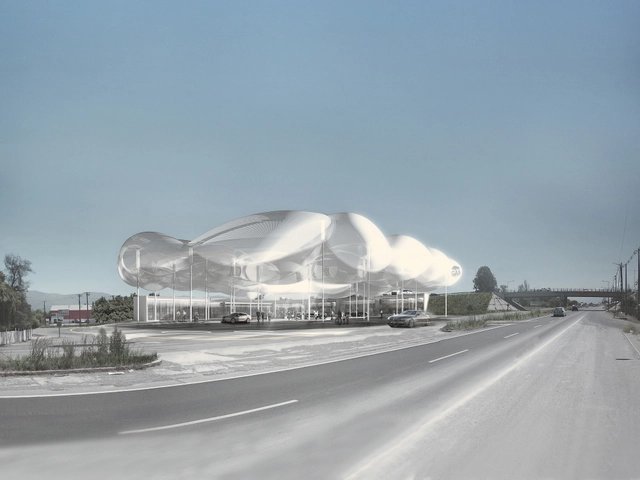
Where the Panamerican Route passes along Rancagua, Chile, it does so in a seemingly interminable straight line, intersecting with the H-35 toward the Pacific and the Andes. At this junction between two of Rancagua's arterial roads German practice raumspielkunst has envisioned "The Cloud," a new form of self-sufficient gas station.
Responding to the nature of its site as a meeting point between the industrial and the touristic, the environmentally efficient gas station would cater for thousands of commuters each day.




_COOKFOX_Architects.jpg?1434039459&format=webp&width=640&height=580)