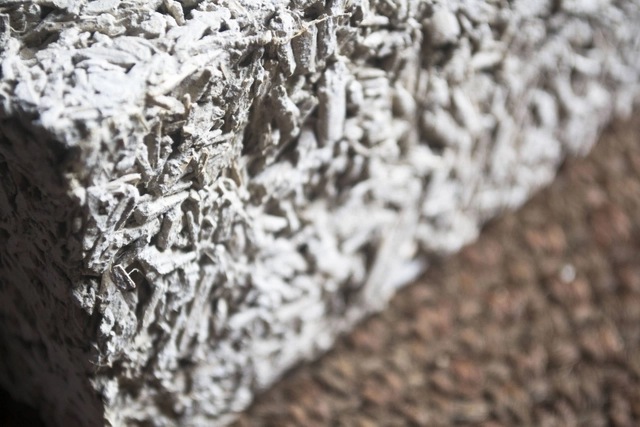
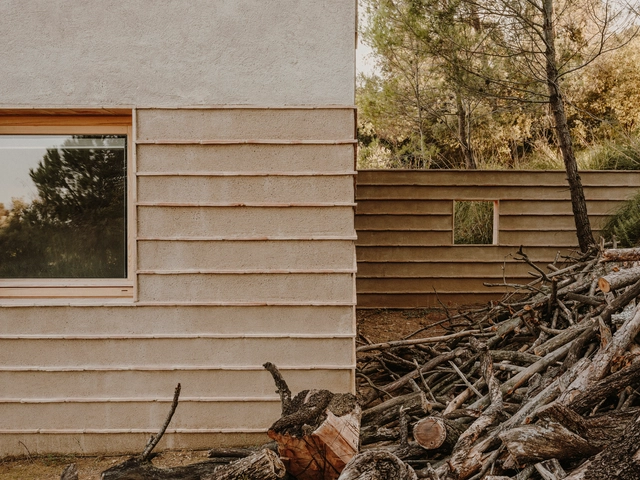
Hemp is one of the oldest crops domesticated by humans. With its wide variety of uses and applications, it’s easy to understand why it’s been a desirable product throughout history. Hemp seeds and flowers are used in health foods, medicines, and organic beauty products; the fibers and stalks of the hemp plant are used in clothing, paper, and biofuel. Today even a waste product of hemp fiber processing, so-called hemp shives, is being utilized to create sustainable building materials like hempcrete.
Continuing our quest to redefine how architecture is perceived nowadays and exposing the different notions out there, ArchDaily gave space for its users to answer four fundamental questions: "What is architecture? What can architecture do? What is your architectural position? What is your design method?" With around 200 entries per interrogation, gathered from all over the world, the ideas shared are mostly complementary and non-conflicting, underlining a general understanding of the role and essence of this field.
App update provides CO2 emission data on chosen routes. Photo: Pixabay
The GoogleMaps application will direct drivers to more eco-friendly routes that generate the lowest carbon footprint using mainly traffic data, road slopes and inclines, and other factors.
The eco-friendly option will be the application's default route if comparable options take about the same time. When alternatives are significantly faster, Google will offer choices and let users compare estimated emissions.
https://www.archdaily.com/960036/google-maps-to-start-showing-routes-with-the-lowest-carbon-footprintEquipe ArchDaily Brasil
New Architecture by Kennedy Nolan. Image Courtesy of Finding Infinity
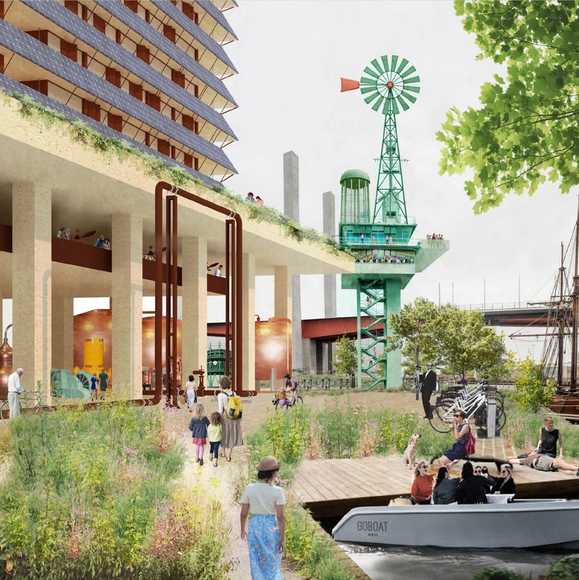
Australian research lab Finding Infinity has collaborated with architects, councils and investors to create a strategy that would turn Melbourne into a self-sufficient city by 2030. Building on exemplary case studies and scientific research, the initiative proposes a 10 step plan for the city’s transition from a consumer of resources to a zero-carbon urban environment.
In Design and the City's fifth episode - a podcast by reSITE on how to make cities more liveable - filmmaker and visual artist Gary Hustwit was interviewed on his creative process and evolution, and what motivates him to make films that strive to make design more accessible to the general public. The interview delves into the process behind Hustwit's filmography, from documentaries such as Helvetica, which explores the use of type in urban spaces, to films such as Rams, a personal and intimate portrait of the influential German industrial designer Dieter Rams.
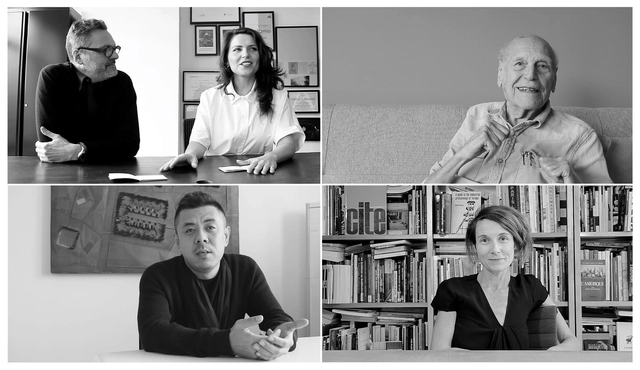
Simple in form but complex in substance, “What is Architecture?” remains an existential question for a lot of architecture students and young professionals. In an attempt to define this ever-changing interrogation and expose the different visions out there, the interview series: WIA – What is architecture? asks four, straightforward, questions to world-leading architectural designers and thinkers. Seeking to uncover their opinion on what architecture is and what it can do, these short videos reveal responses to “What is architecture? What can architecture do? What is your architectural position? and What is your design method?”.
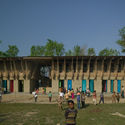
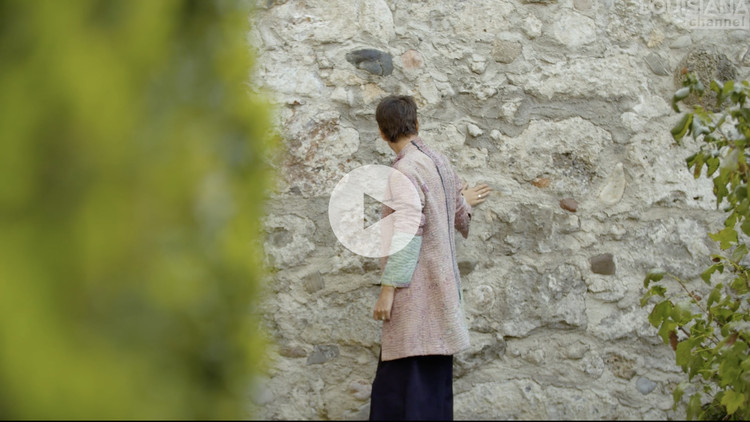
Talking to the Louisiana Channel, German architect Anna Heringer outlines the way she works and her multi-disciplinary approach to architectural practice. Growing up in a small town at the Austrian-Bavarian border close to Salzburg - Heringer spent a year living and working in Bangladesh at the age of 19, a place that is now home to a majority of her office's projects. Heringer describes herself as a mix of things in addition to being an architect, describing herself as an activist and a development worker - using her creativity to explore ideas in a variety of forms and media.
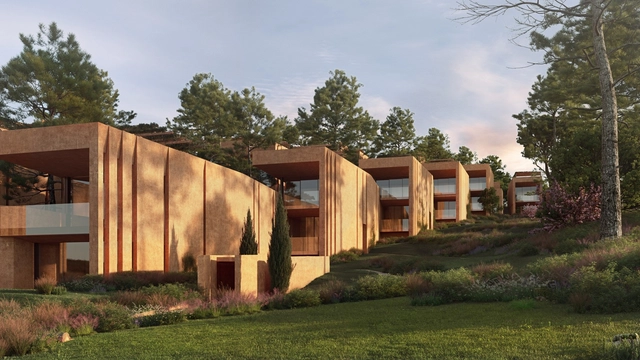
Inspired by the colors and textures of the surrounding environment, Pritzker Prize winners RCR Architectes have translated the Algarve's landscape into new residences and facilities at the Palmares Ocean Living & Golf Resort. A total of 37 new signature apartments and luxury villas are currently under construction, with completion due dates expected between summer 2021 and 2022.
The American architect, designer, and futurist Buckminster Fuller once defined the Dymaxion principle as “constructing ever more with ever less weight, time, and ergs per each given level of functional performance.”
Along with concerns about our environment, new movements, words, concepts, and terms related to these issues constantly emerge, which require us to always remain up to date. The word sustainability itself faced some resistance until it was incorporated into common vocabulary and used widely in the most diverse contexts. Currently, much discussion surrounds the terms circular economy, resilience, the 4 Rs, urban mining, and others. In addition, there are some sustainability-related movements that have been incorporated from activism in other fields, showing the fluidity of such issues. One such initiative is the 0 kilometer materials movement, which has been featured in manifestos and some projects, albeit timidly, in recent times.
Simple in form but complex in substance, “What is Architecture?” remains an existential question for a lot of architecture students and young professionals. In an attempt to define this ever-changing interrogation and expose the different visions out there, the interview series: WIA – What is architecture? asks four, straightforward, questions to world-leading architectural designers and thinkers. Seeking to uncover their opinion on what architecture is and what it can do, these short videos reveal responses to “What is architecture? What can architecture do? What is your architectural position? and What is your design method?”.
Simple in form but complex in substance, “What is Architecture?” remains an existential question for a lot of architecture students and young professionals. In an attempt to define this ever-changing interrogation and expose the different visions out there, the interview series: WIA – What is architecture? asks four, straightforward, questions to world-leading architectural designers and thinkers. Seeking to uncover their opinion on what architecture is and what it can do, these short videos reveal responses to “What is architecture? What can architecture do? What is your architectural position? and What is your design method?”.
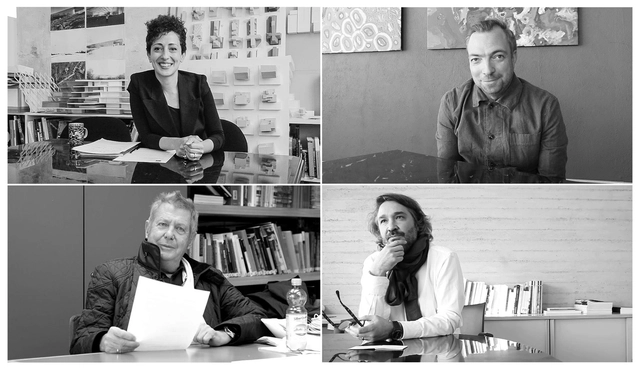
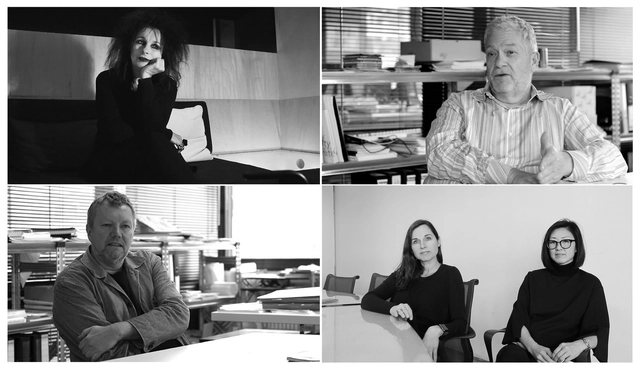
ArchDaily has collaborated with WIA to release every week, 4 of these conversations, and to invite you to take on the challenge and answer these questions. This second article of the series highlights the ideas and visions of Odile Decq from Studio Decq, Kjetil Thorsen from Snøhetta, Florencia Pita & Jackilin Hah Bloom from Pita & Bloom, an architectural design collaborative based in Los Angeles, and Jeffrey Kipnis, an American architectural critic and theorist.
There was a time when people appreciated self-contained architecture, in which the building envelope would not function as a moderator between the climate outside and the interior environment but rather as an inert and independent barrier. Countless mechanical devices and electrical ventilation, heating, and cooling equipment. A real machine.
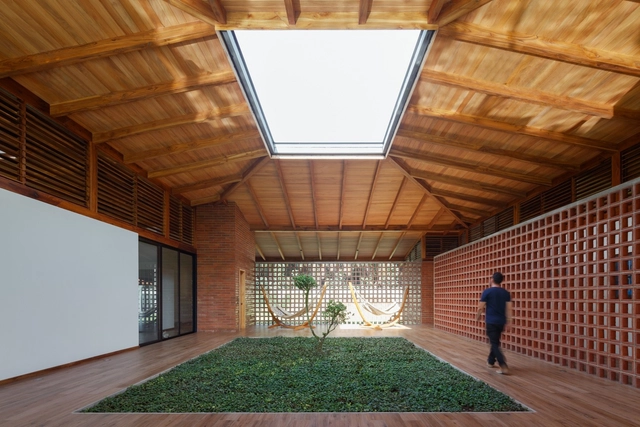
Today, architects are increasingly concerned with the interaction between architecture and the environment in which it is inserted, thus assuming responsibility for the thermal comfort of interior spaces, using design strategies for natural climate control.
In the midst of International Women’s Day which was on March 8th, this year features a week-long curation of articles and editorials by ArchDaily, seeking to dissipate the gender disparity that exists in the world of architecture. In highlighting women's voices in architectural conversations - the following are 10 interviews from ArchDaily’s archived Youtube playlists that feature inspiring women figures in the world of architecture.
HerCity is a platform that involves women in urban development, in order to make better cities for everyone. Turning the tables and putting girls in the expert position, the digital toolbox aims to create more inclusive, equal, and sustainable cities and communities. The initiative makes methods and tools available to urban actors globally, in order to support cities in integrating girls’ participation in their long-term strategies.
Launched on Women’s day 2021, the guide for urban planning and design is a collaborative effort between UN-Habitat and Global Utmaning, the Swedish independent think tank. ArchDaily had the chance to talk with the team behind this digital toolbox, discussing the narratives, the process, and inclusive planning on a worldwide level.
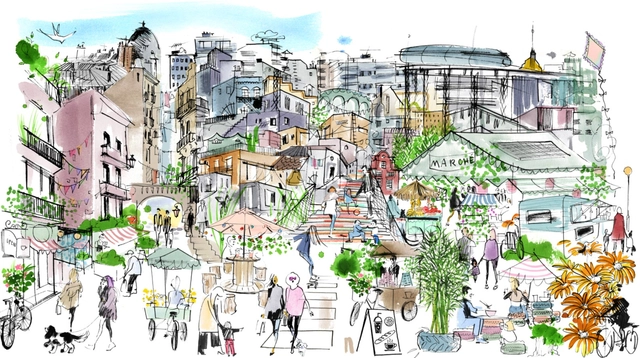
The climate crisis has revealed the poor planning of our cities and the spaces we inhabit. Both construction and projects contribute to high carbon gas emissions. Fortunately, there are several ways to intervene to bring change into this scenario, either through materials and techniques adopted in each initiative or through geographical and social impact. In this scenario, the only certainty is that: to think about the future we cannot ignore the "green" in all its recent meanings from nature to sustainability, and ecology.
Simple in form but complex in substance, “What is Architecture?” remains an existential question for a lot of architecture students and young professionals. In an attempt to define this ever-changing interrogation and expose the different visions out there, the interview series: WIA – What is architecture? asks four, straightforward, questions to world-leading architectural designers and thinkers. Seeking to uncover their opinion on what architecture is and what it can do, these short videos reveal responses to “What is architecture? What can architecture do? What is your architectural position? and What is your design method?”.
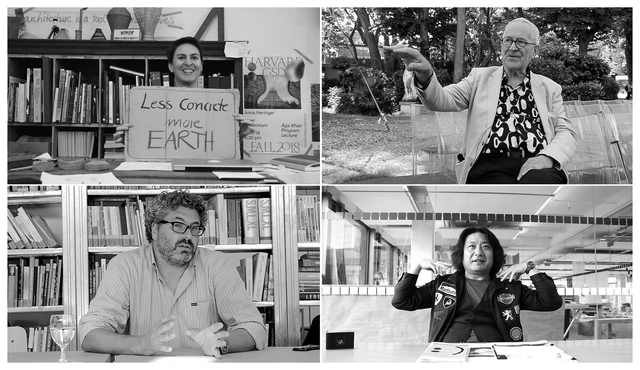
ArchDaily has collaborated with WIA to release every week, 4 of these conversations, and to invite you to take on the challenge and answer these questions. This first feature, shares insights into the thoughts and personality of Peter Cook, Anna Heringer, Moon Hoon, and Greg Lynn.
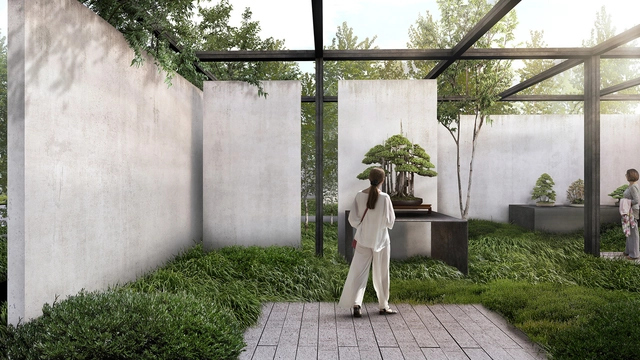
National Bonsai and Penjing Museum at the National Arboretum. Image Courtesy of Trahan Architects by Design Distill
For the third episode of Design and the City, a podcast by reSITE on how to make cities more livable and lovable, by raising questions and proposing solutions for the city of the future, the team interviewed Madame Architect's Julia Gamolina. In this episode, the architect, founder, and editor-in-chief talks about the efforts of building a platform of community and collaboration, putting the spotlight on the diverse stories and perspectives of women that deserve a seat at the table.