

In an interview with Louisiana Channel, Rafael Moneo, the celebrated Spanish architect and 1996 Pritzker Architecture Prize laureate, reflected on his career and philosophy. Born in Tudela, Navarra, Spain, in 1937, Moneo described how his early academic interests and professional experiences shaped his approach to architecture, resulting in a distinguished body of work that integrates historical, cultural, and environmental contexts.
Interview: The Latest Architecture and News
"Buildings Have Their Own Lives:” Rafael Moneo on Creativity in Louisiana Channel Interview


https://www.archdaily.com/1024253/a-great-way-of-being-in-the-world-rafael-moneo-on-creativity-in-louisiana-channel-interviewNour Fakharany
Designing Bombardier’s Aerospace Campus in Toronto, Canada: Insights from Lilia Koleva of NEUF architect(e)s
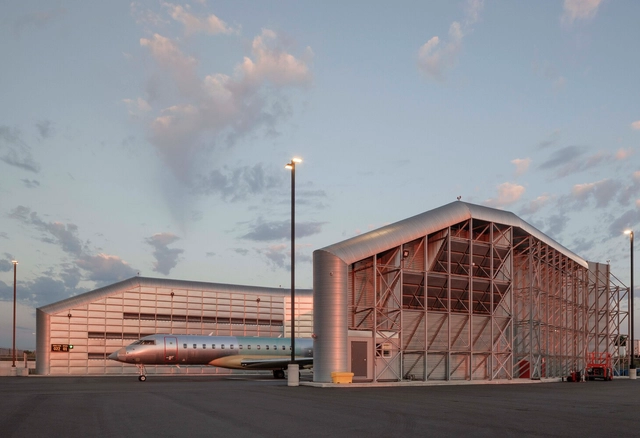
Adjacent to Toronto's Pearson International Airport, the Bombardier Aircraft Assembly Center represents a landmark project in Canadian aerospace design. Located next to Canada's largest airport, it blends 70,000 m2 (750,000 ft2) of technical precision with a focus on people. ArchDaily's editor Moises Carrasco had the opportunity to speak with Lilia Koleva, partner at NEUF architect(e)s and founder of the firm's Toronto office, which led this project. Koleva shared insights into her professional journey and reflected on the challenges of building and growing NEUF's Toronto-based office. She also discusses the Bombardier Campus, describing it as a defining project in her career, and how it showcases NEUF's ability to tackle large-scale, technically demanding projects while maintaining a focus on the people who use the space. This project builds on the office's prior expertise in industrial design and expands its portfolio of human-centered architectural solutions. Koleva also reflects on the importance of fostering collaboration, adaptability, and a clear understanding of client needs; qualities that have defined her approach to architecture and leadership at NEUF.




https://www.archdaily.com/1023961/designing-bombardiers-aerospace-campus-in-toronto-canada-insights-from-lilia-koleva-of-neuf-architect-e-sMoises Carrasco
"The Building as a Dance Between Design and Habitation": In Conversation with Níall McLaughlin
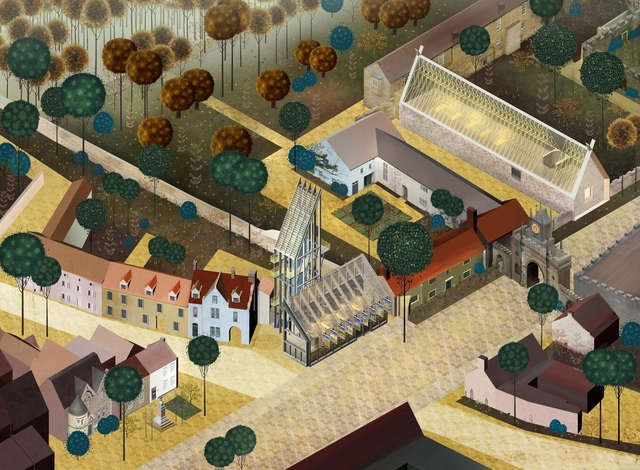
In an era marked by rapid urbanization, climate emergencies, and evolving societal needs, architecture has a complex role to play and a responsibility to engage actively yet sensibly with cultural, political, and economic considerations. In this context, Níall McLaughlin stands out for his balanced approach rooted in historical contexts, yet aware and responsive to contemporary challenges. His studio, Niall McLaughlin Architects, embraces a dialogue-centric approach, fostering a collaborative environment. ArchDaily's senior editor Maria-Cristina Florian had the chance to sit down with Níall McLaughlin and discuss his perspective on the role of architecture in today's society and the emerging challenges of architectural education.


https://www.archdaily.com/1023315/the-building-as-a-dance-between-design-and-habitation-in-conversation-with-niall-mclaughlinMaria-Cristina Florian
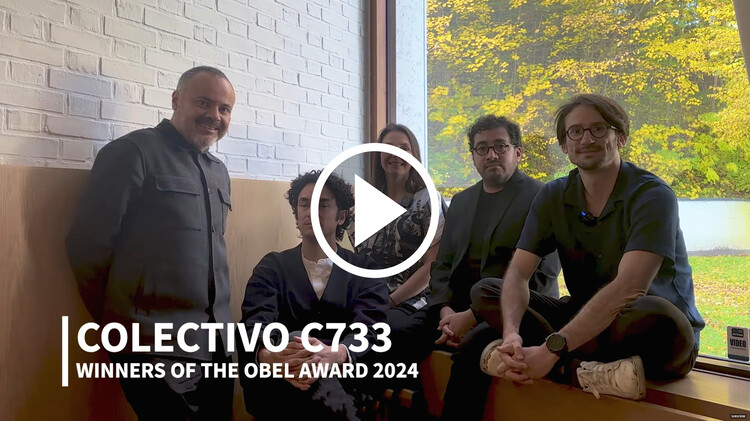
“Architecture is a Work of Generosity:” In Dialogue with Colectivo C733, Winners of Obel Award 2024
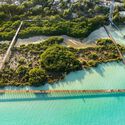
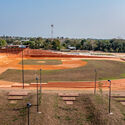
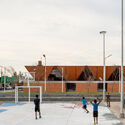
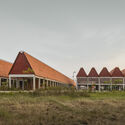
Recognized for completing 36 distinct yet cohesive public projects across Mexico in just 36 months, Colectivo C733 showcases the impact of collaborative design on public spaces and communities. The 36 projects were part of a national effort to revitalize vulnerable urban and rural areas in Mexico, earning them the 2024 Obel Award focused on the theme of "Architectures With". The team behind the designs, Colectivo C733, is a collaborative group formed by the joint offices of architects Gabriela Carrillo (Taller Gabriela Carrillo), Carlos Facio, and José Amozurrutia (TO), along with Eric Valdez (Labg), and Israel Espin. In a recent conversation with ArchDaily's Editor-in-Chief, Christele Harrouk, the collective discussed their approach to public architecture, the process of integrating diverse voices, and remaining flexible to the challenges of local conditions.
https://www.archdaily.com/1023225/architecture-is-a-work-of-generosity-in-dialogue-with-colectivo-c733-winners-of-obel-award-2024Maria-Cristina Florian
Beyond Conventional Design: The Unique Approaches of Office ParkScheerbarth

Office ParkScheerbarth, selected as one of ArchDaily's 2024 Best New Practices, was founded in Berlin in 2019 by principals Moojin Park and Benjamin Scheerbarth. Together, they create a synthesis between architecture, urban planning, and social science, drawings on cultural and educational contexts from Korea, the US, and Germany. Their work creates spaces that welcome versatility, challenges, and growth. The duo embodies a fusion of cultures, nationalities, and diverse disciplines, approaching each project from multiple perspectives and emphasizing adaptability, respect for ownership, and the continuous pursuit of knowledge and innovation. Challenging norms and regulations of the built environment, Moojin Park and Benjamin Scheerbarth share a commitment to pushing and exploring design boundaries. They met during their Master's studies in the US, where their shared vision took shape and marked the beginning of their journey together.


https://www.archdaily.com/1023032/beyond-conventional-design-the-unique-approaches-of-office-parkscheerbarthHadir Al Koshta
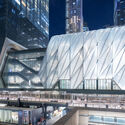
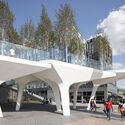
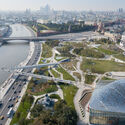
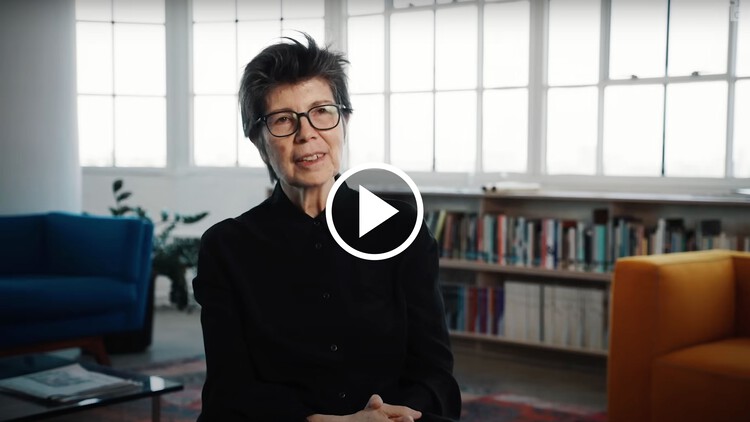
A Mind Reader, an Archaeologist, a Psychiatrist, a Dreamer, a Poet: The Design Philosophy of Liz Diller in Louisiana Channel Interview
In an interview with Louisiana Channel, Liz Diller, co-founder of the renowned architecture firm Diller Scofidio + Renfro, reflects on her unconventional journey into architecture and her innovative approach to design. Starting her career with aspirations of being an artist, Diller never initially intended to become an architect. Her artistic background, which included painting, sculpture, and filmmaking, continues to influence her work today. What drew her into architecture was a combination of curiosity and practicality, driven in part by concerns about the viability of a career in the arts.

https://www.archdaily.com/1022789/a-mind-reader-an-archaeologist-a-psychiatrist-a-dreamer-a-poet-the-design-philosophy-of-liz-diller-in-louisiana-channel-interviewNour Fakharany
Sumayya Vally on Incorporating Diverse Knowledge in Contemporary Architecture: The Obel Award 2024 Theme
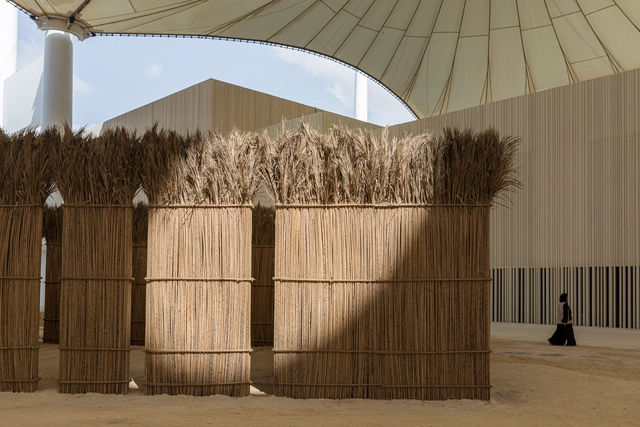
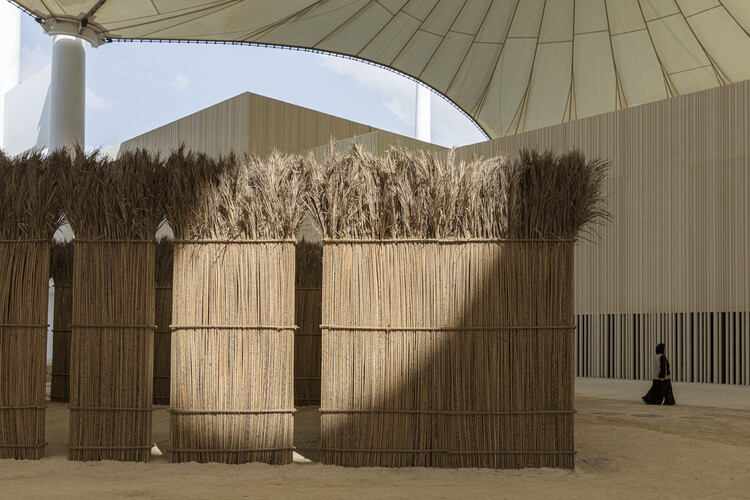
Sumayya Vally, architect, curator, and founder of Counterspace architecture office, joins the jury for the 2024 Obel Award. This international architectural prize, organized by the Henrik Frode Obel Foundation, honors projects that significantly impact people and the planet. The 2024 theme, "Architecture WITH," invites a re-examination of the architectural profession, emphasizing collaborative and co-creative processes that integrate diverse bodies of knowledge into the core of design. Vally's perspective on redefining architectural roles aligns with the theme's focus on non-hierarchical, co-creative approaches.

https://www.archdaily.com/1021680/sumayya-vally-on-incorporating-diverse-knowledge-in-contemporary-architecture-the-obel-award-2024-themeMaria-Cristina Florian
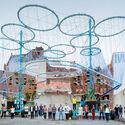
"Architecture Is Not Just the Provision of Space:" Andrés Jaque on the Roles of Architecture in Louisiana Channel Interview
In the interview conducted by Louisiana Channel, architect Andrés Jaque discusses his foundational interest in architecture and his perspective on its role in shaping society. Jaque, founder of the Office for Political Innovation, emphasizes the creative potential of architecture to intervene in reality and reconnect all elements of the environment. He also goes into perspective on the political aspect of architecture, an interest from which the name of his office derives, as well as his perspectives on the true meaning of sustainability.

https://www.archdaily.com/1020834/architecture-is-not-just-the-provision-of-space-andres-jaque-on-the-roles-of-architecture-in-louisiana-channel-interviewMaria-Cristina Florian
Khalil Khouri, Modernism, and the Arab World: In Conversation with Bernard Khoury
In Beirut, the Interdesign Building stands as a striking yet enigmatic structure. Never used since its conception in 1973, the building was designed by Lebanese architect Khalil Khouri and, in some ways, it represents a physical testament to the region’s hopes and struggles. During the inaugural edition of We Design Beirut, the exhibition “All Things Must(n't) Pass: A Subjective Recount Of Khalil Khouri’s Life And Career As A Designer” opened the building to the public, aiming to tell the story of its architect, Khalil Khouri, through the lens of his son and grandson, Bernard and Teymour Khoury. On this occasion, ArchDaily’s Editor in Chief, Christele Harrouk sat down with Bernard Khoury at his DW5 office to discuss the life of his father and a little-known chapter of Lebanese architectural history.


https://www.archdaily.com/1020386/khalil-khouri-modernism-and-the-arab-world-in-conversation-with-bernard-khouryMaria-Cristina Florian
"Building the Line as a Three-Dimensional City:” In Conversation with Tarek Qaddumi, Executive Director of The Line Design of NEOM
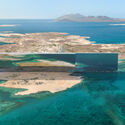
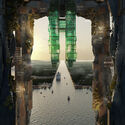
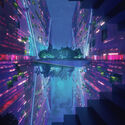
In early 2021, Saudi Arabia unveiled the Line, a 170-kilometer-long linear city, part of the NEOM project. NEOM has since expanded with proposals for the region, including a ski destination set to host the 2029 Asian Winter Games, a floating port city at Oxagon, and cliffside hotels at Leyja. However, the Line continues to be one of the most debated of the proposals due to its scale and unprecedented design. According to the official releases, the city would measure 170 kilometers in length, 200 meters in width, and 500 meters in height, making it the 12th highest skyscraper in the world. In its final phase, it is expected to welcome 9 million residents, nearing the size of London or New York’s five boroughs.
On October 23, 2023, during the closing of the Line Exhibition in Riyadh, Saudi Arabia, ArchDaily’s Editor in Chief, Christele Harrouk spoke to Tarek Qaddumi, Executive Director of The Line Design at NEOM, asking questions that probe into both the conceptual aspects and the technicalities of The Line project. In this video interview, the conversation addresses notions such as accessibility, transportation, and sustainability, while also exploring the concept of Cognitive Cities and the intended phasing of the project.


https://www.archdaily.com/1019840/building-the-line-as-a-three-dimensional-city-in-conversation-with-tarek-qaddumi-executive-director-of-the-line-design-of-neomArchDaily Team
"Life Changes Every Second, But Architecture Never Changes": In Conversation with Tatiana Bilbao
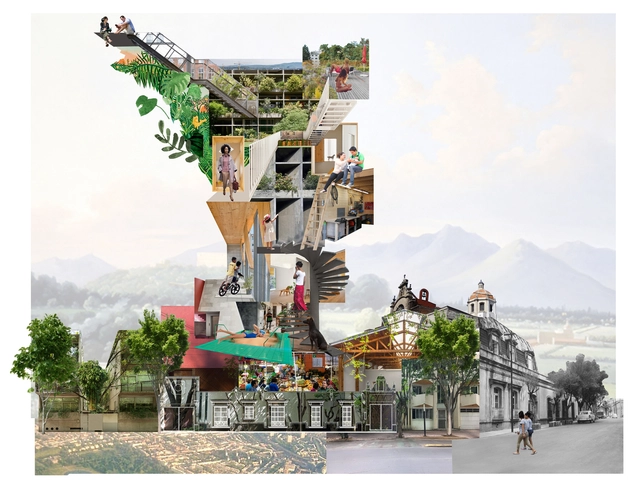
These days, it is common to hear multiple voices addressing the diverse issues of contemporary architecture. The topics are numerous, ranging from sustainability and inclusion to social justice and the crisis in land use. At first glance, there is no common ground where all these concepts can coexist transversally. However, if we look back, we can see that beyond the formal architectural concepts, the true purpose of architecture (probably) lies in the people and the lives that develop within it.
Thus, many would argue that life is likely more important than architecture, which could open up a broad debate. What is certain is that currently, narratives and voices are emerging and consolidating, aimed at renewing architectural tools and languages. This transformation seeks to turn the built environment into a space that promotes a more equitable and optimistic future for all. One of these voices is that of Tatiana Bilbao, recognized for her process-centered approach where life and human interactions play a crucial role in defining habitats.
https://www.archdaily.com/1018888/life-changes-in-seconds-but-architecture-never-changes-in-conversation-with-tatiana-bilbaoEnrique Tovar
Marcelo Rosenbaum: For an Architecture of Alliances, Listening and Respect
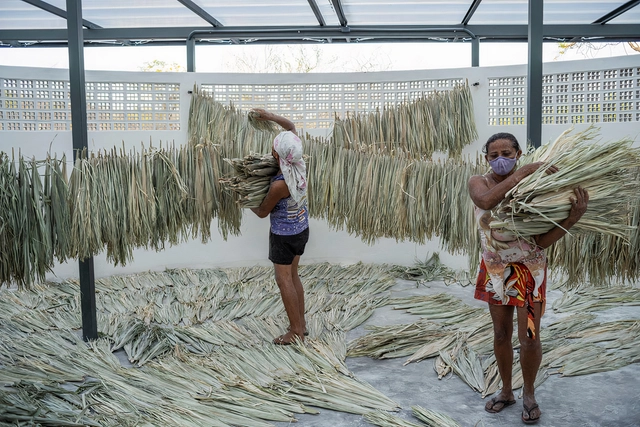
Marcelo Rosenbaum speaks with vivacity and excitement, reflecting his undeniable passion for what he does. His approach to architecture is marked by a proactive stance, leading him to travel to the most remote interiors of Brazil, often voluntarily. There, he listens carefully to local demands and seeks to develop projects that go beyond simple buildings, becoming instruments of transformation for the local reality. One of his best-known projects is in Tocantins, the Children's Village on the Canuanã Farm, done in partnership with the Aleph Zero office, which has been recognized worldwide and won awards. On June 20, he closed the program of the AsBEA 2024 National Convention, whose theme was "Sustainable Roots," held in Florianópolis, Brazil. We had the chance to talk to him about his professional career and some of his recent work.
https://www.archdaily.com/1018425/marcelo-rosenbaum-for-an-architecture-of-alliances-listening-and-respectEduardo Souza
The Intersection of Infrastructure and Community: In Conversation with Holcim Award Winner Juan Carlos Cano
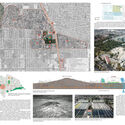
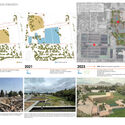
Located in Mexico City, the municipality of Iztapalapa has some of the most densely populated areas within the metropole. Serving a population of 1,800,000 people, many of them with lower incomes, the municipality struggles to provide sufficient public spaces and amenities. In an effort to correct this, the administration set out to take underutilized and abandoned plots of land and transform them for public use. Utopia Estrella is one of these initiatives. Located near Mexico City’s largest water treatment plant, the project combines a socially engaging architectural program with a pedagogical approach to the role of water infrastructures in the larger ecosystem. Designed by Cano Vera Arquitectura, the project has been recognized as the Gold Prize Winner of the Holcim Awards 2023 for Latin America. In a video interview for ArchDaily, Juan Carlos Cano of Cano Vera Arquitectura discusses the impact of this project, its goals, and the unique conditions that led to its development.

https://www.archdaily.com/1018403/the-intersection-of-infrastructure-and-community-in-conversation-with-holcim-award-winner-juan-carlos-canoMaria-Cristina Florian
Plug-In Architecture for Social Engagement: In Conversation with Holcim Award Winner DeRoché Strohmayer
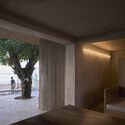
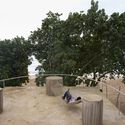
At the initiative of the Surf Ghana Collective, architects Glenn DeRoché and Jurgen Strohmayer, the co-founders of DeRoché Strohmayer, set out to transform a small waterfront plot in Busua, a surfing hotspot on Ghana’s western coast. The result is a dynamic community hub, complete with amenities for local surfers, but also providing spaces for the entire community to gather in and off-season. The project has been recognized as the winner of the Gold Prize of Holcim Awards 2023 for the Middle East and Africa commended for the profound local impact and the resourceful approach to construction techniques. In a video interview for ArchDaily, architects Glenn DeRoché and Jurgen Strohmayer discuss the development of this initiative and the innovations that shaped it.



https://www.archdaily.com/1018302/plug-in-architecture-for-social-engagement-in-conversation-with-holcim-award-winner-deroche-strohmayerMaria-Cristina Florian
Restoring a Symbol of Collective Memory: Holcim Award Winner Xu Tiantian Discusses the Impact of Adaptive Reuse
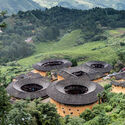
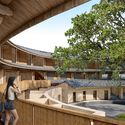
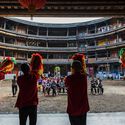
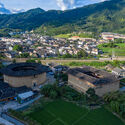
In the mountain valleys of China’s Fujian Province, thousands of large, rammed earth fortresses lay abandoned. Once used for both defense and collective housing, the tulou typology is an integral part of the region’s cultural heritage, with 46 of them being recognized by UNESCO as World Heritage Sites. Despite this, the rural communities surrounding them have struggled to find new roles and purposes for these buildings. Going beyond the need for conservation, architect Xu Tiantian of DnA_Design and Architecture set out to develop and adapt this heritage to reintroduce it into community life. The Fujian Tulou | Adaptive Reuse project recently won the Gold Prize of Holcim Awards 2023 for Asia-Pacific, recognized for creating “an exemplary model for building conservation initiatives.” In a video interview for ArchDaily, Xu Tiantian discusses the principles that underpin this initiative and the potential outcomes of adaptive reuse in rural communities.

https://www.archdaily.com/1017970/restoring-a-symbol-of-collective-memory-holcim-award-winner-xu-tiantian-discusses-the-impact-of-adaptive-reuseMaria-Cristina Florian
"Individual Space is as Important as Collective Space": In Conversation with Pritzker Prize Laureate Anne Lacaton
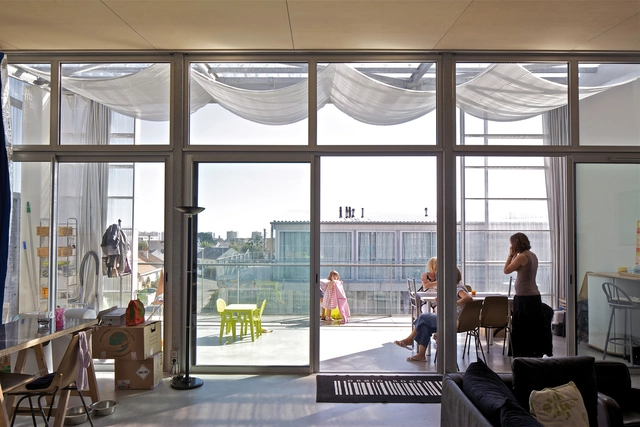
Led by Pritzker Prize laureate Anne Lacaton, the jury of the European Collective Housing Awards has just selected the winners for its first edition. Established by the Basque Architecture Institute and Arc en Rêve Centre d’Architecture in collaboration with the Department of Territorial Planning, the award celebrates innovation and excellence in collective housing design, emphasizing aesthetics, social responsibility, and environmental sustainability. The winning projects - La Borda Housing Collective in Spain and the Conversation of a Wine Storage into Housing in Switzerland - were selected from 171 entries across 19 European countries for their contributions to new construction and renovation, respectively.
Anne Lacaton, renowned for her groundbreaking work with partner Jean-Philippe Vassal, has been working to push the boundaries of sustainable and socially responsible housing architecture for decades. The Pritzker Prize laureates are celebrated for their innovative approach to social housing and are committed to enhancing the quality of life for residents. Their philosophy centers around creating generous, adaptable spaces that rethink how we live together. Onsite in San Sebastián, ArchDaily had the chance to interview the Pritzker-Prize winner to delve into her architectural practice and philosophy. In the conversation, the architect explored core values, the significance of reuse in social housing, and the promising trends in collective housing design that emerged from the first edition of the awards.


https://www.archdaily.com/1017320/individual-space-is-as-important-as-collective-space-in-conversation-with-pritzker-prize-laureate-anne-lacatonNour Fakharany
“We Can Transform the Profession by Rethinking How We Might Serve Society”: A Conversation With Ronald Rael

Understanding a discipline from multiple perspectives and intersections is essential for acquiring a deep understanding of it. In architecture, the diversity of approaches to its study enriches our perception by allowing us to appreciate its complexity from different angles. For students and professionals alike, exploring aspects such as history, sources of materials and products, construction processes, implementation of new technologies, and contemporary social challenges is crucial. These aspects intertwine and expand the conventional notion of "architecture," transcending the mere creation of buildings or the definition of spaces.
Ronald Rael, an architect and the Eva Li Memorial Chair in Architecture at the University of California, Berkeley, exemplifies this vision through his practice, which spans from research to connecting indigenous and traditional material practices with contemporary technologies and issues. As an activist and designer, Rael's research interests explore additive fabrication, border-wall studies, and earth construction. Co-founder of Rael San Fratello, Emerging Objects, and Forust, his practice shows an approach to architecture that is highly relevant in contemporary times.
https://www.archdaily.com/1016555/we-can-transform-the-profession-by-rethinking-how-we-might-serve-society-a-conversation-with-ronald-raelEnrique Tovar
"Industrialization Is Emerging as the Only Sustainable Approach”: New Voices in Construction Reinvention
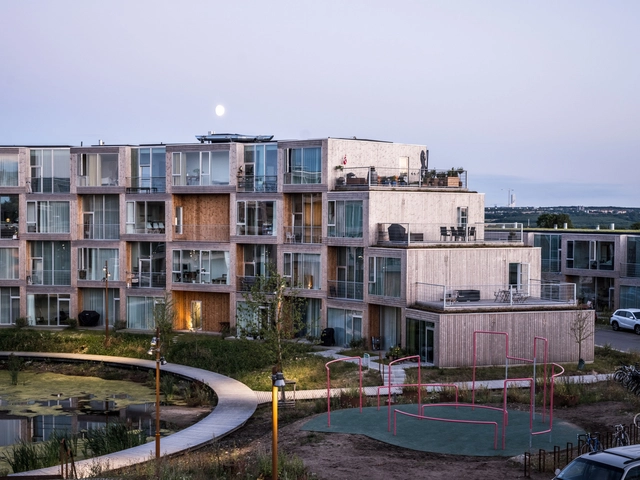
In the Brazilian architectural scene, Felipe Savassi stands out for being a unique mix of designer and communicator. He shares his passion for architecture and his entrepreneurial vision with his thousands of students and followers on social media, with content that seeks to promote an approach centered on the promotion of industrialized and modular construction. With a degree in Architecture and Urbanism from the Isabela Hendrix Institute in Belo Horizonte, his professional activity is supported by four essential pillars: design and execution of architectural projects, education, mentoring and consulting, and a strong commitment to communication and content dissemination.
https://www.archdaily.com/1016071/industrialization-is-emerging-as-the-only-sustainable-approach-new-voices-in-construction-reinventionEduardo Souza