Unconstrained by the dogmas of established offices, new architectural practices can often challenge building norms and redefine living standards. The Young European Architecture Festival (YEAH!) is an event dedicated to highlighting these new and emerging practices and bringing their contributions to the built environment into focus. Many of these practices are challenging and redefining typologies of residential architecture. They are building upon ideas such as cooperative housing schemes, community-initiated developments, and circular economy. Others are exploring local identities and resources as a way to reinvigorate the profession while creating respectful and regionally relevant works of architecture.
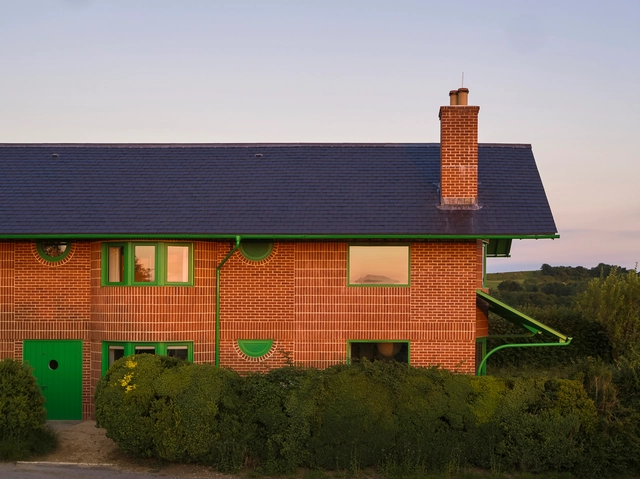
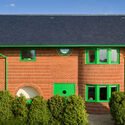
The Royal Institute of British Architects has awarded RIBA House of the Year 2022, to a "contemporary new family house in rural Dorset," the Red House by David Kohn Architects. Inspired by the Arts and Crafts movement, the structure "reinterprets the style in an intentionally provocative way [...] [with] playful eccentricity, including oversized eaves, patterned red brickwork, and contrasting bold green details".
One hundred years ago, design and architecture professionals of the Bauhaus and the modern movement broke with the traditional concept of housing, proposing new ways of building, distributing its spaces and furnishing it. Although many of their aesthetic and constructive approaches have had a great impact and development in the field of design since then, society, however, has gone at a different speed when it comes to adopting certain models of domestic space to which these movements opened the door. Since then, housing has been in constant revision, reformulation and even experimentation, having had a profound interest in design for most of the most important design and architecture professionals of the twentieth century, and so far in the twenty-first.
https://www.archdaily.com/992741/scenes-from-the-near-future-an-exhibition-that-explores-the-future-of-housesArchDaily Team
One of the great challenges that architects have to face every day when designing begins with the conditions of the site where the architectural project is to be implemented. This involves the analysis and study of a series of factors ranging from sunlight, topography, surrounding vegetation, context, and others, all variables that are capable of guiding and/or defining the direction of the architecture to be developed.
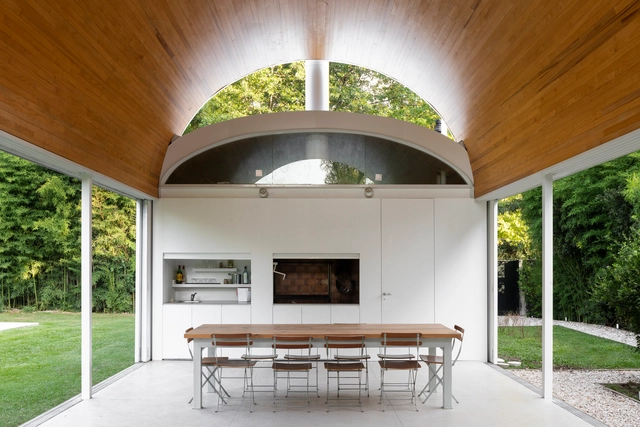
As a protagonist of the Argentinean culinary scene, the barbecue plays a prominent role. In architecture, beyond the dimensions of the spaces where they are installed, grills are consolidated as a meeting point for visitors and residents of the houses, coming into direct contact with the customs and culture of the country.
Being a region characterized by its wide variety of landscapes, biodiversity and thermal floors, the design of interior patios in Colombian homes accompanies the living, resting, access, and circulation spaces, being, on many occasions, protagonists and a source of contact with the surrounding nature.
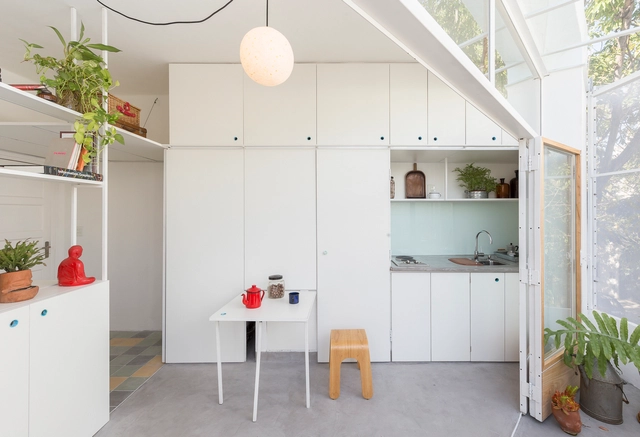
Achieving the best use of space, reducing the footprint of the buildings that are constructed and designing an optimal distribution that can meet the needs of their inhabitants are some of the requirements and challenges faced, day after day, by architects around the world. Through the implementation of certain materials, the definition of the morphology or even the geographical and natural conditions of the terrain, it is possible to carry out various strategies that make it possible to design homes with the comfort that their users need and in the smallest amount of square metres possible.
Regardless of the design adopted for kitchen spaces, for some years now and with increasing frequency, many architects have been deciding to design kitchens by integrating them into other rooms in the home. Free of dividing walls or joinery, integrated kitchens are implemented with the aim of leaving the activities that take place there in full view of everyone, encouraging interaction and communication between the inhabitants.
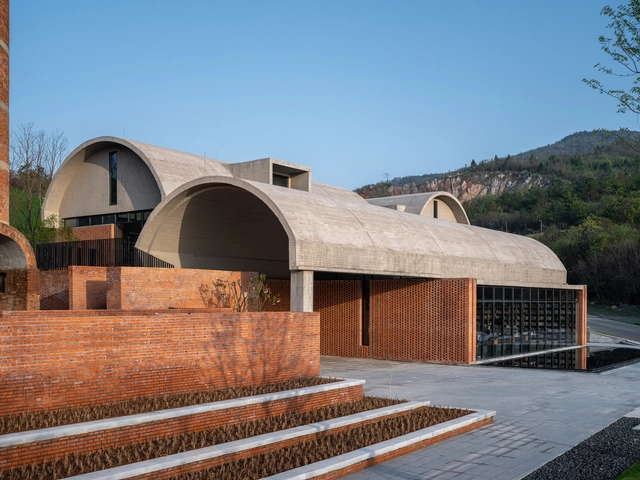
The oldest record of barrel vaults is estimated to date back to 4000 BC. These provided the spans in the Sumerian ziggurat at Nippur in Babylonia, built from fired bricks amalgamated with clay mortar. This type of vault was built as a continuous round arch and became a characteristic architectural element of Roman architecture, later used also in Renaissance architecture.
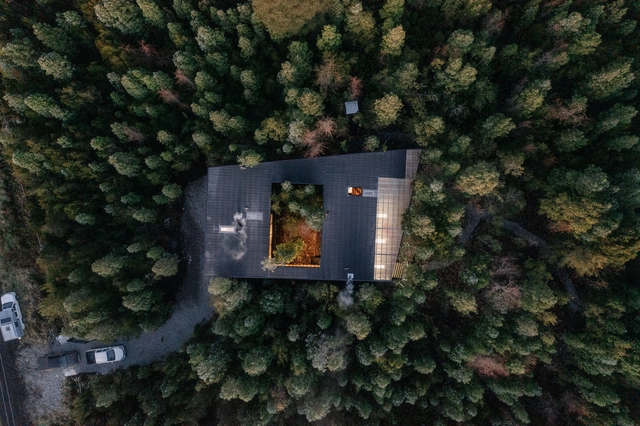
What role do forests play in our daily lives? In what ways can they be converted into living spaces? What strategies can be implemented to reduce the environmental impact of our buildings? On the International Day of Forests, which is celebrated every 21st of March, this year we propose to raise awareness of the links between forests and our daily lives. Even though deforestation continues to advance, forests represent a source of great economic, social and ecological benefits.
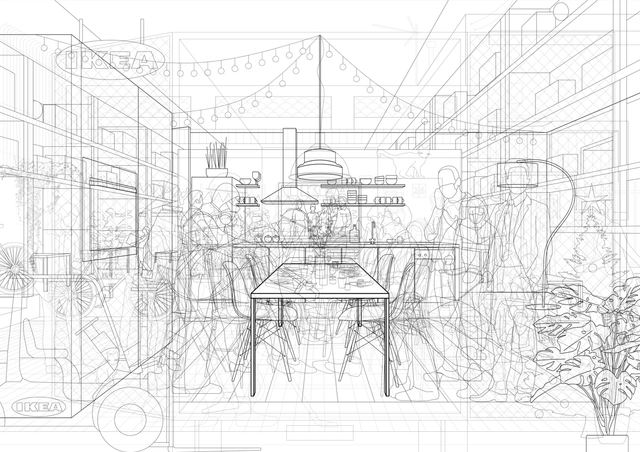
Poner la mesa. Image Cortesía de Florencia Köncke y Paula Olea Fonti
Setting the Table is an illustrated reflection by architects Florencia Köncke and Paula Olea Fonti. In the following paragraphs, the authors develop a first approach to the study of the table as "the centre of our notion of domesticity"(1). In the relationship between space, objects and people and as a social catalyst for gathering and exchange.
https://www.archdaily.com/977914/setting-the-table-from-the-ordinary-table-to-the-extraordinary-tableFlorencia Köncke + Paula Olea Fonti
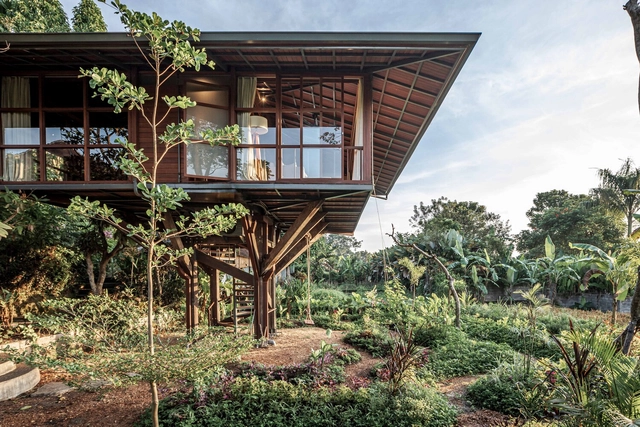
The strategy of raising houses off the ground gained popularity in the 1920s when Le Corbusier announced structures on pilotis as one of the 5 points of modern architecture. A great contribution, especially in the urban issue, as it enables the creation of a free space with greater connection between the public sphere of the street and the private sphere of the building. His iconic Villa Savoye is a paradigmatic example of the use of pilotis that preserves the natural terrain and, as Le Corbusier himself said, places the house on the grass like an object, without disturbing anything. In addition, the pilotis also served as a strategy for the flow of vehicles, which can be seen in Lina Bo Bardi’s equally emblematic Casa de Vidro and its slender steel tubes. Arranged in a modulation of four modules in width by five in depth, they maintain the house as a transparent floating box in the midst of nature, respecting the terrain and assisting in the building's thermal comfort by allowing air circulation.
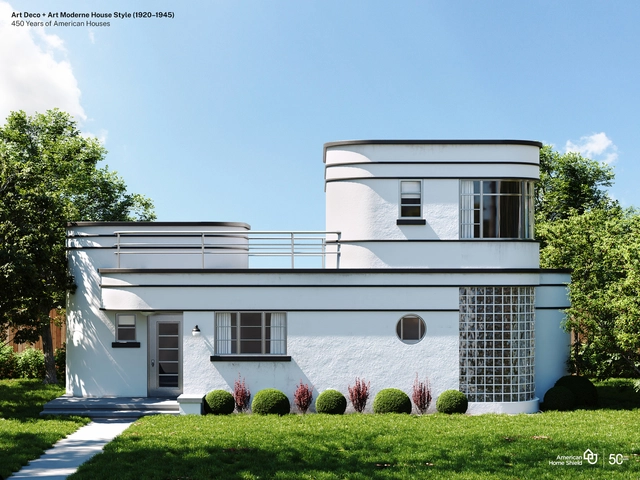
Art Deco + Art Moderne (1920–1945). Image Cortesía de American Home Shield
The history of architecture is made up of demographic, cultural, and social changes. In its relatively short history, American architecture has evolved with changes in the country, representing the catalog of various cultural influences that make up the United States as a whole. Many elements of American home design have remained intact over the past 450 years, reflecting longstanding American traditions and values that have stood the test of time.
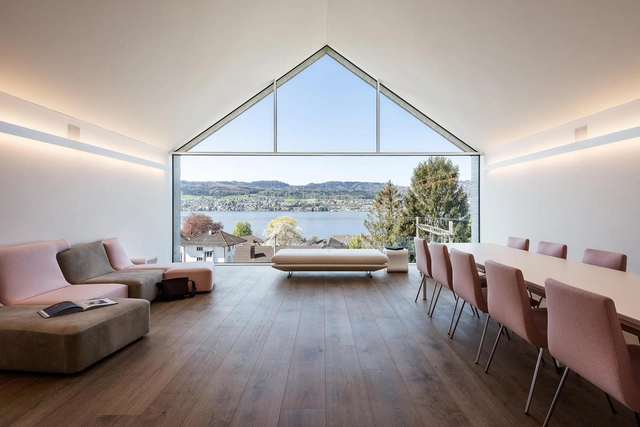
We love to fill our houses with wonderful creative decoration that brings us pleasure every time we enter a room. It’s these decorative features that transform a house into a home. But for those houses lucky enough to be surrounded by captivating landscapes, why shut out all that natural decoration only to replace it with interior imitations?
Using either glass partitions or ground-flush, floor-to-ceiling sliding glass panels, by inviting the environment in, specifiers can connect interior and exterior spaces for a deeper connection with nature, allowing the local landscape itself to become the largest interior in the home. Here is a selection of residential projects that use the latest innovations in sliding windows to form a relationship with the surrounding landscape:
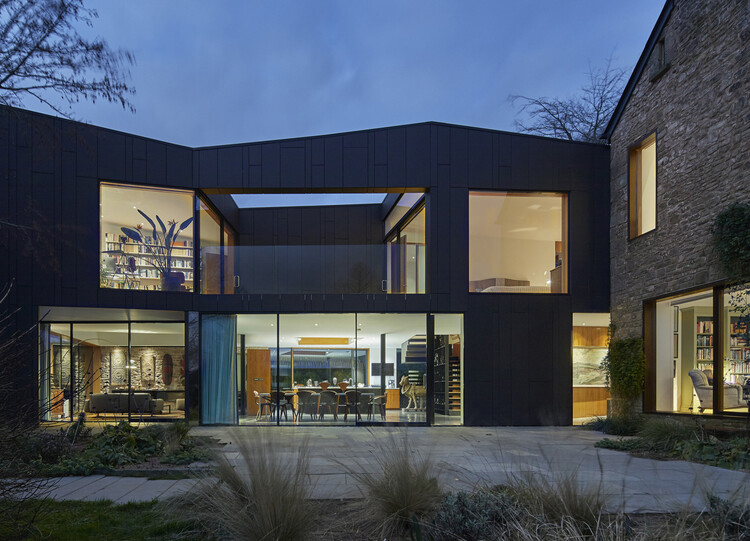
The RIBA House of the Year Award, which highlights the best new architect-designed house in the UK, was given this year to House on the Hill, designed by Alison Brooks Architects. Located in Gloucestershire, the house represents a contemporary extension to an 18th-century farmhouse that functions both as a home and repository of art. Over ten years in the making, the project creates a rich spatial experience while establishing a strong connection between the dwelling and the landscape. The jury commended the house for the “amalgam of architecture, landscape, inhabitation and art” that aptly manages to create a light and calm atmosphere.
Although the design diversity of private homes often relies on how each project responds to the topography, context, and material availability, the most significant factor of residential architecture is users and what they require in terms of spatial needs and preferences. This user-centric approach has long been practiced, Mies van der Rohe once explained that "the architect must get to know the people who will live in the planned house. From their needs, the rest inevitably follows".
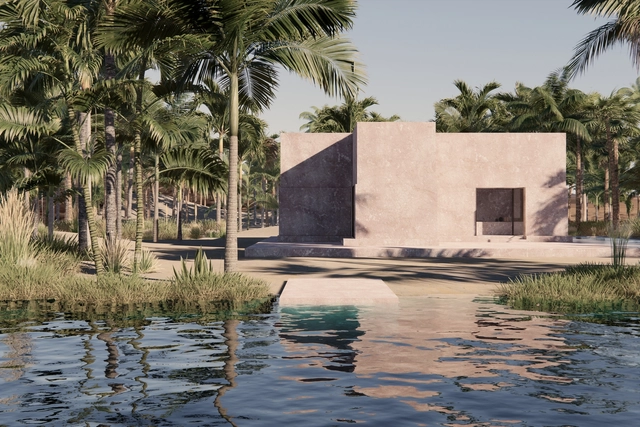
This week’s curated selection of Best Unbuilt Architecture highlights private residential projects submitted by the ArchDaily community. From a private family house nestled in the forests of Russia to a reinvention of Colombia's traditional courtyard typology, this round up of unbuilt projects showcases how architects design private spaces that combine nature, functionality, privacy, and locality. The article also includes projects from Kosovo, Spain, United States, and Serbia.










.jpg?1654617049&format=webp&width=640&height=580)


_Maureen_M._Evans.jpg?1646840531 "© Maureen M. Evans")





.jpg?1642689075 "Casa Redux / Studio MK27 - Marcio Kogan + Samanta Cafardo. © Fernando Guerra | FG+SG")