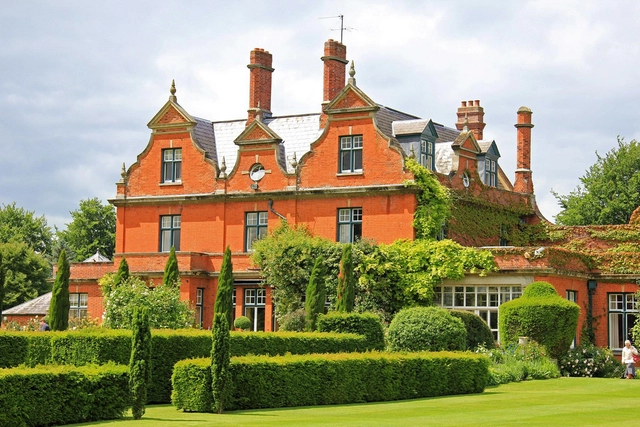
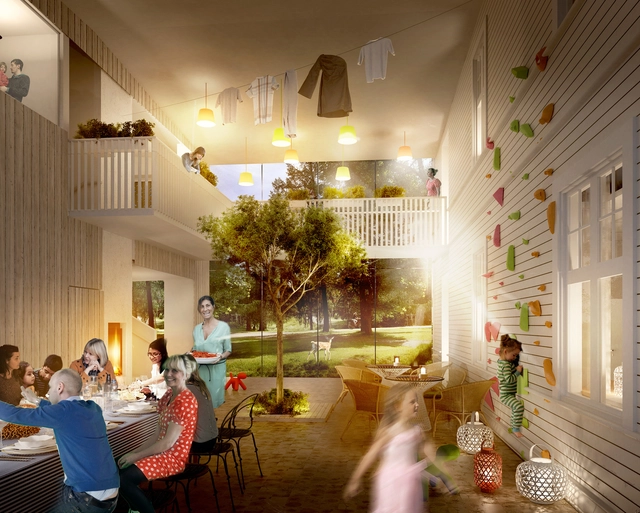
Children suffering from severe illness often leave their homes and families to receive the necessary care. In most of Sweden, accommodations for the relatives of the ill are built in the vicinity of the larger pediatric clinics.
The largest of these accommodations will be built in Umeå, Norrland. Named “Hjältarnas Hus” or "Home for Heroes," the building was designed by White Arkitekter and broke ground on Friday, March 4.
London-based practice dRMM have submitted plans for a new Maggie's Centre in Oldham, a metropolitan area north east of Manchester. Maggie's, a UK charity famed for its cancer care centres, is also well known for commissioning world-renowned architects to design their spaces. This latest proposal will be sited within the grounds of the Royal Oldham Hospital, becoming the second centre of its kind in Greater Manchester following Foster + Partners' current project in central Manchester.
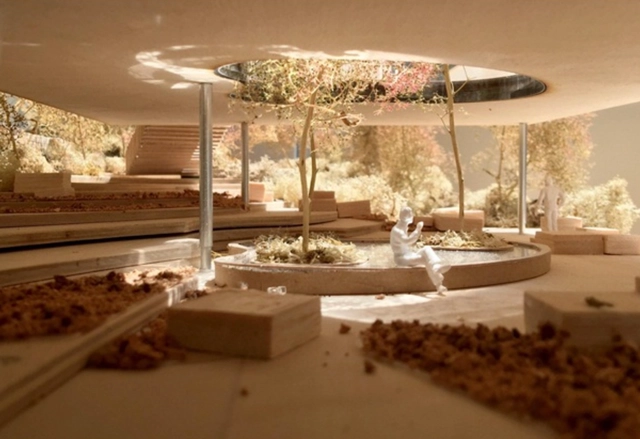
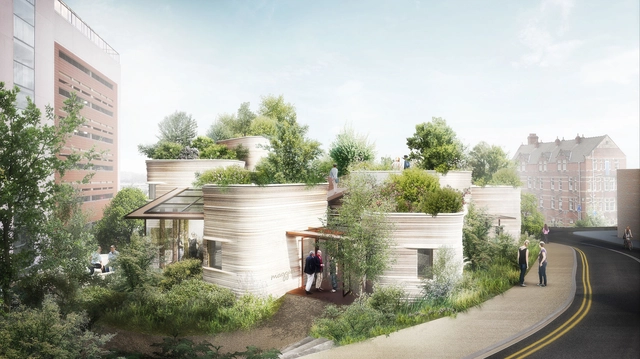
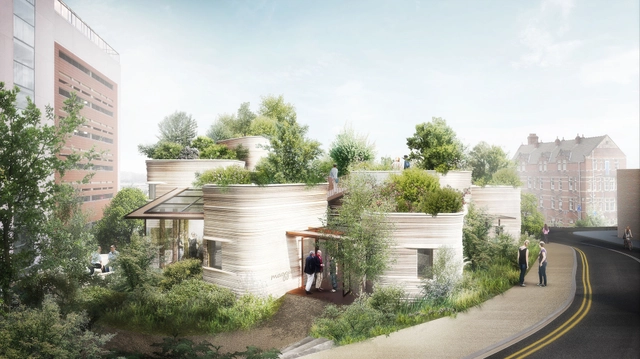
Heatherwick Studio has received planning permission to build a new Maggie's center on the St James' University Hospital grounds in Leeds. Aiming to harness the therapeutic effect of plants for the benefit of the center's cancer patients, the building was designed as a series of stepped "planters" that intertwine to form a unique and restorative layout of inside, outside, private and public space.
"The site is a small patch of green surrounded by the huge volumes of the existing hospital buildings. Instead of taking away the open space we wanted to make a whole building out of a garden," said Thomas Heatherwick in a press release.
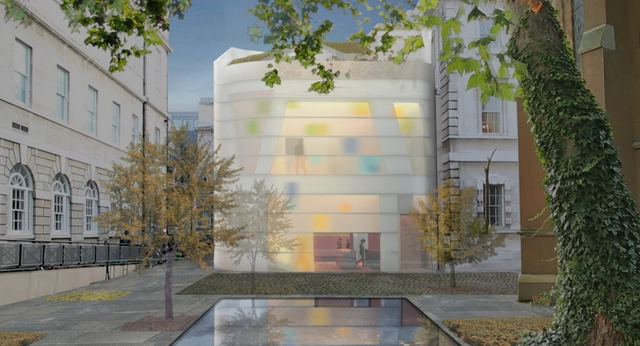
Steven Holl Architects (SHA) has broken ground on London's newest Maggie's Centre across from the large courtyard of St. Bartholomew’s (Barts) Hospital, the city's oldest hospital. The structure, a branching concrete frame lined with perforated bamboo and matte white glass, was inspired by its historic site, which also neighbors the St. Bartholomew the Great Church. It was envisioned as a "vessel within a vessel within a vessel" embellished with colored glass fragments that recall "neume notation" of Medieval music in the 13th century.
"The word neume originates from the Greek pnevma, which means 'vital force.' It suggests a 'breath of life' that fills oneself with inspiration like a stream of air, the blowing of the wind. The outer glass layer is organized in horizontal bands like a musical staff while the concrete structure branches like the hand," describes SHA.
A video of Steven Holl detailing the center's design, after the break.
Maggie's, the UK charity famed for its cancer care centers designed by world-renowned architects, has released a proposal for a new building designed by Heatherwick Studio. The new center is planned to be built on the grounds of the St James' University Hospital in Leeds, and was submitted for planning permission this morning.
The design consists of a series of stepped "planters" which aim to harness the therapeutic effect of plants for the benefit of the center's users. The building's public and private interior spaces are woven both in between these elements, and into the interior space of the planters themselves.
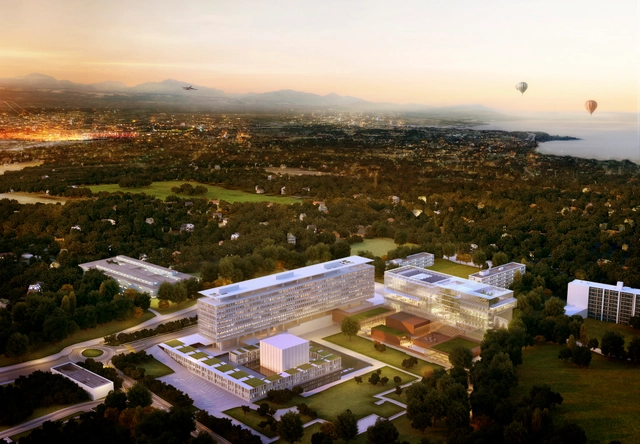
WHO Headquarters after intervention. Image Courtesy of Latitude Studio
Latitude Studio’s entry for the World Health Organization’s (WHO) design competition to expand its Geneva headquarters seeks to embody WHO’s sustainable and collaborative approach to enhancing universal health. Their design consolidates individual offices and open workspaces within one facility, maximizing areas for collaboration and communication, while solar panels and rainwater collection systems improve the building’s sustainability. If chosen, the proposal would become one of three main buildings at the WHO headquarters.
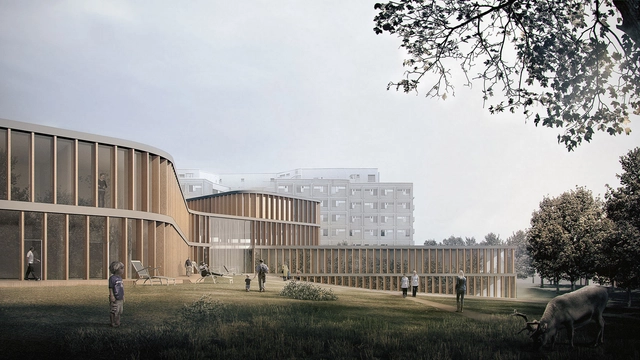
Finnish firm Verstas Architects has been awarded first place in a competition for the expansion of Finland's Lapland central hospital for their design of a functional complex of "healing architecture." Responding to the challenge of Finland's aging population and changes in municipal funding, the winning proposal reflects the "hospital of tomorrow," creating a flexible and functional space in conversation with its urban surrounds.
Biophilia: Our Evolved Kinship To Biological Forms
The organized complexity in artifacts and buildings, as I have described it, leads to a positive response from users. This is the perception of “life” which we sense in certain structures and places in the built environment. The physical structure of the world has a massive effect on human beings. A crucial task of architectural theory is to explain and predict the impact that living structure — or its absence — has on us.








.jpg?1433203539&format=webp&width=640&height=580)
.jpg?1433203483 "© Dennis De Smet")
.jpg?1433203473 "© Dennis De Smet")
.jpg?1433203406 "© Dennis De Smet")
.jpg?1433203529 "© Dennis De Smet")
.jpg?1433203539)