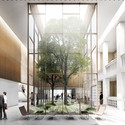
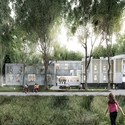
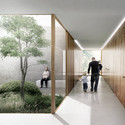
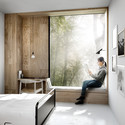
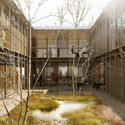
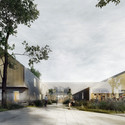
WE architecture and CREO ARKITEKTER A/S have won one of three prizes in the first phase of an invited competition to design a new Moscow Medical Center. Combining the functionalism of today's healthcare with the humanistic qualities of past architecture, the proposal introduces a facility fine-tuned for those inside.
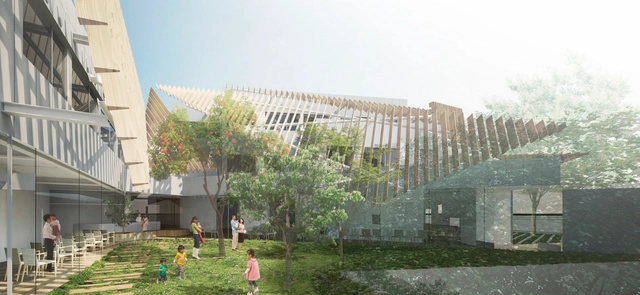
Traditionally, hospital environments are internalized, cut off from the natural world, and structured around efficiency, despite its affect on patient health. Moving beyond this, Kengo Kuma & Associates have unveiled plans to replaced an aging medical center in Setagaya, Tokyo, with a “modest,” “actively open” hospital centered around a landscaped courtyard garden.
Nationwide Children’s Hospital has selected NBBJ to design their $85 million Livingston Ambulatory Center in Columbus, Ohio. The six-story, 200,000-square-foot center will serve more than 100,000 patients annually. It will feature modular and flexible units centered around shared employee workspaces. Construction will begin in February.
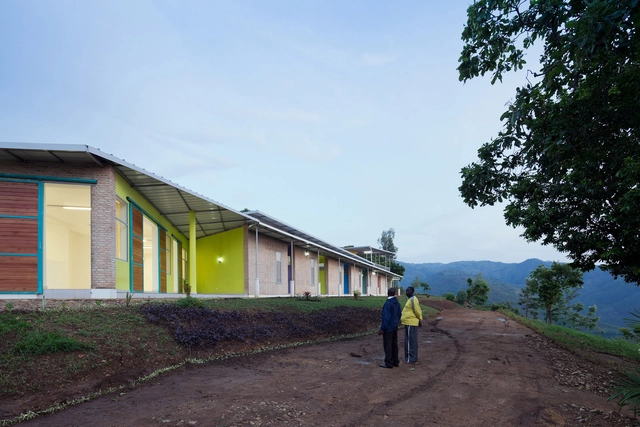
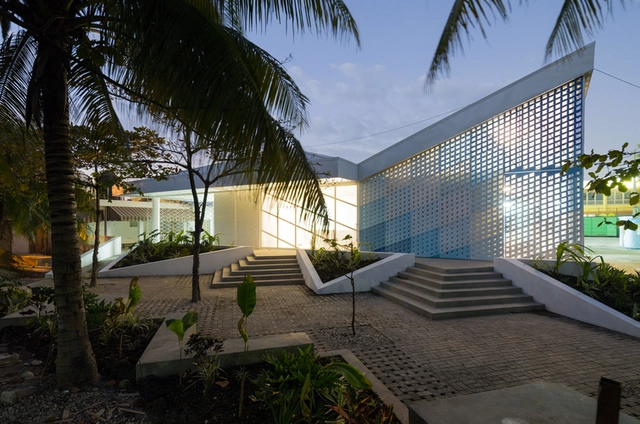
“Architecture and health are inseparable,” says Haitian doctor and founder of Gheskio in Michael Kimmelman’s latest New York Times piece In Haiti, Battling Disease With Open-Air Clinics. Recounting the devastating images of medical dysfunction that have circulated the internet since the Ebola epidemic, Kimmelman presents MASS Design Group’s nearly complete Port-au-Prince health clinics as a potential model for healthcare architecture worldwide. Combating cholera and tuberculosis with a modest, practical layout and open-air design, the new clinics will serve one of the city’s largest slums. Learn why Kimmelman declares them “handsome” and believes they will help eradicate disease in Haiti, here.
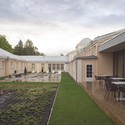
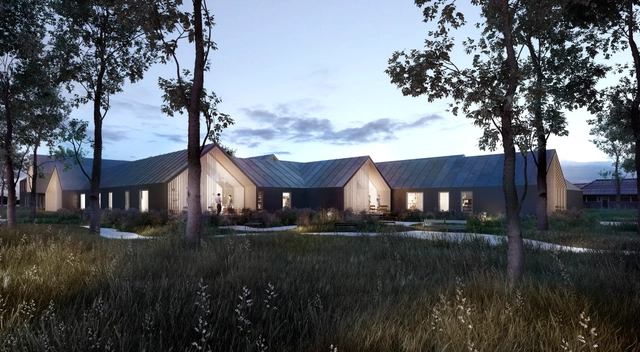
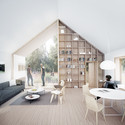
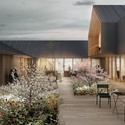
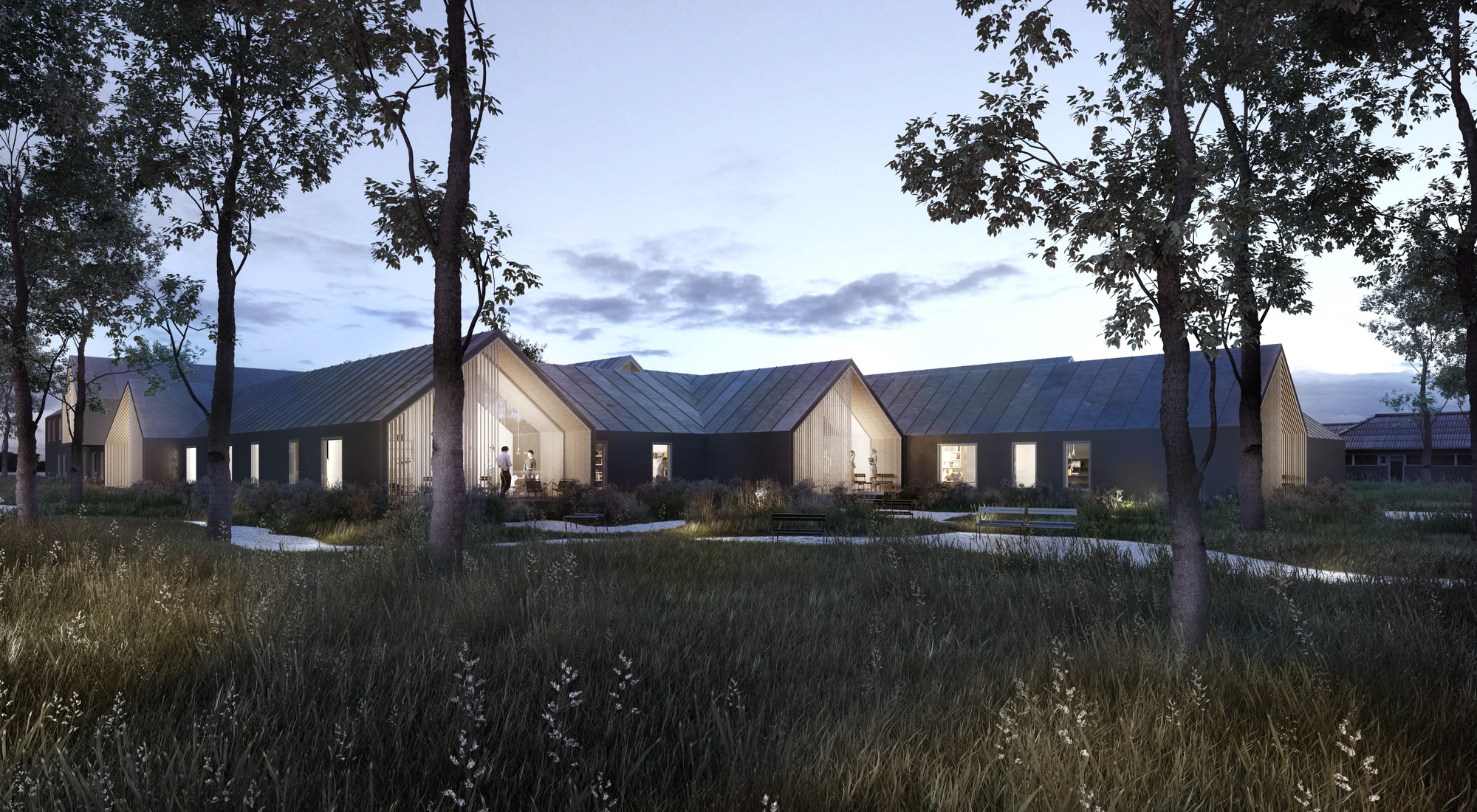
CREO ARKITEKTER A/S and WE Architecture has been selected as one of three winners in the first phase for a new psychiatric hospital in Ballerup. “Reminiscent of a small village,” the prize-winning scheme steps away from the typical hospital typology to propose a dense cluster of gabled structures connected by therapeutic green space.
“The proposal fits the extension subtly and respectfully into the existing context… It adds a gable motif that opens the communal spaces towards the surrounding park and landscape and at the same time frames terraces and balconies. The committee finds that this simple move adds a subtle, non-institutional appearance with strong positive references to low-dense housing projects of very high quality,” stated the jury. Read on to learn more.