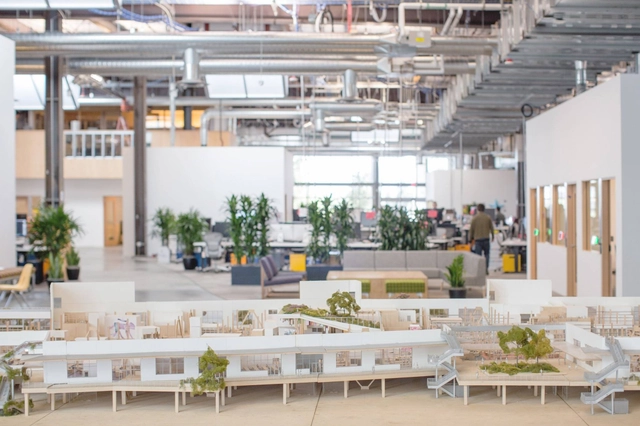
Early building model inside the completed headquarters. Image via Mark Zuckerberg
After Facebook began its move into its new Frank Gehry-designed headquarters last week, Facebook founder Mark Zuckerberg has praised his architect for his work. In a post on his personal Facebook page yesterday, Zuckerberg shares the story of how Gehry he initially turned down Gehry's request to design the project, saying that "even though we all loved his architecture... We figured he would be very expensive and that would send the wrong signal about our culture."
But Frank Gehry persisted, saying that he would match any bids the company received. As a result, Zuckerberg has now praised Gehry - in a somewhat uncharacteristic description of the architect - for being "very efficient."
Read Zuckerberg's full statement, after the break.
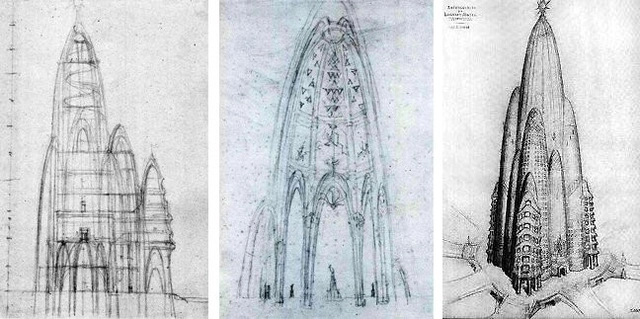
Sketches by Gaudí on the left, with Joan Matamala's drawing of the building on the right. Image Courtesy of 6sqft
Ever since its unprecedented skyward growth in the late 19th and early 20th centuries, Manhattan has been an icon of construction all over the world, with recent estimates concluding that the island contains some 47,000 buildings. However, as with all construction, completed projects are just the tip of the architectural iceberg; Manhattan is also the home of many thousands of unloved, incomplete, and downright impossible proposals that never made it big in the Big Apple.
Of course, the challenges of New York are indiscriminate, and even world-renowned architects often have difficulties building in the city. After the break, we take a look at just three of these proposals, by Antoni Gaudí, Frank Lloyd Wright and Frank Gehry, courtesy of 6sqft.
The wait is over; premiere dates for the highly anticipated film The Competition have been released. The first documentary ever to focus on the tense process of architectural competitions, The Competition captures a fascinating account on how five world renowned architects – Jean Nouvel, Frank Gehry, Dominique Perrault, Zaha Hadid and Norman Foster – “toil, struggle and strategize to beat the competition.” The premise is based on a nearly forgotten, 2008 competition for a new National Museum of Art of Andorra, a small Pyrenees country nestled between Spain and France, which has yet to be realized.
Above is a never-before-seen clip of Frank Gehry discussing project economics with the competition jury. Watch the official trailer and see if The Competition is premiering in a city near you, after the break.
An overlooked strip mall at the corner of Sunset and Crescent Heights boulevards will soon be replaced by a mixed-use, walkable community designed by Frank Gehry. Known to be the “gateway to the Sunset Strip,” the West Hollywood site will be comprised of 249 apartments, restaurants, retail storefronts and a central plaza - all within "an environmentally sensitive building that complements and contributes to the historic architecture in the neighborhood.”
“Frank Gehry’s deep understanding of the property, its history and the context will elevate the project to the iconic and timeless status that it deserves,” said Townscape partner and project developer Tyler Siegel.
February 17 is Mardi Gras, or “Fat Tuesday,” traditionally a Catholic holiday that celebrates the last night of indulging in guilty pleasures before participating in the penitential season of Lent. Celebrated around the world with elaborate parties, parades, dancing, and other frivolities, its festivities are most famously celebrated within the United States today in the city of New Orleans, Louisiana, the site of the first American Mardi Gras.
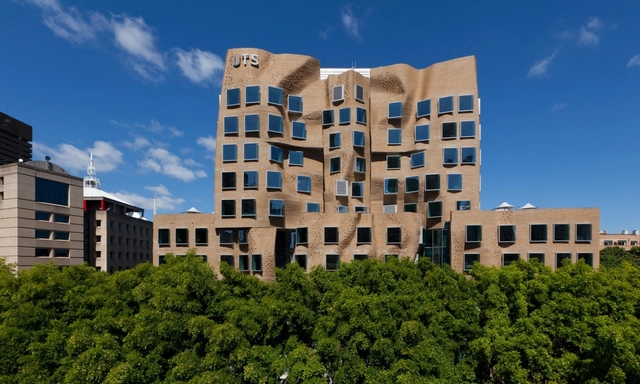
Last week, Frank Gehry inaugurated his first building in Australia, with the formal opening of the Dr Chau Chak Wing Building at the University of Technology in Sydney (UTS). As his first in the country, the building therefore offers an opportunity for a whole new corner of the world to weigh in with their opinions on the polarizing style of the world's foremost love-him-or-hate-him architect.
The resulting media flurry has provided a number of entertaining responses, both positive and negative. After the break, we round up some of the most amusing.
Over the past 14 months our Facebook fans have grown from 1 million to 1.5 million (), and as always our mission continues to be to post the best, latest and most relevant architecture news and projects. But, we couldn’t do it without your help (#thankyou). By liking, commenting and sharing our posts you’ve helped create a vibrant online community, spanning the globe. From the US to India, Brazil and Thailand, you (our fans) are constantly providing unique perspectives and cultural insight. When Frank Gehry lifted his finger and declared that 98% of everything that is built is pure shit, over 9,000 of you shared the post, more than 1,000 commented and as a result the post reached close to 3 million people worldwide.
To celebrate our new milestone on Facebook, we’ve rounded up the #Top10 Facebook Posts from the past 14 months, based on the number of people reached (as calculated by Facebook). From World Cup-related architecture to undulating staircases see the Top 10 Posts after the break.
"Architecture is suffering a crisis of confidence,” stated Shubow in his recent Forbes article. “It is never easy to admit that one is mistaken, still worse that one’s god has failed. It is all the harder when one’s false worldview has been the justification for one’s high social rank. But the growing crisis of confidence is a sign that a cherished dogma will finally be abandoned: The superiority of the architect to the common man.”
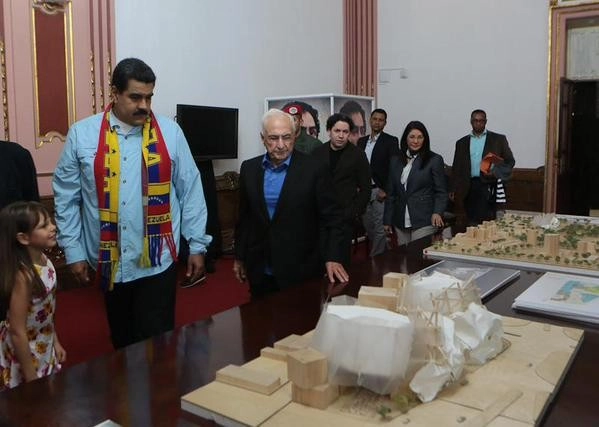
Frank Gehry presents the National Center for Social Action Through Music project
With Venezuelan President Nicolás Maduro in attendance, Frank Gehry presented the model for the future National Center for Social Action Through Music building in Lara state. The project is Gehry’s second in Latin America, following the recently inaugurated Biomuseo in Panamá.
To be located in Barquisimeto, Venezuela’s fourth most populated city, the National Center for Social Action Through Music forms part of the National Network of Youth and Children’s Orchestras and Choirs of Venezuela, more commonly known as “El Sistema.” Founded in 1975 by orchestra director José Antonio Abreu, El Sistema is now funded by the government and provides musical training and education for children from impoverished backgrounds. The Adjkm-designed Simon Bolivar Complex for Social Action is also part of El Sistema.
In just three short years, Frank Gehry’s 450,000-square-foot Guggenheim Abu Dhabi will open. More than 12 times the size of Frank Lloyd Wright’s Guggenheim New York, the expansive $800 million museum will showcase 1960s art from around the world within an asymmetrical mountain of plaster blocks and self-cooling translucent cones. Anticipating its completion, the New York Times sat down with Gehry to hear the story behind the building’s design. Watch the full interview with Gehry, here.
The first week of December marked the beginning of the LA Philharmonic’s in/SIGHT concert series. The multimedia series will incorporate video images playing in sync with the performance, creating an immersive new way to experience the music for concert-goers. The first of these performances was the collaborative work of conductor Esa-pekka Salonen and artist Refik Anadol in an audio-visual rendition of Edgard Varèse’s Amériques. Using audio analysis and Kinect motion capture software to record Salonen’s movements while conducting, Anadol has created a stunning set of moving images that capture the very spirit of Varèse’s work. Learn more about this fascinating project, after the break.
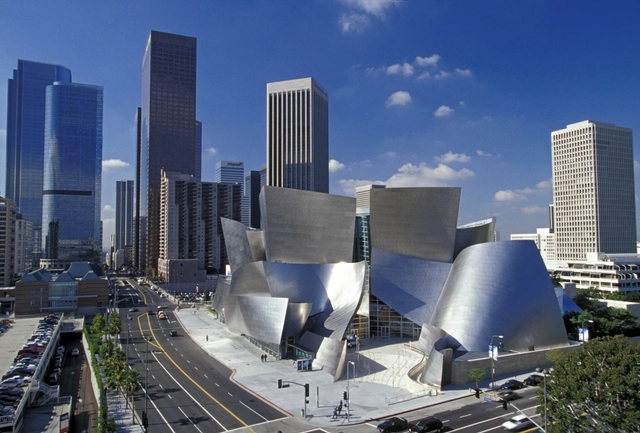
“Chicago is a great city for architecture and has historically supported innovative, forward-looking work. There is a natural impulse to deride a project in the early stages of design, particularly one that has a new shape or expression. This is not a new concept,” says Gehry, citing that both the Guggenheim Museum Bilbao and Los Angeles Walt Disney Concert Hall were shrouded in criticism before becoming “great assets to their mutual cities.”
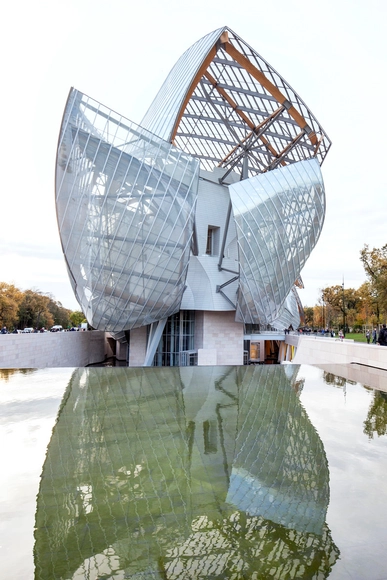
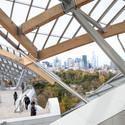
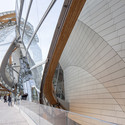
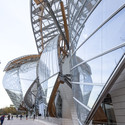
Architecture photographer Danica O. Kus has shared with us images of Frank Gehry's recently completed Fondation Louis Vuitton. Labeled as a "late-career triumph" by Los Angeles Times critic Christopher Hawthorne, the sailed glass structure teeters on the edge of a Parisian water garden in Jardin d’Acclimatation. For a closer look at the building's much-discussed structure, check out all of Kus' images after the break.
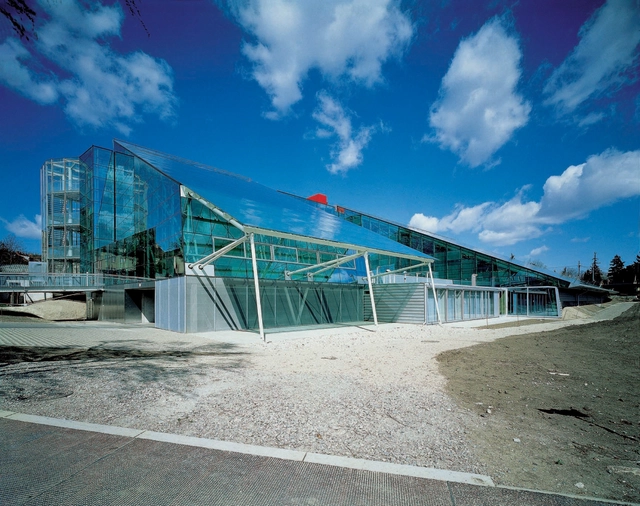
The Science Secondary School in Kinkplatz, Vienna is the work of late Modernist architect Helmut Richter. Considered to be his most iconic and enduring work, Richter’s school is now faced with partial demolition to make way for a conversion of the building’s use and architects from around the world are making an effort to prevent that demolition from happening. Influential individuals, from Zaha Hadid to Bernard Tschumi, have signed a petition voicing their dissent and demanding that Richter’s legacy be protected. See the details, and sign the petition, after the break.
ArchDaily is continuing our partnership with The Architectural Review, bringing you short introductions to the themes of the magazine’s monthly editions. In this editorial from AR’s November 2014 issue, AR Editor Catherine Slessor uses the opening of Frank Gehry's Fondation Louis Vuitton as occasion to examine the split that has developed within the architectural profession, musing "On how architecture can be either manifestation of vanity or source of social transformation."
One of the most depressing illustrations of how far architecture has lost its grip on reality is Frank Gehry’s new handbag. Along with other selected ‘iconoclasts’ from the world of fashion, art and design, Gehry was tasked by French luxury goods purveyor Louis Vuitton to design a bespoke limited edition ‘piece’. Gehry’s new Fondation Louis Vuitton has just opened in Paris and he is the man of the hour, so it seems obvious that after designing a monumental repository for contemporary art, he should turn his hand to the trifling matter of a fashion accessory. The handbag is yours for £2490. The art museum is yours for around £100 million, though some speculate that it cost much, much more.
CEMEX has announced both the international and national winners of the XXIII Building Awards, which aim to recognize the best architecture and construction both internationally and within Mexico. All projects were reviewed by a panel of judges comprised of some of the most important and prestigious representatives of the industry at an international level.
The international awards recognizing housing, institutional/industrial and large-scale infrastructure projects that were built during 2013 and stand out for their constructive solutions, aesthetics and innovative techniques. Finalist projects ranged from Frank Gehry’s Biomuseo in Panama to Plan B Arquitectos’ Click Clack Hotel in Bogotá, Colombia, covering a range of countries and architectural styles.
The CEMEX Building Award is itself a unique piece of art created by Mexican sculptor Miguel Angel Gonzalez and made out of black marble and concrete.
Read on after the break for both the international and national winners…
Last week, Frank Gehry made headlines when he responded to a reporter asking about his “showy architecture” with the finger and a proclamation that 98% of today’s architecture is “pure shit.” Unsurprisingly, this got the architecture world storming. Responses ranged from “oh the irony” to “absolutely refreshing” (join the conversation here). Perhaps most notably, one tumblr has responded in support of the Pritzker Prize-winning architect with images of architecture’s biggest icons giving the finger and Supporting Frank Owen Gehry.
Charles and Ray Eames, Frank Lloyd Wright, Le Corbusier and Oscar Niemeyer are some of the few who have “shown” their support. See our favorites, after the break.
Update 23/10/2015: In the 12 months since Gehry's outburst, the event has been used as the jumping off point for countless articles both criticizing and defending current architecture. But has Gehry's finger inspired any change in architecture or its discourse? We would love to know what our readers think - let us know in the comments.




 ), and as always our mission continues to be to post the best, latest and most relevant architecture news and projects. But, we couldn’t do it without your help (#thankyou). By liking, commenting and sharing our posts you’ve helped create a vibrant online community, spanning the globe. From the US to India, Brazil and Thailand, you (our fans) are constantly providing unique perspectives and cultural insight. When