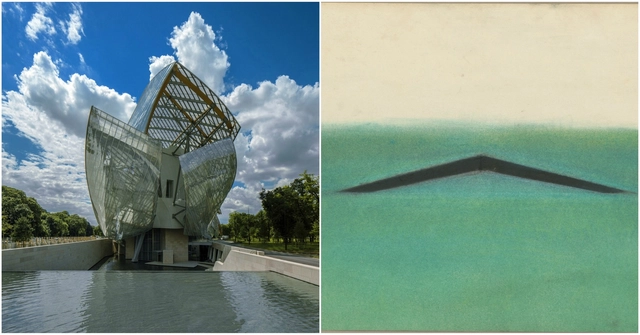
This article originally appeared on guggenheim.org/blogs under the title "How Analog and Digital Came Together in the 1990s Creation of the Guggenheim Museum Bilbao," and is used with permission.
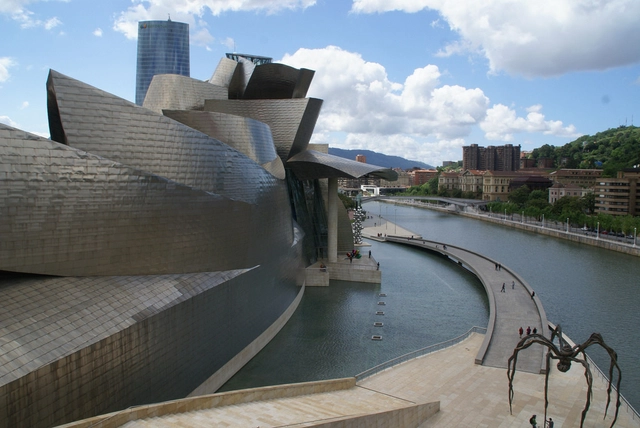
The Guggenheim Museum Bilbao, which celebrates its twentieth anniversary this month, has been hailed as a pinnacle of technological progress since its October 1997 opening. While the use of the modeling software CATIA (Computer Aided Three-Dimensional Interactive Application) was without question groundbreaking, some of the greatest moments of ingenuity during the building’s design and construction were distinctly low-tech. Developed between 1991 and 1997, the curved and angular titanium-clad building was conceived at the turning point between analog and digital practice. This profound shift enveloped and permeated every aspect of the project, from the design process and construction techniques to the methods of communication technology put to use.
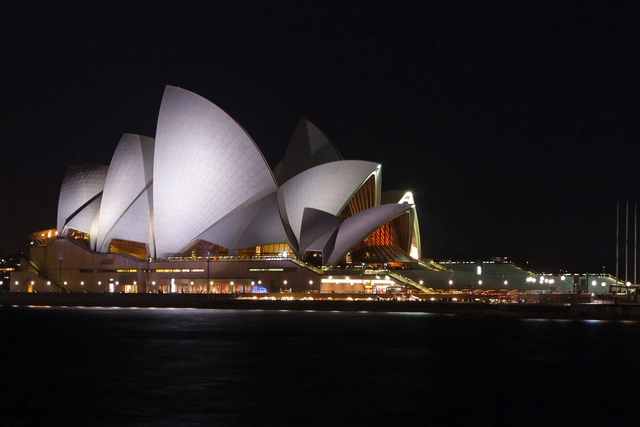
In celebration of the 20th Anniversary of the Frank Gehry-designed Guggenheim Museum Bilbao, creative production studio 59 Productions has put on a 4-day projection mapping light show, transforming the museum’s iconic shimmering surfaces into a canvas for a dazzling light display.
From October 11-14th, the 20-minute-long multisensory production Reflections combined music, light and projection, creating a show on the building’s north-facing titanium facades that told the story of the museum’s genesis and design.
On October 15th four languages, three countries, and three astounding architectural projects will be brought together through a series of events and workshops to celebrate the 20th anniversary of the Guggenheim Museum Bilbao. The Solomon R. Guggenheim Foundation seeks to commemorate the event with a full day program of activities entitled Drawing the Guggenheim. Visitors can explore and sketch the museums during a variety of public drawing exercises, architectural tours, films and family events at each of the Guggenheim locations.
In 2017, many of the world's cities have become potpourri time capsules of architecture. We live in an eclectic era in which a 19th-century industrial loft, post-war townhouse, and brand new high rise condominium are all comparably desirable properties. This increasingly varied urban landscape—and the appetite for variety of the people who live there—makes it more difficult than ever for new architecture to grab the public's attention.
To combat this, architects often attempt to produce an "iconic" work: a building whose design is so so striking that it attracts even a layperson's focus. Sometimes this ambition pays off as timeless, and sometimes it irreversibly pock-marks the skyline. What follows is a collection of attention grabbing structures. Will they be remembered as eccentric landmarks or glaring eyesores? You decide.
Seniority is infamously important in the field of architecture. Despite occasionally being on the butt end of wage jokes, the field can actually pay relatively well—assuming that you’ve been working for a couple of decades. Even Bjarke Ingels, the tech-savvy, video-producing, Netflix-documentary-starring provocateur and founder of the ultra-contemporary BIG isn’t a millennial; at 42 the Dane is a full nine years older than Mark Zuckerberg.
As a result of this, it's common to lead a rich and complex life before finding architectural fame, and many of the world’s most successful architects started their careers off in an entirely different field. If you haven't landed your dream job yet, you may find the following list of famous architects' first gigs reassuring.
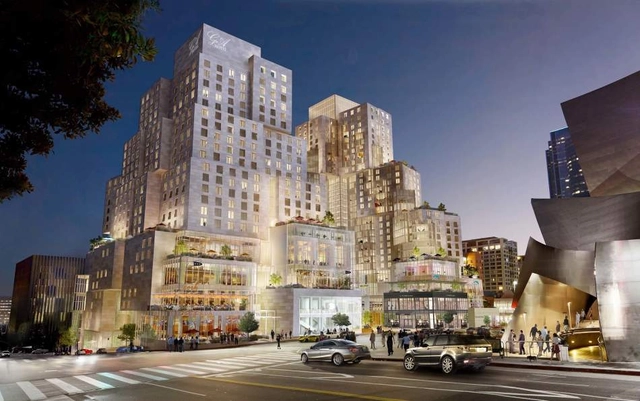
Renderings for a new office building in the Playa Vista neighborhood of Los Angeles designed by Gehry Partners have been revealed in documents released by the LA Department of City Planning. Called New Beatrice West, the eight-story development consists of a series of terraced glass boxes, capped with abundant vegetation aimed at contributing passive energy-efficiency to the complex. The new building will integrate an existing adjacent office building that currently houses the offices of Gehry Partners.
https://www.archdaily.com/876240/renderings-revealed-of-gehry-partners-future-tree-covered-playa-vista-officeAD Editorial Team
Construction is an exercise in frugality and compromise. To see their work realized, architects have to juggle the demands of developers, contractors, clients, engineers—sometimes even governments. The resulting concessions often leave designers with a bruised ego and a dissatisfying architectural result. While these architects always do their best to rectify any problems, some disputes get so heated that the architect feels they have no choice but to walk away from their own work. Here are 6 of the most notable examples:
What did Pritzker Prize winner Frank Gehry get when he designed the Stata Center, an exuberantly whimsical academic complex for MIT? A very large check, plus a major lawsuit, alleging negligence and breach of contract due to rampant leaks, mold, cracks, drainage problems and sliding ice. Sometimes the most inspired designs can go awry. And when they do, some clients lawyer up. Here are 9 fascinating examples.
Google Earth is no longer a clunky, data-intensive desktop or mobile application. As of today, one of the tech-giant's flagship (and unrivalled) products has been relaunched as a widely accessible web application for Google Chrome. This means that anyone can now access the full Google Earth product, free of charge, without having to install software or download mobile applications.
https://www.archdaily.com/869445/architecture-takes-center-stage-with-google-earth-relaunchAD Editorial Team
The Getty Research Institute has announced their acquisition of the Frank Gehry Papers, a major archive covering work from the architect’s career, including drawings, partial and complete models, project documentation, correspondence, photographs, slides and related materials pertaining to 283 projects from Gehry’s early to mid career.
“Frank Gehry is undoubtedly the world’s most famous living architect. This extensive archive, covering the first three decades of his illustrious career, offers an in-depth look at the genesis of Gehry’s distinctive style and includes many of the projects for which he is internationally known,” said Thomas W. Gaehtgens, director of the Getty Research Institute.
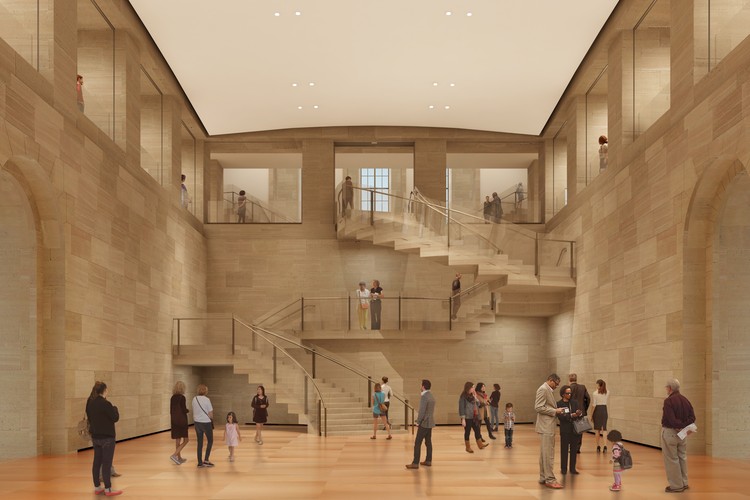
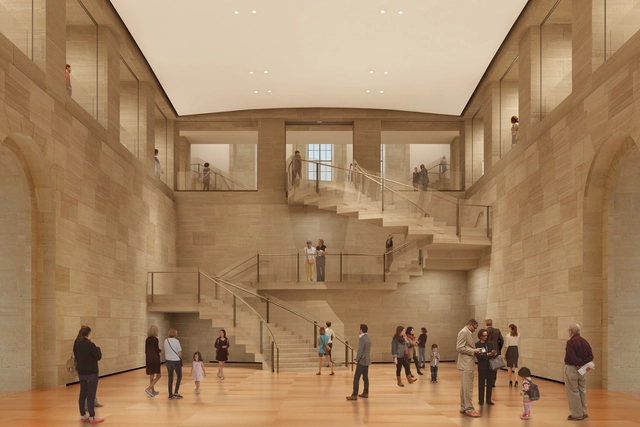
AFTER: The Forum, looking west and up to Lenfest Hall. The Forum extends from Level A to Level C and will be one of the most highly trafficked and recognizable areas created during the Core Project. This stunning space will serve as a venue for performances and events, as well as a welcoming spot for visitors to socialize or orient themselves. Architectural rendering by Gehry Partners, LLP and KX-L. Photo courtesy Philadelphia Museum of Art.
The Philadelphia Museum of Art has broken ground on the Core Project, a $196 million transformation of its main building led by Frank Gehry. In total, the renovation will add a total of 90,000 square feet to the museum, including 67,000 square feet of new public space, 11,500 square feet of gallery space for the museum’s American Art collection, and another 11,500 square feet of contemporary art display space.
As suggested by its name, The Core Project will focus on the heart of the museum; the main circulation of the building will be completely reorganized and museum infrastructure will receive much-needed upgrades, improving access to the community and enhancing the visitor experience.
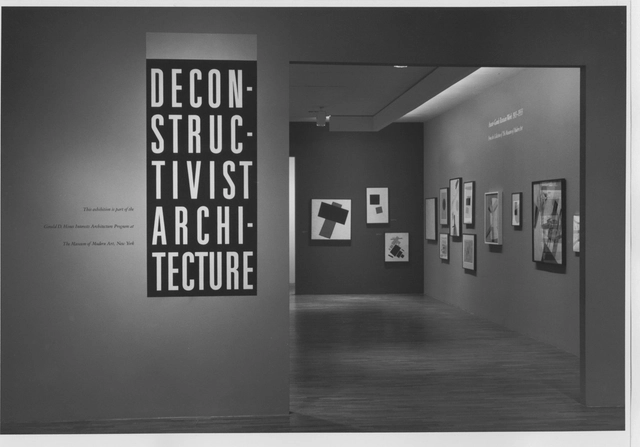
View into the exhibition (1988). Photographer unknown. Image via MoMA
When Philip Johnson curated the Museum of Modern Arts’ (MoMA) 1932 “International Exhibition of Modern Architecture,” he did so with the explicit intention of defining the International Style. As a guest curator at the same institution in 1988 alongside Mark Wigley (now Dean Emeritus of the Columbia GSAPP), Johnson took the opposite approach: rather than present architecture derived from a rigidly uniform set of design principles, he gathered a collection of work by architects whose similar (but not identical) approaches had yielded similar results. The designers he selected—Peter Eisenman, Frank Gehry, Zaha Hadid, Rem Koolhaas, Daniel Libeskind, Bernard Tschumi, and the firm Coop Himmelblau (led by Wolf Prix)—would prove to be some of the most influential architects of the late 20th Century to the present day.[1,2]
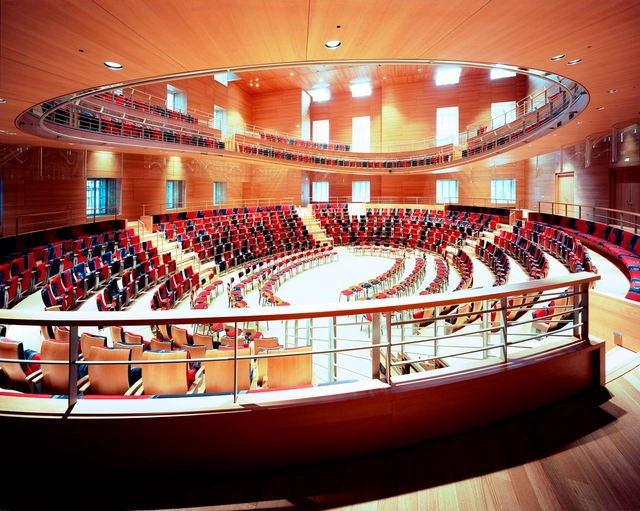
“If it hadn’t been for Frank Gehry, we would have made a simple, straightforward concert hall where students play concerts. But if the space is there, and somebody so gifted, like him, is prepared to do that, then of course you have to do that” - Daniel Barenboim, Founder, Pierre Boulez Saal.
In this Facebook video, Frank Gehry discusses the circumstances of his most recently-completed project, the Pierre Boulez Saal concert hall in Berlin, and the significance of contributing a new venue to Berlin’s historic musical scene.
Frank Gehry has been selected by online education platform MasterClass to lead an interactive architecture and design course on his creative process. The course will include 15 video lessons, and critique from the architect himself on select student work.
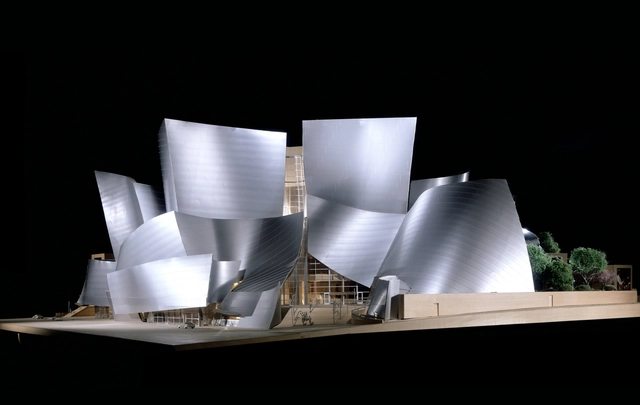
At a cost of $90, the lessons will cover Gehry’s career and architectural philosophy, illustrated with sketches and models from Gehry’s private model archive. Each lesson will offer a downloadable workbook with notes and assignments for the week. Students will then be able to upload videos for the opportunity to get feedback from the class and Frank himself.
At its best, architecture has the power to confront the world’s most urgent social and environmental issues. The Los Angeles River sits at the center of many of these issues, thanks to the long-overdue plans to convert it from a concrete canal back into a social space and an ecological corridor; and thanks to its position as a symbol of the drought in California. In this serene video by filmmaker Chang Kim, the full length of the river is put on display, exploring a resource that is the topic of much debate in the Los Angeles area.
President Obama has named architects Frank Gehry and Maya Lin among the 21 recipients of the Presidential Medal of Freedom, the country’s highest civilian honor. Established in its current decoration in 1963 by President John F. Kennedy, the award is presented to “individuals who have made especially meritorious contributions to the security or national interests of the United States, to world peace, or to cultural or other significant public or private endeavors.”
This article originally appeared on guggenheim.org/blogs under the title "Nine Guggenheim Exhibitions Designed by Architects," and is used with permission.
Exhibition design is never straightforward, but that is especially true within the highly unconventional architecture of Frank Lloyd Wright’s Guggenheim Museum. Hanging a painting in a traditional “box” gallery can be literally straightforward, whereas every exhibition at the Guggenheim is the reinvention of one of the world’s most distinctive and iconic buildings. The building mandates site-specific exhibition design—partition walls, pedestals, vitrines, and benches are custom-fabricated for every show. At the same time, these qualities of the building present an opportunity for truly memorable, unique installations. Design happens simultaneously on a micro and macro scale—creating display solutions for individual works of art while producing an overall context and flow that engages the curatorial vision for the exhibition. This is why the museum’s stellar in-house exhibition designers all have an architecture background. They have developed intimate relationships with every angle and curve of the quarter-mile ramp and sloping walls.







.jpg?1500566908&format=webp&width=640&height=580)
.jpg?1500566881 "via LA Department of City Planning")
.jpg?1500566871 "via LA Department of City Planning")
.jpg?1500566918 "via LA Department of City Planning")
.jpg?1500566892 "via LA Department of City Planning")
.jpg?1500566908)


.jpg?1494051634)

.jpg?1490895765 "BEFORE: The Van Pelt Auditorium, shown here in 2016, is being demolished to create the Forum. The auditorium was not part of the original design for the building, which opened in 1928; it was added in 1959. Photograph by Elizabeth Leitzell. Photo courtesy Philadelphia Museum of Art.")
.jpg?1490895731 "BEFORE: The Van Pelt Auditorium, shown here in 2016, is being demolished to create the Forum. The auditorium was not part of the original design for the building, which opened in 1928; it was added in 1959. Photograph by Elizabeth Leitzell. Photo courtesy Philadelphia Museum of Art.")