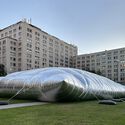
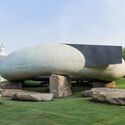
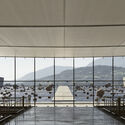
From the pavilions of Osaka and Venice, to the roundtables of Belém, another year comes to a close. December invites us to pause and look back at the moments that defined architecture and cities in 2025. Reflection is not only an act of memory, but of foresight — a way to understand where we've been in order to imagine where we might go next. From shifting cultural narratives to material and technological breakthroughs, this past year underscored the importance of experimentation and adaptation across the built environment.
This month, ArchDaily explores the Year in Review, gathering the year's most compelling stories, ideas, and voices. The coverage revisits the projects, interviews, and essays that shaped the conversation, while recognizing the architects and thinkers who left a lasting impact on the discipline. It also looks ahead, identifying the most anticipated projects and issues of 2026, and the emerging directions they suggest.
Based in Florianópolis, Brazil, Eduardo Souza brings a nuanced perspective to architecture shaped by his lifelong engagement with design, research, and editorial practice. Growing up in an environment deeply connected to architecture—his father a civil engineer and professor—Eduardo developed an early fascination with creativity, craftsmanship, and spatial thinking. This foundation naturally led him to study architecture, and later, to explore the editorial realm where writing and curation became extensions of his architectural passion.
Eduardo joined ArchDaily as a translator in its early years and gradually grew into various editorial roles, developing a keen interest in the intersection of materials, technologies, and construction systems. His editorial work focuses on uncovering innovations that challenge traditional modes of making architecture, emphasizing coherence between concept, execution, and context. He pays close attention to sustainable practices such as circularity, local material use, and vernacular reinterpretations that respond to today's environmental and cultural challenges.
Agustina Iñiguez's journey into architecture was rooted in a deep appreciation for art, drawing, and craftsmanship, interests that naturally evolved into a formal architectural education beginning at age 18. Based in Buenos Aires, Agustina balances her professional architectural practice with an active role in academia, serving as a teaching assistant at the University of Buenos Aires and as an assistant professor at Torcuato Di Tella University. Since joining ArchDaily's Editorial Team in 2021, she has brought a thoughtful and interdisciplinary approach to curating content that bridges theory, practice, and social engagement.
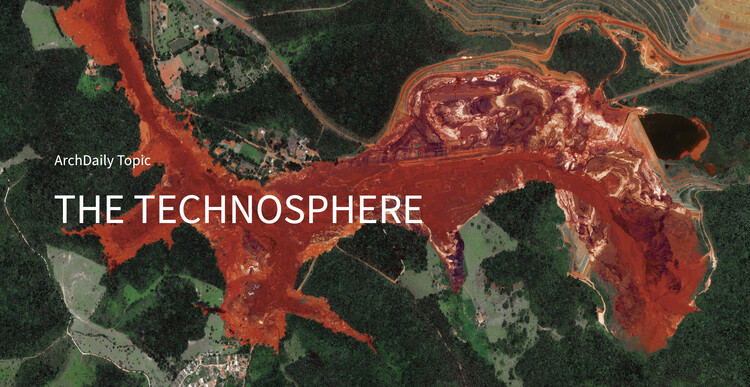
Thirty trillion tons. This is the estimated mass of all human-made matter on Earth, and the starting point for the 7th edition of the Lisbon Architecture Triennale. Curated by Ann-Sofi Rönnskog and John Palmesino, founders of Territorial Agency, the event asks a deceptively simple question: How heavy is a city? To answer it requires more than data. It demands a shift in perception: from the scale of the city to the planetary technosphere.
The technosphere, a term borrowed from Earth sciences, defines the vast system of infrastructures, technologies, and materials that sustain human life while reshaping the planet. Cities, in this view, are not only territories but dense nodes within this planetary metabolism. From October to December 2025, Lisbon becomes a lens to examine that magnitude, hosting three main exhibitions (Fluxes, Spectres, Lighter), a book of essays, a talks program, and more than twenty independent projects across the city.
Olivia Poston's architectural perspective is deeply rooted in her upbringing amid the post-industrial landscapes of Tennessee's foothills, where she developed an early fascination with the complex relationship between urban environments and ecology. This formative experience shaped her view of architecture not just as building, but as a lens to explore social, cultural, and environmental systems in flux. Olivia's work bridges research, writing, and editorial practice, focusing on how cities across diverse climates evolve and adapt in response to increasing environmental challenges.
She is particularly drawn to collaborative design strategies that integrate insights from architects, planners, and engineers to foster resilience and equity within the built environment. Her editorial approach prioritizes projects that engage critically with climate risk while maintaining a sense of optimism and possibility. She values content that offers both reflection and practical pathways forward, serving as a platform to highlight innovative responses to the pressing demands of sustainability.
ReSa Architects. Photo by Antonin Kanant and Revati Shah
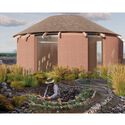
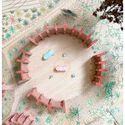
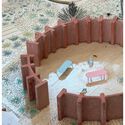
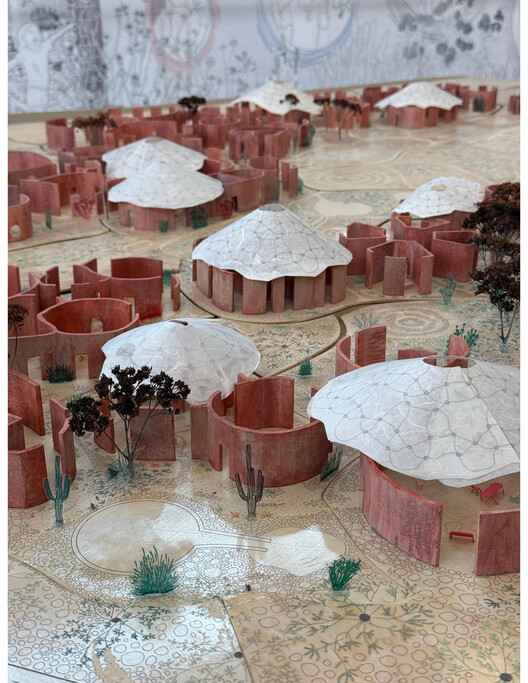
The Lisbon Architecture Triennale announced as the winner of the fifth edition of the Début Award the Indian office ReSa Architects. The office is known for its collective approach to spatial practice, treating architecture as a process of rewriting social and bodily relations. In previous editions, the award recognized the work Vão (Brazil, 2022), Bonell+Dòriga (Spain, 2019), Umwelt (Chile, 2016) and Jimenez Lai, from Bureau Spectacular (USA, 2013).
The announcement was made on October 4, during the opening festivities of the Triennale, which in this edition awarded the Lifetime Achievement Award to the architect, Yasmeen Lari from Pakistan, the first person from the global south to receive the honor. Lari joins Marina Tabassum (2022 award winner), Denise Scott-Brown (2019), the duo Lacaton & Vassal (2016), Kenneth Frampton (2013), Álvaro Siza (2010), and Vittorio Gregotti (2007).
Culture is the set of knowledge and practices people use to express themselves and make sense of the world collectively. As Brazilian philosopher Marilena Chauí reminds us, the word derives from the Latin colere, which means "to take care of." In that sense, agriculture means taking care of the soil, while religious cults are the care of the gods. At its core, culture is the creation of symbolic universes, expressed through different languages, including architecture, that weave connections across time. It safeguards the memories of the past while opening new possibilities for the future.
This month, ArchDaily explores The Architecture of Culture Today, asking a central question: How does architecture shape the way culture is produced, consumed, and experienced? This theme examines how architecture both shapes and responds to cultural life — from the permanence of museums, theaters, and libraries to the ephemerality of pavilions, installations, and virtual platforms. It considers the architect's role in curation, scenography, and exhibition design, as well as the portrayal of cultural spaces in film and digital representations.
ArchDaily is proud to reveal the winners of the 5th edition of Next Practices, recognizing 20 groundbreaking architectural practices from around the globe. These firms embody the creativity, innovation, interdisciplinary approach and social responsibility that are shaping the future of architecture and expanding its horizons.
Jonathan Yeung's architectural journey began through his deep appreciation for the physical and bodily experience of moving through carefully crafted spaces. Having grown up and studied across diverse places—Hong Kong, Kyoto, Cambridge, and Berkeley—he developed a sensitivity to how architecture resonates culturally, often in ways that transcend straightforward explanation. For Jonathan, architecture evolved from an embodied experience to a powerful form of expression, encompassing design, construction, and writing. Editorial work has naturally become an extension of this exploration, offering him a platform to reflect on architectural ideas from multiple perspectives.
Architects today work across many worlds: from designing furniture, landscapes, and urban blocks to creating film sets, photographs, and videos. They restore and retrofit old buildings rather than build anew, while also writing, researching, and publishing. Some design virtual spaces for video games or speculate on habitats in outer space and underwater. Others engage directly with society through politics, activism, or community projects. Many experiment with biology, test new materials, and step into the role of scientist. Architects are decolonizing old narratives and decarbonizing the construction industry, and by weaving together personal passions with pressing social and environmental challenges, they are pushing the limits of the profession and expanding its scope.
With so many changes in the profession, especially in recent years, one may ask: How is the role of the architect evolving in response to global crises and shifting societal needs? In what ways can interdisciplinarity expand the scope and impact of architectural practice? And what skills beyond traditional design are becoming essential for architects in today's world?
Susanna Moreira's path into architecture was shaped early by her involvement in architectural theory and research during her undergraduate studies. Born in Salvador, Brazil, she has also lived and studied in Milan and São Paulo—experiences that have enriched her understanding of the dynamic intersections between art, architecture, and urban environments. These interdisciplinary interests continue to inform her curatorial approach and editorial work.
Born in Sudan and currently based in London, Mohieldin Gamal brings a unique perspective to architecture shaped by his deep connection to both his homeland and global practice. His early fascination with architecture began in 1995, during the construction of his primary school, where he first encountered the significance of materiality, climatic design, and historical context. These formative experiences laid the foundation for his multifaceted approach to architecture as both a practitioner and a writer.
Mohieldin studied architecture at the University of Nottingham and gained valuable experience working with prominent UK firms. In 2021, he returned to Sudan to teach at the University of Khartoum and helped establish the Sudan Chapter of Docomomo, underscoring his commitment to preserving and promoting Sudanese architectural heritage. His work focuses on exploring underreported architecture and the complex historical, political, and economic forces that shape building practices in Africa and beyond.
Born and based in the Transylvanian region of Romania, Maria-Cristina approaches architecture with a rich, multifaceted perspective shaped by a diverse academic and professional journey. Holding master's degrees from UTCN and KU Leuven, she has combined rigorous architectural training with a broad curiosity that spans both the creative and analytical aspects of the discipline. Early in her career, she worked in small and medium-sized architecture offices, gaining valuable practical experience, before transitioning into editorial work at ArchDaily in 2022. Since then, she has advanced to Managing Editor, all while pursuing a Ph.D. in architectural studies and serving as a teaching assistant, reflecting her deep commitment to both practice and scholarship.
Maria-Cristina's approach to architecture is rooted in an understanding of its complexity and diversity. She sees architecture not as a fixed definition but as an evolving field where structures, physics, materials, aesthetics, philosophy, and human experience intertwine. Her interest in editorial work grew from this worldview, discovering that writing and designing share parallels: both involve constructing ideas that connect and support one another, much like the elements of a building. Through this lens, she finds joy in crafting essays that communicate complex ideas clearly and simply, emphasizing the uniqueness of concepts rather than words.
Architecture is going through transformative times, and so are the platforms that shape how we understand it.
Earlier this year, I addressed you directly to share our vision for 2025: a commitment to reaffirm ArchDaily's mission, elevate our editorial voice, and strengthen our role as a trusted, critical resource for architects worldwide. That message marked the beginning of a new chapter, one grounded in relevance, clarity, and purposeful action.
Romullo Baratto's architectural journey began early, influenced by a family environment steeped in engineering and architectural practice. Growing up surrounded by blueprints and models, he developed a foundational appreciation for the technical and creative aspects of the built environment. While his academic path led him to explore film and writing alongside architecture, these multidisciplinary interests naturally converged in editorial work. Starting as a freelance translator for ArchDaily, Romullo's alignment with the platform's mission led him to join as Editor for the Brazilian site, where he guided the publication to become the first media outlet to receive the prestigious FNA Award.
Now Project Manager at ArchDaily Global, Romullo leads flagship initiatives such as the Building of the Year Awards and ArchDaily New Practices. He approaches editorial work with a commitment to elevating projects and narratives that offer fresh perspectives and provoke meaningful discourse—eschewing mere trend-chasing in favor of critical, nuanced storytelling that deepens professional understanding.
Christele Harrouk's path into architecture was shaped by the complex and ever-changing environment of her Lebanese upbringing—a place marked by contradictions, transformation, and resilience. Although her entry into architecture wasn't planned, the discipline quickly became a profound lens through which she understands the world and its complexities. Combining her passion for writing with her architectural and urban design expertise, Christele discovered a unique voice at the intersection of these fields, embracing editorial work as a powerful platform to influence discourse and amplify diverse narratives.
As Editor-in-Chief of ArchDaily, Christele is deeply committed to shaping architectural discourse through thoughtful curation. She looks for projects and stories that engage profoundly with context, culture, and social realities—seeking those that do more than present architecture as mere form or function. For her, the value lies in content that challenges prevailing narratives, amplifies marginalized voices, and fosters critical conversations across global communities.
Based between Berlin and Vienna, Miwa Negoro brings a transcultural and transdisciplinary perspective to her role at ArchDaily, shaped by her architectural training and professional experiences across East Asia and Europe. Her work explores how built environments both reflect and challenge sociocultural contexts, positioning architecture as a dynamic dialogue between history, society, and future possibilities.
Miwa's curatorial approach emphasizes the interplay between regional context, design processes, and social relevance, alongside material and aesthetic considerations. She seeks projects that resonate beyond their immediate surroundings, offering insights that engage broader architectural discourse. By championing a diverse range of building types, scales, and geographic origins, Miwa actively works to broaden the scope of voices and narratives represented within the field.
Based in Mexico City, Enrique Tovar brings a multidisciplinary approach to architecture and editorial work shaped by his interest in history, society, art, and craftsmanship. His early experiences in a context where architecture is often self-built or negotiated gave him a nuanced understanding of the built environment as something fluid and evolving with use. This perspective naturally led him to editorial work, which he sees as an extension of architectural practice—one that captures the complexities and tensions that may not be visible in traditional design processes.
As Sponsored Team Editor at ArchDaily, Enrique explores the critical intersections between materials, construction systems, technology, and software. He is especially interested in how these elements influence contemporary architectural practices and the ways in which inclusive and universal design principles can expand the field's reach. His editorial focus encourages environments that respond to diverse bodies, experiences, and modes of inhabiting space, promoting architecture that challenges conventional norms and embraces broader social concerns.