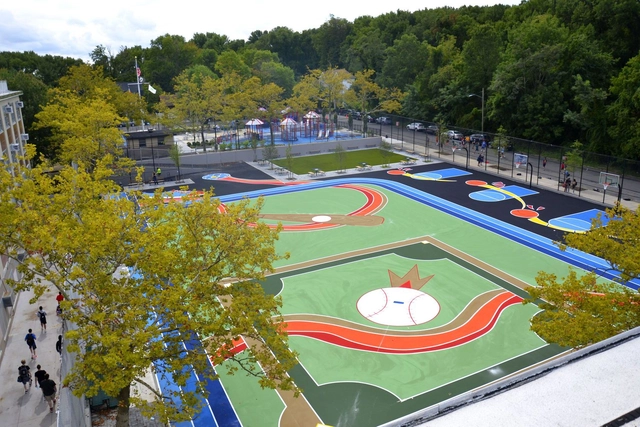
A new report from The Trust for Public Land (TPL) makes a compelling case for transforming underperforming, paved public schoolyards into green oases for the entire community. While the benefits for schools and their educational communities are clear, TPL sees an opportunity to open up these facilities to surrounding neighborhoods after school hours, on weekends, and when school is out. If all 90,000 public schools in the country had a “community schoolyard,” more communities could tackle the persistent park equity issue — in which too few communities, particularly undeserved ones, enjoy access to nearby high-quality public green spaces. TPL argues that opening up all schoolyards, essentially turning them into part-time all-access community hubs, would “put a park within a 10-minute walk of nearly 20 million people — solving the problem of outdoor access for one-fifth of the nation’s 100 million people who don’t currently have a park close to home.”
https://www.archdaily.com/971293/the-incredible-opportunity-of-community-schoolyardsJared Green
The two Belgian practices BOGDAN & VAN BROECK and BC Architects & Studies are currently designing a care centre for drug users in Brussels, which would provide this vulnerable group with a safe and welcoming environment accessible 24/7. Featuring temporary residencies and community spaces, the building neighbouring the city’s port functions as a contemporary version of an inn, bringing a domestic character to an underwise sterile institutional program.
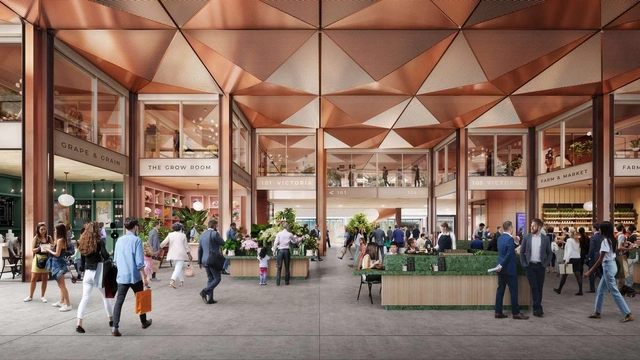
Located in the heart of Westminster, a short distance away from the Buckingham Palace, Henning Larsen are building a community hub that reimagines traditional office and commercial spaces. 105 Victoria Street will be the architecture firm's first ever project in London, providing visitors with an urban plaza that enables an active and social working environment both indoors and outdoors. The project is being developed by BentallGreenOak and is designed in collaboration with Adamson Associates Architects and KPF.
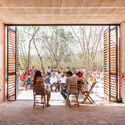
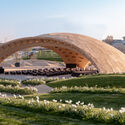
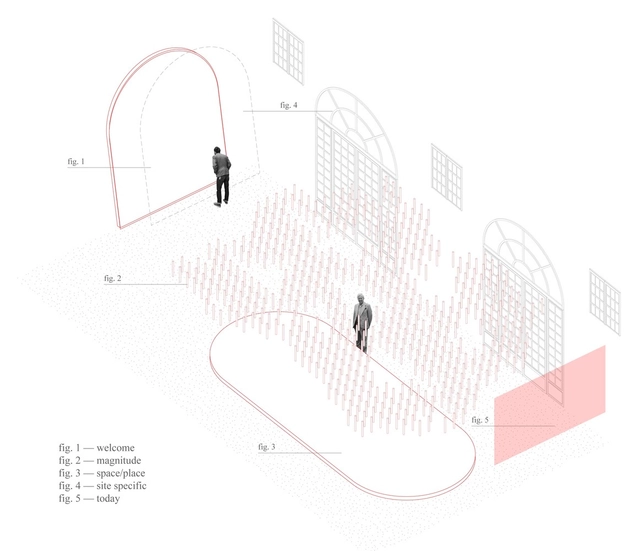
When designing community spaces, the architectural concept can easily clash with the user's experience. Therefore, engaging the community and future users in the project development and design process is a way of adding different perspectives to the architect's vision towards a more intelligent architecture.
A project of relevant scale is rarely a single Man’s work. From the village barn raising events done in the 18th and 19th century to the standard taskforce that a project developer engages nowadays, a build structure requires many hands on-board, bringing forth different inputs and expertise to shape and execute it.
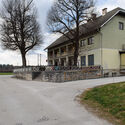
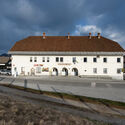
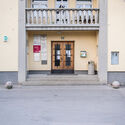
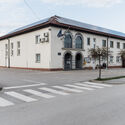
Slovenia's contribution to the 17th Venice Architecture Biennale explores interior public spaces as vital social infrastructure through the lens of the local cooperative centre typology. Titled "The Common in Community", the exhibition curated by Blaž Babnik Romaniuk, Martina Malešič, Rastko Pečar and Asta Vrečko details the architectural spaces of social interaction built after WWII in rural and suburban Slovenia, which continue to serve their purpose as local community centres to this day.
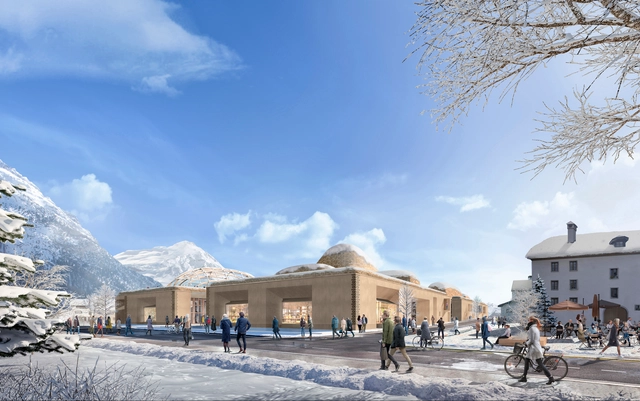
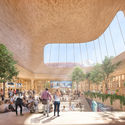
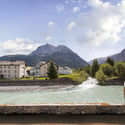
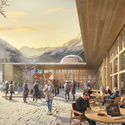
Foster + Partners has revealed images of InnHub La Punt, a new center for innovation in the heart of the Engadin valley, in the Swiss Alps. The 6,000-square-metre project, set for completion in 2022, is comprised of a 3-story building encompassing work and seminar spaces, sports facilities, retail shops, and a restaurant. Based on the idea of the ‘third place’, the intervention creates a space for collaboration and creativity.
When we talk about cities or their lesser variations – villages, towns, communities –, we are used to evoking stereotyped scenarios that relate to streets, cars, buildings, and we often end up forgetting that there are plenty of other surprisingly unique patterns.
Many people study the cities and wonder about the exact moment when they were invented, given that they are open, unfinished works in progress. Some assume that their origin was due to the need for protection, which caused humans to quit nomadic lifestyles and settle as groups in a specific land to increase their chances of survival.
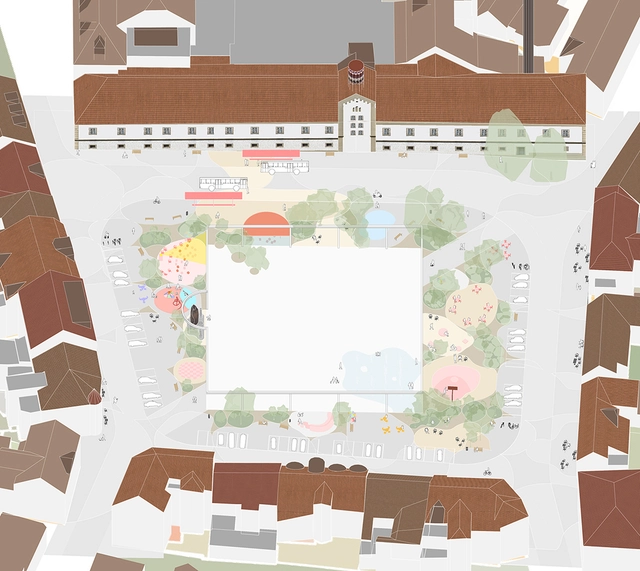
Zbraslav Square . Image Courtesy of Architects for Urbanity
Recognizing the importance of international contests in pushing forward inventive concepts and design, ArchDaily has put together a curated selection of Best Unbuilt Architecture featuring competition entries from around the globe. Submitted by our readers, these projects include winning proposals, honorable mentions, and recognized admissions.
In this week’s article, urban interventions take the lead with multiple square designs and infrastructural elements. On the cultural level, projects underlined include Museums in Iran and Norway, a National Concert hall in Lithuania, and a Mosque in Turkey. For the civic category, the functions highlighted comprise a new city hall for a South Korean district and an Indian community development center for at-risk women. Finally, other programs involve a rural school in Haiti, a tourist center in China, and a housing complex in Prague.
This year the United Nations World Tourism Organization (UNWTO) has been looking at tourism as a way to create jobs and opportunities in rural areas under the banner of Tourism and Rural Development.
Rural based Architecture and traditional edifices play an important role in showcasing local heritage building and craftsmanship. It can also offer jobs and prospects outside of big cities particularly for the communities that might otherwise be left behind.
Kohn Pedersen Fox Associates (KPF) has just received planning consent for Lucan Place in Chelsea, a mixed-use project that provides new homes, nursery, and specialist educational accommodation. The project, a redevelopment of the site of the former Chelsea Police Station, will generate a total of 31 new homes, as well as social and community functions.
Through the past few months, the importance of community interaction and mental well-being has been felt by all. Yet, the need for a support system and constant reassurance has been a recurrent issue for much longer for forcibly displaced populations. Adding to the current health fears these communities, estimated at nearly 70.8 million ( 25.9 refugees only) around the world, struggle with traumas, mental health issues and have much difficulty in adapting to temporary or permanent foreign settings.
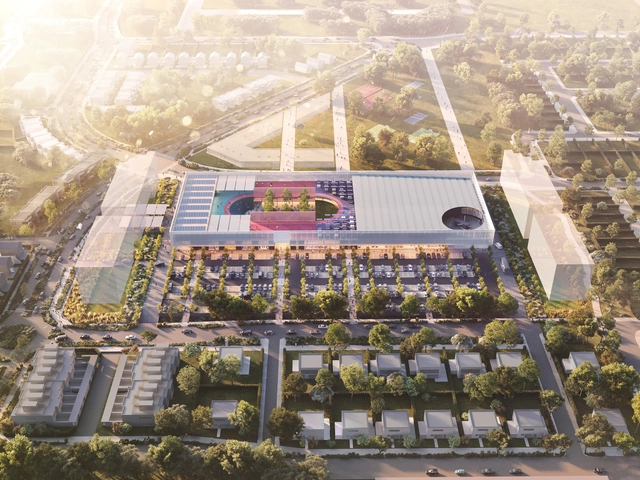
OMA is designing a 10,000-square-metre shopping center integrated with community spaces in Melbourne, Australia. Entitled the Wollert Neighborhood Centre, the project is located in Wollert, Whittlesea, one of Victoria’s fastest-growing regions, in the suburbs of Melbourne.
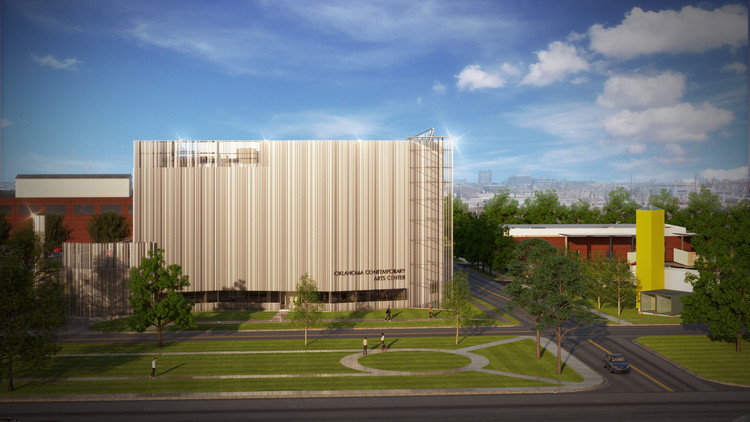
Oklahoma Contemporary Arts Center is relocating to a new building in the downtown area, designed by Rand Elliott Architects, a native firm of the city. This exhibition and educational center, originally a community-oriented arts center founded in 1989, will be open to everyone and free of charge, in order to facilitate the public access for art and education.
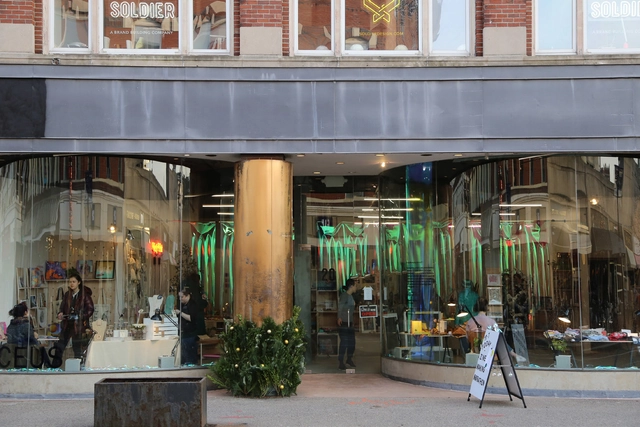
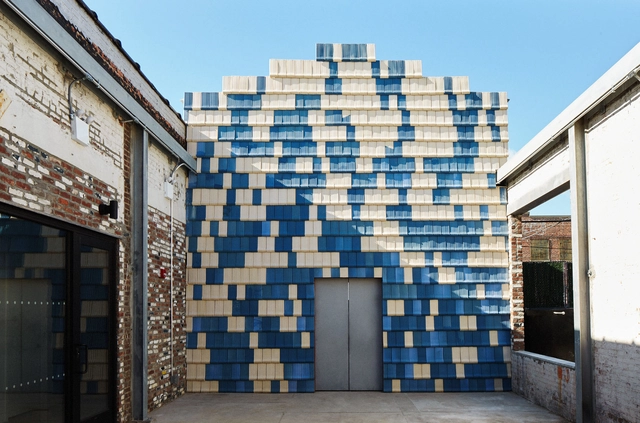
As retail moves evermore online, vacant storefronts have become ubiquitous sights in American cities and towns. Often located in formerly prime downtown real estate, the darkened windows have a knock-on effect, sapping urban vibrancy and sometimes falling into disrepair. Discourse surrounding the predicament of dead malls and traditional retail space is ongoing, but a one-size fits-all solution clearly isn't the answer here.














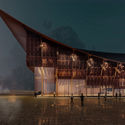

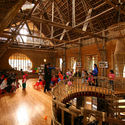
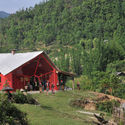
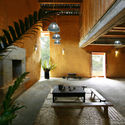


_Ahmed_Hossam_Saafan.jpg?1589841779&format=webp&width=640&height=580)
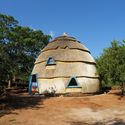
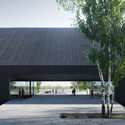
_Thomas_Noceto.jpg?1589908222 "© Thomas Noceto")
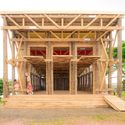
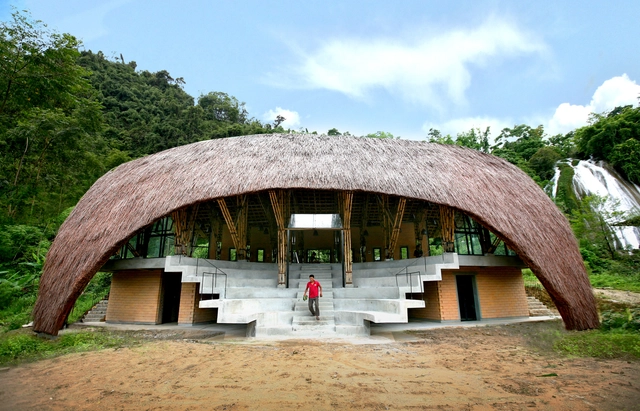
_Rizvi_Hassan.jpg?1589841727 "Integrated Community Center. Image © Rizvi Hassan")

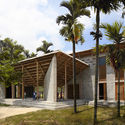
_Katie_Edwards.jpg?1589908688 "Naidi Community Hall. Image © Katie Edwards")
_Ahmed_Hossam_Saafan.jpg?1589841779)